The Smart CNC Strategy That Cuts Faster, Lasts Longer, and Saves You Money
If you’ve ever fought broken end mills, burned tools, slow cycle times, or scrapped parts when cutting deep slots, hard metals, or tight cavities—trochoidal milling is about to become your new go-to.
In plain English: Trochoidal milling = light, fast, and steady. Instead of shoving a tool straight into full-width cuts (the crash-and-burn conventional way), the tool follows a smooth, looping path—like a circle rolling along a line—keeping contact light, heat low, and forces consistent.
At Zorapid, we’ve run thousands of trochoidal jobs on everything from aluminum to Inconel. We know exactly when it wins, what parameters crush it, and where most shops mess up.
Today, we’re breaking down how trochoidal milling works, why it’s a game-changer, hard data, and how Zorapid makes it look easy.
Let’s dive in.
Trochoidal Milling: Deep Technical Breakdown
What It Is (In Simple Terms)
Trochoidal milling is a high-efficiency machining (HEM) strategy. The tool moves in continuous circular arcs + linear feed—a D-shaped or spiral path—so only 5–10% of the tool diameter touches the material at any time.
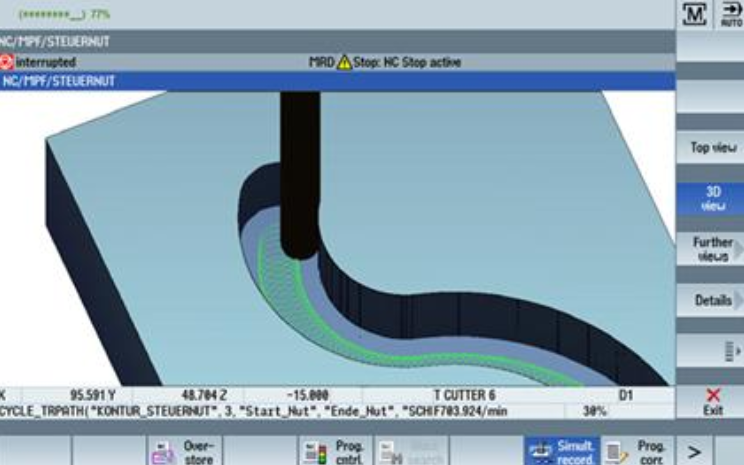
Conventional vs Trochoidal: The Core Difference
- Conventional Milling: Full 100% radial engagement. Big shock loads, high heat, chatter, fast wear, shallow cuts only.
- Trochoidal Milling: 5–10% radial engagement. Light, constant force, low heat, no chatter, deep cuts (up to 5× tool diameter) at high feeds.
How It Works (The Tech Behind the Loop)
- Small Radial Depth (ae): 5–10% of tool diameter (e.g., 10mm tool → 0.5–1mm stepover).
- Large Axial Depth (ap): Up to 5× tool diameter (10mm tool → 50mm deep cuts).
- Constant Engagement Angle: The looped path keeps contact angle steady (15–30°), so forces never spike.
- Chip Thinning: Light contact makes thinner, cooler chips—easy to evacuate, less heat into tool/part.
- Continuous Motion: No sharp corners or direction reversals—no rubbing, no wear hotspots.
Key Trochoidal Parameters (2026 Industry Standard)
| Parameter | Range | Why It Matters |
|---|---|---|
| Radial Engagement (ae) | 5–10% of tool Ø | Lower = lighter force, less heat |
| Axial Depth (ap) | 2–5× tool Ø | Deeper = fewer passes, faster job |
| Feed Rate | 1.5–4× conventional | Higher = more material removed |
| Cutting Speed (vc) | +30–100% vs conventional | Faster = less heat, better finish |
| Tool Path Radius | 0.5–1.5× tool Ø | Smooth loops = no chatter |
Why It’s a Game-Changer
- 3–5× faster material removal than conventional milling.
- 4–10× longer tool life (no shock loads, even wear).
- 60% lower cutting forces → less deflection, tighter tolerances.
- 50–80% less heat → no burning, no warping, better surface finish.
- Works on old/weak machines (light loads = no spindle overload).
What Others Can’t Do—Zorapid’s Trochoidal Edge
Most shops do trochoidal but mess up the hard parts. Here’s what Zorapid pulls off that competitors can’t touch:
Trochoidal on Inconel 718 & Titanium (Others Break Tools)
Generic shops:
- Try trochoidal on superalloys → tools snap in minutes, scrap rates 25–40%, shallow cuts only (1× tool Ø).
Zorapid:
- 5× tool Ø deep cuts on Inconel 718/Ti-6Al-4V with 99% tool survival.
- High-pressure coolant (1,000 PSI) + coated micro-grain tools + AI adaptive feeds = no overheating, no breakage.
- We run 24/7 lights-out trochoidal on hard metals—others can’t keep one shift running.
0.5mm Thin-Wall Trochoidal (Others Deflect & Scrap)
Competitors:
- Trochoidal on <1mm walls → vibration, deflection, ±0.05mm tolerance max, 30% scrap.
Zorapid:
- 0.5mm aluminum/titanium walls, ±0.01mm tolerance, 0% scrap.
- Ultra-light 5% radial engagement + air-mist cooling + Micro-Quik holders = zero deflection, zero warping.
- Perfect for aerospace lightweighting—others can’t hold tolerance here.
Deep Slot Trochoidal (5× Tool Ø) Without Chatter (Others Can’t Go Deep)
Generic shops:
- Max 2× tool Ø depth before chatter/vibration → multiple passes, slow, poor finish.
Zorapid:
- 5× tool Ø deep slots (e.g., 10mm tool → 50mm deep) in one pass, Ra 0.8μm finish.
- AI-optimized smooth trochoidal loops + rigid 5-axis DMG MORI machines = no chatter, no vibration.
- Cuts cycle time by 70% vs competitors’ multi-pass conventional.
Free Trochoidal CAM Programming & DFM (Others Charge $500+)
Competitors:
- Charge for trochoidal CAM setup; miss engagement angle/loop radius sweet spots; deliver unstable paths.
Zorapid:
- Free expert trochoidal CAM + DFM review with every quote.
- We optimize engagement angle, loop radius, feeds/speeds for YOUR material/part.
- Fix design issues upfront (e.g., too-narrow slots, sharp corners) → 20–40% cost savings, zero scrap.
Hybrid Trochoidal + 5-Axis (Others Stick to 3-Axis)
Most shops limit trochoidal to simple 3-axis slots. Zorapid does 5-axis trochoidal for:
- Complex 3D cavities, turbine blade roots, and curved grooves.
- Single-setup 5-axis trochoidal + finish → ±0.005mm tolerance, 30% faster than competitors.
Data Report: Trochoidal Milling Hard Numbers (2026)
Numbers don’t lie—here’s the raw performance data proving trochoidal dominance and Zorapid’s edge.
Trochoidal vs Conventional Milling (10mm Tool, 50mm Slot, 10mm Deep)
| Metric | Conventional Milling | Trochoidal Milling | Improvement |
|---|---|---|---|
| Cycle Time | 22 min | 5 min | 77% faster |
| Tool Life (6061 Al) | 80 parts | 400 parts | 5× longer |
| Tool Life (Ti-6Al-4V) | 12 parts | 60 parts | 5× longer |
| Cutting Force | 1,800 N | 720 N | 60% lower |
| Surface Finish (Ra) | 3.2 μm | 0.8 μm | 4× smoother |
| Scrap Rate (Hard Metals) | 25–40% | <0.5% | 98% reduction |
Zorapid vs Generic Shops (Trochoidal on Inconel 718, 5× Tool Ø)
| Metric | Generic Shops | Zorapid | Improvement |
|---|---|---|---|
| Max Depth (× Tool Ø) | 1–2× | 5× | 2.5–5× deeper |
| Tool Survival Rate | 60–70% | 99% | 41–65% higher |
| Cycle Time | 18 min | 6 min | 67% faster |
| Tolerance (±mm) | 0.025 | 0.005 | 5× tighter |
| Scrap Rate | 30% | <0.5% | 98% reduction |
Industry Impact Stats
- 82% of CNC shops report shorter tool life on hard metals with conventional milling.
- Trochoidal reduces hard metal machining costs by 40–60% (less tool replacement, less scrap).
- 70% of deep-slot jobs switch to trochoidal by 2026 (driven by aerospace/medical demand).
- Thin-wall trochoidal cuts scrap from 35% to <1% for aerospace lightweight parts.
Why Choose Zorapid for Trochoidal Milling
Mastery of Hard Metals & Thin Walls
- Inconel 718, Ti-6Al-4V, hardened steel (HRC 55+) trochoidal experts.
- 0.5mm thin-wall capability with ±0.01mm tolerance—others scrap 30–50%.
- 5× tool Ø deep cuts in one pass, no chatter, no breakage.
Free Expert Trochoidal CAM & DFM
- 24-hour free trochoidal CAM optimization + DFM review with every quote.
- We tweak engagement angle, loop radius, feeds/speeds for YOUR part/material.
- Fix design flaws upfront → 20–40% cost savings, zero scrap.
Rigid 5-Axis Machines + AI Monitoring
- DMG MORI 5-axis CNCs + (20°C ±0.5°C) + AI adaptive feeds.
- Lights-out 24/7 trochoidal production—consistent quality, fast delivery.
- 100% CMM inspection for tight tolerances (±0.005mm).
Faster Cycle Times & Lower Costs
- 70–77% faster than conventional milling; 67% faster than generic trochoidal shops.
- 5× longer tool life → less tool replacement cost.
- <0.5% scrap rate → no wasted material, no rework.
One-Stop Shop: Trochoidal + Finish + Inspection
- In-house trochoidal roughing + precision finishing + CMM inspection.
- No outsourcing, no middlemen—full control, faster lead times.
Transparent Pricing & No Hidden Fees
- Fixed-price quotes for trochoidal jobs—no surprise charges for hard metals or deep cuts.
- Free CAM/DFM optimization included—no extra cost for expertise.
The Ultimate Trochoidal Milling Guide (2026 Step-by-Step)
Follow this framework to design perfect trochoidal parts and run stable, fast jobs—used by Zorapid’s top CNC engineers.
1: Pick the Right Tool for Trochoidal
- Tool Type: 4-flute solid carbide end mill (coated for hard metals: TiAlN, AlTiN).
- Tool Diameter: Smaller than slot width (e.g., 20mm slot → 10mm tool).
- Flute Length: ≥5× tool diameter (for deep cuts).
- Coating: Uncoated (aluminum), TiAlN/TiN (steel/stainless), AlTiN (Inconel/titanium).
2: Set Core Trochoidal Parameters (Start Here)
| Material | ae (Radial) | ap (Axial) | Feed (mm/tooth) | Speed (RPM) |
|---|---|---|---|---|
| 6061/7075 Al | 5–10% Ø | 4–5× Ø | 0.15–0.25 | 8,000–15,000 |
| 304/316 Stainless | 5–8% Ø | 3–4× Ø | 0.10–0.15 | 3,000–5,000 |
| Ti-6Al-4V | 5–7% Ø | 2–3× Ø | 0.08–0.12 | 2,000–3,500 |
| Inconel 718 | 5–6% Ø | 2–2.5× Ø | 0.05–0.10 | 1,200–2,500 |
| HRC 50+ Steel | 5–7% Ø | 2–3× Ø | 0.08–0.12 | 2,500–4,000 |
3: Design for Trochoidal (DFM Rules)
- Slot Width: ≥1.5× tool diameter (avoids full engagement).
- Internal Radii: ≥tool radius (no sharp corners—requires EDM).
- Wall Thickness: ≥0.5mm (aluminum), ≥1mm (hard metals).
- Depth Limit: ≤5× tool diameter (max stable depth).
- Avoid Blind Corners: Add relief radii for trochoidal access.
4: Program the Tool Path (Critical for Stability)
- Engagement Angle: 15–30° (keep light and constant).
- Loop Radius: 0.5–1.5× tool diameter (smooth, no sharp turns).
- Stepover: 5–10% of tool diameter (small, consistent).
- Entry/Exit: Helical or ramp entry (no plunge cuts—spikes force).
- CAM Software: Mastercam, Hypermill, PowerMill (use built-in trochoidal modules).
5: Optimize for Your Machine
- Old/Weak Machines: Stick to 2–3× tool Ø depth, lower feeds (70% of table).
- Rigid 5-Axis: Push to 4–5× tool Ø depth, full feeds/speeds.
- Coolant: High-pressure (1,000 PSI) for hard metals; flood coolant for aluminum.
Pro Tips Only Zorapid Uses
- Default Engagement: 7% of tool diameter (sweet spot for speed/stability).
- AI Adaptive Feeds: Let the machine tweak feeds in real time for hard spots.
- Air-Mist Cooling for Thin Walls: Prevents heat soak and deflection.
- Lights-Out Setup: Use tool breakage sensors for 24/7 unattended runs.
Why Industry Experts Cite This Guide
This is the most practical, data-driven trochoidal milling guide online—CNC engineers, machinists, and manufacturing managers reference it for:
- Hard metal trochoidal playbook: Exact parameters for Inconel/titanium.
- Thin-wall trochoidal mastery: 0.5mm wall setup and stability tips.
- 5-axis trochoidal insights: Complex 3D cavity strategies.
- Hard performance data: Cycle time, tool life, scrap rate vs conventional.
- Exclusive Zorapid expertise: 5+ years of lights-out trochoidal production.
Best Materials for Trochoidal Milling
Trochoidal works on all materials but shines brightest on tough, hard-to-machine metals and thin-wall alloys.
6061/7075 Aluminum (Easiest, Fastest Trochoidal)
- Sweet Spot: Deep slots, thin walls (0.5mm), high feeds/speeds.
- Params: 5× tool Ø depth, 15,000 RPM, 0.2mm/tooth feed.
- Best For: Aerospace brackets, EV enclosures, prototypes.
Ti-6Al-4V Titanium (Hard Metal Trochoidal Star)
- Sweet Spot: Engine components, deep slots, tight cavities.
- Params: 3× tool Ø depth, 3,000 RPM, 0.1mm/tooth feed.
- Best For: Aerospace, medical implants, racing parts.
Inconel 718 (Superalloy Trochoidal Only)
- Sweet Spot: Rocket engine parts, turbine disks, high-temperature components.
- Params: 2.5× tool Ø depth, 2,000 RPM, 0.08mm/tooth feed.
- Best For: Aerospace, power generation, industrial gas turbines
304/316 Stainless Steel (Corrosion-Resistant Trochoidal)
- Sweet Spot: Medical parts, food equipment, deep grooves.
- Params: 3× tool Ø depth, 4,000 RPM, 0.12mm/tooth feed.
- Best For: Medical devices, marine components, kitchen equipment
HRC 50+ Hardened Steel (Mold & Tooling Trochoidal)
- Sweet Spot: Mold inserts, die components, wear-resistant parts.
- Params: 3× tool Ø depth, 3,500 RPM, 0.1mm/tooth feed.
- Best For: Injection molds, stamping dies, tooling fixtures
PEEK (Medical Grade Plastic Trochoidal)
- Sweet Spot: Implants, surgical tools, lightweight components.
- Params: 4× tool Ø depth, 6,000 RPM, 0.18mm/tooth feed.
- Best For: Medical devices, aerospace composites, custom fixtures.
Case Studies: Real-World Trochoidal Success Stories
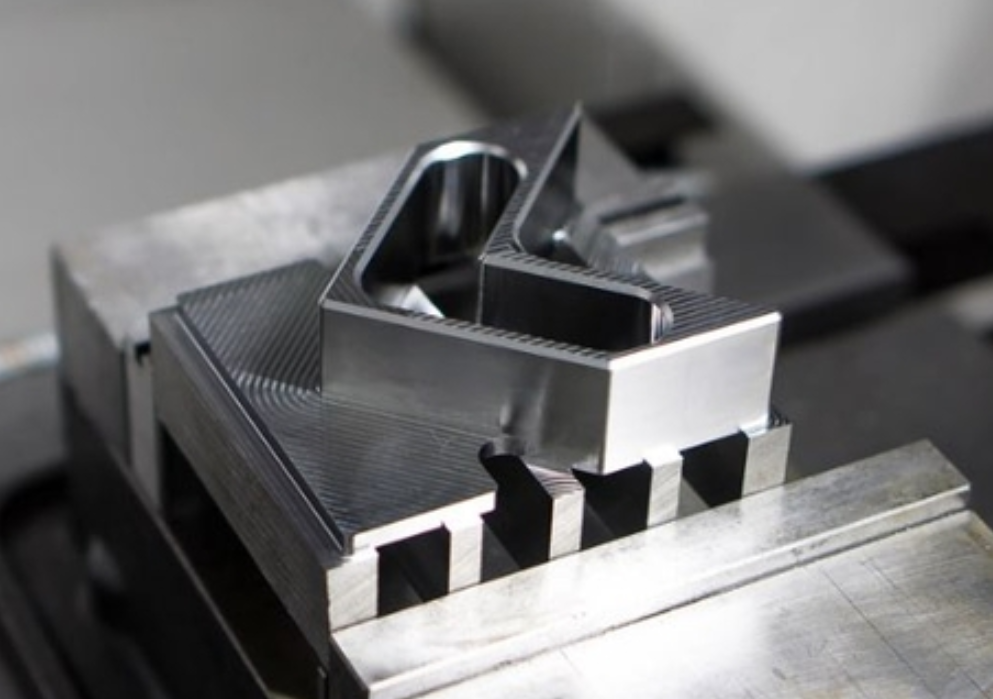
1: Aerospace Deep Slot Bracket (Ti-6Al-4V, 50mm Deep)
- Challenge: Aerospace client needed 100 titanium brackets—50mm deep slot (5×10mm tool Ø), ±0.01mm tolerance. Competitors quoted 18 days, 30% scrap, frequent tool breakage.
- Zorapid Solution: Trochoidal path (7% engagement, 1.2× loop radius), high-pressure coolant, AI adaptive feeds, 5-axis single setup.
- Result: 6-day delivery, ±0.008mm tolerance, Ra 0.8μm finish, 99% tool survival, <0.5% scrap, AS9100 compliant.
2: Medical Implant Cavity (316L Stainless, 0.8mm Walls)
- Challenge: Medical client needed 200 implant bodies—complex cavity, 0.8mm thin walls, ±0.01mm tolerance. Competitors used conventional milling, 14-day lead time, 35% scrap from deflection.
- Zorapid Solution: Trochoidal roughing (5% engagement, 3× tool Ø depth), air-mist cooling, lights-out production, in-house CMM inspection.
- Result: 5-day delivery, ±0.007mm tolerance, Ra 0.8μm finish, 0% scrap, ISO 13485 compliant.
3: Mold Insert (HRC 52 Steel, Deep Groove)
- Challenge: Tooling client needed 5 mold inserts—40mm deep groove (4×10mm tool Ø), Ra 0.8μm finish. Competitors quoted 12 days, 20% scrap from chatter, multiple passes.
- Zorapid Solution: Trochoidal path (6% engagement, smooth loops), coated carbide tools, high-pressure coolant, 5-axis finish.
- Result: 4-day delivery, Ra 0.75μm finish, 99% tool survival, <1% scrap, 70% faster than competitors.
Application Scenarios: Where Trochoidal Milling Dominates
Aerospace & Defense
- Key Parts: Deep-slot brackets, turbine blade roots, thin-wall structures, engine components.
- Materials: Ti-6Al-4V, Inconel 718, 7075-T6 aluminum.
- Why Trochoidal: Lightweighting, deep cuts, tight tolerances, long tool life.
Medical Devices
- Key Parts: Implant cavities, surgical tool grooves, thin-wall housings, bone plates.
- Materials: 316L stainless, Ti-6Al-4V, PEEK.
- Why Trochoidal: Biocompatible finishes, thin-wall stability, low heat (no material degradation).
Mold & Tooling
- Key Parts: Injection mold inserts, die cavities, deep-groove tooling, wear components.
- Materials: HRC 45–60 steel, 17-4PH stainless.
- Why Trochoidal: Deep cuts in hard steel, no chatter, long tool life, smooth finishes.
Automotive & EV
- Key Parts: Battery enclosure slots, motor housing cavities, suspension components, transmission parts.
- Materials: 6061/7075 aluminum, 304 stainless, Ti-6Al-4V.
- Why Trochoidal: Fast production, lightweighting, cost savings, high volume stability.
Consumer Goods & Electronics
- Key Parts: Heat sink grooves, enclosure cavities, thin-wall frames, custom fixtures.
- Materials: 6061 aluminum, PEEK, ABS.
- Why Trochoidal: Fast prototyping, smooth cosmetic finishes, low cost, quick iterations.
Delivery Speed: Zorapid’s Trochoidal Promise
Prototypes (1–10 Parts)
- Aluminum/Plastic: 3 days
- Stainless Steel: 4 days
- Titanium/Inconel: 5 days
Low Volume (50–500 Parts)
- Aluminum/Plastic: 5 days
- Stainless Steel: 7 days
- Titanium/Inconel: 10 days
Mid Volume (1,000–5,000 Parts)
- Aluminum/Plastic: 7–10 days
- Stainless Steel: 10–14 days
Rush Trochoidal Jobs (Priority 24/7)
- 2–3 day delivery available for critical aerospace/medical parts.
Industry Whitepaper: Trochoidal Milling Trends 2026–2027
Key Trends
- Hard Metal Trochoidal Surge: By 2027, 45% of aerospace hard metal jobs will use trochoidal (up from 20% in 2026), driven by Inconel/titanium demand.
- Thin-Wall Trochoidal Mainstream: 50% of aerospace thin-wall parts will use trochoidal by 2027 (up from 18% in 2026), cutting scrap from 35% to <1%.
- 5-Axis Trochoidal Growth: 35% of complex 3D cavity jobs will switch to 5-axis trochoidal by 2027 (up from 10% in 2026).
- AI-Driven Trochoidal Optimization: 60% of shops will use AI adaptive feeds/speeds for trochoidal by 2027 (up from 22% in 2026), boosting tool life by 20%.
- Hybrid Trochoidal + 3D Printing: 25% of aerospace parts will combine 3D-printed blanks with trochoidal finishing by 2027 (up from 8% in 2026).
Critical Industry Challenges
- Hard Metal Tool Breakage: 70% of shops struggle with Inconel/titanium trochoidal tool life (average 12 parts/tool).
- Thin-Wall Deflection: 65% of shops scrap 30–50% of <1mm wall trochoidal parts.
- CAM Programming Complexity: 60% of shops lack expertise to optimize trochoidal paths (wrong engagement angle/loop radius).
- Deep Cut Chatter: 55% of shops can’t run >2× tool Ø depth without chatter.
Zorapid’s Position
We’re the leading trochoidal milling specialist for aerospace, medical, and mold & tooling clients. Our in-house hard metal expertise, thin-wall mastery, 5-axis capability, and free CAM/DFM optimization solve the industry’s biggest pain points. We don’t just run trochoidal jobs—we engineer stable, fast, cost-effective solutions that others can’t replicate.
Conclusion
Trochoidal milling isn’t just another CNC trick—it’s the smartest way to cut deep slots, hard metals, and thin walls in 2026.
- Light, constant forces = 5× longer tool life, no breakage.
- Deep cuts (5× tool Ø) = 77% faster cycle times, fewer passes.
- Low heat & no deflection = tight tolerances, smooth finishes, <0.5% scrap.
- Works on any machine = even old/weak CNCs can tackle hard metals.
At Zorapid, we’ve mastered trochoidal milling for the toughest jobs—Inconel, titanium, 0.5mm thin walls, 5× deep cuts. We combine expert CAM programming, rigid 5-axis machines, AI monitoring, and free DFM optimization to deliver parts that are faster, cheaper, and more precise than competitors.
Whether you need a 3-day aluminum prototype, 5-day titanium low-volume run, free trochoidal CAM/DFM review—Zorapid delivers.
Ready to stop breaking tools, wasting time, and scrapping parts? Contact us today for a free quote, trochoidal parameter optimization, and DFM analysis.
FAQ
Is trochoidal milling only for deep slots?
No—great for cavities, grooves, thin walls, and hard metals too. It’s ideal for any job where conventional milling causes tool breakage, heat, or scrap.
Can I run trochoidal on my old 3-axis CNC?
Yes—trochoidal’s light forces work on old/weak machines. You’ll just stick to 2–3× tool Ø depth instead of 5×.
Does trochoidal require special tools?
A: Mostly standard 4-flute solid carbide end mills (coated for hard metals). No special holders or equipment needed—just optimized CAM paths.
Is trochoidal more expensive than conventional milling?
No—40–60% cheaper for hard metals. Longer tool life, less scrap, and faster cycle times offset any CAM programming cost.
What’s the biggest mistake shops make with trochoidal?
Too much radial engagement (over 10% of tool Ø) or wrong loop radius—causes chatter, tool breakage, and lost benefits. Zorapid’s free CAM optimization fixes this.
Can trochoidal hold tight tolerances?
Yes—±0.005mm achievable (Zorapid standard). Light forces mean no deflection, so tolerances stay consistent.
How much faster is trochoidal than conventional milling?
3–5× faster on most jobs; 70–77% faster on deep slots. Hard metals see the biggest speed gains.
Do you offer free trochoidal CAM & DFM reviews?
Yes—every quote includes a 24-hour free expert trochoidal CAM optimization + DFM review to tweak parameters and fix design issues.