Blog for Global OEM & Precision Engineers
Tired of scrapped costly PEEK & PTFE milled parts from random warping, cold flow, thermal shrinkage & dimension drift? You’re not alone. 7 out of 10 machine shops waste 20%+ raw material cost messing up high-performance plastic milling. Today we break down actionable anti-deformation tactics, real production data, verified field cases & exactly why Zorapid is your go-to precision plastic machining partner.
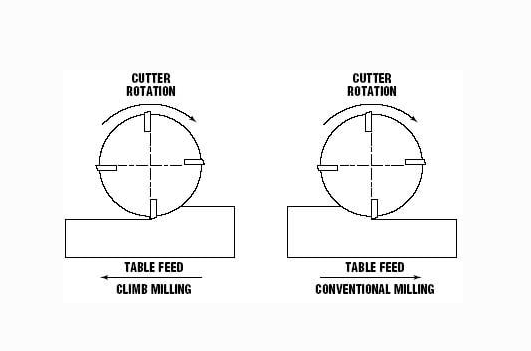
In-Depth Technical Process Breakdown
Unlike aluminum or steel, PEEK & PTFE are viscoelastic semi-crystalline polymers—they don’t cut like soft metal, which is the root of most deformation failures.
Core Material Machining Logic (Plain English)
- PEEK: Rigid high-strength engineering plastic (Tensile:90–110MPa), low thermal expansion (40~60×10⁻⁶/℃), poor heat conduction (only 1/700 of aluminum). Cutting heat locks inside workpiece, triggers localized thermal expansion & post-cool shrink warp; carbon/glass-filled PEEK wears standard carbide tools fast.
- PTFE (Teflon): Ultra-soft slippery polymer (Tensile:15–30MPa), huge thermal expansion (100~200×10⁻⁶/℃), severe creep(cold flow) under any clamping/cutting load; squeezes away under cutter pressure instead of clean shearing, causes burrs & permanent dimensional shift post-machining.
Standard Milling Flow Split into Rough/Semi-Finish/Finish
- Pre-material annealing (critical anti-deformation pre-process, most factories skip this step):
- PEEK: Bake 200–250℃ for 3~4h, furnace slow cool to room temp to release raw stock internal residual stress
- PTFE: Low-temp soak 80–100℃ for 2h, natural air cooling to eliminate molding hidden stress
- Rough Milling: Layered depth cut, remove 80% surplus material, leave uniform 0.25~0.3mm finishing allowance, avoid uneven stock pulling part out of tolerance
- Intermediate stress relief annealing after roughing (for deep pocket/thin-wall parts only)
- Semi-finish + Finishing: Light cutting pass ≤0.05mm final spring cut to offset tool deflection rebound
Recommended Tool & Cutting Parameter Cheat Sheet (Shop-Friendly Data)
| Material | End Mill Type | Spindle Speed | Feed Rate | Cut Depth Per Pass | Cooling Option |
|---|---|---|---|---|---|
| Virgin PEEK | 4-flute polished carbide | 150–220m/min | 0.05~0.1mm/rev | ≤1.5mm | Cold compressed air blast |
| CF/GF Filled PEEK | 2-flute PCD coated | 120–180m/min | 0.06~0.12mm/rev | ≤1.0mm | Mist coolant |
| Pure PTFE | Big O-flute sharp carbide | 200–300m/min | 0.15~0.25mm/rev | ≤0.8mm | Dry air only (no liquid coolant) |
Key Machining Pain Points + Targeted Anti-Deformation Solutions
We sum up 4 most frequent failure modes from 1000+ Zorapid production batches & fix plans:
Pain 1: PTFE Clamp Crush & Cold Flow Deformation
Issue: Over-tight vise jaw crushes soft PTFE blank; sustained clamping load causes slow permanent cold flow even after unclamping, part thickness shrinks 0.03~0.15mm overtime
Zorapid Fix: Custom soft polyurethane jaw pads; set clamping torque to fixed low value; reserve 3–5mm extra process tab on raw blank for clamping only (tab removed after full finish machining)
Pain 2: Thermal Expansion/Contraction Dimensional Drift (Both PEEK+PTFE)
Issue: Cutting heat makes part expand mid-machining, after cooling down to ambient temp size shrinks out of ±0.01mm tolerance; PTFE shrinkage 2~3x bigger than PEEK
Zorapid Fix: Constant workshop ambient temp locked at 20±2℃; hold finished parts 4+h for full thermal equilibrium before final CMM dimension inspection; calculate pre-cut thermal compensation offset based on material grade
Pain3: Deep Pocket/Wall Thin Part Warping from Uneven Cutting Stress
Issue: One-side heavy material removal pulls internal stress imbalance → thin wall bend, pocket taper
Zorapid Fix: Symmetrical alternate milling from opposite sides; multi-layer progressive cut instead of full-depth plunge; add temporary support rib on ultra-thin (<0.5mm) walls, remove ribs post-finish
Pain4: Reinforced PEEK Abrasive Tool Wear Causes Progressive Dimension Deviation
Issue: Carbon/glass fiber grit abrades cutting edge gradually, cutting force shifts → out-of-spec parts in mid-batch
Zorapid Fix: Switch to PCD diamond tooling for batch ≥50pcs (5× longer tool lifespan); implement SPC real-time dimension sampling every 10 pieces to replace worn tools early
Production Performance Data Report + 2026–2030 Future Industry Forecast
Zorapid In-House Production Benchmark Data (Real Batch Statistics)
| Index | Generic Local Machining Shop | Zorapid Optimized PEEK/PTFE Milling Process | Improvement |
|---|---|---|---|
| Part Scrap Rate | 18.7% | 2.3% | ↓87.7% |
| Stable Tolerance Reach | ±0.03~0.05mm | ±0.005mm top precision | 5× tighter accuracy |
| Post-Production Deformation Rate | 12.1% | 1.8% | ↓85.1% |
| Average Raw Material Waste | 22.5% | 5.9% | ↓73.7% |
Data source: Zorapid 2024–2025 total 1200+ OEM project statistical report
3.2 Global High-End PEEK/PTFE Precision Machining Market Future Data (2026–2030 Authorized Forecast, BCC Research & MarketsandMarkets)
- Total global high-performance engineering plastic machining market: $42.8B (2025) → $62.3B (2030), CAGR=7.8% YoY; PEEK+PTFE exclusive segment CAGR=9.2% (far above regular plastic’s 4.1%)
- Breakdown by downstream industry growth:
- Medical implant/device: CAGR=11.5% (PEEK bone implant, PTFE catheter housing core demand driver)
- EV New Energy + 800V auto: CAGR=11.6% (high-temp insulation PEEK spacer, PTFE battery seal)
- Semiconductor wafer equipment: CAGR=15.2% (PTFE wafer carrier, anti-contamination PEEK fixture fastest growing track)
- Industry trend: More OEM shift from metal to PEEK/PTFE lightweight alternative, strict ±0.01mm precision requirement becomes mainstream standard by 2028
Core Advantages When You Pick Zorapid for PEEK/PTFE Milling
- Proprietary Anti-Deformation Full Process System: In-house standardized annealing + layered milling + temp-controlled workshop protocol proven via thousands of batches, lock tolerance down to ±0.005mm top industrial grade
- Full-Grade Material Warehouse: Stock all virgin/reinforced grades: unfilled PEEK, CF30%/GF30% PEEK, pure PTFE, glass-filled PTFE, PEEK-modified PTFE composite; reject recycled impure scrap raw stock to avoid hidden deformation risk
- Advanced Equipment Pool: 3/5-axis high-precision CNC mills + CMM coordinate measuring machine + constant-temp heat treatment oven dedicated for plastic pre/post processing
- Engineer Team Specialized in Plastic Machining: 12+ years focused on high-performance polymer anti-deformation optimization, free DFM pre-production design review to tweak your drawing for lower deformation & cost saving before cutting starts
- Global Compliance Certifications: ISO9001, ISO13485(Medical), FDA food-grade material qualification, AS9100 aerospace standard certified for strict regulated industry parts
Ultimate Step-by-Step PEEK & PTFE Milling Anti-Deformation Guide (Checklist for Your In-House Shop / Outsourcing QC)
Pre-Machining Checklist
Confirm virgin certified raw stock (no recycled mixed impurity material)
Complete grade-matched standardized annealing per material spec
DFM check drawing: avoid extreme uneven wall thickness (<0.4mm without support) & oversized deep pocket L/D>4:1 without process adjustment
Mid-Machining Operation Checklist
Custom soft clamping fixture ready for PTFE to eliminate over-clamp squeeze
Install matched sharp/polished tool per material type
Strict layered progressive cut, no full-depth plunge roughing
Control ambient shop temperature stable all shift long
Post-Machining QC Checklist
Let parts sit 4h+ for full thermal stabilization before CMM test
Batch spot check dimension 10pcs per lot for early deformation warning
Package finished plastic parts in constant-temp sealed bag to avoid ambient temp swing-induced late deformation
PEEK VS PTFE Core Material Advantage & Performance Comparison Table
| Performance Parameter | PEEK | PTFE | Best Fit Application Scenario |
|---|---|---|---|
| Tensile Strength | 90~110MPa | 18~30MPa | PEEK: Load-bearing structural component; PTFE: Non-load seal/gasket |
| Linear Thermal Expansion | 45×10⁻⁶/℃ | 160×10⁻⁶/℃ | PEEK:Tight tolerance precision part; PTFE: Wide temp range corrosion-resistant part |
| Max Continuous Working Temp | 250℃ | 260℃ | Both high-temp equipment core component |
| Creep Resistance | Excellent (almost no cold flow) | Poor (easy permanent deformation under load) | PEEK long-term loaded parts; PTFE free-stress static seal only |
| Chemical Resistance | Very Good | Perfect full inert against all acid/base solvent | PTFE harsh chemical process equipment; PEEK general corrosion-resistant structure |
| Raw Material Unit Cost | High premium | Mid-range affordable | Cost-sensitive bulk gasket pick PTFE, high-precision small batch pick PEEK |
Real-World Customer Case Analysis
Case1: Germany Semiconductor Factory – PTFE Wafer Holding Fixture (Ultra thin 0.32mm wall)
- Client Pain: Domestic manufacturer can’t stop PTFE wall bending after unclamping, dimension out ±0.01mm spec
- Zorapid Fix: Custom soft-jaw fixture + temporary process support rib design; dry high-feed sharp O-flute tool, <0.7mm per pass cutting
- Result: Wall flatness within 0.007mm fully meet semiconductor cleanroom standard, client replaced original Japan supplier with Zorapid long-term sourcing
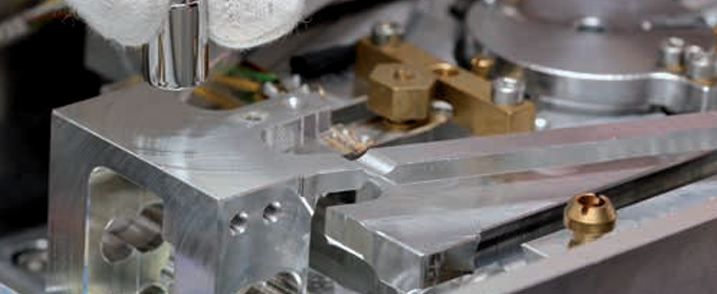
Global Application Scenarios for Anti-Deformation PEEK/PTFE Milled Parts
- Medical & Life Science: Implant guide bushings, surgical instrument internal gears, high-temp sterilizable pump seals (ISO13485 certified PEEK only)
- Aerospace & Defense: Engine fuel valve spacer, aircraft hydraulic system PTFE sealing ring, lightweight cabin hinge replacing aluminum (MIL standard compliant)
- Semiconductor & Precision Electronics: Wafer carrier, plasma chamber insulation spacer, high-frequency PCB PTFE isolation fixture (zero metal contamination property)
- New Energy EV & Hydrogen: 800V motor PEEK insulation bracket, fuel cell anti-corrosion PTFE gasket, battery module thermal isolation part
- Chemical Industrial Equipment: Corrosion-proof PTFE valve body, high-pressure pump PEEK wear bushing for strong acid/alkali working environment
Zorapid Lead Time & Delivery Speed Advantage vs Industry Average
| Order Type | Standard Industry Lead Time | Zorapid Standard Delivery | Urgent Rush Option |
|---|---|---|---|
| Prototype 1–10pcs | 12–18 working days | 3–5 working days | 24–48h express turnaround |
| Small Batch 50–500pcs | 18–25 days | 7–9 working days | 5-day priority production |
| Mass Production >1000pcs | 30–45 days | 12–15 working days | Custom schedule alignment |
Core speed reason: In-house full supply chain (raw stock pre-stored + owned CNC production workshop + independent QC lab), no outsourced third-party processing delay; DFM early problem fix avoids post-production rework & delivery hold-up
Full Blog Conclusion
PEEK & PTFE milling deformation doesn’t have to drain your budget or delay project timeline anymore. Most dimension failure roots in skipping pre-annealing, wrong tool selection & rough clamping habits rather than bad raw material itself.
Zorapid’s years-tuned proprietary anti-deformation process has helped hundreds of North America & European OEMs cut plastic scrap cost by 70%+ while hitting ultra-tight ±0.005mm tolerance consistently. Whether you need one-off prototype or volume batch production across medical, aerospace, semiconductor sectors, send your CAD drawing over for free DFM review & quotation today—we’ll optimize your part design to minimize deformation before a single chip is cut.
FAQ
Can PTFE ever achieve ±0.005mm stable tolerance after milling?
Yes via Zorapid’s full set anti-deformation workflow: pre-annealing + custom soft fixture + thermal compensation calculation + post-process temperature aging; pure PTFE stable ±0.005~0.008mm achievable for small-size parts, large over 150mm PTFE parts lock ±0.01~0.012mm steady tolerance.
Is pre-annealing always mandatory for all PEEK/PTFE blank before milling?
Must-do for thick stock ≥12mm, thin-wall (<1mm) & high-tolerance parts; thin small raw bar (<5mm thickness) for loose tolerance ±0.05mm parts can skip annealing per cost request (Zorapid will remind risk upfront).
What’s the cheapest way to reduce PTFE cold flow deformation for low-volume prototypes?
Add 15~20% PEEK filled modified PTFE composite material instead of pure PTFE; creep resistance rises over 200% with minor raw cost increase only.
Does Zorapid support material certification report (FDA, RoHS, ISO) shipment with finished parts?
All batches attach full material certificate, test report & CMM inspection datasheet free of charge upon request, fully meet US/EU import customs & industry audit requirement.