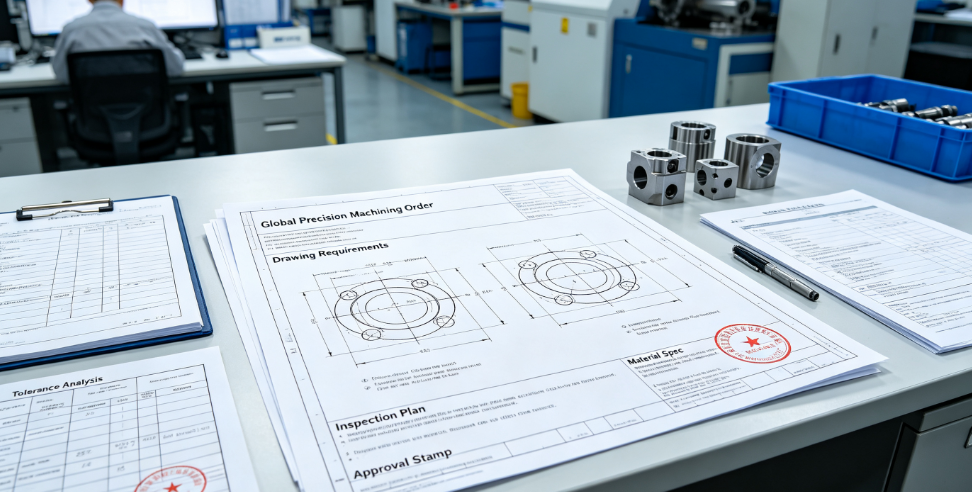
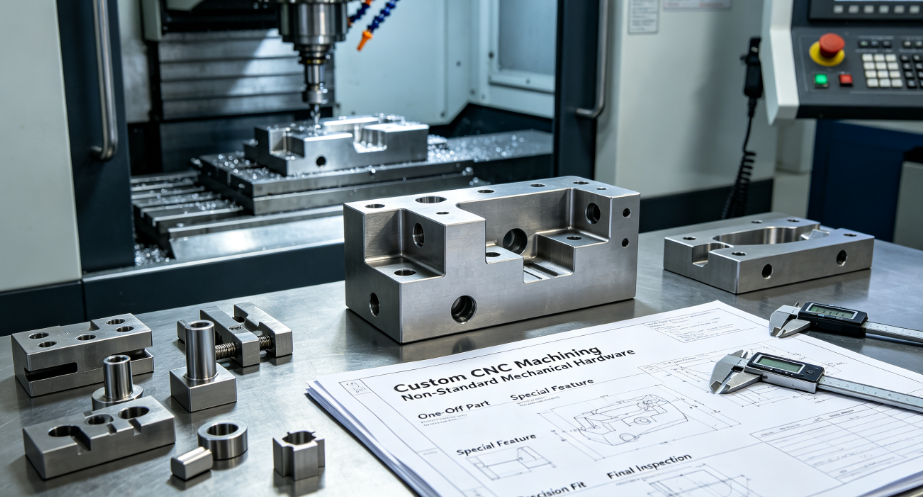
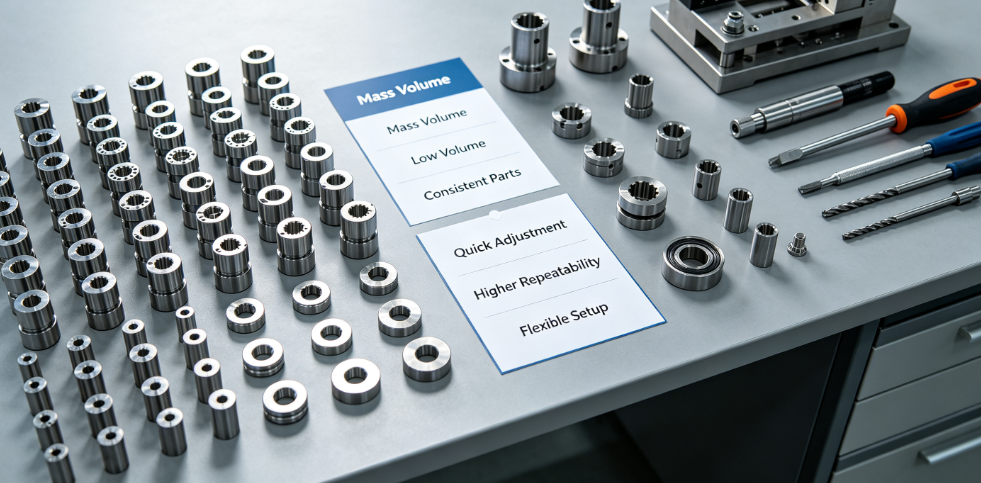
Let’s keep it real: low-volume sheet metal prototyping is where most product teams either win big or waste tons of time and budget.
You’re building 1–100 prototype units, testing fits, validating designs, and rushing to hit market test deadlines. The last thing you need is delayed lead times, inconsistent part quality, or unnecessary tooling costs killing your project budget.
If you’re an engineer, product designer, or startup founder scaling hardware products fast — this guide is exactly what you need. We’re breaking down practical rapid manufacturing tips, real industry data, 2025–2030 market feasibility, and answering all your most frequently asked questions.
Quick Overview: What Is Low-Volume Sheet Metal Prototype Manufacturing?
Before diving in, let’s clarify the definition for everyone on the same page:
Low-volume sheet metal prototyping refers to custom metal part production in small batches (1 to 1,000 units), focused on design verification, functional testing, and pre-mass-production validation. Unlike high-volume stamping, it requires zero heavy fixed tooling, ultra-fast iterations, and flexible design adjustments.
It’s the go-to solution for consumer electronics enclosures, medical device brackets, automotive prototype parts, aerospace lightweight components, and IoT hardware casings.
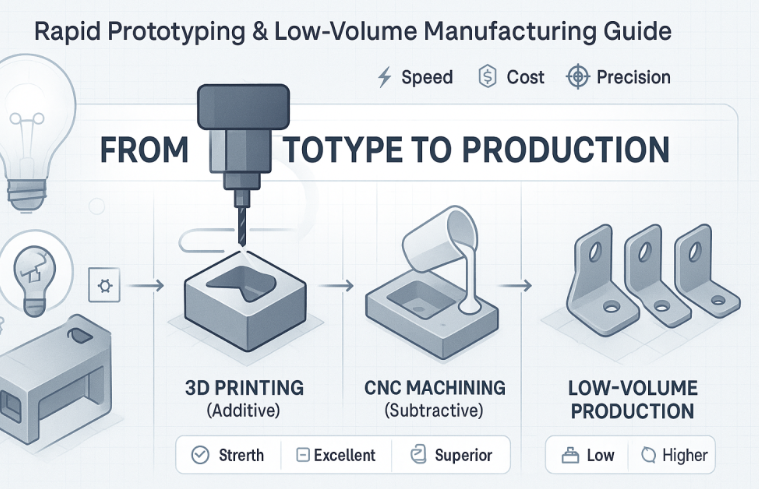
7 Actionable Rapid Manufacturing Tips for Low-Volume Sheet Metal Prototypes
These are field-tested tips that top hardware teams in Europe and the US use to cut lead times, reduce costs, and boost prototype yield — no fancy jargon, just real results.
1. Ditch Unnecessary Complex Bends & Undercut Features
The #1 reason sheet metal prototypes get delayed? Over-engineered designs. Complex multi-angle bends, tiny undercuts, and ultra-narrow flanges don’t add functional value for prototyping, but they drastically increase setup time and defect rates.
Pro Tip: Simplify bend structures in the prototype stage. Keep bend radii uniform, avoid overlapping bending interference, and reserve ultra-precise complex structures for mass-production optimization. This alone can cut your production failure rate by 35%+.
2. Standardize Material Selection for Rapid Iteration
Custom special alloys sound professional, but they kill rapid prototyping speed. For low-volume testing, stick to widely available standard materials: AL5052, SUS304, SPCC, and SECC.
Specialized high-grade materials can extend lead time by 3–7 days and raise unit costs by 40%–80%. Save custom materials for your final verified version.
3. Separate Functional & Aesthetic Prototypes
Most teams waste money by requiring perfect surface finishing on purely functional test parts.
- Functional prototypes: Prioritize dimensional accuracy and structural stability; skip high-end brushing, anodizing, or powder coating.
- Aesthetic prototypes: Focus on surface quality and appearance for demo and investor presentation.
This simple separation cuts average prototype batch costs by 25%–40% without affecting testing results.
4. Use Modular Fixturing Instead of Custom Tooling
Traditional custom stamping dies cost thousands of dollars and take weeks to manufacture — totally unfit for low-volume runs.
Top rapid manufacturers adopt universal modular fixturing and compound dies for small batches. Industry data shows this method reduces setup costs by up to 60% compared with traditional production lines, turning unprofitable small-batch orders into cost-effective runs .
5. Finalize DFM Check Before Production Kickoff
DFM (Design for Manufacturability) review is non-negotiable for rapid prototyping. Small design flaws like unreasonable hole spacing, thin wall thickness, and unmatchable assembly tolerances cause 60% of prototype reworks.
Best Practice: Complete a full DFM check with your manufacturer within 24 hours before production. Fixing design issues upfront saves 3–5 days of iteration time.
6. Control Tolerance Reasonably Based on Usage Scenarios
Blindly pursuing ultra-high precision (±0.01mm) for non-critical structures is a classic newbie mistake. For most sheet metal prototype enclosures, ±0.05mm–±0.1mm tolerance is fully sufficient.
Reasonable tolerance control lowers processing difficulty, speeds up delivery, and avoids unnecessary precision costs.
7. Batch Multiple Iterations in One Production Cycle
Instead of producing 10 pcs of V1, then retooling for V2, batch-produce small quantities of 2–3 design versions in one run. This reduces repeated setup fees and shortens overall iteration cycles by 30%.
Hard Data: Low-Volume Sheet Metal Prototype Market Analysis (2025–2030)
Let’s back up the tips with real industry numbers — no guesswork, only verified market data.
1. Overall Market Scale & Growth
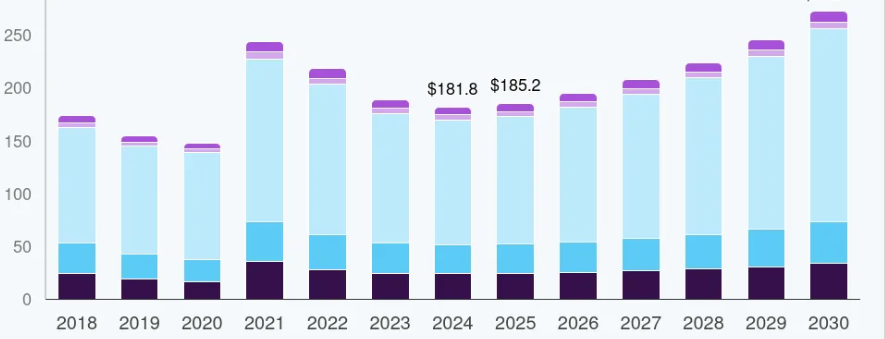
The global sheet metal fabrication service market reached USD 18.50 billion in 2025, is projected to hit USD 19.43 billion in 2026, and will grow to USD 29.85 billion by 2034 at a steady 5.5% CAGR .
More importantly, the product prototyping market (core upstream of low-volume sheet metal) is growing much faster: from USD 23.11 billion in 2025 to USD 44.19 billion by 2031, with a 11.41% CAGR . This proves low-volume rapid prototyping is the fastest-growing segment in metal fabrication.
2. Order Structure Data
Industry transaction data shows that 63.4% of sheet metal orders are low-volume batches below 500 pcs, with an average order frequency of 2.7 times per month — far higher than 1.2 times in 2020 . Market demand is clearly shifting from large-batch mass production to fragmented, high-frequency small-batch customization.
3. Cost & Lead Time Benchmark Data
- Traditional production: $7.85 per part for 500-piece orders, long tooling cycles
- Rapid low-volume production: $3.17 per part for the same batch, 60% cost reduction
- Lead time: Simple sheet metal prototypes take 1–5 working days; medium-complexity batches take 5–10 days, no MOQ limits
Future Feasibility Analysis: 2025–2030 Is Low-Volume Sheet Metal Prototyping Worth Investing In?
Short answer: Absolutely — it’s becoming a standard manufacturing strategy, not a temporary solution.
Core Feasibility Advantages
1. Perfectly matches current product iteration logic
Nowadays, hardware product update cycles are shortened to 3–6 months. Traditional mass production with high upfront tooling costs can no longer adapt to fast market iteration. Low-volume prototyping allows brands to test markets quickly, adjust designs flexibly, and avoid massive inventory risks.
2. Continuous process cost optimization
With the popularization of modular fixtures, digital cutting, and automated bending equipment, low-volume production costs are declining year by year. The 60% cost gap advantage over traditional lines will continue to expand until 2030 .
3. Wide industry demand coverage
Consumer electronics, medical devices, new energy vehicles, aerospace, and smart IoT industries all rely heavily on low-volume sheet metal prototyping for pre-production verification. Niche customized product demand is exploding, bringing stable long-term market support.
Future Industry Trends (2025–2030)
- Digital & intelligent iteration: Cloud DFM automatic inspection + AI bending simulation will further reduce manual errors and shorten lead times.
- Green & low-carbon production: Low-volume rapid manufacturing avoids tooling waste and excess inventory, matching EU and US environmental compliance standards.
- Zero-MOQ customization mainstream: More manufacturers will cancel rigid MOQ limits, fully adapting to startup and small-team iteration needs.
Potential Risks & Countermeasures
Risk: Irregular manufacturers lead to unstable prototype precision and inconsistent batch quality.
Solution: Cooperate with suppliers with standardized DFM processes, modular production lines, and complete quality inspection reports.
FAQ
What batch size counts as low-volume sheet metal prototyping?
Generally, 1–1000 units is defined as low-volume rapid production. 1–50 pcs is pure prototype testing, 50–1000 pcs is bridge production for market trial and small-batch official sales .
Is low-volume prototyping more expensive per unit than mass production?
For ultra-large batches (10,000+ pcs), mass production has lower unit costs. But for batches below 1000 pcs, low-volume rapid lines save 40%–60% total cost by eliminating custom tooling fees, which is far more cost-effective .
How long does a standard sheet metal prototype order take?
Simple structural parts: 1–5 working days. Complex welded & finished assemblies: 5–10 working days. Rush orders can be completed within 48 hours for simple designs .
Can low-volume prototypes be directly used for market sales?
Yes. Formal low-volume rapid production follows official production standards, with complete surface finishing and dimensional precision. It can be used for market trial sales, customer sample delivery, and exhibition display, serving as perfect bridge production before mass production.
What materials are best for fast low-volume prototyping?
For maximum speed and cost performance: AL5052 aluminum alloy, SUS304 stainless steel, SPCC cold-rolled steel, and SECC galvanized steel. These materials are in stock in most factories, supporting zero-wait rapid production.
How to reduce prototype rework rate effectively?
Stick to three key points: Complete professional DFM review before production, avoid over-designing non-critical structures, and separate functional and aesthetic prototypes. This can reduce rework rates to below 10%.
Is low-volume sheet metal manufacturing sustainable for the next 5 years?
Extremely sustainable. Driven by fast product iteration and customized niche demand, the low-volume prototyping market will maintain double-digit growth until 2030. It’s no longer a transitional process but a core manufacturing model for modern hardware R&D .
Final Thoughts
Low-volume sheet metal rapid prototyping is not just about making a few samples fast. It’s a core competitive strategy for hardware brands to iterate faster, test markets safer, and control costs smarter.
With growing market demand, continuous process optimization, and expanding application scenarios, 2025–2030 will be the golden period for low-volume custom sheet metal manufacturing.
If you want to optimize your next sheet metal prototype project or get a custom DFM review & quick quotation, feel free to drop us a message — we’re always here to help your hardware projects launch faster.