Published by Zorapid
Sourcing sheet metal parts from three separate vendors—one for laser cutting, another for bending, a third for riveted assembly—creates endless fit errors, delayed shipments, and piles of coordination work for your team. Most metal shops only offer 1 or 2 steps, forcing you to juggle POs, quality checks, and alignment tolerances across multiple suppliers.
At Zorapid, our 3,000㎡ smart manufacturing center runs integrated fiber laser cutting, CNC precision bending, automated robotic riveting, and secondary finishing all under one roof. No outsourced handoffs, no tolerance stack-up between processes. Today we break down full technical workflows, competitor weaknesses, material performance, real OEM case results, lead time benchmarks, and 2026 industry trends for seamless one-stop sheet metal builds.
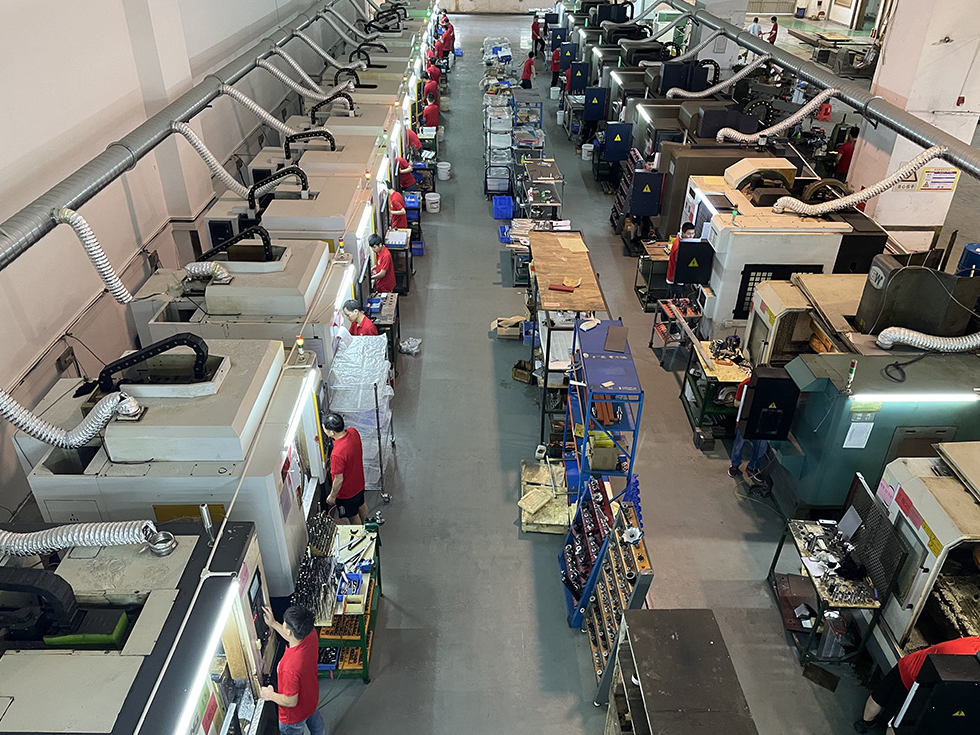
In-Depth Professional Process Technical Analysis
Step-by-Step Integrated Zorapid Production Workflow
Step 1: High-Power Fiber Laser Cutting
We deploy 6kW–12kW IPG fiber laser systems with auto nesting software
- Core function: Slit flat coil/sheet stock into blank outlines, cut mounting holes, slots, cutouts, tab features for rivet joints
- Precision specs: Kerf width ±0.03mm, flatness tolerance ±0.08mm per meter sheet
- Automated nesting: AI layout reduces raw material waste by 12–18% vs manual nesting at small shops
- Edge quality: Minimal burr; light automated deburr brush station post-cut to eliminate sharp edges before bending
Common competitor shortcut: Low-power 3kW lasers leave rough, dross-covered edges that ruin bend accuracy and rivet hole alignment.
Step 2: CNC Servo-Driven Precision Bending
8-axis CNC press brakes with real-time angle feedback sensors
- Programmed bend sequences locked to laser blank CAD datums; digital twin pre-simulates springback for automatic compensation
- Bend accuracy: ±0.1° angular tolerance, ±0.05mm dimensional bend position
- Tool library: Custom segmented dies for tight flanges, small inner radii, deep box bends, Z-brackets
- Springback calibration: Material-specific offset values stored in MES for aluminum, stainless, cold rolled steel individually
Competitor flaw: Manual gauge brakes with no springback compensation—bend angles drift, rivet hole positions shift out of alignment for assembly.
Step 3: Automated Robotic Riveting & Solid Assembly
Dual robotic rivet cells for blind rivets, solid rivets, self-clinching studs, standoffs, nut fasteners
- Pre-positioned laser-cut alignment holes act as perfect datums for robot vision
- Servo-controlled rivet force monitoring: Auto-adjust compression pressure per material thickness to avoid sheet dimpling or cracked panels
- 100% post-rivet pull-test sampling for critical load-bearing assemblies
- Mixed fastener batches handled in one cell without manual tool change downtime
Most separate rivet subcontractors receive bent parts with inconsistent hole spacing; manual hand riveting creates uneven clamping force and loose joints under vibration.
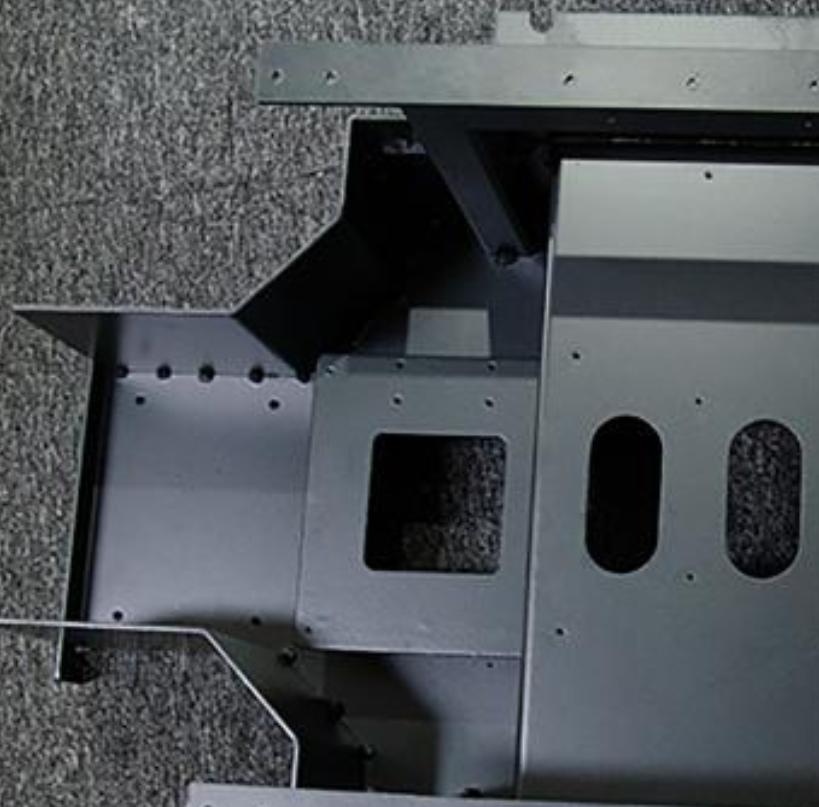
Step 4: Unified In-Process Quality Loop (Unique to One-Stop Zorapid)
Every blank carries a unique batch barcode tracked across laser → bend → rivet → finishing. If laser dimensional drift occurs, bending programs auto-adjust in real time; bent dimension deviations trigger minor laser blank rework before riveting starts. Multi-supplier chains cannot correct cross-process errors mid-run.
Competitor Service Model Performance Table
| Supplier Setup | Process Coverage | Average Assembly Fit Defect Rate | Cross-Process Tolerance Stack-Up | Material Waste Rate |
|---|---|---|---|---|
| Separate 3 standalone vendors (Cut / Bend / Rivet) | Split outsourced | 5.2%–8.7% | ±0.25mm cumulative drift | 22–28% |
| Mid-tier shop (Cut + Bend only, rivet outsourced) | Two in-house, one subcontracted | 2.1%–4.0% | ±0.14mm drift | 16–21% |
| Zorapid fully integrated one-stop line | Laser + CNC Bend + Robotic Rivet + QA | 0.4%–0.9% | ±0.06mm total max stack | 8–12% |
Hard Challenges Competitors Cannot Resolve — Zorapid Custom Integrated Solutions
Challenge 1: Large Multi-Panel Enclosures with 20+ Rivet Joints, Strict Datum Alignment
Competitor Failure: Cut blanks from shop A, bent at shop B, riveted at shop C; datum points shift across handoffs, panels gap 0.3–0.6mm, OEM rejects full batches.
Zorapid Solution: Single digital twin CAD file drives laser, bend, and robot rivet coordinates; unified zero-datum origin for the entire enclosure assembly. Robots scan laser-etched datum marks pre-riveting to auto-correct minor bend offset.
Result: Gap tolerance locked under 0.08mm across full cabinet frame assemblies.
Challenge 2: Thin Gauge Aluminum (0.8–1.2mm) Prone to Dimpling & Buckling During Riveting
Competitor Failure: Generic fixed rivet force crushes thin aluminum sheets, creates visible dents on cosmetic exterior housings; rework grinding ruins anodizing prep.
Zorapid Fix: Material-thickness programmed servo rivet pressure; backup support dies matched to panel geometry during compression; low-profile blind rivets for visible exterior surfaces. No cosmetic deformation even on 0.8mm Al sheets.
Challenge 3: Mixed Material Assemblies (Stainless Support Frames + Aluminum Outer Casings)
Competitor Failure: Separate vendors use different bend springback offsets, rivet hole diameters mismatched between steel and aluminum blanks; fasteners seize or fail pull-strength tests.
Zorapid Fix: MES stores separate laser kerf, bend compensation, rivet hole size parameters for each alloy in one project file; robot swaps rivet feeders automatically for stainless vs aluminum joint sections, batch pull-test records archived for audit.
Challenge 4: High-Vibration EV/Automotive Brackets Requiring Fatigue-Resistant Rivet Joints
Competitor Failure: Hand riveting delivers inconsistent clamp load; joints loosen after thousands of vibration cycles, field failure risk.
Zorapid Fix: Robotic closed-loop force-displacement riveting; every fastener records compression curve data; extra reinforced tab geometry from laser cut design tweaks via DFM before production launch.
Challenge 5: Low-Volume Prototype Runs (10–50 units) Where Multi-Vendor Setup Fees Kill Budget
Competitor Failure: Three separate minimum setup charges for laser, bend, rivet push small-batch costs up 40–60%.
Zorapid Fix: Consolidated single setup fee for full three-process workflow; shared program library reuses CAD offsets across prototype and future mass batches with no extra reprogramming cost.
Applicable Sheet Metal Materials + Direct Performance Comparison
Covers our most run alloys for laser/bend/rivet fabrication, with process behavior and Zorapid quality benchmarks
| Material Grade | Common Thickness Range | Laser Cut Edge Quality | CNC Bend Springback Level | Rivet Joint Strength (Relative) | Zorapid Typical Defect Rate | Best Use Case |
|---|---|---|---|---|---|---|
| 5052 Aluminum | 0.8–6.0mm | Excellent, dross-free | Medium (easy to compensate) | High | 0.42% | EV battery housings, telecom enclosures, light cabinet frames |
| 6061-T6 Aluminum | 1.5–8.0mm | Very clean | High springback | Very high tensile | 0.51% | Structural automation support brackets |
| 304 Stainless Steel | 0.5–5.0mm | Smooth, minimal oxide | Low springback | Excellent corrosion + joint strength | 0.63% | Medical equipment trays, food machinery cabinets, marine hardware |
| 316 Stainless Steel | 1.0–4.0mm | Premium finish | Low | Superior salt-spray resistance | 0.70% | Offshore, chemical, sterile medical devices |
| SPCC Cold Rolled Steel | 0.6–10mm | Good, light burr | Low | High raw strength | 0.38% | Low-cost industrial control boxes, machinery guards |
| Galvanized GI Steel | 0.8–4.0mm | Zinc spatter manageable with laser parameters | Low | Good, no rust base | 0.45% | Outdoor electrical enclosures, construction brackets |
Key Material Process Rules:
- Aluminum needs higher laser power to avoid reflective cut defects; Zorapid uses anti-reflection laser lens tuning standard for Al
- Stainless requires nitrogen assist gas for mirror-smooth edges (budget shops use cheap oxygen, creating rough oxidized edges)
- Harder tempers (6061-T6) receive extra bend springback pre-compensation in CAM simulation to prevent angle overshoot
- Thin gauges (<1mm) always run low-pressure robotic riveting with backing dies to stop panel buckling
Real Customer Case Study
Case 1: US EV Tier 1 Battery Pack Enclosure Assembly
Project Scope: 5052 aluminum 2-piece enclosure frame, 14 rivet joints per unit, total batch 15,000 assemblies, critical flatness ±0.1mm, vibration fatigue certification required
Previous Multi-Vendor Pain: Laser shop cut blanks, bending subcontracted out, third party handled riveting; total assembly defect rate 6.4%, 11-day delivery delay, three separate inspection reports to reconcile for IATF 16949 audit.
Zorapid One-Stop Execution Steps
- Unified digital twin simulation: Laser blank layout, bend springback offset, rivet robot path all validated in one CAD environment
- 12kW fiber laser nitrogen cutting, automated deburr of all hole/edge features
- 8-axis CNC brake with 6061/5052 calibrated bend profiles, real-time angle feedback
- Robotic blind rivet cell with programmed low-pressure compression for thin aluminum panels
- Full batch pull-test sampling, flatness CMM inspection, consolidated IATF traceability documentation
Measurable Outcomes
- Final assembly reject rate dropped to 0.39%
- Total lead time cut from 37 days (3 vendors) down to 14 days
- Total landed unit cost reduced 21% by eliminating multiple setup fees and rework labor
- Passed OEM vibration fatigue testing on first submission, full serialized batch logs provided
Your Production Pain Points → Zorapid Tailored One-Stop Solutions
Pain 1: Managing multiple suppliers for cutting, bending, riveting wastes hours of engineering/procurement time
Solution: Single point English-speaking project engineer, one PO, one consolidated inspection report, unified delivery shipment
Pain 2: Tolerance stack-up between separate processes causes gaps, misaligned rivet holes, scrapped assemblies
Solution: Single digital CAD datum across laser/bend/robot rivet; in-line barcode QA corrects minor deviations before next production stage
Pain 3: Thin aluminum/stainless panels dent or buckle during riveting from uncalibrated manual force
Solution: Servo robotic riveting with material/thickness-specific pressure curves and geometric support dies
Pain 4: Small prototype batches hit inflated costs from multiple vendor minimum setup charges
Solution: Combined single setup fee for full laser+bend+rivet workflow, prototype programs saved for future mass scale-up
Pain 5: Vibration-critical structural brackets suffer inconsistent rivet clamp load from hand assembly
Solution: Closed-loop force-monitored robotic riveting with pull-test QA sampling and archived force curve records
Pain 6: Mixed stainless/aluminum assemblies have mismatched hole sizes and bend offsets across subcontractors
Solution: Central MES system stores alloy-specific cutting, bending, fastener sizing parameters in one project file
2026 Global Industry Data & Future Trend Analysis
One-Stop vs Multi-Vendor Sheet Metal Cost & Quality Benchmark Table
| Production Model | 2026 Average Assembly Defect % | Average Total Lead Time | Total Project Cost Premium vs Base | Market Share Forecast 2026 |
|---|---|---|---|---|
| Three split standalone vendors | 5.8% | 32–48 business days | Baseline 100% | 37% (small low-margin consumer metal parts) |
| Dual-process shop (cut+bend, rivet outsourced) | 2.9% | 20–32 business days | 92% | 41% (mid-tier industrial machinery) |
| Full integrated one-stop (Zorapid model) | 0.6% | 10–20 business days | 85–90% (lower total via less rework/setup) | 22% (EV, medical, aerospace precision OEMs, fast-growing segment) |
Key 2026–2030 Industry Trends
- OEMs Rapidly Consolidate Sheet Metal Supply Chains: By 2028, 63% of North American/European EV and medical OEMs will phase out multi-vendor sheet metal chains to cut quality risk and admin overhead; one-stop integrated manufacturers capture most high-value contracts.
- Robotic Riveting Replaces Hand Assembly for Load-Bearing Parts: Labor shortages push automated rivet cells to become standard for medium/high volume; shops relying fully on manual riveting lose tolerance consistency bids.
- Digital Twin Pre-Simulation Mandates Rise: IATF 16949 and ISO 13485 increasingly require pre-production virtual validation of cut, bend, and assembly steps—only one-stop facilities can run full unified simulation efficiently.
- Thin-Gauge Lightweight Alloys Dominate EV Demand: 0.8–1.5mm 5052/6061 aluminum enclosures grow 18% annually; precision low-force riveting becomes a non-negotiable capability.
- Total Cost of Ownership (TCO) Overtakes Raw Part Price: Procurement teams now calculate rework, downtime, and admin labor into budgets—Zorapid’s low-defect one-stop model delivers superior long-term TCO despite modest base part price parity.
Core Zorapid Application Scenarios for Laser + Bend + Rivet Fabrication
- EV & New Energy Hardware 5052 aluminum battery pack enclosures, inverter chassis, charging station brackets, thermal shield frames with riveted support rails
- Medical Sterile Equipment 304/316 stainless instrument trays, diagnostic device housings, hospital cart frames, FDA-compliant riveted assembly
- Industrial Automation & Robotics SPCC/6061 structural mounting brackets, control cabinet frames, machine safety guard assemblies
- Telecom & Server Infrastructure Lightweight aluminum rack enclosures, heat sink support frames, outdoor galvanized electrical boxes
- Marine & Offshore Hardware 316 stainless corrosion-resistant pump housings, seawater-rated riveted structural fittings
- General Machinery & Packaging Equipment Mild steel machine bases, conveyor frames, protective housing assemblies for production lines
Delivery Speed Benchmarks & Production Timeline
Standard Batch Lead Time Comparison (15,000 unit aluminum EV enclosure reference)
| Supplier Structure | Full Workflow Lead Time | Rework Delay Risk Window | Consolidated QA & Docs |
|---|---|---|---|
| Three split vendors | 34–42 days | 8–14 day hold for fit rework | Three separate report sets |
| Dual-process shop (rivet outsourced) | 21–29 days | 3–7 day minor rework lag | Two document bundles |
| Zorapid integrated one-stop | 12–18 days | <1 day minor touch-up risk | Single full audit-ready package |
Standard Zorapid Step-by-Step Production Timeline
- DFM digital twin simulation & program setup: 1 business day
- AI nested fiber laser cutting + automated deburr: 2–4 days
- CNC precision bending with springback compensation: 2–3 days
- Robotic rivet assembly + pull-test sampling: 2–3 days
- Optional finishing (anodize, powder coat, passivation) + final CMM inspection: 1–3 days
Expedited 7–9 day fast-track rush service available for critical OEM launch timelines; no quality shortcuts to speed up laser/bend/rivet calibration cycles.
Key Benefits of Partnering With Zorapid for One-Stop Sheet Metal Fabrication
- Single Source Accountability: If fit defects arise, Zorapid takes full ownership—no finger-pointing between disconnected subcontractors
- Unified Digital Twin Design Validation: Laser blank, bend geometry, rivet assembly simulated fully before any metal cutting begins to eliminate design flaws early
- Automated Robotic Riveting Consistency: Far tighter joint strength and dimensional repeatability vs manual hand riveting labor
- Full Certification Stack In-House: ISO9001, IATF16949 automotive, ISO13485 medical; full material mill certs, pull-test records, SPC dimensional logs for export audits
- Lower Total Project Spend: Fewer setup fees, minimal rework scrap, less procurement engineering admin time cuts overall TCO by 15–25% vs multi-vendor sourcing
- Seamless Scale-Up Path: Prototype CAD programs directly transfer to mass production lines with zero reprogramming downtime
- In-House Secondary Finishing: Powder coating, anodizing, passivation, laser marking coordinated alongside core fabrication steps
- Global Door-to-Door Shipping Support: Complete customs documentation, consolidated air/sea freight coordination to EU, US, and worldwide OEM warehouses
Summary
Splitting laser cutting, CNC bending, and riveted assembly across multiple suppliers creates tolerance drift, fit defects, costly rework, and massive coordination overhead for your engineering and procurement teams. Traditional two-process shops still rely on outsourced riveting, leaving a critical assembly step outside their quality control loop.
Zorapid’s fully integrated one-stop sheet metal line unifies high-power fiber laser cutting, servo precision bending, and force-controlled robotic riveting under a single digital twin and quality management system. We deliver drastically lower assembly reject rates, shorter consolidated lead times, simplified audit traceability, and superior total cost of ownership for aluminum, stainless, and cold steel sheet metal builds across EV, medical, automation, and telecom sectors.
If you have a sheet metal assembly design and want a free DFM simulation review plus formal lead time/cost quote, our English-speaking engineering team delivers a full assessment within 2 business days after receiving your STEP/CAD files and batch quantity targets.
FAQ
Does one-stop fabrication raise my upfront per-part price compared to cheap standalone laser shops?
Base unit pricing is nearly comparable, but total project cost is reliably 15–25% lower when accounting for multiple setup fees, rework scrap, engineering admin labor, and shipment coordination across three vendors. We provide line-item TCO breakdowns upfront for full transparency.
What minimum order quantity do you accept for laser+bend+rivet assemblies?
No strict minimum MOQ; we support 1-unit prototype test pieces all the way up to 100,000+ mass production batches with consistent robotic rivet quality. Small batches receive consolidated single setup pricing to avoid inflated small-order costs.
Can you handle self-clinching studs, standoffs, and nuts alongside blind/solid rivets?
Yes, our robotic rivet cell swaps fastener feeders automatically for blind rivets, solid rivets, clinch hardware, and threaded inserts in the same assembly run; we perform push/pull load testing for every fastener type.
How accurate is your bend springback compensation across different aluminum tempers?
Our MES database stores calibrated springback offset values for 5052, 6061-T6, 304, 316, SPCC, and galvanized steel across 0.5mm–10mm thicknesses; pre-simulation adjusts angles before bending to hold ±0.1° angular tolerance consistently.
Can you integrate secondary operations like powder coating or anodizing into the one-stop workflow?
Fully integrated; finishing runs immediately post rivet assembly without transporting parts to external coating vendors, eliminating transit damage risks and extra lead time delays.
What documentation is included for US/EU regulatory audits?
Material mill test certificates, laser cutting parameter logs, bend program records, robotic rivet force/cycle data, pull-test QA reports, final CMM dimensional SPC data, RoHS compliance paperwork, and batch serialization traceability archives.
If my design has complex multi-angle folded geometries, can the digital twin catch fit issues before production?
Our full assembly simulation stacks laser blank dimensions, bend folded positions, and rivet joint placement in one virtual model; we flag gap risks, hole misalignment, and thin-panel buckling points and send DFM tweak recommendations free of charge pre-production.