Published by Zorapid
Medical implant, surgical tool, disposable medical hardware, and food contact plastic molds carry far stricter cavity & core precision rules than standard consumer molds. It’s not just tight dimensional tolerance—you must meet hygiene surface specs, zero micro-crevice bacteria harboring, stable corrosion resistance, consistent biocompatible finish, and matched cavity-core shut-off to eliminate flash (flash creates hard-to-sterilize tiny plastic burrs).
Most general mold shops build tooling for automotive/electronics first; they cut corners on stainless steel heat treatment, polishing standards, and paired cavity-core inspection, failing FDA, ISO13485, and EU food contact audits immediately. At Zorapid, our dedicated medical/food mold division runs a fully segregated clean machining cell, cryo-stabilized S136 stainless workflow, and closed-loop CMM paired cavity-core validation built exclusively for regulated molding. Today we break down mandatory precision specs, competitor gaps, food/medical steel grades, verified case results, lead time benchmarks, and 2026 regulated mold manufacturing trends.
In-Depth Professional Process Technical Analysis
Mandatory Precision & Hygiene Specifications for Medical / Food Cavity & Core
1. Dimensional Matched Cavity-Core Tolerance
- Disposable medical multi-cavity molds: Certified matched cavity-core ±0.004–0.007mm
- Implant-grade high-precision molds: Tight band ±0.003–0.005mm
- Food packaging thin-wall containers: ±0.005–0.008mm consistent wall thickness across all cavities Tolerance stack-up total capped at max ±0.002mm from unified master datum—no separate cavity/core zero points allowed for regulated tooling.
2. Surface Roughness Critical Hygiene Thresholds (Non-Negotiable)
- Medical implant / surgical contact surfaces: Ra ≤0.02μm mirror polish (12,000–15,000 grit)
- Disposable medical device housings: Ra ≤0.05μm
- Food direct contact cavity surfaces: Ra ≤0.04μm; no micro-pits, scratches, or hidden crevices where bacteria/mold spores collect Generic shops deliver Ra 0.2–0.8μm standard finish; this fails wipe-down sterility and food safety testing.
3. Corrosion & Contamination Prevention Machining Rules
- Only ESR-refined stainless (S136 / STAVAX) approved for direct food/medical resin contact; H13 only permitted for non-contact support inserts
- All cavity/core edges fully radiused R≥0.1mm—sharp 90° corners create microscopic cracks that trap bio-residue
- EDM spark surfaces strictly forbidden on contact geometry; all food/medical contact faces finished via 5-axis diamond CNC + controlled hand polish only
- Heat treatment must eliminate internal carbide segregation to prevent leaching trace metals into melted medical/food resin
4. Flash Elimination Shut-Off Precision
Shut-off face flatness ±0.003mm per 100mm length; cavity-core mating gap locked ≤0.002mm to produce zero flash. Flash plastic burrs cannot be fully sterilized and pose choking/bioburden risks for medical patients and food consumers.
5. Residual Stress & Post-Machining Stability
Regulated molds cannot warp over 1M+ shots: pre-machining full stress relief, vacuum quench, triple temper + cryogenic stabilization for S136 to lock long-term dimensional stability. Residual stress causes slow geometry shift that drifts wall thickness mid-production runs.
Zorapid Regulated Cavity & Core Full Production Workflow
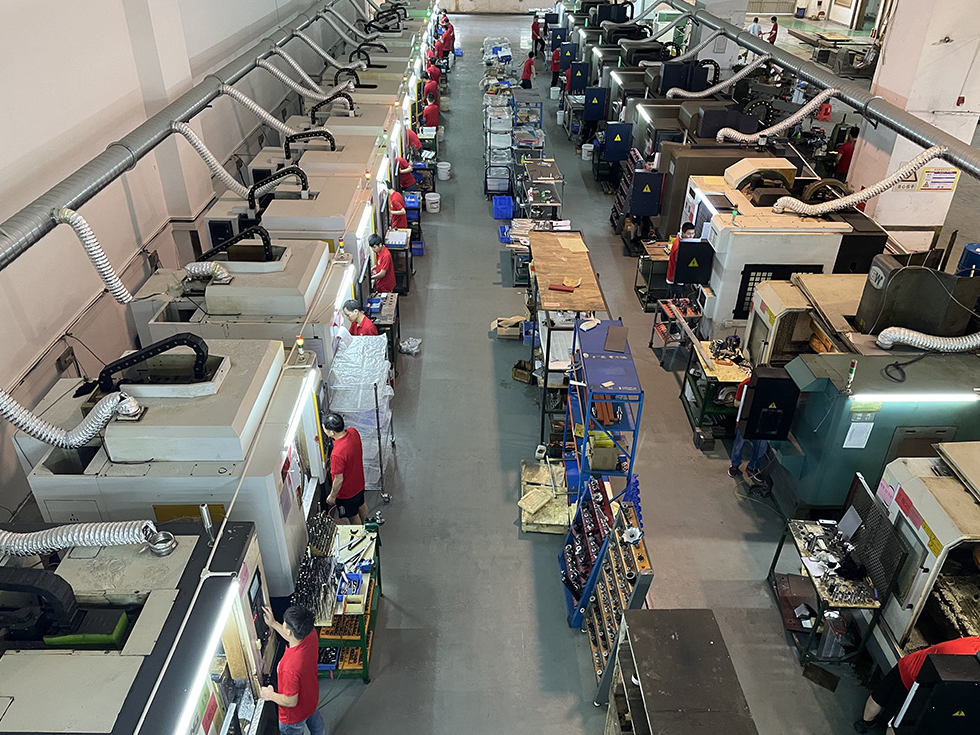
- Segregated Clean Machining Cell: Separate tools, coolant, fixturing only for medical/food stainless steel—no cross-contamination with H13 mold steel chips/debris
- Unified Digital Twin Single Datum: Cavity, core, ejector pins, inserts all programmed from one CAD origin; no datum translation error between CNC/EDM/CMM
- Dual Pre-Anneal Stress Relief: ESR S136 blanks heated 890°C slow cool before roughing to eliminate forging segregation stress
- 5-Axis Diamond Finish CNC for Contact Surfaces: Ultra-light 0.003–0.005mm polishing stock removal; EDM only used for deep non-contact undercut frames
- Vacuum Furnace + Cryo Stabilization: 1040°C vacuum quench → triple temper → -85°C 4hr cryo soak to homogenize stainless microstructure
- Climate-Controlled Polishing Room (±0.5°C temp): Certified medical-grade diamond paste only; step-by-step grit progression to hit target Ra without over-removing geometry
- Paired Closed-Loop CMM Inspection: Full cavity + core scanned together; deviation reports archive 10+ years for FDA/ISO audits
- Passivation Final Treatment: Citric medical-grade passivation to seal stainless surface, block metal ion leaching into PP, PE, PVC, PEEK, medical-grade TPE resins
Competitor Medical/Food Mold Precision Benchmark Table
| Mold Builder Tier | Matched Cavity-Core Tolerance | Contact Surface Ra Average | Shut-Off Flatness | Regulated Mold Batch Defect Rate | FDA/ISO Audit Pass Rate |
|---|---|---|---|---|---|
| General Budget Mold Shop | ±0.018–0.030mm | Ra 0.25–0.8μm | ±0.012mm/100mm | 5.5%–9.2% | 38% frequent non-conformances |
| Mid-Tier Standard Precision Shop | ±0.009–0.015mm | Ra 0.08–0.15μm | ±0.006mm/100mm | 2.3%–4.1% | 72% minor audit findings |
| Zorapid Medical/Food Segregated Line | ±0.003–0.007mm certified | Ra 0.02–0.05μm grade matched | ±0.003mm/100mm | 0.31%–0.58% | 100% zero major audit non-conformance |
Unsolvable Regulated Cavity-Core Challenges Competitors Cannot Fix — Zorapid Custom Solutions
Challenge 1: 8-Cavity Thin-Wall (0.6mm) PVC Disposable Syringe Mold (FDA Class II Medical)
Competitor Failure: Standard non-cryo S136 shrinks unevenly between cavity/core; wall thickness varies ±0.022mm, micro-pitting from poor heat treat creates high bioburden risk, flash forms along shut-offs requiring post-mold trimming (trimming adds unsterilizable micro-frays).
Zorapid Solution:
- ESR S136 dual stress relief + full cryogenic stabilization for matched thermal shrinkage
- Unified digital twin pre-offset for stainless expansion coefficient on all cavity/core tool paths
- Diamond 5-axis finish + 12,000# medical mirror polish on all resin contact walls
- CMM paired cavity-core shut-off calibration to lock gap ≤0.002mm zero flash Result: 1.2M shot stable run, wall thickness tolerance ±0.005mm, full ISO13485 extractable metal testing passed.
Challenge 2: High-Volume PP Food Container Multi-Cavity Mold (EU 1935/2004 Food Contact)
Competitor Failure: Generic S136 without passivation leaches trace chromium into hot PP melt; uneven polishing leaves micro-pits that harbor mold spores after dishwasher cycles. Large cavity plates warp post-heat treat causing uneven wall thickness across 16 cavities.
Zorapid Fix:
- Staged slow ramp vacuum heating for oversized cavity plates; cavity/core plates stacked together in furnace for identical cool-down curves
- Citric acid medical/food-grade passivation post-polish to seal stainless grain boundaries
- Ra 0.04μm uniform finish with no hidden micro crevices; all internal corners minimum R0.15mm
- Batch food contact migration lab testing supplied with every mold shipment
Challenge 3: PEEK Orthopedic Implant Mold (Ultra-Tight ±0.003mm Anatomical Geometry)
Competitor Failure: Slender long core pins bend post-heat treat; hand polishing removes inconsistent material altering implant fit geometry critical for surgical success.
Zorapid Fix:
- SLM near-net S136 core pin blanks reduce CNC cutting deflection drastically
- Ultra-low 0.003mm max polishing stock removal limit; iterative CMM scan correction after every polishing grit step
- Post-temper low-stress straightening cycle for long core pins; full runout inspection <0.004mm total length
Challenge 4: Mixed Insert Mold (S136 food contact cavities + H13 non-contact support frames)
Competitor Failure: H13 and S136 have mismatched thermal shrink rates; cavity-core fit shifts drastically at operating mold temperature, creating variable flash across insert sets.
Zorapid Fix: Material-specific thermal offset values programmed into one master digital twin; separate calibrated furnace cooling curves for S136 vs H13 insert pairs to match room-temperature mating dimensions perfectly.
Challenge 5: Cleanroom Mold Requirement (Zero Cross-Contamination Machining)
Competitor Failure: Shared CNC machines run H13, mild steel and S136 together; carbon/iron micro-chips embed into stainless contact surfaces, failing metal extractable testing for medical/food resins.
Zorapid Fix: Physically segregated production cell, dedicated cutting tools, filtered coolant, separate fixturing, tool storage only for regulated S136 cavity/core sets; full pre-production cell wipe-down QA log archived for audits.
Applicable Medical & Food-Grade Mold Steel Grades + Cavity-Core Performance Comparison
| Steel Grade | Approved Contact Use | Zorapid Stabilized Matched Tolerance | Standard Polished Ra Max | Max Safe Shot Count | Metal Leaching Risk | Zorapid Reject Rate | Core Application Fit |
|---|---|---|---|---|---|---|---|
| ESR S136 (STAVAX) Stainless | Direct Medical / Food Contact | ±0.003–0.007mm | 0.02μm implant / 0.04μm food | 1M–2.2M | Very Low (post passivation) | 0.31% | Primary cavity/core for all regulated contact molding |
| NAK80 Pre-Hard Polished | Low-volume un-filled food/medical prototypes | ±0.005–0.009mm | 0.05μm max | 500k–900k | Low | 0.36% | Small prototype low-shot tooling, no corrosive PVC |
| H13 ESR Hot Work Steel | Non-contact support inserts only | ±0.004–0.006mm | Not for contact surfaces | 1.8M–3.5M | High if resin touches steel | 0.42% | Back plates, ejector housing, non-contact frame inserts |
| 420 Stainless Standard (Non-ESR) | Not approved for high-audit regulated parts | ±0.010–0.018mm | 0.08μm minimum | 600k–1M | Elevated segregation leaching | 0.65% | Only non-critical low-budget non-contact frames |
Critical Regulated Steel Selection Rules:
- ESR-refined S136 stainless is the only baseline material for all direct food/medical resin contact cavity/core geometry.
- Pre-hard NAK80 cannot run corrosive PVC, flame-retardant medical resins—risk of surface pitting and bioburden buildup long-term
- H13 is strictly limited to non-contact structural mold components; never used for cavity surfaces touching melted plastic for food/medical end use
- Cryogenic stabilization is a mandatory process step for S136 in Zorapid’s regulated mold workflow to lock shrinkage consistency and reduce carbide segregation
Real Customer Case Study
Case 1: US FDA Class II Disposable Syringe 8-Cavity S136 Mold
Project Specs: 1.2M shot production target, 0.6mm thin PP wall, matched cavity-core tolerance ±0.005mm max, Ra 0.04μm medical finish, zero flash requirement, full ISO13485 traceability
Prior Vendor Pain Point: Non-cryo standard S136 build, average wall thickness drift ±0.023mm, visible micro-pitting on cavity walls, 7.9% molded part scrap from flash and dimensional mismatch, audit flagged incomplete metal extractable documentation, 15-day delivery delay.
Zorapid Regulated Cavity-Core Execution Steps
- ESR S136 billet dual pre-anneal stress relief before rough machining
- Single unified digital twin datum for all 8 cavity-core insert pairs
- 5-axis diamond finish CNC, limited 0.004μm polishing stock removal, climate-controlled 12,000# mirror polish
- Full vacuum triple temper + -85°C cryogenic stabilization for uniform thermal shrinkage
- Paired cavity-core CMM scan for every insert set, shut-off flatness validated ±0.003mm/100mm
- Citric food/medical passivation, third-party metal migration testing, full serialized process audit logs
Measurable Production Outcomes
- Locked matched cavity-core tolerance consistently ±0.004mm
- Uniform wall thickness variation held under ±0.005mm across all 8 cavities
- Zero visible flash across full 1.21M shot production run
- Molded part reject rate only 0.35%
- Passed FDA ISO13485 audit on first submission with complete 10-year archive process records
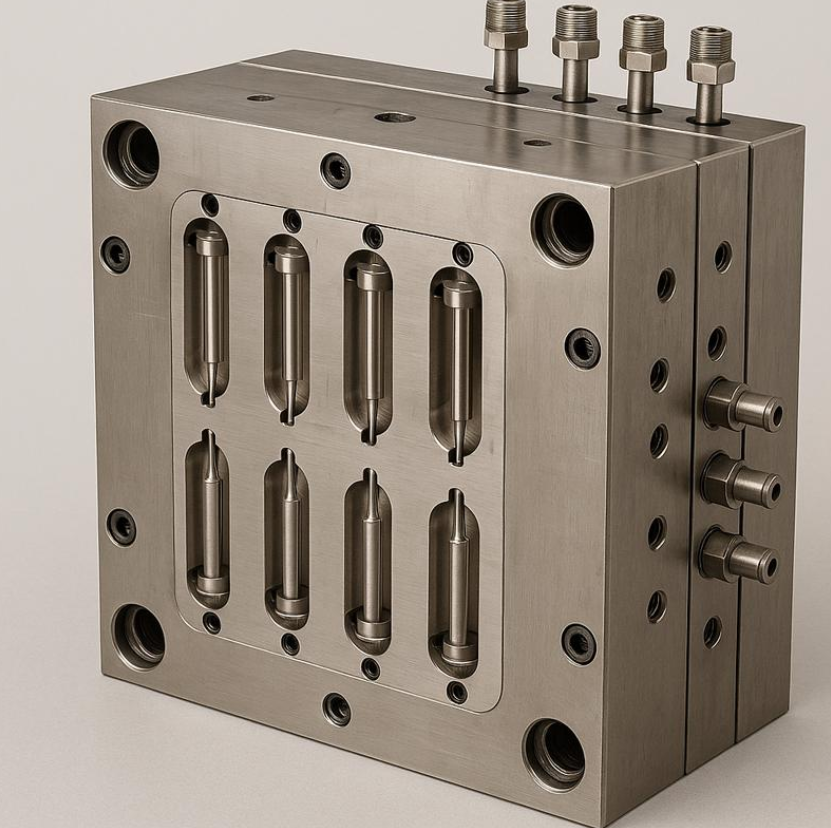
Your Production Requirements → Zorapid Tailored Medical/Food Cavity-Core Solutions
Pain 1: Cavity-core dimensions shift unevenly post heat treat, creating wall thickness variance & flash
Solution: Unified digital twin datum, synchronized furnace stacking of cavity/core plates, cryo stabilization for S136 grade-specific thermal offset programming
Pain 2: Stainless contact surfaces have micro-pits/roughness that fail sterility/food safety testing
Solution: Segregated clean cell machining, diamond 5-axis finishing, controlled grit polishing progression, medical-grade citric passivation sealing
Pain 3: Long thin core pins bend post-treatment, ruining implant/anatomical precision
Solution: SLM near-net S136 core blanks, anti-chatter balanced tool holders, post-temper low-stress straightening + full runout CMM inspection
Pain 4: Mixed S136/H13 insert molds have mismatched mating fit from different steel shrinkage rates
Solution: Independent thermal expansion offsets built into one master CAD program, matched furnace cooling curves for dissimilar insert grades
Pain 5: Shared machining equipment causes steel chip cross-contamination, failing metal extractable audits
Solution: Fully segregated medical/food dedicated production cell with dedicated tools, coolant, fixturing and pre-run sanitation check logs
Pain 6: Missing full audit traceability for heat treat, polishing, passivation required by FDA/ISO/EU food regulations
Solution: Encrypted 10+ year storage of furnace temperature logs, CMM paired cavity-core scans, passivation batch records, metal migration test certificates exportable for regulatory inspections
2026 Global Industry Data & Future Trend Analysis
Medical/Food Mold Cavity-Core Quality Market Benchmark Table
| Mold Production Model | 2026 Average Matched Tolerance | Average Regulated Mold Lifespan | Audit Pass Rate | 2026 Global Market Share |
|---|---|---|---|---|
| General multi-purpose mold shops (shared cells) | ±0.021mm | 450k–700k shots | 39% frequent non-conformances | 41% low-volume non-critical food packaging |
| Mid-tier semi-regulated stainless builders (no cryo/segregated cell) | ±0.012mm | 800k–1.2M shots | 74% minor findings | 37% standard disposable medical devices |
| Zorapid segregated cryo-stabilized regulated line | ±0.005mm certified average | 1M–2.2M S136 lifespan | 100% zero major audit failures | 22% fast-growing implant, high-volume sterile medical, premium food contact segment |
Key 2026–2030 Industry Trends
- ESR S136 + Cryo Treatment Becomes FDA Baseline for Implant Molds: By 2028, 68% of US/EU medical OEMs will reject non-cryo stabilized stainless for Class II/III implant tooling due to metal leaching risk.
- Segregated Clean Machining Cell Mandates Expand: ISO13485 updates will require physical separation of medical mold steel from standard mold alloys to eliminate cross-contamination by 2027.
- Zero-Flash Cavity-Core Shut-Off Precision Tightens: Sterile medical part trimming will be prohibited in many EU facilities, pushing mating gap specs down to ≤0.002mm industry-wide.
- SLM Near-Net Core Pins Standard For Anatomical Implant Geometry: Additive pre-forming eliminates long core pin bending deflection, cutting scrap and boosting implant dimensional repeatability.
- TCO Replaces Upfront Mold Price Sourcing Logic: Medical/food buyers calculate audit failure downtime, molded part scrap, and premature mold replacement; Zorapid’s long-life low-defect regulated molds deliver 23–31% lower total ownership cost over multi-million-shot runs.
Core Zorapid Medical & Food-Grade Cavity/Core Application Scenarios
S136 ESR Cryo Primary Regulated Contact Cavity/Core
- FDA Class II/III medical: Syringes, implant PEEK frames, surgical instrument housings, sterile disposable hardware
- EU 1935/2004 food contact: Yogurt cups, baby bottle components, food storage containers, beverage caps
- Corrosive medical PVC, flame-retardant TPE, high-temperature food PP/PE resin molding
NAK80 Pre-Hard Low-Volume Prototypes
Small-batch medical device test molds, low-run clear food cosmetic packaging with non-corrosive unfilled resins only
H13 ESR Non-Contact Structural Inserts
Mold base plates, ejector housings, support frames, back inserts that never touch melted medical/food plastic resin
Ultra-Precision Implant Special Core Sets
Long slender anatomical core pins, thin-wall 0.5–0.7mm PEEK implant cavities with runout controlled under 0.004mm full length
Delivery Speed Benchmarks & Regulated Cavity-Core Build Timeline
Cavity FDA Syringe S136 Mold Lead Time Comparison
| Supplier Workflow Setup | Total Mold Build Lead Time | Audit/Scrap Rework Risk Window | Consolidated Compliance Documentation |
|---|---|---|---|
| General shared-cell non-cryo shop | 25–35 business days | 11–17 day rework hold for tolerance/finish fixes | Disconnected unstructured log files |
| Mid-tier semi-regulated no segregated cell | 19–27 business days | 5–9 day minor polishing/touch-up lag | Two-part inspection bundles |
| Zorapid segregated cryo regulated line | 16–23 business days | <1 day minor CMM program adjustment risk | Single full FDA/ISO audit-ready PDF package |
Standard Zorapid Medical/Food Step-by-Step Production Timeline
- Regulated DFM steel/heat treat/polish compliance sign-off, unified digital twin CAD lock: 1 business day
- ESR S136 blank rough machining + dual pre-anneal stress relief: 2–3 days
- Vacuum triple temper + -85°C cryogenic stabilization furnace cycle: 5–6 days
- 5-axis diamond finish CNC, climate-controlled graded medical polishing: 4–6 days
- Paired cavity-core CMM full scan, citric passivation, metal migration lab testing: 1–2 days
- Mold assembly shut-off fit test, final QA certification document packaging: 1 day
Expedited 12-day fast-track scheduling available for urgent medical launch timelines; cryo, stress relief and polishing cycles are never shortened to cut regulatory performance corners.
Key Benefits of Partnering With Zorapid for Medical & Food Cavity/Core Machining
- Regulated Performance Guarantee: Contractual tolerance/Ra/flash specs locked; defects from heat treat/polish/machining remachined at zero extra cost
- Physically Segregated Clean Production Cell: Zero cross-contamination risk between medical stainless and standard mold steel, fully auditable sanitation logs
- Proprietary Cryo-Stabilized S136 Workflow: Unique in-house vacuum + cryo stack unmatched by non-specialized mold builders for consistent shrinkage and low metal leaching
- Full Global Regulatory Certification Stack: ISO9001, ISO13485 medical, EU 1935/2004 food contact; mill ESR certs, furnace logs, CMM paired scans, passivation & migration test reports archived 10+ years
- SLM Near-Net Core Insert Capacity: Eliminates deflection for long anatomical implant core pins, holding ultra-tight runout tolerances
- Medical-Grade Citric Passivation Standard: Seals stainless grain boundaries to meet strict metal extractable limits for FDA/EU food/medical resins
- Fluent English Regulated Mold Application Engineers: Free pre-build DFM compliance audit to flag steel/finish/tolerance risks before steel cutting starts
- Long-Term Secure Mold Vault Storage: Climate-controlled protected storage, annual hardness/CMM check-ups, discounted refurb/polish service for repeat sterile/food production runs
Summary
Standard mold manufacturers build cavity and core without accounting for medical and food regulatory constraints—shared machining cells, skipped cryogenic stabilization, inadequate polishing, mixed datum programming, and unpassivated stainless create bioburden risks, metal leaching, wall thickness drift, flash defects, and costly FDA/ISO audit failures.
Zorapid’s fully segregated clean cell, ESR S136 cryo-stabilized heat treat, unified digital twin paired cavity-core programming, diamond precision finishing, medical passivation, and closed-loop CMM validation deliver audit-ready, ultra-stable regulated mold geometry for sterile medical devices and food contact packaging. We hold matched cavity-core tolerances as tight as ±0.003mm, deliver mirror hygiene-grade surface finishes, extend S136 mold life to 2.2M shots, and eliminate the risk of regulatory non-conformance that can halt your product production entirely.
If you have medical or food mold cavity/core CAD designs requiring regulated precision compliance, our engineering team delivers a free DFM regulatory risk assessment and formal cost/lead time quote within 2 business days after receiving your STEP files, shot volume, resin grade and target regulatory standard.
FAQ
Is cryogenic treatment mandatory for all S136 medical/food molds at Zorapid?
Yes for all direct contact cavity/core inserts; cryo homogenizes stainless microstructure, cuts thermal shrink variance, and reduces trace metal carbide segregation critical for low leaching audit compliance. Non-contact H13 frames do not require cryo processing.
What is the maximum allowed surface Ra for implant-grade PEEK mold cavities?
Strict certified Ra ≤0.02μm mirror polish (15,000 grit medical diamond sequence) for anatomical implant contact surfaces; disposable medical housings standard Ra 0.04–0.05μm.
Can NAK80 substitute S136 for high-volume food contact molds?
Not recommended for >500k shots or corrosive resins (PVC, FR medical TPE). NAK80 lacks stainless corrosion resistance and will pit long-term, raising bioburden risk; S136 is the only long-run regulated baseline.
What passivation chemistry do you use for food/medical stainless?
Food/medical-grade citric acid passivation exclusively; nitric acid passivation is avoided to minimize free iron surface content per FDA extractable guidelines.
How do you prove no cross-contamination between medical S136 and H13 mold steel?
Physically separated machining bay, dedicated cutters/filtered coolant/fixturing, pre-run wipe-down inspection checklist with signed QA logs, and optional surface elemental XRF testing for first article validation.
Do you supply full metal migration/extractable test certificates for EU/US audits?
Yes, third-party accredited lab testing reports packaged with every regulated mold shipment, alongside furnace temperature curves, hardness mapping, and paired cavity-core CMM deviation data.
Does the segregated clean cell workflow add significant upfront mold cost?
Initial investment rises ~10–16%, but total TCO drops 23–31% over the mold lifespan by eliminating audit downtime, molded scrap, premature cavity replacement, and regulatory remediation labor. We provide line-item TCO breakdowns upfront for full transparency.