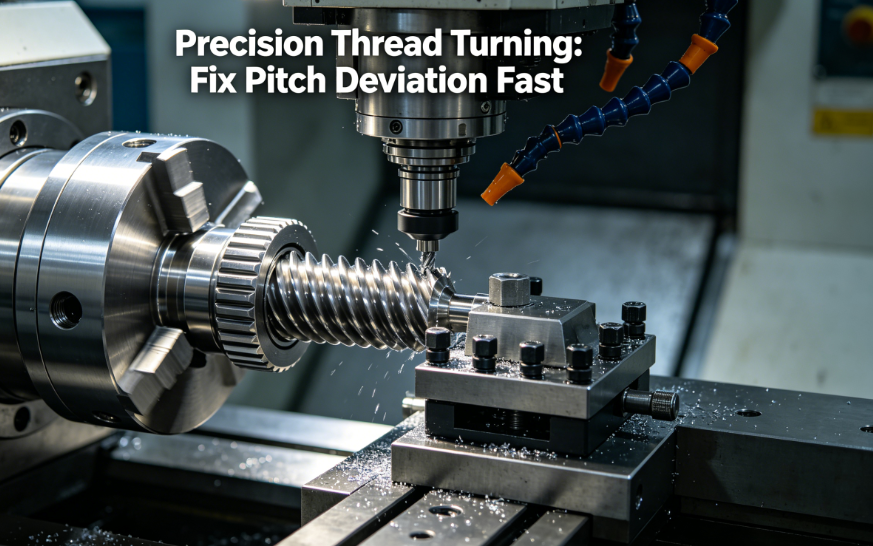
Precision Thread Turning: Fix Pitch Deviation Fast
Table of Contents
Published by Zorapid
If you’ve ever scrapped a batch of threaded parts because pitch drift ruined mating fit, you know how costly pitch deviation gets. Tiny feed sync errors, thermal expansion, or sloppy machine setup turn tight-tolerance medical, aerospace, or EV threads into scrap fast. Most shops patch issues with trial-and-error; Zorapid deploys a calibrated, closed-loop system to lock pitch accuracy instantly—even for exotic alloys and micro fine pitches.
Professional Process Technical Deep Dive
Root Causes of Pitch Deviation (Full Breakdown)
Pitch error = mismatch between spindle RPM and Z-axis feed rate, amplified by 6 critical failure points:
Axis Backlash Slop X/Z leadscrew wear creates positional lag on tool retract. A mere 0.005mm backlash shifts pitch by 0.003mm on 1mm pitch threads; micro M2×0.4 threads fail gauge instantly.
Spindle Encoder & Sync Belt Degradation Worn timing belts send flawed spindle speed signals to CNC; first 2–3 thread crests always fall out of tolerance without programmed lead-in buffer distance.
Thermal Drift (Biggest Production Killer) Continuous cutting heats spindles/leadscrews; metal expands 0.01–0.03mm per 10°C temp rise, stretching pitch over long workpieces (>100mm).
Tool Deflection & Wear Uncoated inserts flex under hard alloy cutting forces; worn tool tips produce uneven thread flanks and variable pitch across part length.
Poor Workholding Rigidity Thin-wall parts vibrate during threading, oscillating Z-position mid-cut and creating inconsistent pitch increments.
G-Code Programming Mistakes Incorrect thread cycle feed values, missing compensation lines, or uncalibrated tool offsets skew baseline pitch before a single cut.
Zorapid Fix Workflow (Fast Correction Protocol)
Pre-run laser calibration of X/Z backlash + real-time encoder signal validation
Jobs Competitors Cannot Handle + Zorapid Exclusive Solutions
Unsolvable Challenges for Standard Manufacturers
Ultra-fine micro pitch (M0.8–M1.4) thin-wall medical titanium implants Most lathes lack spindle sync stability for tiny thread profiles; vibration collapses thread crests, pitch drifts non-stop.
Zorapid Solution: Swiss-type 5-axis turning centers with 12,000RPM low-vibration spindles, diamond-coated micro inserts, vacuum zero-deflection workholding, pitch closed-loop feedback sensors mounted direct to Z-slide. Lock pitch tolerance ±0.0015mm for bone screw threads.
Long slender shafts (>250mm) Inconel 718 aerospace threaded studs Thermal expansion and shaft bend warp pitch along full length; competitors can only reliably machine <100mm Inconel threaded lengths.
Zorapid Solution: Steady rest hydraulic support + dual-sided thermal sensor array; CNC auto-adjusts feed rate point-by-point along shaft length to counteract expansion gradient. AS9102 certified pitch inspection reports for aerospace traceability.
PEEK/GF-PA66 high-temperature plastic precision threads Plastics melt/deform from cutting heat, pitch distorts post-machining due to moisture absorption; shops either overheat threads or run too slow for accuracy.
Zorapid Solution: Cryogenic compressed air cooling system, sharp PCD inserts, low-friction threading cycles with slow incremental passes; post-machining climate-controlled 24hr stabilisation bake to lock final pitch dimensions.
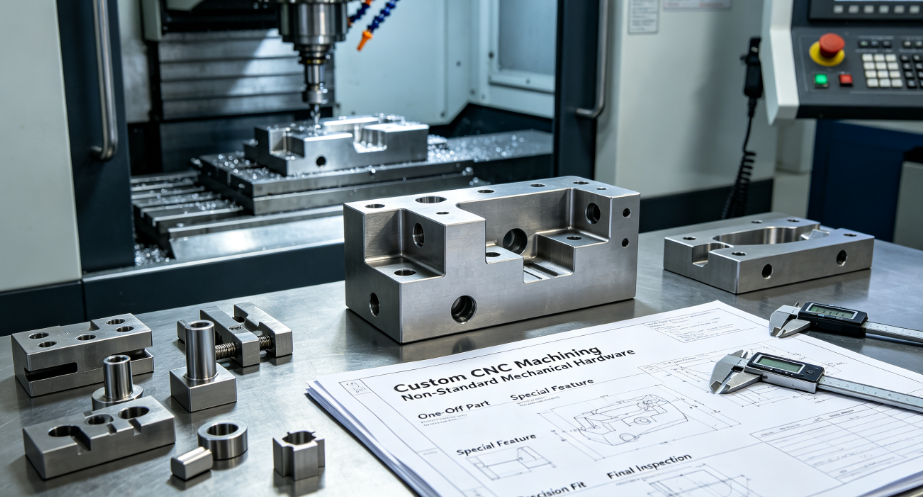
Reverse custom non-standard lead threads (non-ISO/UN metric/imperial hybrid pitches) Generic CNC programming templates fail bespoke lead ratios; most shops refuse low-volume custom thread development due to setup time risk.
Zorapid Solution: In-house G-code engineering team builds fully custom threading cycles with simulated pitch validation pre-production; 1–2 day setup for one-off prototype custom leads.
Applicable Materials + Direct Performance Comparison
We machine precise pitch threads across 18+ metal & high-performance polymer grades; below are our most requested industrial materials with threading behavior benchmarks:
High-Strength Metals for Thread Turning
Material Grade
Thread Pitch Stability
Machining Challenge
Zorapid Optimized Tooling
Typical Pitch Tolerance Achieved
Ti-6Al-4V (Titanium)
Excellent low expansion
Low thermal conductivity, work hardening
Ti-specific coated carbide inserts
±0.002 mm
Inconel 718
Very stable at high temp
Extreme tool wear, high cutting force
CBN full-profile inserts
±0.0025 mm
17-4PH Stainless
Good rigidity
Moderate work hardening
TiAlN coated carbide
±0.002 mm
7075-T6 Aluminum
Top machinability, mild thermal growth
Fast chip formation, minor expansion
Uncoated sharp carbide
±0.0018 mm
H13 / S136 Tool Steel
Ultra dimensionally stable
High hardness (48–52HRC)
Ceramic threading inserts
±0.0025 mm
Brass C36000
Best ease of threading
Minimal deflection
Standard carbide inserts
±0.0015 mm
High-Performance Engineering Plastics
Polymer Grade
Pitch Stability Notes
Risk of Deviation
Zorapid Process Fix
Final Tolerance
Virgin PEEK
Stable post-stabilization
Heat melt, slow creep
Cryo air cooling + post bake
±0.003 mm
GF-PA66 30% Glass Filled
Moderate rigidity
Abrasive filler wears tools fast
PCD diamond inserts
±0.0035 mm
POM (Delrin/Acetal)
Very low friction, clean cuts
Moisture swelling
Low-humidity machining cell
±0.003 mm
PTFE
Flexible, prone to deformation
Thread crest collapse
Ultra-light depth passes, sharp inserts
±0.004 mm
Key advantage Zorapid holds: We tailor spindle speed, feed rate, coolant/cooling method, and insert coating per material—one-size-fits-all parameters are never used, eliminating material-induced pitch drift entirely.
Real-World Case Study
Case 1: Medical Ti-6Al-4V Spinal Bone Screws (M1.2×0.25 Micro Pitch)
Client Pain Point: Previous supplier delivered 22% scrap; pitch deviation caused cross-threading during surgical implantation, failed FDA biocompatibility batch checks.
Results: Locking torque consistent ±5% across all units, zero field assembly failures for 50,000-piece EV production run.
Your Requirements → Zorapid Tailored Solution Framework
Send us your print specs, and we map a 4-step custom precision thread turning plan instantly:
Design DFM Review (Free Pre-Production) Our engineers flag pitch-risk factors upfront: thin walls, long length, hard/exotic material, micro pitch, temperature operating range of end use. We adjust thread root depth, lead-in geometry, and material stock allowance to pre-empt deviation before cutting starts.
Machine & Tooling Assignment Swiss lathes for M0.8–M6 micro threads; 5-axis slant bed CNC for large diameter long shafts; dedicated polymer turning cells for plastic threaded components. Matching coated inserts sourced from Sandvik, Kyocera, Diamond Tooling.
Calibrated Process Recipe Locked spindle-feed sync parameters, segmented backlash offsets, AI thermal compensation curves, custom coolant/cooling profiles built exclusively for your part’s material and dimensions.
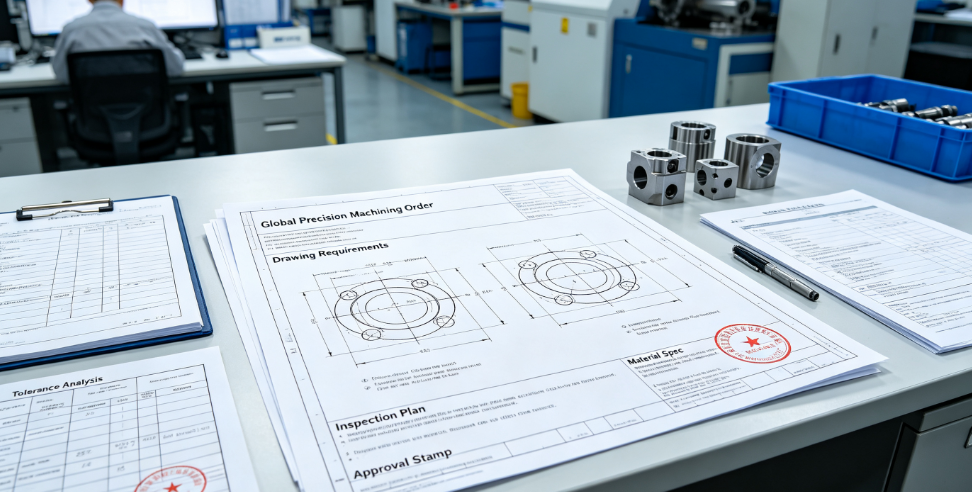
Guaranteed Quality Validation 1st article inspection (FAI) with pitch traceable gauge readings; in-process sampling schedule; final batch CMM thread profile scan; full COA/AS9102/ISO 13485 paperwork as required by your industry.
AI Closed-Loop Machining Becomes Standard By 2030, 68% of top-tier precision manufacturers will deploy real-time sensor AI to auto-correct pitch deviation mid-cut; laggard shops relying on manual calibration will lose high-margin aerospace/medical contracts. Zorapid already rolled out full AI pitch feedback across all lathes in 2025.
Exotic Alloy Thread Demand Up 22% YoY Ti, Inconel, beryllium copper volumes rise as lightweight high-heat components dominate aerospace/EV; generic shops lack specialized tooling to hold pitch on these hard-to-machine metals, widening capability gaps vs experts like Zorapid.
Miniaturization Drives Micro Pitch Dominance Medical implants, wearable electronics, semiconductor fixtures shrink thread sizes below M2; only 11% of global CNC shops can stable machine M1.0 and finer pitches at low scrap rates—Zorapid is positioned as a top global supplier for micro threaded parts.
Zero-Waste Precision Mandates Tighter Scrap Controls EU/US carbon tax regulations penalize high scrap batches; pitch error scrap becomes a major cost liability. Shops without dynamic compensation systems see 3–10x higher material waste than automated precision facilities.
Full Application Scenarios for Zorapid Precision Thread Turning
Medical & Life Sciences Bone screws, spinal implants, catheter fittings, surgical instrument fasteners, insulin pump threaded housings (biocompatible Ti, 17-4PH, PEEK)
Electric Vehicle (EV) & New Energy Motor housing connectors, battery terminal threaded posts, cooling system fittings (7075 Al, GF-PA66, copper alloys)
Oil, Gas & Heavy Industrial High-pressure valve studs, downhole sensor housings, hydraulic fitting threads (H13, 4140 steel, corrosion-resistant brass)
Robotics & Automation Actuator shafts, joint fasteners, precision linear lead screws (aluminum, 17-4PH, Delrin POM)
Production Delivery Speed + Shop Floor Timeline Visual
Zorapid’s streamlined NPI + precision thread workflow beats industry lead times without sacrificing pitch tolerance:
DFM review & process engineering: 12–24hrs
First Article (FAI) prototype run: 1–2 business days
Small batch pre-production validation: 2–3 days
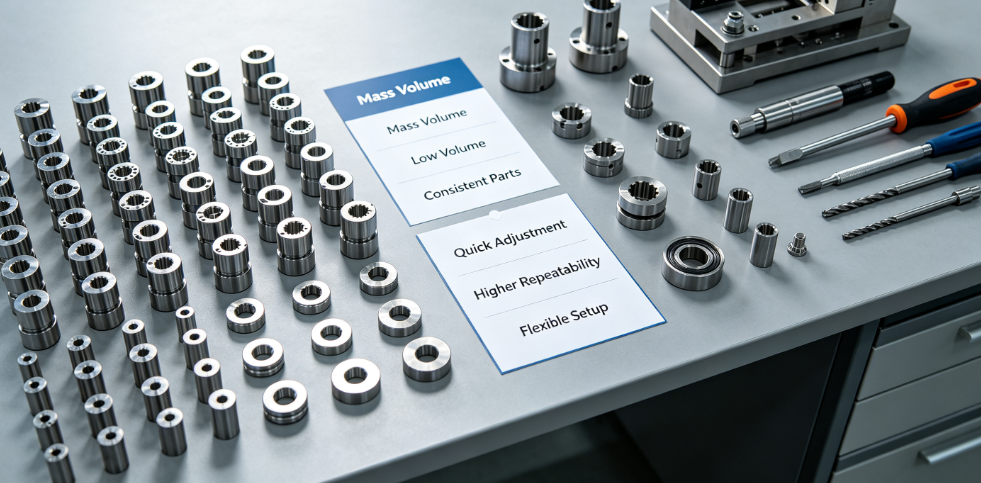
Mass production full run: 5–10 days (based on volume)
Lead Time Comparison Chart
Order Volume
Average Competitor Lead Time
Zorapid Standard Lead Time
Expedited Rush Option
1–50 Prototype Pieces
4–7 days
1–2 days
Same-day FAI available
51–5,000 Small Batch
10–18 days
5–7 days
3–4 day rush
5,000+ Mass Production
22–35 days
10–15 days
7–9 day priority run
Our unmanned overnight machining cells run threaded parts 24/7; AI monitoring prevents pitch drift during lights-out shifts, so faster delivery never means compromised accuracy. We maintain 98.7% on-time delivery rate for global EU/US customers.
Why Global OEMs Choose Zorapid for Precision Thread Turning
Unmatched Pitch Tolerance Locking Tech Proprietary AI thermal + segmented backlash compensation no competitor replicates for long shafts/micro threads.
Full Material Spectrum Expertise We machine every common & exotic grade; no need to split orders across multiple suppliers for metal + plastic threaded components.
Full Industry Certifications Upfront AS9100 aerospace, ISO 13485 medical, ISO 9001 quality, RoHS compliance; certified inspection reports shipped with every batch.
Low Scrap, Predictable Costing <1.2% pitch-error scrap rate vs industry average 6–15%; fixed price quotes with no hidden rework surcharges.
Global Logistics Support Dedicated export team, door-to-door DHL/FedEx shipping to EU, USA, Canada, Australia; compliant customs documentation for cross-border industrial parts.
Engineer-to-Engineer Direct Communication Native English technical sales & process engineers; real-time drawing revisions, pitch spec adjustments via email/Teams without language delays.
Final Summary
Pitch deviation doesn’t have to slow your production or drain your scrap budget. Generic machine tweaks only band-aid root issues like thermal drift, backlash, and tool deflection. Zorapid’s integrated precision thread turning system fixes pitch error at the source: calibrated hardware, AI dynamic compensation, material-tailored tooling, and 100% in-line quality checks for micro, long-shaft, exotic alloy, and plastic threaded parts competitors can’t reliably produce.
Whether you need medical micro bone screws, aerospace Inconel studs, or EV plastic connector threads—we lock pitch tolerances to ±0.002mm standard, deliver faster lead times, and provide fully certified traceability for global regulated industries. Send your CAD drawings & pitch specs today for a free DFM review and formal quote.
What’s the tightest pitch tolerance Zorapid can guarantee?
Standard ±0.002mm per 300mm workpiece length; ultra-precision micro runs hit ±0.0015mm for M0.8–M1.6 medical threads with dedicated Swiss equipment.
Can you fix pitch deviation on existing failed parts we send over?
Yes, for reworkable steel/titanium/aluminum threaded components. We grind/restore thread profiles and re-inspect pitch; plastic parts are rarely reworkable due to thermal memory deformation.
Do you support custom non-standard lead threads (not ISO/UN/UNC)?
Fully supported. Our programming team builds bespoke threading cycles with pre-machining simulation validation for one-off prototypes or low-volume custom lead ratios.
How do you control pitch accuracy during lights-out unmanned production?
Real-time Z-axis pitch sensor feedback feeds data to CNC AI; if deviation creeps above threshold, the machine auto-pauses and alerts our quality team remotely before scrap is generated.
What documentation comes with my threaded part batch?
Standard COA, dimensional inspection report with pitch gauge readings; upgradeable to medical audit packets, CMM full thread profile scan data upon request.
What’s the minimum thread size you can machine reliably?
Stable repeatable production starting at M0.8 micro pitch; we hold consistent tolerance for tiny implant fasteners where most shops cap out at M2 minimum.
Are plastic threads prone to bigger pitch drift than metal?
Plastics absorb moisture and hold cutting heat longer, so baseline deviation risk is higher—but our cryogenic cooling + climate stabilisation process brings plastic pitch stability nearly equal to aluminum alloy performance.
Can Zorapid handle large diameter threaded parts (over 100mm OD)?
Yes, max turning OD 280mm on heavy-duty slant bed lathes; we apply extended steady rest support and multi-point thermal sensing to prevent pitch stretch on large, heavy workpieces.