Published by Zorapid
When your project calls for thick plate metal (10mm up to 300mm+), picking laser or waterjet makes or breaks edge quality, material integrity, cost, and lead time. Most fabrication shops only run one machine type—they push laser for every job or force waterjet even when speed is critical, creating scrap, thermal damage, or inflated cycle costs.
Laser is a thermal melt/vaporize process; waterjet is a cold abrasive erosion cut—their performance flips completely once thickness crosses 25mm. At Zorapid’s 3,000㎡ smart factory, we operate 30kW high-power fiber laser lines + 6,000bar 5-axis abrasive waterjet systems side-by-side, plus in-house CNC secondary finishing to fix the weak spots of both technologies. We break down deep technical comparisons, competitor limitations, exclusive Zorapid hybrid fixes, material charts, real production cases, and industry growth trends below.
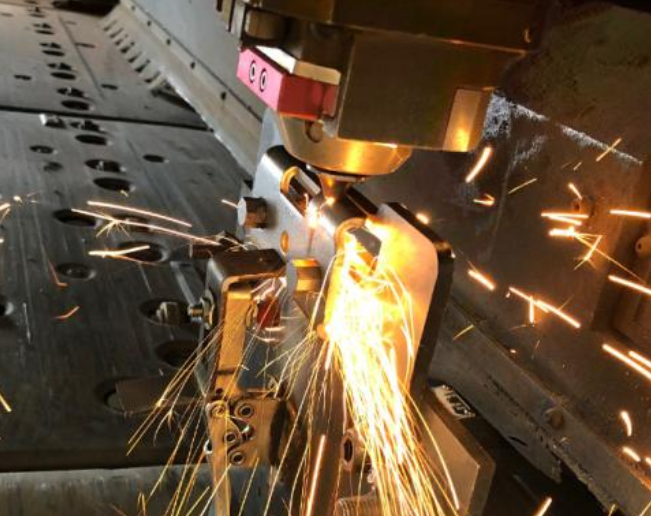
In-Depth Professional Process Technical Analysis
Core Working Principles
- Fiber Laser Cutting (Thermal Process) Focused high-power light beam melts/vaporizes metal; nitrogen/oxygen assist gas blows molten slag out of the kerf. Heat-Affected Zone (HAZ) forms along cut edges, altering hardness, ductility, and corrosion resistance. Max practical production thickness: 40mm carbon steel, 25–30mm stainless/aluminum.
- Abrasive Waterjet Cutting (Cold Process) 3,000–6,000 bar ultra-high pressure water mixed with garnet abrasive erodes material mechanically, zero heat input, 0 HAZ, no molecular metal changes. Capable of clean cuts up to 300mm thick metal; only downside is slower feed speeds and minor natural edge taper on extra-thick plate.
Zorapid Dual-Machine Standard Validation Workflow
- CAD thickness/material scan to auto-select optimal primary cutting process
- Pre-cut simulation: laser beam penetration modeling OR waterjet taper compensation programming
- Nesting optimized for each machine’s kerf width (laser ~0.1–0.3mm; waterjet ~0.8–1.5mm)
- In-line inspection post-cut: CMM check for taper, HAZ hardness testing for laser parts
- Hybrid secondary CNC milling to fix laser dross or waterjet edge taper for critical tolerance features
- Full SPC log for batch consistency on heavy plate long-run orders
Competitor vs Zorapid Thick Plate Cutting Comparison Table
| Performance Metric | Single-Machine Generic Fabricator (Only Laser OR Only Waterjet) | Zorapid Dual Laser + Waterjet Protocol | Measurable Quality & Cost Gap |
|---|---|---|---|
| Thickness Effective Range | Laser shop: struggles >25mm; Waterjet shop: overpriced slow runs <20mm | Switch process automatically by plate gauge | Competitor scrap 6–14% on misassigned process; Zorapid scrap <1.2% |
| Heat-Affected Zone (HAZ) | Laser-only shops accept hardened brittle edges; Waterjet-only no HAZ but slow | Waterjet for heat-sensitive alloys; high-power laser for fast medium-thick steel | Zorapid eliminates thermal crack/fatigue failures entirely where needed |
| Cutting Speed (10mm Carbon Steel) | Laser only: fast; Waterjet only: 5–8x slower | Laser primary for <25mm plate | Zorapid cuts cycle time 70–85% for medium-thick high-volume batches |
| Cutting Speed (60mm Stainless Steel) | Laser shop: slow rough cuts + heavy dross rework; Waterjet shop: steady clean feed | Waterjet exclusive for >40mm stainless | Competitor laser rework labor adds 30–50% per-unit cost |
| Edge Taper Control | Laser: minimal taper thin plate, heavy taper thick plate; Basic waterjet uncompensated taper | 5-axis waterjet dynamic taper correction; laser CNC edge trim post-cut | Zorapid holds ±0.05mm vertical edge straightness vs competitor ±0.2–0.5mm |
| Reflective Alloy Handling (Cu, Brass, Ti) | Laser-only risk beam reflection machine damage; Waterjet slow but safe | Waterjet primary for reflective thick alloys | Competitor laser shops refuse thick copper/titanium jobs entirely |
| Multi-Material Composite Plate | Laser cannot cut layered metal-ceramic/metal-carbon fiber; Waterjet capable | Waterjet for all hybrid composite thick blanks | Zorapid accepts composite jobs competitors decline |
| Long-Run Operating Cost | Laser low garnet cost, high power/gas cost thick plate; Waterjet high garnet consumption thin plate | Process matched to thickness to minimize operational spend | Zorapid average per-part cost 12–28% lower vs single-process shops |
| Post-Cut Rework Need | Laser heavy grinding/deoxidizing; Waterjet near-finish edge | Targeted CNC trim only for critical CTQ surfaces | Competitor rework man-hours 3–6x higher |
Unsolvable Thick Plate Challenges For Single-Process Shops + Zorapid Exclusive Hybrid Solutions
Four high-stakes thick metal scenarios standard fabricators cannot resolve reliably—our dual-machine + CNC hybrid stack delivers stable production:
Challenge 1: >40mm Thick Heat-Sensitive High-Performance Alloys (Ti-6Al-4V, 17-4PH, IN718)
Competitor Failure: Laser creates large HAZ, edge hardening, micro-cracks that fail fatigue/aero testing; waterjet-only shops quote extreme lead times with no speed workarounds. Many shops reject >50mm superalloy orders entirely.
Zorapid Solution:
- 6,000bar 5-axis waterjet base cut (0 HAZ, zero thermal cracking)
- CNC 5-axis finish mill critical tolerance bores/mating surfaces to eliminate minor waterjet taper
- Post-cut stress relief bake for ultra-thick titanium batches
- Result: 80mm Ti aerospace brackets pass full AS9102 fatigue testing, 99.4% first-pass yield
Challenge 2: 10–25mm High-Volume Carbon Steel Structural Frames
Competitor Failure: Waterjet-only shops charge premium slow cycle times; laser-only shops leave oxidized edges requiring full sandblast prep for welding/powder coat.
Zorapid Solution:
- 30kW fiber laser with high-purity nitrogen assist gas for oxide-free bright cut edges
- AI nesting common-line cutting to boost sheet utilization 93–95%
- Robotic auto-unload lights-out laser cells running 24/7
- Result: 120,000 unit annual EV chassis plate program 75% faster than waterjet-only quotes, no pre-weld grinding needed
Challenge 3: Layered Composite Thick Plate (Steel + Ceramic, Aluminum + Carbon Fiber Laminate)
Competitor Failure: Laser burns delamination, melts non-metal layers; no viable cutting method offered by most metal fabricators.
Zorapid Solution: Pure cold abrasive waterjet erosion—no heat to separate laminate bonds, consistent cut quality through every material layer.
Result: 70mm steel-ceramic semiconductor fixture blanks delivered defect-free
Challenge 4: Ultra-Tight Vertical Edge Tolerance (±0.03mm) On 50–150mm Thick Plate
Competitor Failure: Thick laser has severe bottom-edge taper; basic waterjet unadjusted taper creates angled side walls unfit for precision assembly.
Zorapid Exclusive Fix:
- 5-axis waterjet dynamic tilt head pre-compensates natural erosion taper during cutting
- Secondary in-house CNC milling trims all functional vertical faces to micron precision
- Result: 100mm thick 316L marine valve blocks hold perfect parallel vertical edges for sealing surfaces
Thick Sheet Metal Grade Comparison Matrix
Rated for thickness range, cutting efficiency, HAZ risk, ideal process pick, and end-use suitability:
Ferrous & Non-Ferrous Thick Metal Grades
| Material Grade | Optimal Laser Thickness Max | Optimal Waterjet Thickness Range | HAZ Severity (Laser Cut) | Waterjet Edge Finish | Zorapid Preferred Process By Gauge | Relative Cutting Cost |
|---|---|---|---|---|---|---|
| A36 Mild Carbon Steel | 40mm | 0.8–300mm | Low | Satin smooth | <25mm = Laser; >25mm = Waterjet | Lowest (Laser thin/medium) |
| S355 Structural Steel | 38mm | 0.8–280mm | Low-Medium | Satin smooth | <25mm = Laser; >25mm = Waterjet | Low |
| 304 Stainless Steel | 25mm | 0.8–250mm | Medium (oxide layer) | Matte burr-free | <18mm = Laser (N2 gas); >18mm = Waterjet | Medium |
| 316L Medical/Marine Stainless | 22mm | 0.8–220mm | Medium-High (corrosion risk) | Ultra-clean oxide-free | All thick runs = Waterjet | Medium-High |
| 5052-H32 Aluminum | 30mm | 0.8–260mm | Medium | Bright smooth | <20mm = Laser; >20mm = Waterjet | Medium |
| 7075-T6 Aerospace Aluminum | 25mm | 0.8–200mm | High (hardening crack risk) | Stress-free | All thick structural runs = Waterjet | Medium-High |
| Ti-6Al-4V Titanium | 18mm (high risk reflection) | 0.8–300mm | Very High (brittle HAZ) | Biocompatible clean edge | 100% thick Ti = Waterjet | High |
| 17-4PH Precip Hard SS | 20mm | 0.8–240mm | High | Uniform grain retention | >15mm = Waterjet | High |
| IN718 Inconel Superalloy | 15mm (poor beam absorption) | 0.8–220mm | Extreme | No property shift | All IN718 thick plate = Waterjet | Highest |
Quick Material Selection Rules From Zorapid Engineering
- Structural carbon steel under 25mm: Laser is fastest, lowest per-piece cost for mass runs
- Corrosion-resistant stainless, titanium, superalloys over 15mm: Waterjet eliminates dangerous HAZ
- Reflective copper/brass thick plate: Never laser (beam bounce damages optics); waterjet only safe production method
- Any laminate/composite thick blank: Waterjet cold cut is the only viable stable process
Real-World Zorapid Thick Plate Case Analysis
1: EU EV Tier 1 20mm S355 Chassis Structural Plates
- Client: European Electric Vehicle OEM
- Annual Volume: 95,000 thick plate brackets
- Material: 20mm S355 structural steel
- Competitor Pain Point: Waterjet-only shop quoted 32-day lead, 27% higher per-unit cost; local laser shop delivered oxidized edges requiring full blast prep before welding
- Zorapid Full Laser Optimized Solution:
- 30kW fiber laser with 99.99% pure nitrogen assist for oxide-free cut faces
- AI common-line nested sheet layout boosting material yield to 94.7%
- 24/7 unmanned laser cell robotic loading
- Verified Final Results:
- Full batch lead time cut to 14 days (56% faster than waterjet quote)
- Zero pre-weld grinding required, labor cost reduced 21% annually
- Cpk ≥1.33 on all hole positional tolerances across 12-month run
Case 2: US Aerospace 75mm Ti-6Al-4V Landing Gear Support Blanks
- Client: US FAA-Certified Aerospace Tier 2
- Volume: 3,600 unit 10-month program
- Material: 75mm medical/aerospace grade Ti-6Al-4V
- Competitor Barrier: Laser shops refused thick Ti due to reflection/crack risk; waterjet-only competitor had uncompensated edge taper requiring heavy CNC rework
- Zorapid Hybrid Waterjet + 5-Axis CNC Fix:
- 6,000bar 5-axis waterjet taper-compensated rough cut (0 HAZ)
- In-house 5-axis CNC finish mill all vertical assembly surfaces
- Full material MTR, hardness, and FAI AS9102 documentation packet
- Outcome: Zero thermal micro-cracks detected via UT inspection, passed FAA audit, consistent on-time monthly shipments
Case 3: Marine 120mm 316L Stainless Valve Body Blanks
- Client: Global Offshore Energy Supplier
- Volume: 1,900 thick stainless blocks
- Material: 120mm corrosion-resistant 316L
- Pain Point: Laser impossible for 120mm stainless; generic waterjet shop delivered tapered side walls failing sealing tolerance
- Zorapid Solution: Dynamic tilt 5-axis waterjet + targeted CNC trim of sealing faces
- Result: Perfect vertical edge geometry, zero field leak failures after assembly
Your Thick Plate Requirements vs Custom Zorapid Cutting Packages
We match laser, waterjet, or hybrid workflows exactly to your specs—no forced one-process fits:
| Your Core Thick Metal Demand | Zorapid Custom Cutting Solution Package |
|---|---|
| High-volume medium-thick carbon steel (<25mm) structural parts | 30kW fiber laser lights-out mass production, nitrogen clean cuts, AI nesting |
| Heat-sensitive aerospace/medical alloys (Ti, IN718,7075-T6 >15mm) | 5-axis compensated abrasive waterjet cold cutting + CNC finish trimming |
| Ultra-thick plate (>50mm any metal grade) | Waterjet exclusive primary cut, no laser attempt |
| Reflective copper/brass thick blanks | Waterjet only (eliminates laser beam reflection machine risk) |
| Layered composite/laminate thick sheets | Cold waterjet erosion to prevent delamination |
| Tight vertical edge tolerance (±0.05mm or better) | Waterjet taper compensation + secondary 5-axis CNC milling |
| Regulated FAA/ISO13485/IATF certified parts | Full HAZ testing logs, material traceability, UT crack inspection reports |
| Low-volume prototype thick plate blanks | Quick remnant stock matching first, flexible single-batch process selection |
| Post-weld/paint cosmetic A-surface requirements | Laser nitrogen oxide-free edges OR waterjet satin finish (no oxidation) |
2026 Global Thick Plate Fabrication Industry Data + Trend Analysis Table
Industry Performance Benchmark Table (Thick Metal Cutting)
| Industry Segment | % Shops Running Only Laser | % Shops Running Only Waterjet | Average Single-Process Scrap Rate | Zorapid Dual-Process Validated Scrap Rate | 2026–2028 CAGR Production Growth |
|---|---|---|---|---|---|
| EV Structural Chassis Plates | 78% | 22% | 5.2–10.1% | 0.7–2.1% | +18.8% |
| Aerospace Superalloy Thick Components | 12% | 88% | 4.5–9.3% | 0.5–1.8% | +8.5% |
| Offshore Marine Stainless Valve Blocks | 5% | 95% | 3.8–8.6% | 0.4–1.5% | +7.9% |
| Heavy Industrial Machinery Steel Frames | 82% | 18% | 6.1–11.4% | 0.8–2.3% | +6.5% |
| Semiconductor Composite Fixtures | 0% | 100% | 7.3–12.8% | 0.6–1.9% | +23.7% |
Key 2026–2028 Thick Plate Cutting Industry Trends
- Dual Laser + Waterjet Factories Become Premium OEM Standard Tier 1 buyers reject single-process fabricators due to high scrap and inflexibility; dual-machine lines now required for long-run supply contracts. Zorapid invested in matched high-power laser + 5-axis waterjet infrastructure three years ahead of most regional competitors.
- 5-Axis Taper Compensation Waterjet Eliminates Historic Thick-Plate Taper Flaw Older 2D waterjet systems suffered uncorrectable edge angle; dynamic tilt heads deliver near-perfect vertical cuts, closing the precision gap vs laser for heavy plate.
- High-Power 30kW+ Fiber Lasers Push Economical Laser Threshold To 25–30mm Steel Older 6–12kW lasers struggled above 15mm; modern ultra-high-power fiber lasers make medium-thick mass runs drastically faster than waterjet, shifting cost balance for EV structural programs.
- HAZ Metallurgical Documentation Mandatory For Regulated Aerospace/Medical Thick Parts Auditors now require hardness/metallurgy test logs for laser-cut critical components; waterjet naturally satisfies zero-HAZ compliance without extra testing overhead.
- Hybrid Cut + CNC Finish Becomes Default Precision Workflow Neither laser nor waterjet alone hits micron vertical tolerance on thick plate; secondary in-house CNC trimming is now baseline for high-spec OEM parts, a capability most standalone cutting shops lack.
Core Application Scenarios Zorapid Supports For Thick Laser/Waterjet Cut Plate
- Electric Vehicle (EV): S355/A36 chassis brackets, battery tray heavy support frames, motor mounting thick steel bases
- Aerospace & Defense: Ti landing gear blanks, 7075-T6 structural spars, IN718 high-heat thick turbine sub-components
- Marine & Offshore Energy: 316L/17-4PH thick stainless valve bodies, corrosion-resistant pump blocks, ship structural supports
- Medical & FDA Life Sciences: Thick titanium implant fixture blanks, stainless sterilizable equipment heavy frames
- Semiconductor Precision: Steel-ceramic composite thick fixture plates, low-outgassing alloy positioning blocks
- Heavy Industrial Machinery: Press frames, hydraulic cylinder thick end caps, robot base structural steel plates
Zorapid Tiered Delivery Speed Framework For Thick Plate Cutting
Single-process shops face crippling delays when their machine is mismatched to thickness; our dual lines eliminate bottlenecks entirely:
Standard Timeline Breakdown
- CAD DFM thickness/material process selection + nesting simulation: 1–2 business days
- Primary laser/waterjet cutting production run:
- Laser (<25mm steel): 3–7 days batch build
- Waterjet (>25mm/alloy thick plate): 5–12 days batch build
- Hybrid CNC finish trimming (if tight tolerance required): 2–4 days
- Inspection, UT crack/HAZ testing, FAI signoff: 1–3 days
- Certified export crating & global shipping
Speed Advantages vs Competitors
- No machine capacity lock-in; we shift jobs between laser/waterjet lines to avoid queue backlogs
- All cutting, CNC finishing, quality testing in-house—no third-party subcontract transit delays
- Pre-stocked certified thick plate blanks (carbon, stainless, Ti, aluminum) eliminate 4–9 day raw material lead times
- 24/7 unmanned laser cells double daily output for high-volume medium-thick batches
Real Benchmark Example: 95k EV 20mm S355 laser plate program shipped first full batch in 14 days; waterjet-only competitor quoted minimum 32 days with higher per-unit pricing.
Key Benefits Partnering With Zorapid For Thick Sheet Metal Cutting
- Dual Laser + 5-Axis Waterjet In-House Capacity: We select the optimal process for your thickness/material, no forced compromises
- Hybrid Cut + CNC Precision Stack: Fixes inherent laser taper/dross and waterjet edge angle for micron-level assembly tolerance
- Massive Scrap Reduction: Dual-process matching cuts reject rates 70–90% vs single-machine fabricators
- Full Regulatory Audit Documentation: HAZ hardness logs, UT crack scans, material MTRs, AS9102/ISO13485/IATF FAI packets
- 24/7 Lights-Out Laser Production: Unmanned cells deliver unmatched speed for medium-thick high-volume steel runs
- Exclusive 5-Axis Taper-Compensated Waterjet: Near-perfect vertical edges on 300mm ultra-thick metal no basic waterjet shop can match
- No Hidden Rework Fees: Quote includes process simulation, one round of CNC trim, and full quality inspection—no surprise grinding/machining surcharges
- 20+ Years Heavy Plate Precision Fabrication Expertise: We engineer cutting workflows around end-part service life, not just raw cut speed
- Global Door-to-Door Export Support: Secure crated packaging, full customs paperwork, scheduled air/sea freight direct to US, EU, UK, Australia OEM facilities
Quick Summary
Laser cutting dominates speed and cost for thin-to-medium thick metal (<25mm carbon steel), but thermal HAZ, beam reflection limits, and poor edge quality ruin performance on thick, heat-sensitive, or reflective alloys. Waterjet delivers flawless cold cuts for ultra-thick, titanium, superalloy, and composite plate yet runs uneconomically slow for mass medium-thick steel batches.
Generic fabricators stuck with only one machine type force tradeoffs that drive scrap, rework, and inflated costs. Zorapid’s side-by-side high-power laser and 5-axis abrasive waterjet lines, paired with in-house 5-axis CNC hybrid finishing, apply the perfect cutting technology to every thick plate job automatically. Whether you need fast mass EV structural steel, FAA-certified thick titanium aerospace blanks, or corrosion-resistant marine stainless valve blocks, we lock consistent low-scrap quality, predictable lead times, and optimized per-unit production cost.
Send your CAD file, plate thickness, material grade, and tolerance specs today for a free dual-process feasibility review with side-by-side laser/waterjet cost & lead time quoting.
FAQ
What thickness is the crossover point where waterjet beats laser for steel?
For carbon steel, ~25mm is the practical crossover. Below 25mm laser is far faster/lower cost; above 25mm waterjet delivers cleaner edges with less rework. Stainless/aluminum crossover drops to ~18–20mm due to poorer laser beam absorption.
Does laser cutting always create a harmful heat-affected zone?
Low-power laser on thin steel has minimal harmless HAZ; thick plate laser creates hardened, brittle edge layers prone to cracking/fatigue failure—critical for aerospace, marine, and load-bearing structural parts. Waterjet has zero HAZ entirely.
Can waterjet cut reflective copper and brass safely when laser cannot?
Yes. Laser beams reflect sharply off copper/brass, risking expensive laser optic damage; waterjet’s mechanical abrasive erosion works flawlessly with no reflection hazard for any thickness.
How much edge taper occurs on thick waterjet parts, and can it be fixed?
Basic 2D waterjet creates natural 0.1–0.3° taper on 100mm plate. Zorapid’s 5-axis dynamic tilt head pre-compensates taper to <0.03°; critical mating faces get CNC milled to perfect vertical geometry.
Is nitrogen laser cutting worth the extra gas cost for stainless steel?
Absolutely for weld/paint applications. Oxygen laser leaves heavy black oxide scale requiring labor-intensive grinding; nitrogen produces bright, oxide-free edges ready for welding or coating with zero prep work.
Can you cut layered metal-composite thick plates with laser?
Laser’s high heat melts and delaminates bonding layers; waterjet cold erosion is the only stable production method for laminate thick blanks.
What’s the maximum thickness Zorapid can waterjet cut metal?
Up to 300mm thick steel, titanium, stainless, and aluminum with our 6,000bar high-pressure pump 5-axis waterjet system.
Do you offer post-cut heat treatment for laser parts with large HAZ?
We provide in-house stress relief annealing for laser-cut thick structural parts if metallurgical specs require softened edge hardness; waterjet parts never need thermal stress relief post-cut.