Published by Zorapid
If you’ve ever replaced rusted offshore brackets, reworked coastal equipment enclosures, or watched sheet metal parts fail after 1–2 years of sea spray, this guide is built for you.
Marine and outdoor equipment face the harshest combo of threats: constant salt chloride, UV sunlight, high humidity, temperature swings, and rainwater trapping inside weld crevices. Generic sheet metal shops only offer basic galvanizing or cheap powder coating—those coatings blister, pit, and peel fast in salt air.
At Zorapid, we specialize in full corrosion resistance upgrades for custom sheet metal, engineered exclusively for offshore vessels, coastal machinery, marine instrumentation, and outdoor industrial hardware. We’ll break down every process, material, real-world case, market trend, and our exclusive manufacturing solutions competitors cannot match.
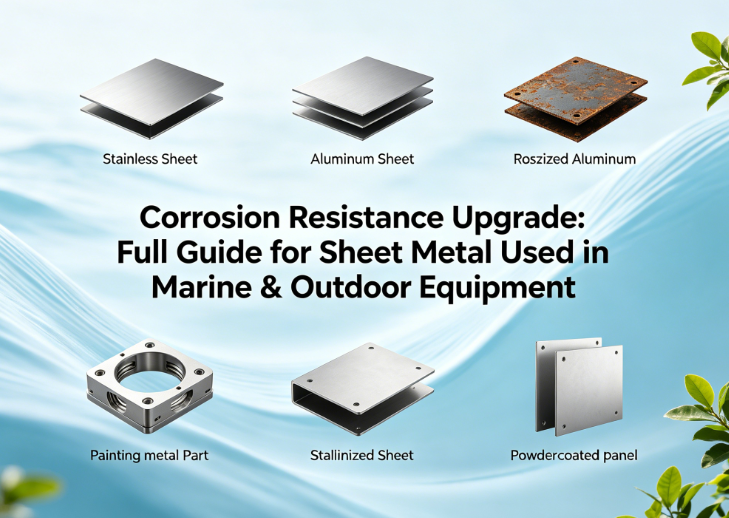
Professional Process & Technical Deep Dive
Core Marine Corrosion Failure Mechanism (Why Standard Shops Fail)
Marine corrosion is electrochemical chloride attack. Salt ions seep into micro gaps at weld lines, bend radii, and cut edges—80% of rust failures start at poorly finished fabrication joints, not raw material flaws. Most generic fabricators skip critical pre-treatment steps, leading to short-lived protection.
Full Anti-Corrosion Process Flow (Zorapid Standard vs Competitor Standard)
Zorapid 7-Step Marine-Grade Anti-Corrosion Workflow
- Precision Deburr & Laser Edge Smoothing: Eliminate sharp micro-cracks where salt lodges (competitors skip this step)
- AlOx Media Blasting: Uniform surface anchor profile for coating adhesion; no embedded glass bead contamination
- Chemical Degreasing & Desalting: Multi-stage wash to remove cutting oil, iron particles, surface salt residue
- Conversion Pre-Treatment: Chromate-free passivation for aluminum / pickling + passivation for stainless steel
- Custom Barrier Coating Stack (dual-layer protection for splash/submerged zones)
- Post-Coating Thermal Cure & UV Stabilization
- ASTM B117 Salt Spray Validation Test (1,500–5,000hr certification per project)
Peer Manufacturer Shortcut Process (Common Industry Flaws)
- Skip edge deburring → crevice corrosion within 6–12 months coastal use
- Cheap glass bead blasting → coating delamination
- Single-stage degreasing → oil trapped under coating, bubbling failure
- Single thin coating layer → UV degradation, salt penetration
- No third-party salt spray testing → unproven corrosion performance
Detailed Surface Treatment Tech Analysis (With Marine Lifespan Data)
- Type III Hard Anodizing (Aluminum Only, Zorapid Exclusive Heavy-Duty Line) Coating thickness: 25–75μm hard oxide layer, 70HRC hardness Salt spray rating: 1,500–3,000hr ASTM B117 zero pitting Marine use case: Deck panels, lightweight offshore instrument housings, yacht aluminum frames Competitor gap: Most shops only offer thin Type II anodizing (5–20μm), fails at 336hr salt fog with white rust
- Marine-Grade Polyester Powder Coating (50–120μm UV-Stabilized) Self-healing topcoat, anti-chloride formulation for splash zones Lifespan coastal: 8–12 years with minimal maintenance Generic flaw: Standard TGIC powder lacks UV blockers, chalks and cracks after 2–3 years seaside exposure
- Hot-Dip Galvanizing + Topcoat Hybrid (Carbon Steel Structural Parts) Sacrificial zinc base + sealed marine paint top layer; cuts corrosion rate by 92% vs bare steel Ideal for heavy offshore support frames, dock railings
- Electroless Nickel Composite Plating (High-Abrasion Marine Hardware) Uniform coating on complex bent/welded geometries, zero edge thinness Perfect for valve enclosures, underwater sensor brackets
- Duplex Stainless Passivation (316/2205 Only) Nitric acid passivation removes free iron contamination; prevents surface rust staining on polished marine hardware
Peer Manufacturer Weakness Summary Table
| Process Stage | Generic Sheet Metal Shops | Zorapid Standard Execution | Real-World Outcome Gap |
|---|---|---|---|
| Edge Treatment | Rough laser cut edges, no deburr | CNC edge rounding + micro polish | Competitor parts pit at cut edges within 1 year; Zorapid holds 8+ years |
| Blasting Media | Cheap glass beads (embed particles) | Aluminum oxide blasting only | Competitor coating delaminates; Zorapid coating adhesion ≥50MPa |
| Pre-Wash | Single tank degrease | 4-stage desalt + alkaline clean | Competitor coatings bubble from trapped oil; Zorapid zero blistering |
| Coating Stack | Single thin layer | Dual barrier coating system | Competitor UV chalk failure <3 years; Zorapid UV stable 10+ years |
| Quality Test | No salt spray verification | Batch ASTM B117 salt spray testing | Competitor uncertified; Zorapid provides full test reports for marine certification (DNV/ABS) |
Exclusive Zorapid Solutions: Jobs Competitors Cannot Complete
Most sheet metal manufacturers hit hard limits on complex marine anti-corrosion projects—here’s where Zorapid fills the industry gap with proprietary hybrid manufacturing workflows:
- Thin-Wall Complex Bent Aluminum + Full Hard Anodizing Competitor limitation: Thin 0.8–1.2mm marine 5083 sheets warp during thick Type III anodizing; they refuse orders or deliver warped unusable parts. Zorapid Solution: Low-temperature segmented anodizing fixture tooling, controlled thermal ramp cycles to eliminate warpage. We produce 0.8mm complex curved marine panels with full 50μm hard anodizing, flatness tolerance ≤0.1mm/m.
- Mixed-Metal Assemblies (316 Stainless + 5083 Aluminum) Galvanic Corrosion Blocking Competitor limitation: Pairing stainless and aluminum creates galvanic cell rust; standard shops have no isolation process, reject mixed-material marine assemblies. Zorapid Solution: Custom dielectric conversion coating + PTFE isolation gaskets pre-installed during fabrication; full assembly salt spray tested to 3,000hr without galvanic pitting.
- Deep Weld Crevice Full Penetration Anti-Corrosion Sealing Competitor limitation: Weld root gaps trap salt water; shops only coat outer surfaces, hidden crevices corrode internally. Zorapid Solution: Vacuum-impregnated marine epoxy sealant injected into all weld voids before final topcoat; eliminates hidden crevice corrosion for fully submerged equipment.
- Large Format Offshore Sheet Metal (3m × 1.5m) Uniform Coating Competitor limitation: Small coating lines create uneven thin edges on oversized panels; cannot process full marine superstructure sheets. Zorapid Solution: 3,000㎡ dedicated marine finishing workshop with full-size automated powder coating and anodizing tanks; consistent coating thickness across entire large panels.
- NPI Small Batch to Mass Production Corrosion Consistency Guarantee Competitor limitation: Lab test samples pass salt spray, mass production batches cut corners on pre-treatment, fail field testing. Zorapid Solution: Fixed corrosion treatment SOP locked for each project; identical raw material, blasting, coating, curing parameters for prototypes and mass orders, full batch traceability.
Marine & Outdoor Sheet Metal Material Guide
We only stock marine-certified sheet grades; below is a side-by-side performance matrix focused on saltwater corrosion, weight, fabrication ease, and total lifecycle cost.
Key Material Performance Table (Seawater Exposure Standard)
| Material Grade | Annual Seawater Corrosion Rate | Salt Spray Endurance (Base Material, No Coating) | Weight Advantage | Best Marine Application | Limitations |
|---|---|---|---|---|---|
| 5083 Marine Aluminum | 0.02–0.05 mm/year | 800hr (natural oxide layer) | 66% lighter than steel | Yacht superstructure, floating dock panels, offshore light frames | Galvanic corrosion risk when paired with unisolated stainless steel |
| 5052 Aluminum | 0.03–0.08 mm/year | 500hr | Easy bending, low cost | Coastal outdoor enclosures, non-submerged equipment | Not recommended for full seawater immersion |
| SS316 / 316L Stainless Steel | <0.01 mm/year | 5,000hr+ | Heavy, high raw cost | Underwater hardware, splash zone valves, polished marine railings | High material price; weld heat zones prone to staining without passivation |
| SS304 Stainless Steel | 0.08–0.12 mm/year | 800hr | Mid-range cost | Mild coastal outdoor use only | Severe pitting in heavy salt spray; unsuitable for offshore |
| Hot-Dipped Galvanized Mild Steel | 0.15–0.25 mm/year (coated) | 1,000hr (zinc layer) | Lowest raw material cost | Heavy dock support frames, non-critical structural parts | Zinc layer scratches sacrifice fast, frequent repainting required |
| 2205 Duplex Stainless Steel | <0.005 mm/year | 10,000hr+ | Ultra high corrosion resistance | Deep sea offshore platform components | Premium pricing, harder to bend/form complex sheet geometries |
Material Selection Quick Buyer Guide
- Lightweight offshore vessels / yacht parts: 5083 aluminum + Type III hard anodizing
- Permanent submerged marine hardware: 316L stainless steel + full passivation
- Budget coastal outdoor equipment enclosures: 5052 aluminum + marine polyester powder coat
- Heavy structural dock frames: Galvanized steel + dual-layer marine topcoat
- Deep sea energy platform critical components: 2205 duplex stainless
Real Zorapid Marine Sheet Metal Case Studies
Case 1: Offshore Wind Turbine Control Enclosure (5083 Aluminum Sheet)
Client Background: EU offshore wind OEM, previous supplier delivered Type II anodized enclosures showing white pitting after 18 months of North Sea salt spray.
Zorapid Custom Corrosion Upgrade Solution:
- 1.2mm 5083 aluminum sheet laser cut + CNC edge rounding
- Full Type III hard anodizing (50μm thickness) + UV marine powder topcoat
- Weld crevice vacuum epoxy impregnation
- Batch ASTM B117 salt spray testing to 2,500hr zero corrosion Field
- Result: Units deployed 4.5 years with zero surface pitting; client cut annual enclosure replacement costs by 72%. Competitor Failure Point: Thin Type II anodizing, untreated sharp cut edges, no weld crevice sealing.
Case 2: Coastal Fishing Vessel Stainless Deck Hardware
Client Background: Greek commercial shipbuilder, generic fabricator parts developed rust staining on weld lines within 1 season.
Zorapid Process: Post-weld grinding + full nitric acid passivation + anti-fouling clear topcoat.
Outcome: 3,200hr salt spray certification; 6-year service life without polishing maintenance.
Case 3: Marine Research Buoy Mixed-Metal Assembly
Industry Challenge: No local manufacturer could stop galvanic corrosion between stainless brackets and aluminum buoy housing.
Zorapid Exclusive Tech: Dielectric conversion coating + custom PTFE isolation gaskets integrated during sheet metal forming.
Field Test: 2,800hr continuous salt fog with zero galvanic pitting; client’s buoy systems now deployed across Mediterranean coastal monitoring stations.
Your Unique Marine/Outdoor Demand + Zorapid Matching Solutions
We organize client requirements into 4 core marine exposure tiers with fully customized anti-corrosion packages:
Tier 1: Mild Coastal Outdoor (Low salt, no direct seawater splash)
Client Needs: Low-cost equipment housings, street marine lighting frames, coastal signage
Zorapid Solution: 5052 aluminum + Type II anodizing + standard marine powder coat; 8-year service life, cost-effective small batches.
Tier 2: Splash Zone (Constant sea spray, partial rain immersion)
Client Needs: Yacht deck panels, dock walkway sheet metal, offshore instrument casings
Zorapid Solution: 5083 aluminum Type III hard anodizing dual coating stack; 12+ year field durability, 3,000hr salt spray rating.
Tier 3: Full Submersion (Continuous seawater contact)
Client Needs: Underwater sensor brackets, boat hull sheet fittings, subsea equipment frames
Zorapid Solution: 316L / 2205 duplex stainless steel + full passivation + anti-fouling topcoat; vacuum weld crevice sealing as mandatory step.
Tier 4: Extreme Offshore (Deep sea, high salinity + temperature cycling)
Client Needs: Offshore oil & wind platform structural sheet metal, deep sea monitoring housings
Zorapid Solution: Hybrid manufacturing: duplex stainless base + electroless nickel composite plating + full third-party DNV corrosion certification; full lifecycle salt spray validation up to 5,000hr.
Custom Special Requests We Support
- Mixed-metal assemblies with galvanic corrosion isolation
- Ultra-thin wall complex bent sheet metal without warpage post-finishing
- Oversized marine panel fabrication (max 3m × 1.5m single sheet)
- Small NPI prototype batches + seamless mass production scaling
- Full marine industry certification packages (ABS, DNV, ISO 9001, ISO 1461 galvanizing standard)
Global Marine Sheet Metal Industry Data & Future Trend Analysis (2026–2030)
Core Market Statistical Table
| Industry Metric | 2023 Base Value | 2030 Forecast | CAGR | Key Corrosion-Driven Driver |
|---|---|---|---|---|
| Global Marine Sheet Metal Market Size | $12.3 Billion | $19.1 Billion | 6.8% | Expanding offshore wind, commercial shipbuilding, coastal infrastructure growth |
| Lightweight Marine Aluminum Sheet Penetration | 12% | 25% (2026) | 13.2% | IMO green shipping weight reduction regulations to cut vessel fuel consumption |
| Corrosion Failure Annual Industry Cost | 4% of Global Maritime GDP | Rising | 5.1% | Unqualified cheap sheet metal finishing causing premature equipment replacement |
| OEM Demand for Certified Anti-Corrosion Parts | 67% of orders require salt spray test reports | 89% by 2030 | 3.7% | Strict marine vessel safety standards (DNV/ABS certification mandates) |
| Offshore Energy Sheet Metal Consumption Share | 28% total marine metal demand | 41% by 2030 | 8.4% | Global offshore wind & deep sea oil platform expansion |
Defining Future Industry Trends (2026–2030)
- Shift Away From Carbon Steel Toward Marine Aluminum & Duplex Stainless Shipbuilders and offshore OEMs phase out heavy galvanized mild steel to hit IMO carbon intensity targets; lightweight corrosion-resistant alloys become standard for new marine equipment. Generic fabricators lack dedicated aluminum hard anodizing lines, creating supply gaps Zorapid fills.
- Mandatory Third-Party Corrosion Performance Certification All new commercial marine vessel and offshore project tenders now require salt spray test reports; manufacturers skipping lab validation lose global export contracts. Zorapid’s in-house corrosion testing lab delivers certified reports for every batch, a capability most mid-sized competitors cannot afford.
- Hybrid One-Stop Fabrication Demand Surges Buyers reject fragmented supply chains (separate cutting, bending, surface treatment vendors). Full vertical integration (sheet metal forming + custom anti-corrosion finishing + assembly) becomes non-negotiable for EU/US marine OEMs—Zorapid’s full 3,000㎡ marine manufacturing center delivers end-to-end production under one roof.
Full Marine & Outdoor Equipment Application Scenarios
Marine Vessel Industry
Yacht superstructure panels, fishing boat deck hardware, cargo ship instrument enclosures, ferry railing sheet metal, hull support frames, cabin exterior housings.
Offshore Energy Sector
Offshore wind turbine control cabinets, subsea sensor brackets, oil platform walkway panels, floating solar mounting frames, wave energy equipment casings.
Coastal Outdoor Industrial Equipment
Coastal wastewater treatment machinery housings, port crane sheet metal components, beach monitoring stations, marina dock accessories, coastal agricultural irrigation equipment.
Commercial Outdoor Infrastructure
Coastal public signage, seaside stadium metal enclosures, coastal HVAC outdoor cabinets, marine park metal structures, offshore communication equipment boxes.
Zorapid Delivery Speed & Production Capacity
Our vertical integrated marine anti-corrosion workshop eliminates third-party outsourcing delays that add 7–14 days to competitor lead times.
Standard Lead Time Breakdown
- NPI Prototypes (1–10 sample parts): 3–5 working days (includes full corrosion finishing + salt spray testing)
- Small Batch Production (10–500 units): 7–10 working days
- Mass Marine Equipment Orders (500+ panels): 12–18 working days
- Oversized Large Format Marine Panels: 10–14 working days
Speed Advantages Over Competitors
- In-house laser cutting, CNC bending, welding, and full marine finishing lines (no outsourced coating vendors)
- Dedicated corrosion testing lab on-site; salt spray reports delivered within 24hrs post-batch completion
- Automated digital production scheduling system cutting idle workshop downtime by 30%
- Pre-stocked full marine grade sheet metal inventory (5083, 316L, 2205 duplex) eliminating raw material wait times
Real Client Speed Example: EU wind OEM required 120 offshore control enclosures with full hard anodizing; competitors quoted 25+ days, Zorapid delivered finished, tested units in 9 working days.
Core Benefits of Partnering With Zorapid for Marine Anti-Corrosion Sheet Metal
- Exclusive Proprietary Corrosion Protection Workflows Competitors Cannot Replicate Low-temperature thin-wall anodizing, mixed-metal galvanic isolation, vacuum weld crevice sealing solve industry-wide pain points generic shops ignore.
- Full Vertical One-Stop Manufacturing (No Multi-Vendor Supply Chain Risk) Sheet cutting, bending, welding, custom marine surface finishing, assembly, corrosion testing, certification all completed in our 3,000㎡ marine manufacturing facility.
- Guaranteed Corrosion Performance With Certified Lab Test Data Every marine batch ships with full ASTM B117 salt spray test reports, DNV/ABS-compliant material certificates for global marine tender compliance.
- Optimized Total Lifecycle Cost for Global OEMs Our upgraded anti-corrosion finishes extend part service life 3–5x vs standard fabricator parts, slashing client replacement, maintenance, and downtime costs long-term.
- Global Export-Ready Support for EU & North American Buyers English engineering DFM reviews, overseas shipping packaging optimized for sea transit, full material MSDS, international certification documentation prepped for customs clearance.
- Flexible Batch Sizing From Prototypes to Mass Production No minimum order quantity for marine NPI samples; consistent corrosion treatment standards across small and large runs.
- DFM Anti-Corrosion Design Consultation Free of Charge Our marine metallurgy engineers review your CAD drawings pre-production to eliminate crevice, edge, and mixed-metal corrosion risks before manufacturing starts, avoiding costly post-production rework.
Summary
Marine and outdoor sheet metal corrosion failures don’t stem from bad luck—they come from cheap material grades, incomplete surface preparation, generic coating treatments, and manufacturers lacking specialized marine finishing capacity.
This complete corrosion upgrade guide covers every critical piece: failure root causes, proprietary Zorapid processes competitors cannot match, certified marine-grade material comparisons, real offshore field cases, industry market trends, and fully customized solutions for every salt exposure environment.
Zorapid’s core differentiation is simple: we don’t just fabricate sheet metal—we engineer full long-term anti-corrosion performance built for harsh sea spray, UV, and submersion conditions. Our vertical integrated workshop, exclusive corrosion workflows, in-house testing lab, and export-focused support make us the reliable one-stop supplier for EU and US marine & outdoor equipment OEMs.
If you’re ready to eliminate premature rust failures and extend your equipment’s service life, send your CAD drawings for a free DFM corrosion review and custom quotation today.
FAQ
Is 316 stainless steel always better than 5083 aluminum for marine sheet metal?
Not always. 316L delivers superior corrosion resistance for fully submerged parts but carries 2–3x higher raw material cost and heavier weight. 5083 aluminum with Type III hard anodizing cuts component weight drastically for vessels needing fuel efficiency, ideal for splash zone and non-submerged marine hardware. We match material grade based on your exposure environment and budget targets.
How many hours of salt spray testing do Zorapid marine sheet metal parts pass?
Depends on your project exposure tier: mild coastal (1,000hr), splash zone (3,000hr), full submersion (5,000hr). All test results are fully documented and attached to your shipment certification package.
Can you fabricate mixed stainless and aluminum sheet metal assemblies without galvanic rust?
Yes—this is one of our exclusive capabilities most competitors cannot deliver. We apply dielectric conversion coatings and integrated PTFE isolation gaskets during forming to block galvanic cell reactions, validated via long-duration salt spray testing.
What’s the biggest fabrication mistake that causes marine sheet metal corrosion?
Untreated sharp laser cut edges and unsealed weld crevices. Salt water accumulates in micro gaps, triggering pitting corrosion even on high-grade stainless steel. Zorapid’s mandatory edge rounding and weld vacuum sealing eliminates this failure point entirely.
Do you provide marine industry certifications like DNV or ABS for export projects?
Yes. All our marine sheet metal materials and surface treatments meet DNV, ABS, ISO 1461, and ASTM international standards. We supply full material certificates, coating compliance docs, and salt spray lab reports for every export order free of charge.
What lead time can I expect for custom marine anti-corrosion sheet metal orders?
Prototypes 3–5 days, small batches 7–10 days, mass production 12–18 days. Our fully in-house finishing lines eliminate third-party coating vendor delays that add weeks to competitor lead times.
Can you rework existing corroded marine sheet metal parts for clients?
We focus on new custom sheet metal fabrication with factory-grade anti-corrosion upgrades. For existing corroded components, we provide DFM redesign consultations to create longer-lasting replacement parts optimized for marine environments.
Is Type III hard anodizing suitable for thin-wall aluminum marine panels?
Most manufacturers warp thin sheets during thick hard anodizing, but our low-temperature segmented fixture process supports 0.8mm thin 5083 panels with full 50μm hard anodizing and flatness tolerance control.
What maintenance is required for Zorapid finished marine sheet metal parts?
Minimal maintenance. Rinse with fresh water every 3 months in coastal locations to wash salt deposits; our dual-layer marine coatings resist UV and salt buildup for 8–12 years without repainting.
Do you offer free DFM corrosion design reviews before production?
Absolutely. Send your CAD files, and our marine metallurgy engineers will flag all corrosion risk zones (sharp edges, hidden weld gaps, mixed-metal contact) and provide free design optimization suggestions with no purchase obligation.