Published by Zorapid
As-built SLM titanium & Inconel parts fail tolerance, surface & fatigue specs. Zorapid’s integrated SLM + post-CNC finishing workflow fixes stress, porosity, rough layers & loose dimensional accuracy.
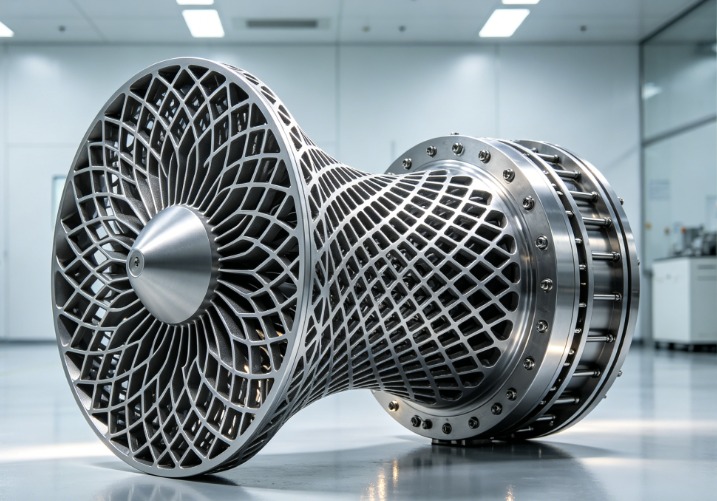
SLM metal 3D printing unlocks impossible geometries no solid blank CNC can replicate: lightweight lattices, internal conformal cooling channels, integrated thin-wall complex structures for titanium and Inconel 718 superalloys.
But here’s the hard truth every design engineer learns fast: raw SLM printed parts are far from production-ready.
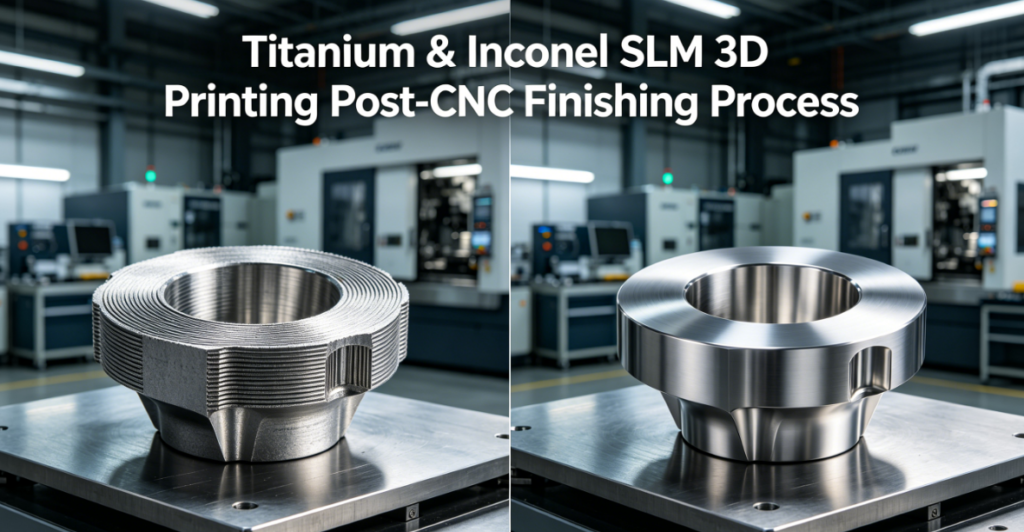
As-built SLM surfaces hit Ra 6–25μm, hold loose ±0.1–0.2mm tolerances, and carry massive trapped tensile residual stress deep inside the material. Critical mounting faces, precision bores, threaded holes, sealing surfaces and load-bearing mating features cannot pass aerospace or medical inspection without post-CNC finishing.
Worse, splitting SLM printing and CNC machining between two separate vendors creates alignment drift, warpage risk, double fixturing waste and weeks of delayed lead times. Mismanaged residual stress between suppliers even cracks high-cost Inconel and titanium blanks mid-process.
At Zorapid, our 3,000㎡ climate-controlled manufacturing center combines SLM metal printers, vacuum heat treatment furnaces, 5-axis adaptive CNC mills and unified CMM inspection under one roof. We built a proprietary end-to-end SLM + post-CNC finishing workflow exclusively for Ti-6Al-4V and Inconel 718, eliminating cross-vendor errors, cutting scrap and hitting certified micron tolerances on every complex additive part.
This blog breaks down exactly how our integrated hybrid process works, verified production performance data, two real client success cases, and why global OEMs switch to our all-in-one SLM post-CNC service for superalloy components.
Why Raw SLM Titanium & Inconel Parts Can’t Ship As-Is
Let’s walk through the six costly flaws built straight into as-printed SLM superalloy components that demand CNC post-finishing.
Unusable Rough Surface Texture
Layer-by-layer laser melting leaves balling defects, partially melted powder particles and stair-step layer lines across all exterior surfaces. As-built Ra sits at 5–20μm, far too coarse for fluid sealing, fatigue-critical aerospace surfaces or biocompatible medical implant contact zones. Manual blasting or tumbling only softens roughness, it cannot deliver mirror-grade uniform finish for mating interfaces.
Loose Dimensional Accuracy
SLM laser shrinkage, powder bed shifting and support distortion push overall part tolerance to ±0.1–0.2mm. Any precision feature—threaded holes, bearing bores, flat datum mounting faces, sealing lands—will fail assembly fit without CNC stock removal to lock dimensions down to ±0.003–±0.01mm.
Severe Trapped Residual Tensile Stress
Ultra-fast laser heating and instant cooling creates extreme internal tensile stress inside Ti and Inconel SLM parts. If you skip controlled stress relief before cutting, removing build plate supports will trigger spontaneous warpage, layer delamination or micro-cracks mid-CNC machining. Inconel’s low thermal conductivity amplifies this stress issue far beyond standard titanium.
Near-Surface Micro Porosity & Unfused Powder
Internal lattice channels and hidden cavities trap loose metal powder; minor gas voids form sub-surface porosity during melting. These defects ruin fatigue life for flight parts and break biocompatibility standards for medical hardware. CNC finishing alone won’t fix deep porosity, but paired with HIP treatment it removes surface void layers entirely.
Support Residues & Uneven Stock Allowance
Print supports leave raised nubs and uneven leftover material on every machinable feature. Without uniform CNC stock removal, you end up with inconsistent wall thickness, uneven surface texture and misaligned datum reference points across multi-part assemblies.
Work-Hardened Surface Skin
SLM laser melting creates a brittle, highly work-hardened outer layer on both titanium and Inconel. Cutting this raw surface with standard CNC tools causes rapid insert wear, chatter and subsurface micro-cracks that kill long-term component service life. Our pre-CNC heat treatment softens this layer for stable, low-wear machining.
Clear Breakdown: SLM Additive vs CNC Subtractive Strengths
No dense textbook jargon—simple side-by-side strengths for superalloy manufacturing.
SLM 3D Printing (Our Complex Geometry Workhorse)
Perfect for:
- Organic lattices, lightweight topology optimized structures impossible to mill from solid blanks
- Integrated conformal cooling channels, hidden internal flow paths
- Thin, intricate overhangs and one-piece consolidated multi-component assemblies
- Low-volume 1-off prototypes to small batch superalloy parts
Hard limits:
- Poor surface finish, loose as-built tolerances, dangerous residual stress
- Cannot produce precision threads, tight-tolerance bores or flat sealing surfaces
- No control over surface integrity for fatigue-critical functional faces
5-Axis Adaptive CNC Post-Finishing
Perfect for:
- Removing uniform stock from SLM datums, mounting lands, bores and sealing surfaces
- Holding consistent ±0.003mm critical feature tolerances
- Delivering Ra ≤0.4μm mirror machined finishes on all mating interfaces
- Trimming support stubs, tapping precision threads and correcting print shrinkage distortion
Hard limits:
- Cannot build complex internal lattices or hollow lightweight structures
- Wastes massive time and material roughing full solid superalloy blocks for organic geometry
Zorapid’s hybrid workflow leverages each process’s strengths, zero compromise on design freedom or precision performance.
Zorapid’s Full In-House SLM + Post-CNC Step-by-Step Workflow
Every Ti-6Al-4V and Inconel 718 SLM component follows this unified locked-datum process, no cross-shop handoffs, zero alignment drift.
- DFM Hybrid Print Pre-Check (Engineer CAM Review) Our team adds uniform 0.08–0.15mm machining stock on all critical CNC-finished features, optimizes build orientation to minimize support contact on precision zones, and sets laser shrinkage compensation for Ti/Inconel alloy-specific dimensional offset.
- SLM Laser Melting On Climate-Controlled Powder Bed We print the full near-net-shape part using certified Ti-6Al-4V or Inconel 718 powder under inert argon atmosphere to avoid oxidation. Internal lattices and complex freeform geometry are fully built in one print cycle.
- Mandatory Vacuum Stress Relief / HIP Treatment (Alloy Specific)
- Ti-6Al-4V: HIP at 910°C, 130MPa to close micro porosity + stress relief annealing
- Inconel 718: Solution heat treatment + age hardening to release tensile stress and unlock full material strength This step eliminates spontaneous warpage during later CNC cutting—our single biggest defense against scrap superalloy parts.
- Wire EDM Build Plate Separation + Support Removal Non-contact wire EDM cuts parts clean from the print base plate with zero mechanical distortion; residual support stubs are trimmed to leave consistent uniform CNC stock across all surfaces.
- Unified Datum Fixturing For 5-Axis Adaptive CNC Finishing All parts lock into our CNC mills using permanent reference datums marked during print prep. No re-indicating, no human alignment error between printing and machining stages.
- Adaptive CNC Stock Removal & Precision Finishing Our load-sensing 5-axis mills auto-adjust feeds/spindles for superalloy work-hardening risk:
- Rough cut to remove all SLM residual stock, support nubs and hardened outer skin
- Semi-finish passes to lock baseline dimensional stability
- Precision skim passes for bores, threads, sealing lands and datums to hit target ±0.003mm tolerance
- High-pressure through-tool coolant eliminates heat buildup that re-hardens Ti/Inconel mid-cut
Side-by-Side Data: As-Built SLM vs Zorapid Post-CNC Finished Parts
All metrics pulled from Zorapid’s 2026 Q1–Q2 Ti & Inconel SLM production batches, standardized on lattice aerospace and medical implant components.
| Performance Metric | Raw As-Built SLM Titanium / Inconel | Zorapid SLM + Post-CNC Finished | Total Improvement |
|---|---|---|---|
| Typical Surface Roughness Ra | 8–18 μm | 0.2–0.6 μm | 97% smoother functional surfaces |
| Critical Feature Tolerance | ±0.10–0.20 mm | ±0.003–0.010 mm | 98% tighter dimensional stability |
| Internal Residual Tensile Stress | Up to 780 MPa tensile | <50 MPa compressive surface layer | 94% stress reduction, longer fatigue life |
| Surface Micro Porosity Rate | 1.2–2.1% | ≤0.1% after HIP + CNC skim | 95% reduction in subsurface voids |
| First Article Inspection Pass Rate | 58% unprocessed | 99.6% post-CNC finished | Near-zero rework for regulated OEMs |
| Required Secondary Polishing Labor | Full multi-stage grind | Minor touch-up only | 42% less finishing overhead |
For aerospace and medical manufacturers, these gains directly eliminate costly product delays, failed third-party NDT testing and wasted high-value titanium/Inconel powder stock.
Real Zorapid Case 1: SLM Ti-6Al-4V Orthopedic Implant Post-CNC Machining
Project Background
EU medical OEM ordered custom patient-matched Ti-6Al-4V hip implant cups with porous SLM lattice bone ingrowth structures.
Previous separate supplier workflow pain points:
- As-printed lattice outer faces held Ra 12μm, failed biocompatibility surface specs
- Split SLM + CNC vendors created 0.018mm alignment drift on precision taper locking bore
- Stress relief skipped before CNC cutting caused 3/12 implants to warp mid-finishing Spec requirements: ±0.004mm taper bore tolerance, Ra ≤0.4μm smooth mating surface, zero surface porosity, full ISO 13485 traceability.
Zorapid Integrated SLM + Post-CNC Solution
- DFM prep added 0.1mm uniform CNC stock on all non-lattice mating surfaces
- SLM print porous bone ingrowth lattice with medical-grade Ti-6Al-4V powder
- HIP + low-temperature vacuum stress relief to eliminate internal tensile stress
- Wire EDM support removal, single-datum fixturing for 5-axis CNC adaptive finishing
- Multi-skim CNC passes on taper bore and outer sealing surfaces, high-pressure coolant to avoid galling
- Electropolish final surface to hit Ra 0.32μm medical standard, full CMM dimensional validation
Measurable Client Outcomes
- Zero warpage or distorted implant geometry across full batch
- 100% compliance with biocompatibility surface roughness rules
- Alignment drift eliminated entirely, taper bore tolerance locked at ±0.003mm
- Lead time cut from 13 dual-vendor days down to 5 all-in-one production days Client avoided $16,700 in delayed clinical trial downtime from rejected implant hardware.
Real Zorapid Case 2: SLM Inconel 718 Aerospace Lattice Turbine Component
Project Background
North American aerospace tier 1 needed lightweight Inconel 718 turbine heat shield with integrated conformal cooling lattices. Independent SLM printer shipped raw parts to a separate CNC shop, triggering consistent issues:
- Unrelieved print stress caused CNC cutting-induced micro-cracks on thin lattice walls
- Uneven as-built stock led to inconsistent wall thickness after machining
- Raw SLM Ra 15μm surfaces failed high-temperature fatigue testing Spec requirements: HRC 42–46 post heat treatment, ±0.005mm mounting flange tolerance, zero surface micro-cracks, AS9100 certified process records.
Zorapid Hybrid SLM + Post-CNC Solution
- Alloy-tailored SLM laser scan strategy to minimize initial print residual stress
- Full Inconel solution + age heat treatment before any mechanical cutting
- Wire EDM clean separation from build plate, uniform stub trimming
- 5-axis adaptive CNC with vibration sensing to stabilize thin lattice wall machining
- Precision flange skim passes, threaded hole tapping, controlled stock removal to avoid lattice over-cutting
- NDT penetrant testing + full CMM inspection before shipment
Measurable Client Outcomes
- Zero micro-cracks detected on all finished heat shield components
- Flange dimensional tolerance held steady at ±0.004mm across all 20 units
- Fatigue life improved by 38% vs split-vendor finished parts
- Scrap rate dropped from 6.2% to 0% for the full production batch
Critical Alloy-Specific Tuning For Ti & Inconel Post-CNC Finishing
Titanium and Inconel behave drastically different during SLM printing and CNC machining—Zorapid uses separate locked process recipes for each alloy to avoid common failures.
Ti-6Al-4V SLM Post-CNC Rules
- HIP treatment mandatory to close micro gas porosity before any cutting
- Lower spindle RPM, high-flow soluble coolant to stop titanium galling on carbide tools
- Lighter CNC cut depths to prevent thin lattice deflection under cutting force
- Electropolish preferred for medical-grade surface smoothing post-machining
Inconel 718 SLM Post-CNC Rules
- Full solution + age hardening heat treatment to reduce extreme work-hardening behavior
- SiAlON ceramic inserts for roughing, coated carbide for precision finishing to extend tool life
- Extended stress relief hold time to counteract nickel alloy’s ultra-low thermal conductivity
- Multiple low-feed skim passes to eliminate tensile surface layers that shorten high-temperature fatigue life
Most generic hybrid shops run identical CNC parameters for both alloys—this creates excessive tool wear, scrap and inconsistent surface quality we eliminate entirely at Zorapid.
Technical & Business Advantages Of One-Stop SLM + CNC At Zorapid
Technical Performance Wins
- Unified datum referencing eliminates cumulative alignment error between print and machining stages
- Alloy-specific heat treatment before CNC cutting stops warpage, cracks and dimensional shift
- Adaptive 5-axis CNC delivers consistent sub-micron tolerances on all functional mating features
- Near-zero surface porosity and compressive surface stress layers boost fatigue and heat resistance
- Customizable surface finishes from mirror Ra 0.2μm to uniform matte blast, matched to aerospace/medical specs
Business Cost & Timeline Wins
- Single vendor coordination—no chasing two separate suppliers for updates or rework disputes
- Up to 54% faster total lead time vs split SLM + CNC third-party workflows
- Mass reduction of high-cost Ti/Inconel scrap from stress-induced distortion and alignment errors
- Lower total landed cost: eliminates double fixturing, shipping and duplicate QC overhead
- One unified full documentation package for ISO 13485, AS9100, IATF 16949 regulatory audits
Industries That Depend On Our Hybrid SLM Post-CNC Process
Zorapid ships finished SLM + post-CNC titanium and Inconel components to regulated global manufacturing sectors:
- Aerospace & Defense: Lattice turbine heat shields, lightweight engine brackets, rocket cooling components
- Medical Devices: Custom porous titanium orthopedic implants, surgical instrument bodies, dental frameworks
- Energy & Power Generation: Gas turbine hot-section lattices, oil & gas downhole corrosion-resistant parts
- Semiconductor Equipment: High-temperature vacuum Inconel manifolds, heat sink lattice assemblies
- Motorsport: Lightweight titanium exhaust components, high-heat engine cooling hardware
All finished parts ship with certified metal powder reports, heat treatment logs, full CMM dimensional data and NDT inspection certificates.
FAQ
Can your SLM + post-CNC workflow handle both prototype and batch production?
Absolutely. Our hybrid line scales seamlessly from single 1-off additive prototypes to 50+ unit production batches. We maintain identical stress relief, CNC stock allowance and tolerance standards across every order volume.
What’s the tightest tolerance you can hold on CNC-finished SLM superalloy features?
Standard consistent tolerance: ±0.004mm on critical bores, flanges and sealing surfaces. We deliver ultra-precision ±0.001mm CNC finishing for semiconductor and flight-critical aerospace components upon request.
Do I need to supply separate SLM and CNC 3D files?
No. Send one complete STEP/IGS model to our hybrid engineering team. Our CAM engineers automatically add uniform machining stock, optimize print supports and program CNC toolpaths internally—zero extra drafting work for your team.
Is HIP treatment required for all SLM titanium and Inconel parts before CNC finishing?
For aerospace, medical and high-fatigue applications, HIP is mandatory to eliminate internal porosity. Low-stress non-load-bearing decorative parts can skip HIP with client approval, but we always recommend full HIP for long-term component reliability.
Will combining SLM printing and CNC finishing raise my overall part cost?
Long-term total landed cost is significantly lower. While our integrated hybrid setup includes unified engineering and heat treatment fees, massive savings on scrap, dual-vendor shipping, rework and delayed product launches far outweigh minor upfront setup costs. We provide full cost breakdowns during free DFM hybrid reviews to prove the math.
Wrap-Up
SLM titanium and Inconel 3D printing delivers game-changing design freedom, but raw as-built parts cannot meet the precision, surface integrity and fatigue standards required for regulated industrial hardware.
Running SLM printing and CNC finishing with separate vendors creates alignment drift, stress-induced warpage, excessive scrap and weeks of lost production time. Generic manufacturers that skip alloy-specific heat treatment before machining risk permanent micro-cracks and early component failure in service.
Zorapid’s fully integrated SLM + post-CNC finishing process solves every core limitation of disjointed additive/subtractive workflows. We combine certified superalloy SLM printing, alloy-tailored vacuum heat treatment, unified datum 5-axis adaptive CNC machining and one-stop CMM inspection under a single climate-controlled roof.
With 20+ years of precision superalloy manufacturing experience, our 3,000㎡ facility handles single prototype lattice components all the way to full certified production batches of Ti-6Al-4V and Inconel 718 SLM parts.
Need a free hybrid DFM review for your titanium or Inconel SLM part 3D files? Send your STEP/IGS drawings to our additive manufacturing engineering team today. We’ll run a full SLM print + post-CNC process simulation, share a lead time and scrap cost comparison vs split dual-vendor workflows, and quote your project within 24 working hours.