Published by Zorapid
If your CNC quotes always run higher than budget, the root issue rarely sits with your machinist.
80% of total part manufacturing cost gets locked in during initial CAD design, before a single chip hits the machine table.
Engineers often over-engineer without accounting for real CNC shop limits:
- Tight tolerances stamped on every dimension
- Tiny internal radii forcing fragile micro tools
- Unnecessary deep narrow pockets and thin walls
- Random non-standard hole/thread sizes
- Multiple re-fixture setups for one component
Every one of these small design choices adds cycle time, tool wear, inspection labor, and scrap risk.
DFM optimization fixes these pain points before production kicks off—no sacrifice to your part’s core function.
What DFM Optimization Actually Does
DFM stands for Design for Manufacturability. It’s a collaborative review process between your design team and precision manufacturers like Zorapid.
We tweak non-critical CAD features to match standard CNC equipment capabilities while keeping all required performance specs intact.
Our production data from 300+ custom machining projects confirms consistent savings:
- Average machining cost reduction: 18–25%
- Average CNC cycle time cut: 22–30%
- Scrap rate drop: From 12–20% down to under 3%
- Lead time shortened by 3–7 business days
This 25% cost ceiling isn’t marketing fluff. It comes from eliminating hidden fees: extra tooling charges, repeated setup labor, overtime precision inspection, and scrapped failed parts.
7 Actionable DFM Fixes That Slash CNC Expenses Fast
Every tip below is field-tested by Zorapid’s senior DFM engineers for aluminum, steel, stainless steel, and alloy precision machining.
Relax Tolerances Where Function Doesn’t Demand Tight Limits
Most designers label every dimension ±0.005 mm by default. This doubles inspection time and slows cutting feeds drastically.
- Rule: Keep ultra-tight tolerances ONLY on mating sealing/assembly surfaces
- Non-critical geometry: Shift from ±0.005 mm to ±0.02–0.1 mm One automation client saved 9% of total machining cost just by rationalizing tolerance labels across their bracket CAD file.
Standardize All Internal Radii & Hole Sizes
CNC shops stock fixed end mill and drill sizes. Odd custom radii or hole diameters force custom tool orders and constant tool swaps.
- Use standard radii: R2, R3, R4, R6 for all internal corners
- Stick to metric standard drill/tap sizes (3 mm, 5 mm, 8 mm, 10 mm) Avoid mixed random radii on the same pocket—standardization cuts programming time by nearly half.
Fix Wall Thickness To Eliminate Vibration & Warpage
Ultra-thin walls create chatter marks, part deflection, and high scrap rates during high-speed milling.
- Aluminum minimum wall: 0.8 mm
- Steel/stainless minimum wall: 1.5 mm Add lightweight ribs instead of thinning solid sections; strength stays identical while machining stability improves massively.
Limit Pocket Depth-To-Width Ratio Under 4:1
Deep, narrow cavities trap metal chips, wear down cutting tools, and require slow peck drilling cycles.
If deep pockets are mandatory, split the single part into two assembled sub-components. Cycle time drops immediately.
Remove Unneeded Undercuts
Undercuts demand specialty angled tools or secondary EDM processing—both expensive add-ons.
Redraw geometry to let all features access via top/4-side standard tool angles wherever functional design allows.
Consolidate Multiple Small Parts Into One Machined Component
Separate small brackets each need independent fixture setup and handling labor.
Merge compatible assemblies into a single monolithic CNC piece. One medical device client cut assembly labor + machining combined costs by 21% with this tweak.
Pick Machinable Base Materials First
Hard exotic alloys (Inconel, titanium) raise cutting time and tool replacement costs.
Swap to 6061-T6 aluminum if corrosion resistance can be solved via anodizing. Only use 7075, 316L stainless, or Inconel when high strength/heat resistance is non-negotiable.
Zorapid Real Client Case: 24% Machining Cost Cut Via DFM Review
Client Background
EU industrial automation OEM ordering 600 aluminum mounting brackets monthly.
Original CAD design pain points:
- All dimensions held to ±0.01 mm tight tolerance
- Sharp internal pocket corners (no radii)
- 0.6 mm thin unsupported walls
- Mixed non-standard hole sizes across the part
Zorapid DFM Optimization Adjustments
- Relaxed non-mating tolerances to ±0.03 mm
- Added uniform R2 internal radii to all pockets
- Thickened walls to 1.2 mm with reinforcing ribs
- Standardized all holes to 5 mm / 8 mm drill sizes
Hard Cost Results
| Metric | Before DFM Review | After Zorapid DFM Optimization | Improvement |
|---|---|---|---|
| Per-piece machining cost | $41.20 | $31.30 | -24% |
| Single part CNC cycle time | 14.7 mins | 10.2 mins | -30.6% |
| Monthly total production spend | $24,720 | $18,780 | Save $5,940/month |
| Scrap rate during production | 16% | 2.1% | Near-zero waste |
The client kept full mechanical performance, passed all assembly testing, and locked in consistent monthly cost savings long-term.
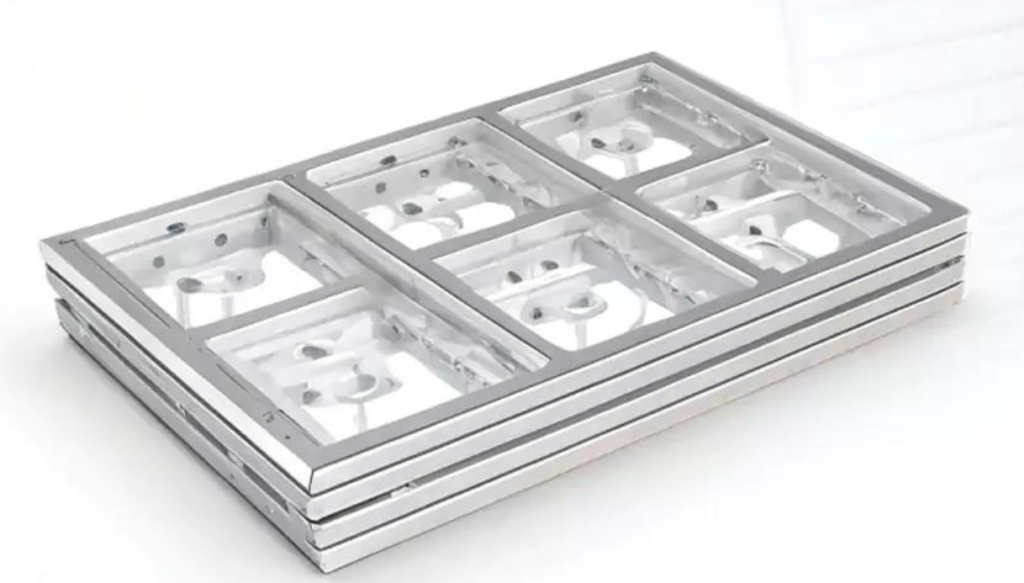
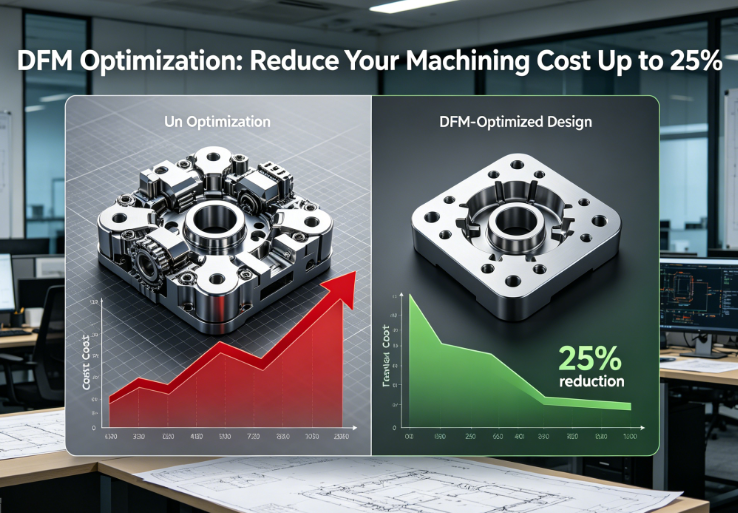
Visual Comparison: Bad Design vs Zorapid DFM Optimized Part
Original Unoptimized Design (Cost Heavy Flaws)
- Sharp internal corners requiring tiny fragile end mills
- Over-toleranced non-critical surfaces
- Thin flexible walls prone to chatter distortion
- Multiple undercut features needing secondary EDM work
Zorapid DFM Refined Design (Cost Efficient)
- Uniform standard R3 internal radii
- Tiered tolerances only on critical assembly faces
- Reinforced consistent wall thickness
- All geometry accessible via standard 3-axis CNC setup
- Fewer unique drill/tap sizes to reduce tool change downtime
Visually, the two parts look almost identical to engineers—but the optimized version costs nearly 25% less to machine at scale.
How Zorapid Delivers Free Pre-Production DFM Analysis
We built DFM optimization directly into our NPI workflow for every custom CNC machining order, no hidden fees.
Our standard DFM review process works in 4 simple steps:
- You share your native CAD files (STEP, IGES, SolidWorks)
- Zorapid senior manufacturing engineers run full geometry & tolerance audit
- We send a marked-up revised CAD + detailed cost breakdown comparison report
- You approve DFM tweaks, or request custom adjustments to preserve strict design constraints
This free pre-production review eliminates costly redesign rework after machining starts. Most competitors charge separate DFM consulting fees—Zorapid includes it for all prototype and batch orders.
Our Manufacturing Capabilities Backing DFM Savings
- 3000 m² precision machining facility (5-axis CNC, Swiss turning, high-speed milling)
- ISO 9001 & AS9100 certified quality control
- In-house simulation tools to validate DFM changes before cutting stock
- 20+ years supporting aerospace, medical, automotive, semiconductor OEMs worldwide
Industries That Gain The Biggest Savings From DFM
DFM cost optimization delivers outsized ROI for these high-precision verticals:
- Medical Devices: Small complex housings, strict biocompatible material rules, tight sealing tolerances (average 22–28% cost cut)
- Aerospace & UAV: Lightweight structural brackets, alloy material components (19–25% savings)
- Industrial Automation & Robotics: High-volume aluminum mounting frames, repeated batch runs
- Semiconductor Test Equipment: Ultra-precise cavities with critical flatness specs
- EV & Automotive Prototypes: Fast iteration cycles, large CNC-machined structural parts
Even low-volume prototype runs (1–50 pieces) see measurable cost drops with basic DFM adjustments.
FAQ
Will DFM optimization change my part’s fit or function?
No. Zorapid engineers only modify non-critical geometry and tolerances. All functional mating surfaces, load-bearing structures, and sealing specs stay fully preserved. We provide test validation data on request for regulated industries like medical and aerospace.
Is DFM worth it for one-off prototype parts?
Absolutely. Even single prototypes carry high setup and tooling overhead. Simple DFM tweaks can slash prototype machining quotes by 15–22% and cut lead time by multiple days.
How long does a full Zorapid DFM review take?
Standard turnaround: 1–2 business days after receiving your CAD files. Rush DFM analysis available for urgent NPI projects.
Can I send my revised DFM CAD to other manufacturers?
Yes. All optimized CAD files and DFM reports we deliver belong to your engineering team for unlimited external use.
Wrap-Up
Machining cost waste doesn’t have to be built into your design.
DFM optimization is the fastest, lowest-risk way to shrink your custom part budget without compromising quality or performance.
Zorapid’s free pre-production DFM audit turns hidden design flaws into measurable cost reductions—our client data consistently hits the 18–25% machining cost savings range with minimal CAD adjustments.
Ready to calculate your potential cost cut? Send over your CAD drawing today for a complimentary full DFM analysis and transparent CNC machining quote.