Published by Zorapid
Tired of slow, overpriced low-volume sheet metal prototypes? Grab 12 actionable rapid manufacturing tips from Zorapid’s precision engineering team. Cut lead times by 40%, slash prototype costs, avoid rework, and get production-ready metal parts without expensive hard tooling—perfect for hardware startups, medical, aerospace & electronics OEMs.
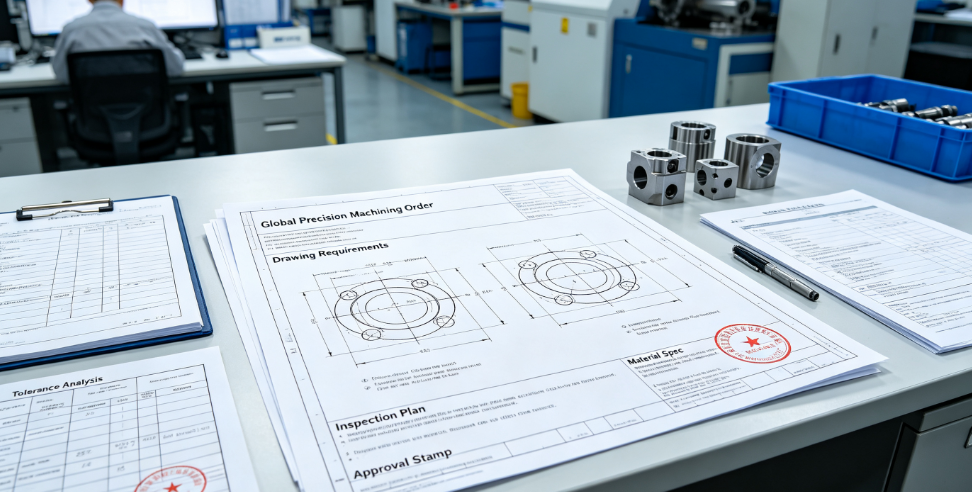
If you’re a product engineer, hardware startup founder or procurement manager sourcing sheet metal prototypes in low runs (1–500 units), you know the pain all too well.
Traditional sheet metal shops force you to pay thousands for custom stamping dies just to test a simple enclosure or bracket. Lead times stretch 2–4 weeks. One tiny design flaw means full rework, wasted budget and delayed product launches.
That’s where rapid low-volume sheet metal manufacturing changes everything. No hard tooling, fast laser cutting + CNC bending workflows, real metal functional parts, and room to iterate multiple designs fast.
At Zorapid, our 3,000㎡ precision fabrication center handles thousands of small-batch sheet metal prototypes yearly for North American, European and Australian clients. We’ve compiled our field-tested, zero-fluff tips to speed up your prototyping, lower costs and eliminate common manufacturing headaches.
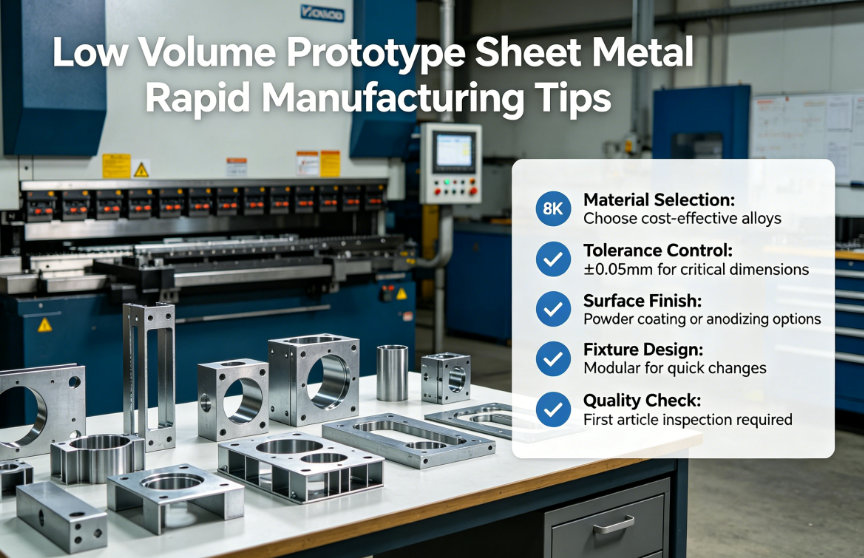
Below are actionable, engineer-approved hacks you can apply to your next RFQ today.
Pick Zero-Tooling Core Processes for Fast Low-Volume Turnaround
Here’s the biggest mistake overseas buyers make: asking for stamping dies when they only need 5–100 prototype units. Hard tooling adds $8,000–$20,000 upfront and 2+ weeks of lead time you don’t have.
Stick to these rapid, tool-free workflows exclusively for low-volume prototyping:
- Fiber Laser Cutting: ±0.005” precision flat blanks, cuts aluminum, stainless, mild steel in hours. Nest multiple part designs on one sheet to save material cost.
- CNC Press Brake Air Bending: Universal standard tool sets for all common bend angles (90°, 135°, U-channels). No custom bend dies required.
- Spot Welding / MIG Welding: Fast assembly for prototype frames, lighter distortion vs full TIG if surface finish is non-critical.
- Offline PEM Insertion: Install self-clinching nuts/studs in batches without secondary machining delays.
Zorapid Pro Tip: We combine laser cut + CNC bending as our standard rapid prototype package. Most simple enclosures ship in 1–3 working days once your CAD file is finalized.
Optimize CAD Files To Cut Quotation & Production Delays By 60%
Vague, incomplete CAD files are the cause of back-and-forth email delays between overseas buyers and manufacturers. Our engineers spend 30% of their time clarifying messy drawings every week.
Follow these simple file rules for instant, accurate quotes and zero production hold-ups:
Submit STEP (.stp) 3D files + DXF flat pattern (1:1 scale, clear bend lines)
Skip mesh STL files—they lose critical bend, hole and tolerance data
Label all critical GD&T datums, threaded holes, weld zones and surface finish requirements
List exact material grade, sheet thickness and target surface treatment directly on drawings
Separate assembly sub-parts into individual CAD files for multi-piece prototypes
Quick win: If you share fully defined CAD upfront, Zorapid locks your quote within 4 working hours for most low-volume sheet metal projects.
DFM Design Rules To Avoid Rework On Low-Volume Prototypes
Design for Manufacturability (DFM) doesn’t just save money—it stops you from receiving unbuildable prototype parts. These universal sheet metal rules apply to every small batch run at Zorapid:
- Inside bend radius ≥ 1x material thickness (1T). Skip tight radii under 0.8T—they crack aluminum and stainless during bending.
- Minimum flange height = 2T + inner bend radius. Short flanges force custom jigs and raise prototype cost 15–25%.
- Hole edge to bend line gap ≥ 1.5T minimum; 2T preferred to prevent ovalized holes after forming.
- Hole diameter never smaller than sheet thickness. Tiny thin-sheet holes tear during laser cutting.
- Limit tight tolerances only to functional mating surfaces. Use ISO 2768 medium tolerance for all non-critical dimensions.
Case Example: A US medical startup sent us a stainless sensor housing with 0.6T bend radii initially. We revised the DFM and reissued the CAD overnight—they avoided a full prototype rework batch of 30 units worth $1,400 in labor and material waste.
Smart Material Selection For Low-Volume Prototypes
Don’t over-spec specialty alloys for early design validation prototypes. Match material to your testing goals to slash lead time and material expense:
| Material Grade | Best For Low-Volume Prototypes | Key Prototype Benefit |
|---|---|---|
| 5052 Aluminum 0.8–3.0mm | Electronics enclosures, lightweight brackets | Easy bending, fast anodizing, low raw cost |
| 304 Stainless Steel | Industrial equipment housings, corrosion test parts | In stock at Zorapid, passivation finish ready |
| SPCC Cold Rolled Steel | Internal structural frames, powder-coated prototypes | Cheapest bulk sheet for non-outdoor use |
| 316 Stainless | Marine/medical corrosion validation | Order only for salt-spray test runs (longer lead) |
Zorapid Hack: We stock full sheets of 5052 Al, 304 SS and SPCC on-site. Specialized alloys like titanium or Inconel require 3–5 extra days sourcing—reserve those only for final functional pilot prototypes.
Tolerance Strategy: Stop Wasting Budget On Over-Specified Precision
Most engineers add tight ±0.002 tolerances across entire parts just to be safe —this doubles inspection time and raises your prototype quote drastically.
Our standard low-volume sheet metal tolerance baseline (achievable without premium setup):
- Laser cut profiles: ±0.005”
- CNC bend dimensions: ±0.010”
- Hole position: ±0.008”
Only lock tight fine tolerances on:
- PCB mounting slots
- Shaft fit openings
- Inter-panel assembly mating edges
All other dimensions can use standard commercial tolerance. At Zorapid, we automatically flag over-toleranced drawings during DFM reviews and send cost-saving revision suggestions free of charge.
Nest Parts Strategically To Cut Raw Material Waste
Material cost makes up 35–50% of your total low-volume prototype bill. Intelligent sheet nesting directly reduces per-unit pricing for small runs.
Two easy nesting tips you can coordinate with your manufacturer:
- Group all prototype sub-components on one standard sheet size (48×96” / 1220×2440mm) to eliminate leftover scrap.
- Request shared nesting if you have multiple unrelated small prototype jobs running at the same time.
For a 50-unit aluminum enclosure batch, optimized nesting at Zorapid cuts sheet waste by ~12% and saves roughly $300–$600 per order.
Simplify Secondary Finishing For Faster Prototype Delivery
Surface finishing (powder coat, anodize, passivation, silk screen) is the most common lead time bottleneck for low-volume metal prototypes. Speed up delivery with these tweaks:
- Skip custom color powder coating for initial fit-test prototypes; use natural metal finish or standard black/white stock powder colors.
- Install PEM fasteners after coating—this eliminates labor-intensive hole masking and cuts finishing time by 1–2 days.
- Combine silk screen marking in one single batch post-finish instead of separate marking runs.
If you only need form/fit validation without cosmetic requirements, request deburr-only raw metal finish—our fastest prototype turnaround option.
Consolidate Multi-Piece Assemblies To Lower Labor & Lead Time
Every separate sheet metal sub-part adds laser cutting, bending and inspection setup steps. Where design allows, merge two small brackets or panels into a single formed blank.
Real Zorapid Client Win: An EU automation OEM originally split a machine guard into 4 separate sheet metal pieces. Our engineers redesigned it as one single laser + bend part for their 80-unit prototype run. Total prototype cost dropped 22%, assembly labor cut in half, lead time shortened 2 full days.
Batch All Iteration Revisions At Once To Avoid Multiple Setup Fees
Low-volume prototyping’s hidden cost killer: sending one small design revision at a time. Each new CAD change triggers a full machine re-setup charge.
Instead:
- Run your first prototype batch (10–20 units) for core fit testing.
- Collect all feedback, dimensional fixes and feature adjustments.
- Submit one consolidated revised CAD file for the second production run.
This simple step eliminates repeated setup fees that can add $500–$1,200 across multiple small rework batches.
Choose A Manufacturer With Integrated In-House Full Workflow
Many overseas sourcing agents outsource laser cutting, bending, welding and finishing to third-party subcontractors. Each handoff adds delays, miscommunication and quality inconsistency for your low-volume prototypes.
Zorapid’s all-in-one in-house manufacturing eliminates third-party delays:
- Fiber laser cutting stations
- 6-axis CNC press brakes
- Spot/MIG/TIG welding booths
- PEM insertion workshop
- In-house powder coating, anodizing & silk screen lines
- First Article Inspection (FAI) lab with CMM dimensional testing
Every prototype stays under one roof—no cross-factory shipping gaps, full quality control for every small batch order.
Lock Clear Pre-Production Inspection Rules For Overseas Shipment
Sourcing sheet metal prototypes from Asia creates risk of receiving non-conforming parts after weeks of shipping. Remove all guesswork with these pre-ship inspection rules for your RFQ:
- Mandate full FAI dimensional report with photos before shipment.
- Request sample photos of 2–3 random finished prototype units for sign-off.
- List clear acceptable surface defect limits (scratch size, discoloration, burr standards).
- Specify DDP door-to-door shipping to avoid unexpected customs fees for low-volume small parcels.
Our standard Zorapid overseas prototype package includes free FAI reports and pre-ship photo confirmation for all orders over 10 units.
Plan Scalability From Prototype To Low-Volume Pilot Runs
The best low-volume sheet metal prototypes aren’t just for testing—they should smoothly scale to 500–2,000 unit pilot production later. Future-proof your design with these tweaks:
- Stick to standard sheet gauges and off-the-shelf fastener sizes.
- Avoid one-off custom bend profiles that require special tooling for larger batches.
- Design modular components that reuse identical sheet metal base parts across product variants.
When you’re ready to scale past prototypes, Zorapid transitions your CAD files directly to soft tooling low-volume production without full design rework.
Real-World Zorapid Low-Volume Prototype Case Study
Client: US Medical Device Startup
Requirement: 45-unit stainless steel sensor housing prototype run
Initial Pain Points
- Original design with ultra-tight tolerances across full part, tiny 0.7T bend radii
- Separate outsourced finishing vendor predicted 18-day lead time
- 3 split assembly pieces with heavy masking for threaded holes
Zorapid Optimization Steps
- Free DFM review revised bend radii to 1T and relaxed non-critical tolerances
- Merged 3 assembly panels into one single formed sheet metal blank
- Swapped pre-coat threaded holes for post-install PEM nuts to eliminate masking
- Nested all 45 units on one full stainless sheet to cut material waste
Final Outcome
- Lead time cut from 18 days to 4 days
- Total prototype cost reduced 28%
- Zero dimensional rework during testing phase
- Design ready to scale to 1,500-unit pilot production later that quarter
FAQ
What counts as low volume for sheet metal rapid prototyping?
The industry standard low-volume range is 1–500 units. This range avoids expensive hard tooling and fits rapid laser + CNC bending workflows perfectly at Zorapid. Runs above 500 units shift to soft tool pilot production for better per-unit pricing.
How fast can Zorapid ship low-volume sheet metal prototypes to US/EU?
Simple aluminum enclosures (1–50 units) ship within 3 working days post CAD approval via DDP air freight. Stainless steel batches with finishing take 5–7 production days plus 3–5 day door-to-door international transit.
Can I iterate multiple design versions in one single prototype order?
Absolutely. We nest different design variants on the same raw sheet to cut separate setup fees. Just submit all revised CAD files together for consolidated quoting.
Does Zorapid offer free DFM analysis for sheet metal prototype drawings?
Yes. Every RFQ request includes a complimentary DFM review from our senior sheet metal engineering team, with annotated design tweaks to reduce cost and lead time.
Closing From Zorapid
Low-volume sheet metal prototyping doesn’t need to be slow, expensive or full of avoidable rework. The 12 tips above combine decades of hands-on precision manufacturing experience tailored for overseas product engineers and hardware founders.
If you’re ready to turn your CAD into fast, cost-effective functional sheet metal prototypes without hard tooling costs, send your drawing package to Zorapid today for a zero-obligation rapid quote + free DFM design review.