Published by: Zorapid Precision Sheet Metal Fabrication
Every sheet metal enclosure project hits this tough call: powder coat or anodize?
Get it wrong, and you face three costly headaches.
Tight threaded holes no longer fit after thick coating. The surface fades and rusts outdoors in just two years. Or you overspend on high-end anodizing for a basic indoor cabinet.
We build hundreds of control boxes, IoT housings and battery enclosures every month at Zorapid.
Most overseas customers mix up these two processes because they do not understand one critical difference:
Anodizing becomes part of aluminum. Powder coating sits on top of the metal surface.
Today we break down every real-world factor: dimensional shift, salt spray performance, color options, unit pricing and enclosure assembly issues.
By the end, you will know exactly which finish fits your cabinet project.
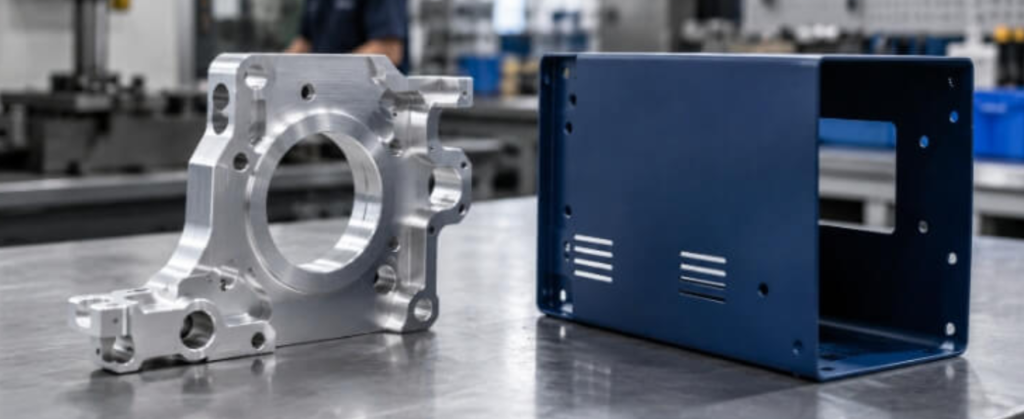
Core Process Difference
Let’s keep this simple, no textbook jargon.
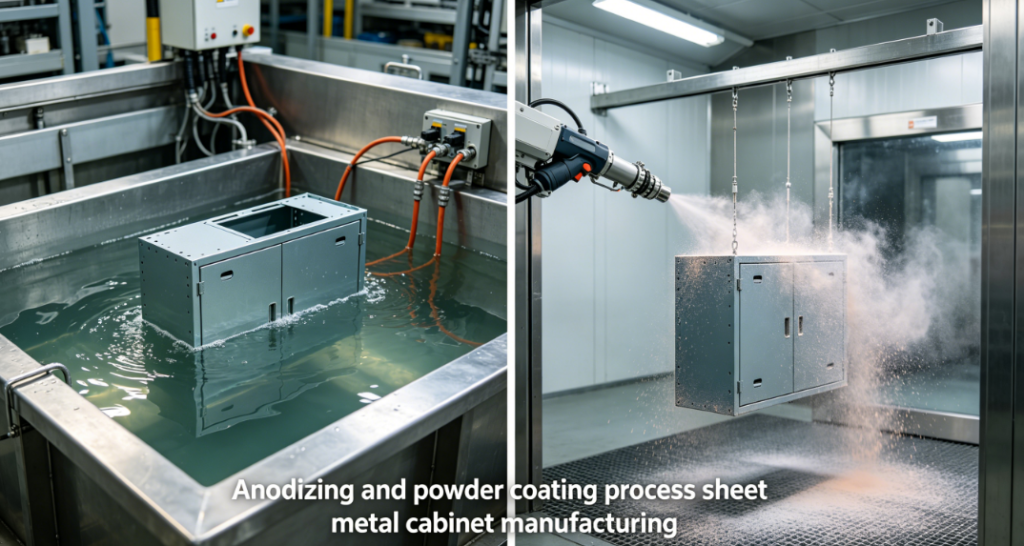
Anodizing
It is an electrochemical reaction only for aluminum.
The acid bath plus electric current turns the outer aluminum layer into hard aluminum oxide.
No extra paint sticks on the surface. The thin oxide layer grows inward from the original material surface.
Coating thickness: only 5–25μm. Hard, bonded, and impossible to peel off.
Powder Coating
Dry plastic powder sprays electrostatically onto metal, then baked at 180–200°C into a solid polymer film.
This coating sits fully on top of steel, aluminum or galvanized metal.
Coating thickness: 60–120μm. It covers scratches, but heavy impact will create chips.
Key rule for enclosures:
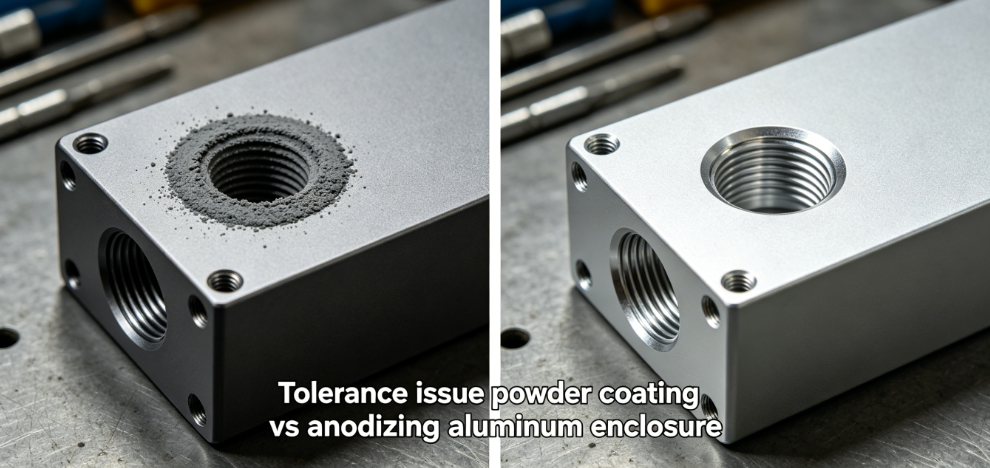
If you hold tight tolerance on tapped holes, alignment pins or assembly flanges, thickness change will make or break your fit.
Direct Side-by-Side Comparison for Sheet Metal Enclosures
All data comes from our enclosure production and ASTM B117 salt spray testing.
| Evaluation Item | Anodizing (Type II / Type III) | Powder Coating (Polyester Powder) |
|---|---|---|
| Compatible Material | Aluminum only (6061, 5052 sheet) | Steel, cold rolled steel, galvanized steel, aluminum |
| Coating Thickness | 5~25μm (almost no dimensional shift) | 60~120μm (adds thickness to all surfaces) |
| Dimensional Tolerance Impact | Tapped holes, pin positions stay within ±0.01mm tolerance | Threads must be masked or re-tapped; flange gaps may shift |
| Corrosion / Salt Spray Hours | Type II: 1000hrs; Hard Anodize Type III: 2000+hrs | Standard powder: 500~800hrs; Outdoor polyester: 1000hrs |
| UV Outdoor Stability | Excellent, no fading for 15~20 years | Good; epoxy powder chalks under sunlight |
| Scratch & Abrasion Resistance | Very high; hard ceramic oxide layer | Moderate; flexible coating can chip on sharp edges |
| Color Range | Limited: clear, black, bronze, dark grey metallic dyes | Unlimited: all RAL matte, textured, gloss, custom colors |
| Hide Sheet Metal Blemishes | Poor; minor weld marks or grinding lines still visible | Excellent; thick film covers weld seams and surface burrs |
| Unit Cost (Medium Batch) | Higher (35% more expensive than powder coat) | Low cost for large cabinet batches |
| Lead Time | 3–5 days for multi-stage acid bath processing | 1–2 days fast batch curing |
| Heat Dissipation | Good thermal conductivity | Insulating polymer slows heat transfer |
Notes from Zorapid workshop:
Sharp folded corners on sheet metal always get thin powder coverage. Anodizing forms an even layer all over folded edges without thinning.
When to Choose Anodizing for Your Metal Enclosure
Pick anodize only if all these conditions apply to your cabinet:
- The enclosure material is 5052 / 6061 aluminum sheet
- You need tight assembly tolerances: tapped holes, positioning pins, precision mating flanges
- The housing sits outdoors, coastal salt air, long-life electronics equipment
- You want a clean metallic brushed finish without thick paint
- The unit requires good heat dissipation for PCBs and power modules
- Zero peeling or flaking is required for long-term field reliability
Best enclosure applications for anodizing:
- IoT aluminum instrument housings
- Outdoor telecom control boxes
- Medical electronic equipment casings
- Battery aluminum enclosures with precision machined mounting holes
Common pitfall we fix for customers:
Do not use Type II decorative anodizing for coastal projects. Upgrade to Type III hard anodizing to double salt spray life without ruining dimensions.
When Powder Coating Is the Better Choice for Sheet Metal Cabinets
Powder coat wins most enclosure projects for four practical reasons:
- It works perfectly on carbon steel and galvanized steel (anodizing cannot process steel at all)
- Unlimited RAL colors and textures. You can match brand color for industrial control panels
- Thick coating hides weld seams, grinding scratches and sheet metal surface imperfections
- Lower cost, faster turnaround for big batches of electrical cabinets
Other big advantages for enclosure builders:
- You can coat full welded cabinet assemblies without masking dozens of precision holes
- Impact resistance is far better for shipping; minor bumps will not crack the surface
- No chemical acid waste; powder overspray is fully recyclable (compliant with EU environmental rules)
Top enclosure projects for powder coating:
- Steel electrical distribution cabinets
- Indoor industrial machine housings
- EV charger metal enclosures
- Large sheet metal junction boxes with welded seams
- Low-cost consumer equipment casings
One critical warning from our finishing team:
Never powder coat pre-threaded holes without high-temperature masking tape. The cured powder will block threads and force expensive rework.
Hidden Enclosure Problems Most Fabricators Fail to Warn You About
We run into these two mistakes on nearly every overseas enclosure order:
1: Ignore Coating Thickness on Mating Surfaces
Anodizing adds almost zero thickness. Powder coat adds 0.06–0.12mm on every flat face.
If two cabinet halves fit tight before coating, powder coat will make them bind after baking.
Zorapid solution: We add intentional 0.13mm clearance on all matching flanges for powder-coated enclosures.
2: Choose the Wrong Powder Grade for Outdoor Use
Epoxy powder looks cheap, but it fades and chalks within 2 years under sunlight.
We strictly use polyester TGIC powder for all outdoor sheet metal housings to guarantee 10+ years of color stability.
3: Expect Anodizing to Cover Weld Lines
Anodizing is translucent. Every weld mark will stay visible on the aluminum surface.
If you want to hide welding traces, you have to go with powder coating.
Real Zorapid Enclosure Case Study
Project Info
Aluminum 6061 sheet metal outdoor telecom enclosure, with 12 tapped mounting holes and folded flanges.
Option A: Powder Coating
The thick coating partially blocked threads. We spent 2 hours re-tapping every hole, and the tight flange created assembly binding. Salt spray only hit 700 hours, failing the customer’s coastal specification.
Option B: Type II Sealed Anodizing
Only 15μm oxide layer. All threaded holes stayed within drawing tolerance. No rework needed.
Salt spray test reached 1100 hours, UV test passed 2000hrs without discoloration.
First article passed inspection with zero dimensional deviation.
Final outcome:
We switched the finish to anodizing, cut rework time completely, and the batch met the European telecom long-life standard.
Quick Decision Checklist for Your Sheet Metal Enclosure
Go with Anodizing if:
- Base material = aluminum
- Precision holes & tight assembly fit
- Outdoor / coastal environment
- Metallic brushed appearance
- PCB heat dissipation matters
Go with Powder Coating if:
- Material is steel or galvanized metal
- Need custom brand RAL colors
- Weld seams need full coverage
- Large batches with low budget
- Indoor or moderate outdoor environment
Hybrid Solution (Premium Enclosure):
Brushed aluminum + clear anodize on machined precision surfaces + local powder coating on welded cosmetic panels. We regularly deliver this combo for high-end OEM equipment.
Why Choose Zorapid for Finished Sheet Metal Enclosures
- We pre-calculate coating thickness during DFM review, so you never run into flange binding or blocked threads
- Two full finishing lines: anodizing (Type II & Type III hard coat) and full polyester powder coating with RAL color library
- Every enclosure batch comes with salt spray test records and surface finish inspection reports for EU & US OEM audits
- Sheet metal bending, laser cutting, welding + surface treatment under one roof, lead time cut by 30%
- We mask all threaded holes and precision features automatically to eliminate post-coating rework
- First article approval rate above 97% for export electrical housings
Conclusion
The fight between powder coating and anodizing for sheet metal enclosures always comes down to three factors: material, tolerance, and working environment.
Anodizing is the precision outdoor aluminum finish with zero dimensional shift and zero peeling.
Powder coating is the low-cost, high-color solution for steel cabinets and cosmetic welded housings.
Picking the wrong finish leads to rework, field corrosion, and delayed shipments.
At Zorapid, we build the enclosure geometry around your coating choice upfront in the DFM stage.
Send your enclosure STEP and 2D drawings. Our engineering team will mark up tolerances and recommend the most cost-effective surface treatment free of charge.
FAQ
Does anodizing change aluminum part dimensions?
Only 5–25μm grows inward from the surface. It barely shifts size, making it ideal for tapped holes and mating flanges on enclosures. Powder coat adds 60–120μm external thickness and changes fit drastically.
Can you anodize steel sheet metal enclosures?
No. Anodizing is exclusively for aluminum, titanium and magnesium. All steel cabinets must use powder coating.
Which finish lasts longer outdoors for aluminum housings?
Sealed Type II anodizing outlasts standard powder coat by years. It resists UV rays and salt air without fading, while regular polyester powder will slowly chalk after 8–10 years.
Will powder coating cover welding lines on sheet metal cabinets?
Yes. The thick polymer film fully hides weld seams, grinding marks and minor surface defects. Anodizing is clear and will show every weld trace.
Which finish is cheaper for bulk enclosure orders?
Powder coating costs 30–40% less per square foot and has shorter curing cycles. Anodizing requires multiple chemical bath stages and higher energy cost.
Can we keep threaded holes clean during powder coating?
Yes, with high-temperature silicone masking plugs. We pre-install plugs on all threaded features to avoid re-tapping after baking.