Published by Zorapid
You just opened two CNC quotes for your custom machined part.
The 3-axis price looks clean and cheap. The 5-axis line item jumps 60% higher right away.
Your first thought: Do I really need to pay this premium? Is 5-axis just an expensive upgrade, or will it actually cut my total project cost long-term?
This no-fluff buyer guide will help you stop guessing. We break down real cost tradeoffs, list exactly which parts need 5-axis machining, and show you when sticking with 3-axis wastes more money than upgrading.
At Zorapid, we run 3-axis and full 5-axis simultaneous mills daily for aerospace, medical, semiconductor and EV OEMs. We see this cost debate pop up on nearly every RFQ. Let’s cut through the sales noise and run plain math you can plug directly into your sourcing decision.
Why 5-Axis Always Carries a Higher Upfront Price Tag
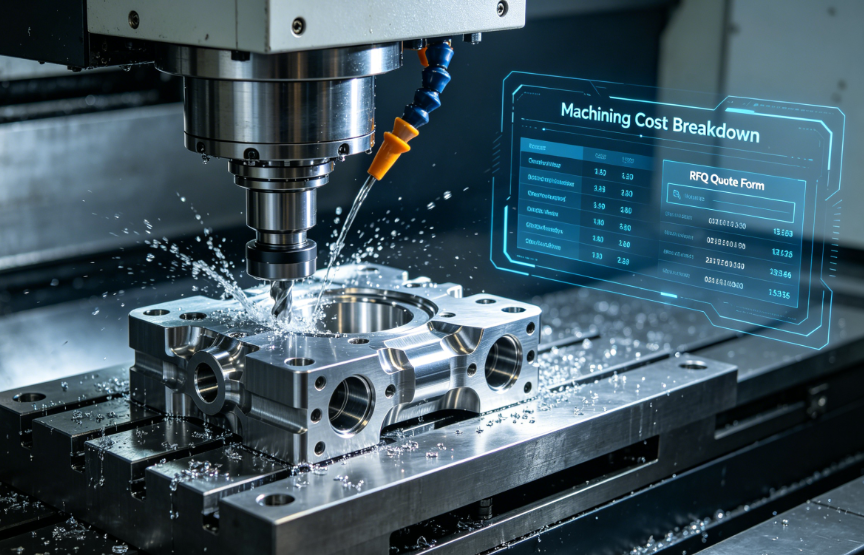
Let’s be fully transparent. The higher hourly rate is not markup. It comes from hard business costs.
- Machine capital cost A quality simultaneous 5-axis center costs 3x to 5x more than a standard 3-axis vertical mill. Maintenance, calibration and power bills run far higher every month.
- Higher skilled labor 5-axis programmers need advanced CAM simulation, VERICUT collision checking and GD&T tolerance control. Experienced operators demand higher pay than standard 3-axis machinists.
- Longer programming & simulation time One complex multi-surface job needs 2–4x more toolpath planning to avoid crashes. We add strict simulation time before every cut to lower scrap risk, and that labor gets added into your quote.
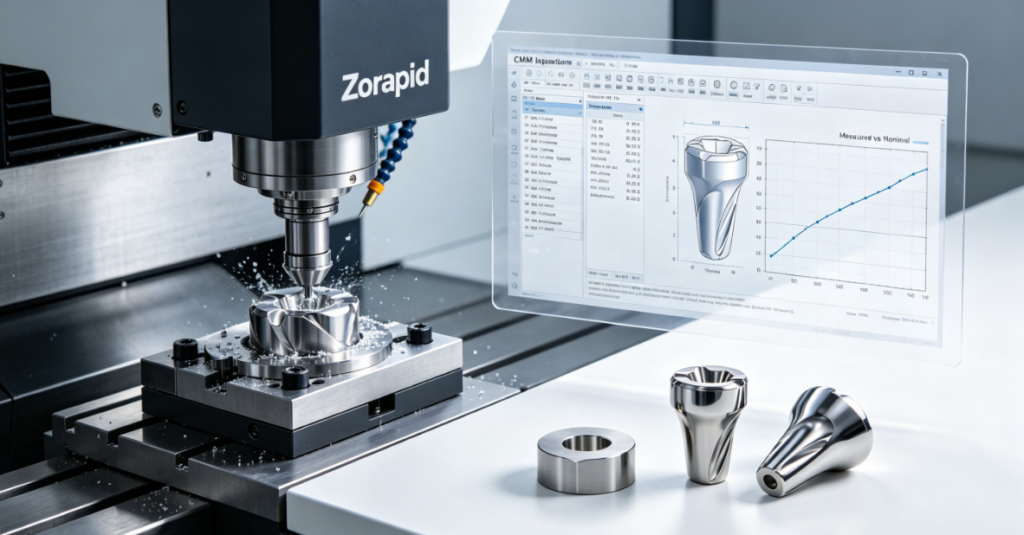
- Tighter quality control 5-axis jobs target ±0.005mm positional tolerance. We run full CMM inspection after production, which adds QC overhead you won’t see on basic 3-axis parts.
Quick Real-World Rate (2026 Global Sourcing Data, Zorapid Price Benchmark)
| Machine Type | Hourly Rate (USD) | Setup Fee | Typical Tolerance |
|---|---|---|---|
| Standard 3-Axis CNC | $35–65 | $180–350 | ±0.015 ~ ±0.025 mm |
| 3+2 Positional 5-Axis | $75–110 | $380–650 | ±0.008 ~ ±0.012 mm |
| Full Simultaneous 5-Axis | $120–185 | $550–900 | ±0.004 ~ ±0.008 mm |
Most buyers only compare this hourly line item and reject 5-axis immediately.
This is the biggest sourcing mistake you can make. Upfront cost is only half the story. The hidden costs of repeated re-clamping will blow your budget apart.
Hidden Costs of Sticking With 3-Axis
3-axis machines only move X, Y, Z. If your component has features on 4, 5 or 6 faces, every new angle needs a full re-clamp and re-datum. Every time you remount the workpiece, four costly problems show up:
- Tolerance stack-up error Each re-fixture shifts the base datum. What should be concentric bores or matched angled faces drift out of spec. You end up with rejected parts and expensive rework.
- Extra custom fixture cost You need multiple jigs, soft jaws and custom holding plates for every new orientation. Fixture design and fabrication often adds $300–$1,200 per batch on complex housings.
- Longer lead times Every clamp change stops production. A job that runs in 8 machine hours on 5-axis can stretch to 18+ hours on 3-axis with repeated stoppages. NPI prototype timelines blow out by 7–14 days easily.
- Poor surface finish + extra manual polishing On curved surfaces, 3-axis uses long, thin cutting tools that vibrate. You get chatter marks, tool deflection and uneven texture. Shops then charge extra for hand polishing to clean up blemishes, pushing total cost even higher.
Real Case Math (Zorapid Customer Prototype Batch, 15 aluminum aerospace brackets)
- 3-axis processing total cost: $2,820 Breakdown: Machining + 4 custom fixtures + 2 rework runs + polishing + extended inspection
- 5-axis one-setup total cost: $2,410 Breakdown: Higher machine time, zero extra fixtures, zero rework, no hand finishing. Final result: 5-axis was 15% cheaper overall, and delivered 9 days faster.
Clear Yes / No Checklist: When 5-Axis Is Absolutely Worth The Extra Money
Use this checklist the second you review a quote. Tick 2 or more boxes? 5-axis will save you total landed cost.
Your part has features on 3 or more separate faces
You need compound angles, undercuts, curved 3D contours or aerodynamic geometry
GD&T tolerances require tight positional accuracy across multiple datums (±0.01mm or tighter)
Deep cavity milling needs short, rigid cutting tools to avoid tool deflection
You run low-volume prototypes (1–25 pcs) and cannot afford multiple fixture sets
Post-processing polishing or secondary machining adds extra labor to 3-axis parts
Aerospace, medical implant, semiconductor fixture, EV cooling manifold or turbine component
Two 5-axis sub-types — Don’t Overpay For Full Simultaneous Motion
Many buyers waste money ordering full 5-axis when 3+2 positional 5-axis gets the job done at a lower rate.
- 3+2 Positional 5-axis (Budget Upgrade) The table tilts and locks at a fixed angle, then cuts linearly. Best for angled holes, deep bores, multi-face brackets. Cheaper programming, lower hourly cost.
- Full Simultaneous 5-axis (Premium Tier) All 5 axes move continuously during cutting. Only needed for blisks, turbine wheels, organic implant contours and complex freeform surfaces.
At Zorapid, our engineering team always flags this difference on every RFQ to avoid over-engineering your component and inflating your budget unnecessarily.
When You Should Stick With 3-Axis & Skip The 5-Axis Upgrade
5-axis is not always the smart buy. Save the premium for complex geometry only.
Stick strictly with 3-axis CNC if all these apply:
- Your part only has flat surfaces, 1–2 machined sides, no angled features
- Tolerances are loose (above ±0.025 mm), no strict GD&T callouts
- High volume mass production (hundreds to thousands of identical flat plates, simple blocks)
- Simple aluminum or plastic covers with no deep cavities or undercuts
For basic flat components, 3-axis remains the most cost-effective choice. We never push 5-axis on simple work just to raise the quote at Zorapid. Our DFM engineers always match machine capacity strictly to your part geometry.
4 Pro Buyer Tips To Avoid Overpaying For 5-Axis Machining (Zorapid Sourcing Playbook)
- Share full 3D STEP files + full GD&T drawing upfront Without complete geometry, most shops default to quoting full simultaneous 5-axis as a safety buffer. Full drawings let us run DFM analysis and select the cheaper 3+2 setup wherever possible.
- Ask suppliers to split the quote line-by-line Separate machine time, fixture cost, programming fee, simulation cost and QC. You can clearly see which charges are mandatory and which can be optimized.
- Eliminate unnecessary secondary operations in your design We can machine most angled holes and contoured surfaces in one 5-axis cycle. If you leave secondary drilling or tapping on the drawing, you still pay extra labor. Our team edits design for manufacturability to merge operations into one setup.
- Avoid splitting small prototype batches across multiple fixtures For NPI runs under 20 pieces, the fixed fixture cost crushes 3-axis pricing. One-setup 5-axis eliminates all custom jig expense entirely.
Real Zorapid Project Story (5 Axis Beat 3 Axis On Total Cost)
A European medical OEM sent us an RFQ for 18 Ti-6Al-4V orthopedic implant blanks.
The client first got a 3-axis quote that looked 40% cheaper on machine hours alone.
Our engineers ran a quick DFM review and pointed out the risks:
- 5 separate re-clamping cycles would create datum shift
- Long thin tools would bend and ruin the curved bone-contour surface
- 3 custom titanium fixtures would add $950 non-recurring cost
- At least 20% scrap rate was expected with repeated re-fixturing
We quoted 3+2 5-axis one-setup machining.
Final outcome:
- Zero custom fixtures
- 100% first-pass yield, zero scrap
- No manual secondary finishing
- Total project cost ended up 12% lower than the original 3-axis option, with lead time cut in half.
The client now runs all their low-volume implant components on our 5-axis cells.
Final Verdict: Is 5 Axis Worth The Extra Upfront Cost?
Short answer: Stop comparing only hourly machine rates. Calculate your total landed cost, including fixtures, rework, scrap, secondary labor and lead time delay.
- For simple flat parts with 1–2 machined sides: No. Stick with 3-axis to keep pricing low.
- For multi-face, angled, contoured, tight-tolerance custom components (prototypes & low batches): Yes, 5-axis almost always delivers lower total cost, higher consistency and faster delivery.
- Always start with 3+2 positional 5-axis before jumping to full simultaneous 5-axis, to avoid unnecessary premium pricing.
5-axis machining is not a luxury upgrade for fancy parts. It is a process optimization tool that eliminates repeated fixturing errors and wasted labor. If you only judge cost by the initial machine hour line, you will keep overspending on rework and delayed prototypes.
At Zorapid, we run a full 5-axis workshop with DMG Mori & Haas multi-axis centers, paired with DFM simulation, VERICUT collision check and ISO 9001 / IATF 16949 quality control. Send over your STEP file and drawing today, and we will split your quote between 3-axis, 3+2 5-axis and full 5-axis options with full cost breakdown — no hidden fees, no over-engineering.
FAQ
Does 5-axis always produce tighter tolerance than 3-axis?
Yes, because we lock the workpiece into one fixed datum. Multi-clamp 3-axis inevitably creates positional drift. We regularly hit ±0.005mm consistency on single-setup 5-axis runs.
Can small prototype runs justify 5-axis extra cost?
Prototypes (1–30 pcs) benefit most. The fixed cost of multiple jigs for 3-axis usually far outweighs the higher 5-axis machine rate.
Will 5-axis reduce my post-processing work?
Dramatically. Shorter rigid tools cut smoothly without chatter. Most parts come off the machine with Ra ≤0.4μm, no hand grinding or polishing required.
How do I stop suppliers quoting full 5-axis when 3+2 works?
Explicitly add geometry notes on your RFQ and attach the full 3D model. Our team will select the most economical multi-axis mode automatically.