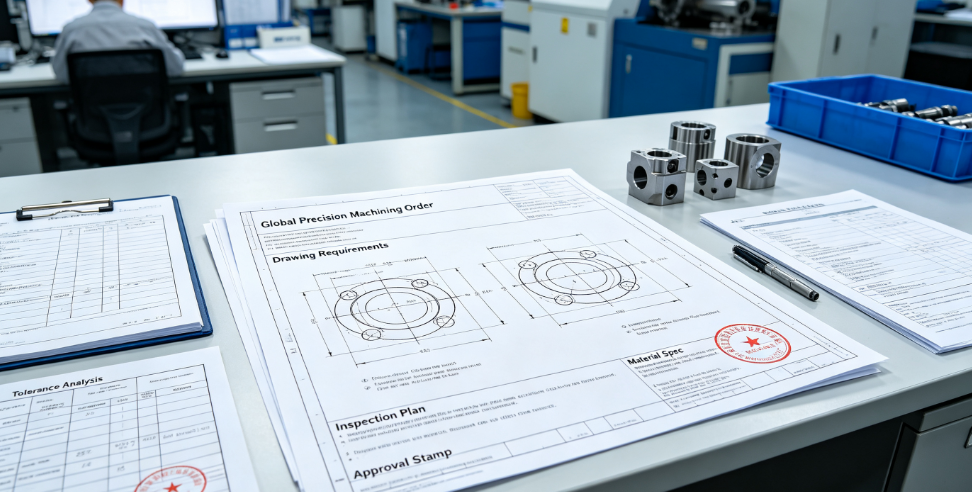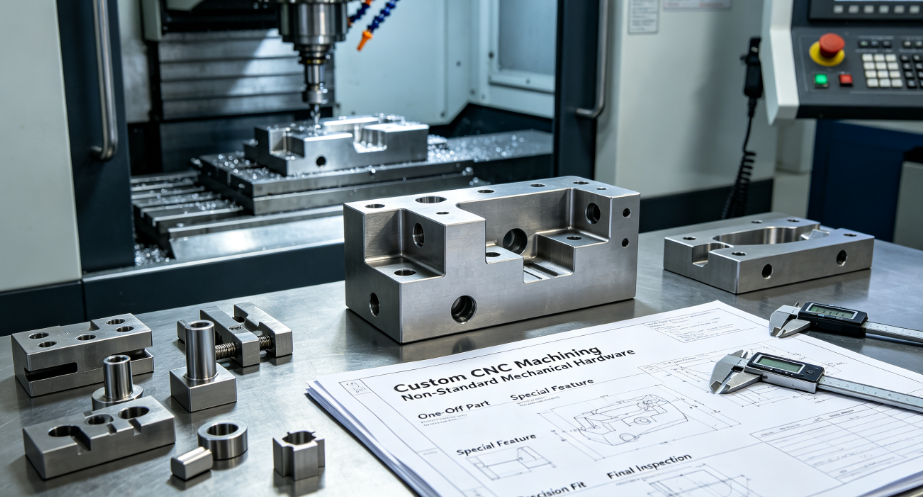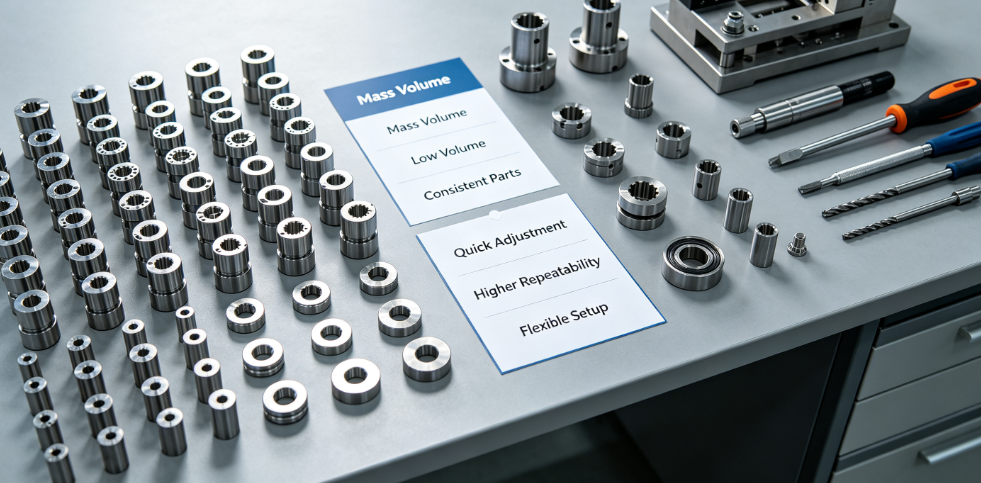
Custom aerospace manufacturing designs and builds application-specific parts for aircraft and aerospace systems. Unlike standard off-the-shelf components, custom parts are engineered to meet unique operational and performance demands for each aerospace vehicle.
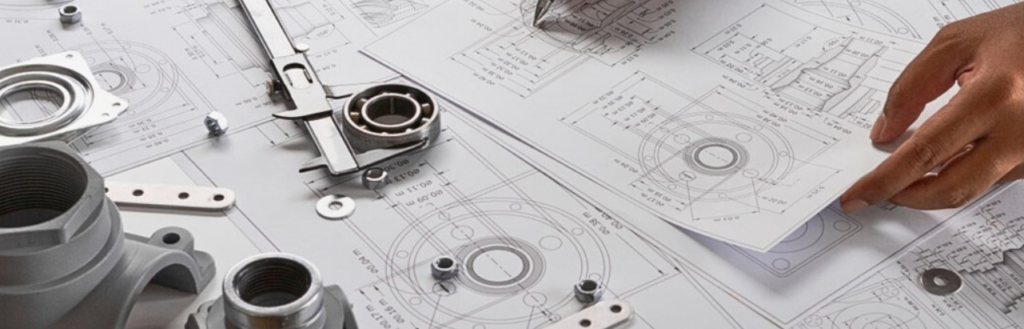
Custom Aerospace Parts Manufacturing
Close teamwork between aerospace engineers, designers and manufacturers delivers application-optimized components. Advanced analysis, prototyping and testing ensure strict quality compliance.
Custom aerospace manufacturing covers structural parts, propulsion units, avionics and cabin components. All parts are tailored in size, shape, material and function to match unique aircraft and aerospace system needs.
CNC Aerospace Manufacturing: Component Production Steps
Design & Programming
Aerospace parts are engineered via CAD software, with digital models built to define exact dimensions, features and tolerances. CAM software converts these designs into actionable G-code, delivering precise commands to guide full CNC machining operations.
Material Selection & Preparation
Materials for aerospace components are selected based on strength, weight, thermal performance and other critical factors. Raw materials, mostly metals and high-performance engineering plastics, are cut to required sizes and securely fixtured on the CNC machine table to complete pre-machining preparation.
CNC Machining
It precisely removes material from workpieces to achieve the required shape, dimensions and surface finish.
It covers a variety of processes such as milling, turning, drilling and grinding, depending on the complexity of components.
- CNC Turning:Workpieces rotate against fixed cutting tools to craft cylindrical parts. Widely used in aerospace for shafts, fittings and other rotational aircraft components.
- CNC Milling:A core aerospace machining process using rotating cutters to remove material. Ideal for high-precision engine parts, structural components and assembly housings.
- CNC Drilling:Delivers accurate, precision holes for aerospace parts. Critical for assembly, fastener mounting, wiring and piping layouts to secure aircraft stability and flight safety.peration and flight safety.
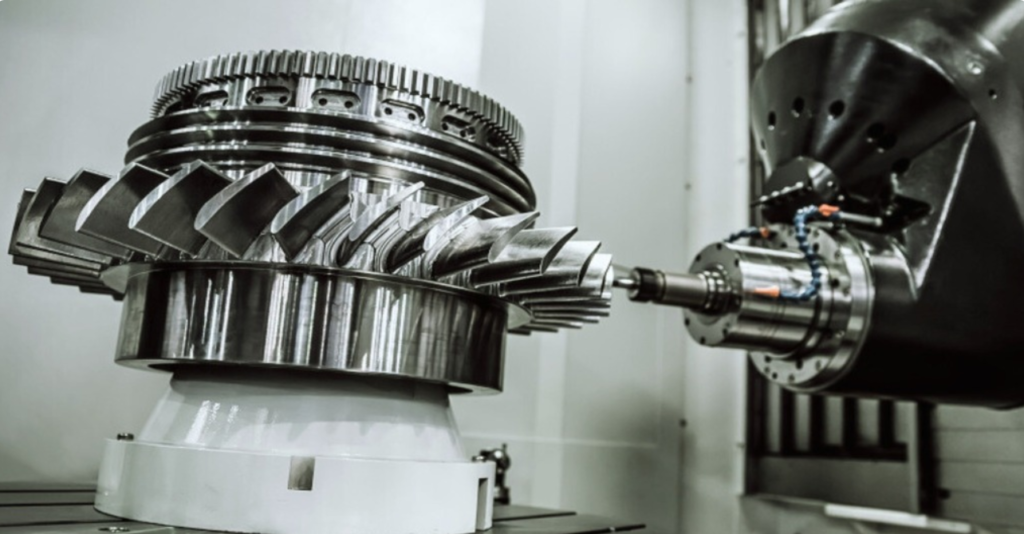
Tools and Tool Changing
Different cutting tools support all CNC machining tasks. Smart tool selection and swapping ensure top performance. Automatic tool changers enable fast tool changes to cut downtime and raise efficiency. Micrometers, calipers and CMM validate parts to meet strict industry specs.
Quality Control Tools:
- CMM precision devices measure component geometry to guarantee parts meet exact design specs.
- Hardness Tester: Measures material resistance to indentation, deformation and scratches, securing aerospace parts’ structural durability and mechanical stability.
- Optical Comparator: Magnifies part contours on-screen for direct comparison with templates and dimensional standards, enabling fast, accurate verification.
- Surface Profilometer: Precisely measures component surface roughness for objective texture checks, ensuring finishes meet all technical requirements.
Quality Evaluation
Full-process quality control covers every machining step to ensure aerospace parts meet exact specs. We conduct in-process checks with calipers, micrometers and CMM. Any dimensional or tolerance errors are rapidly identified and fixed.
Finishing & Post-processing
Post-machining finishing boosts surface quality and part appearance. Common options: deburring, polishing, anodizing and painting.
Testing and Verification
Finished aerospace parts go through rigorous testing to meet performance, safety and regulatory standards. Mechanical, dimensional and functional tests verify structural stability and overall performance.
Certification and Documentation
Parts gain aerospace certification after passing all tests and inspections. We keep complete manufacturing, testing and certification records for full traceability and regulatory compliance.
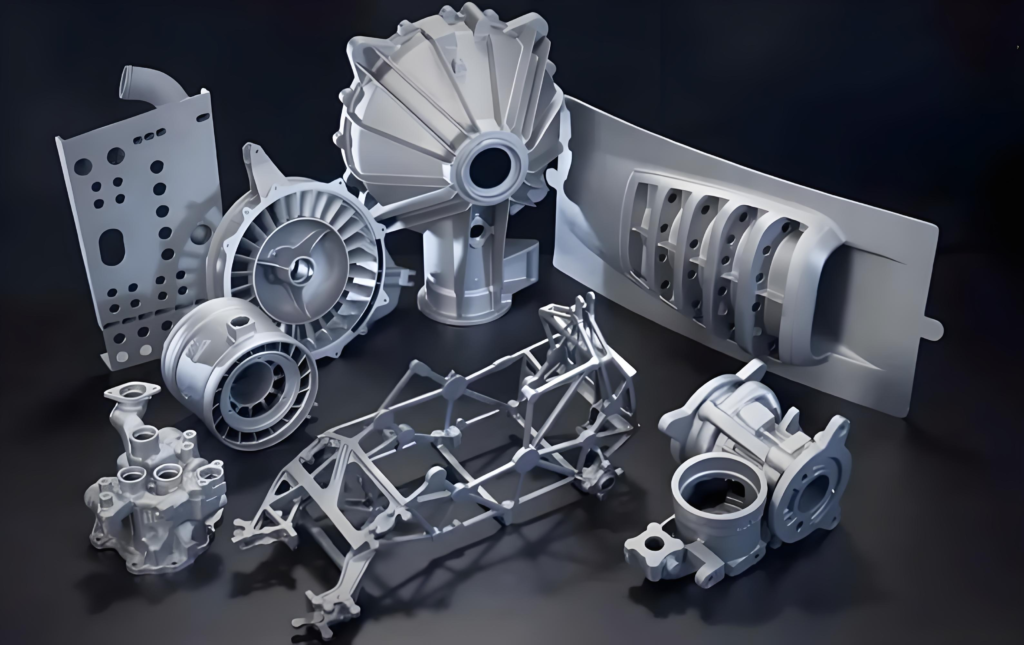
Other Machining Processes of Aerospace Parts
Besides CNC machining, several other processing methods are widely adopted in aerospace component manufacturing.
Aerospace Forging
Forging is critical to aerospace manufacturing, delivering durable, high-precision components for aircraft. Widely used for mass production, forged parts offer excellent durability and consistent dimensional accuracy.
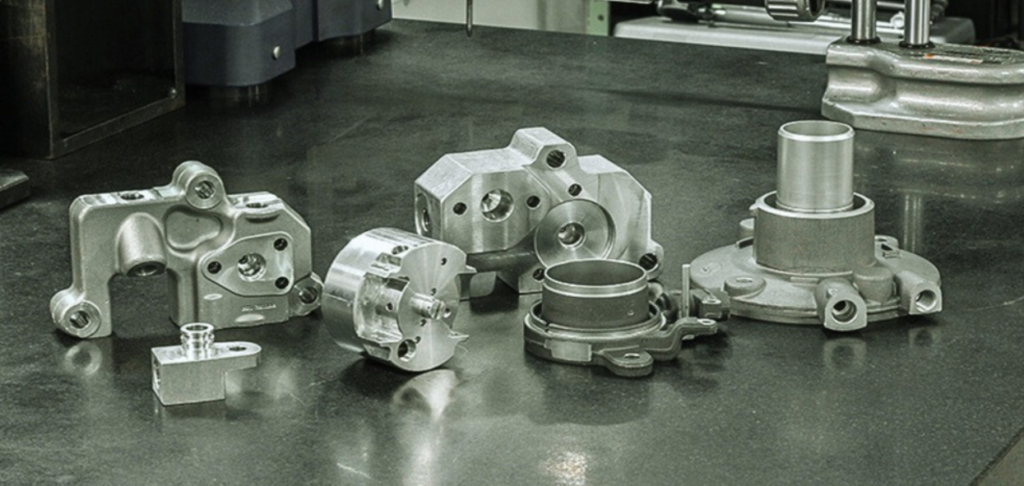
Forging processes including open‑die and closed‑die forging create complex aerospace parts like turbine blades and structural components. These methods deliver refined grain structure and superior mechanical performance.
Forged aerospace parts feature high strength, great toughness and long-term reliability. They perform steadily under extreme conditions, fully meeting strict modern aircraft standards and are essential for all critical aerospace applications.
Aerospace Injection Molding
Thermoplastics are essential in aerospace, ideal for lightweight interior non-structural parts. Injection molding forms molten plastic into complex components like seats, tray tables and control panels.
Injection molding creates lightweight parts to cut aircraft fuel consumption. Proper thermoplastic selection is critical for reliable performance in harsh aerospace conditions.
Aerospace-grade thermoplastics need strong flame resistance and stable performance under extreme temperature swings and heavy vibration. Even with strict standards, injection molding stays a cost-efficient solution for modern lightweight aircraft cabin parts.
Aerospace Additive Manufacturing
3D printing, or additive manufacturing, builds parts layer-by-layer from digital models. SLM and FDM are widely used for complex aerospace components like brackets, piping and engine parts.
It produces intricate geometries traditional methods cannot achieve. Ideal for custom, high-strength lightweight parts, it accelerates prototyping, shortens design cycles and cuts lead time.
Aerospace Metal Stamping
Metal stamping delivers high-precision panels, brackets and structural parts for aircraft production. It ensures tight tolerance and consistent mass output, serving as a reliable core process for aerospace manufacturing.
Metal stamping offers great cost efficiency and scalability for high-volume production.
Progressive dies combine multiple forming steps in one pass, streamlining output and ensuring on-time, high-quality aerospace parts.
Aerospace Waterjet Cutting
Waterjet cutting is a staple aerospace process, ideal for composite materials. High-pressure abrasive water delivers precise cuts on lightweight, high-strength aircraft-grade materials
It shapes flight control parts like rudders, elevators and ailerons for optimal aerodynamics, alongside interior panels, fairings, engine ducts and shrouds.
With outstanding versatility and precision, it manufactures winglets, wing ribs and fuselage composite structures for diverse aerospace applications.
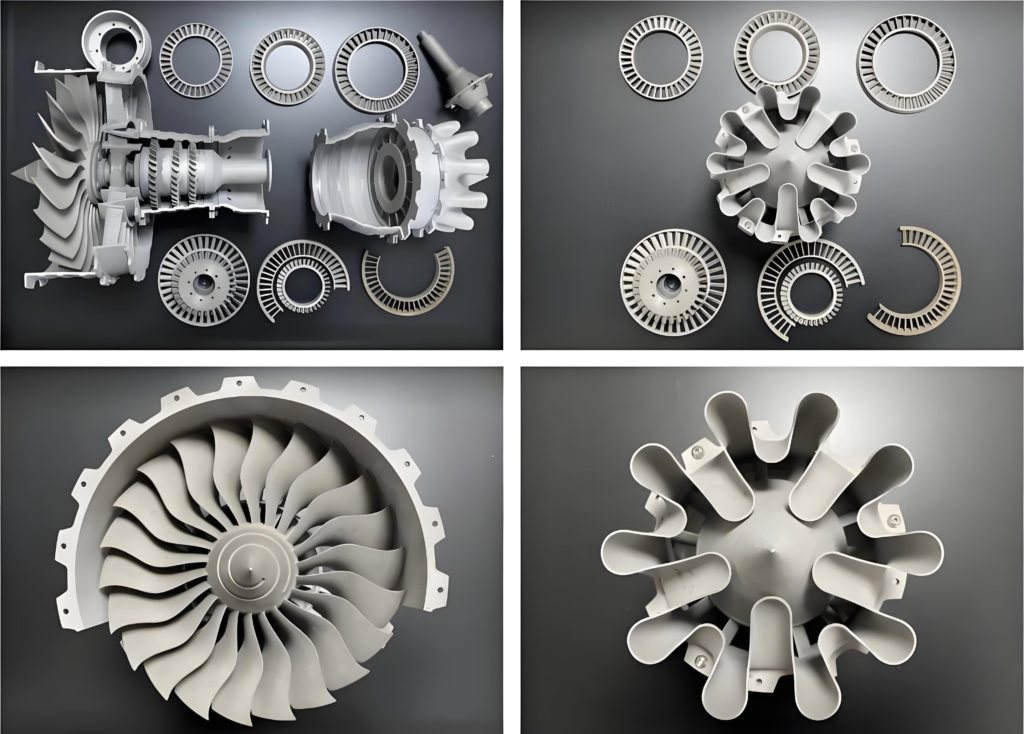
Materials for Manufacturing Custom Aerospace Parts
In aerospace manufacturing, material selection is critical with considerations for properties such as strength and weight. CNC machine operators ensure precision by verifying alignment. Common materials include aluminum, titanium and stainless steel, to guarantee that parts meet industrial standards for performance and safety.
Aluminum
Lightweight and high-strength, aluminum sheet is a core aerospace material, widely used for aircraft fuselages, wings, panels and skins.
Aluminum’s ductility, flexibility and corrosion resistance suit aerospace use perfectly. Great machinability enables reliable CNC production of durable parts.
High thermal conductivity supports aircraft heat exchangers for effective heat dissipation. Versatile and cost-effective, aluminum boosts aerospace performance and safety.
Titanium
Titanium features superior strength, low weight, corrosion resistance and high-temperature stability, making it indispensable for aircraft. It serves landing gear, airframes, engine parts and structural assemblies to improve aircraft performance, safety and efficiency.
Its outstanding strength-to-weight ratio cuts overall weight, optimizing fuel economy and operational capability with balanced durability and light mass.
High strength and fatigue resistance secure critical load-bearing parts and landing gear components, ensuring long-term reliability during repeated takeoffs and landings.
Great heat resistance fits high-temperature exhaust parts like nozzles and pipes. Its non-magnetic property also eliminates magnetic interference for aviation electronic and navigation systems.
Stainless Steel
Stainless steel is critical for aerospace engines, exhaust and structural parts. Superior strength, corrosion resistance and heat stability ensure reliable performance in harsh aviation conditions.
It withstands extreme heat and mechanical stress for engine and exhaust components with long-term stable operation.
High durability secures wing spars, landing gear and airframe integrity for flight safety.
Well-rounded properties make stainless steel a dependable choice to extend core aviation part service life.
Graphene
Made of single-layer carbon atoms, graphene offers extreme strength, electrical and thermal superiority for aerospace use. Its high conductivity works perfectly for aircraft electromagnetic shielding, wiring and electronic parts.
It optimizes thermal management via heat dissipation systems, thermal coatings and engine components. Unique electric properties enable high-precision aircraft sensors and control systems.
Graphene coatings provide strong hydrophobicity for wing anti-icing, cutting de-icing energy consumption and boosting flight safety and efficiency.
Liquid Silicone Rubber (LSR)
LSR features excellent flexibility and temperature resistance, ideal for aviation seals, gaskets and insulation parts.
Its high flexibility fits irregular surfaces for reliable sealing and insulation. Broad temperature tolerance ensures stable performance across extreme flight temperatures.
Resistant to humidity, UV and chemicals, LSR delivers long-term durability. It is the top choice for sealing and insulating aircraft electronics and engine compartments.
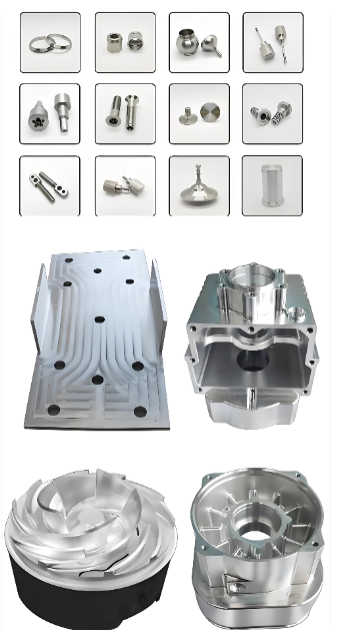
Aerospace Plastic Materials
Plastics are indispensable materials in aerospace machining, delivering versatility and superior performance for a wide range of components.
- PEEK boasts premium mechanical strength and chemical resistance, ideal for aerospace structural and engine parts with lasting durability.
- Ultem (PEI): High rigidity and thermal stable, perfect for aircraft interior panels and piping to improve cabin safety and comfort.
- PET: Great durability and chemical resistance, used for insulation and electrical connectors to secure aerospace system stability.
- Polycarbonate: Superior clarity and impact resistance, widely adopted for aircraft windows and canopies to ensure flight safety and visibility.
These plastic materials not only enable lightweight design, but also deliver innovative solutions that meet stringent aerospace industry standards, driving the advancement of aerospace technology.
More related plastic materials: https://zorapid.com/materials
Quality Assurance for Aerospace Manufactured Parts
- Pre-machining Evaluation: Assess raw materials and tool conditions for precision processing.
- In-process Monitoring: Continuously oversee machining operations to guarantee accuracy and implement necessary adjustments.
- Dimensional Inspection: Measure critical dimensions throughout production to ensure precision and reliability.
- Surface Finish Assessment: Evaluate surface quality to meet aesthetic and functional requirements.
- Final Inspection: Verify finished dimensions, surface finish and core parameters to ensure operational reliability and safety.
Why Partner with Zorapid?
Efficiency Boost: Rapid prototyping plus short lead-time production shortens time-to-market and captures market share.
Quality Improvement: Premium precision equipment and strict quality control ensure high part consistency and yield, minimizing rework.
Worry-free Cooperation: One-stop manufacturing solutions and global support let clients focus on core business with fully streamlined production.
Cost Reduction: Instant quote cuts communication costs; optimized mass production processes lower unit pricing.
FAQ
What are the quality control methods for CNC-machined aerospace components?
We prioritize quality across all operations and implement stringent quality control procedures throughout the entire CNC machining process. Our ISO-certified workflows reflect our commitment to delivering aircraft parts that meet and exceed industrial standards for quality and reliability.
Does CNC machining help aircraft manufacturing achieve faster production lead times?
CNC machining simplifies complex tasks, shortens production cycles and streamlines manufacturing workflows. This high efficiency delivers the high precision required for aerospace components, while greatly reducing project timelines.
Does CNC machining enable faster production in aircraft manufacturing?
CNC machining simplifies complex tasks, accelerates production cycles and streamlines manufacturing processes. This efficiency delivers the high precision required for aerospace components, while significantly shortening project lead times.