Published:Zorapid.Ltd
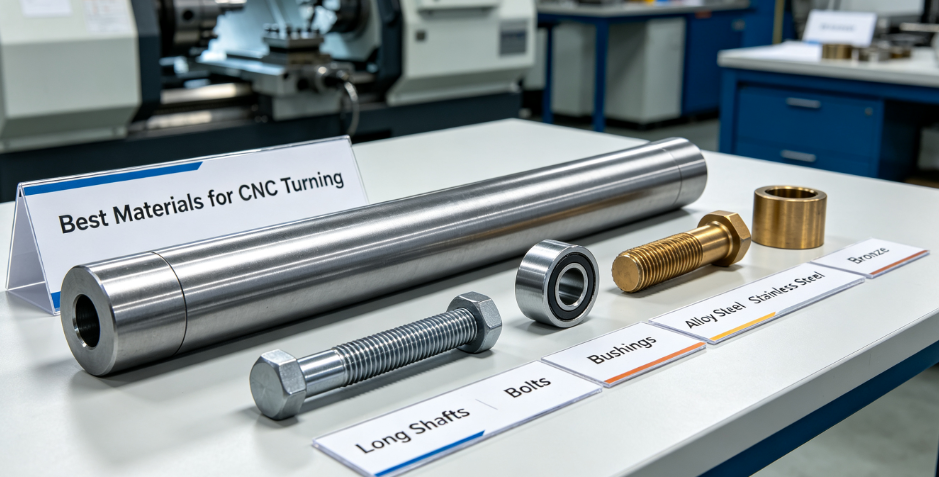
Long slender shafts, threaded bolts, precision bushings are high-volume CNC turning workpieces. These rotary parts have unique machining challenges: long length-to-diameter ratios trigger vibration, bending, chatter during high-speed turning; threads demand clean chip formation; bushings need controlled friction and wear resistance. Material choice decides turning ease, final straightness, service life, corrosion resistance and total cost.
This guide categorizes mainstream metals and engineering plastics by functional needs, highlights turning performance for long slender components, lists ideal use cases for shafts, bolts, bushings separately, and adds turning process tips for slender stock. All grades cover common industrial scenarios: automation equipment, hydraulics, medical, aerospace, food machinery, marine hardware.
Key Selection Criteria for Turned Round Parts
Before picking material, confirm 5 core requirements that impact both function and turning manufacturability:
- Length/diameter (L/D) ratio: L/D>10 = ultra-slender; requires high rigidity material to resist cutting bending
- Thread quality: ductile materials form clean threads; brittle metals risk thread chipping
- Wear & friction: Bushings prioritize low friction; shafts need surface hardness for sliding contact
- Corrosion: Marine, food, outdoor equipment demand stainless or anti-rust alloys
- Machinability: Free-cutting grades lower turning chatter, reduce cycle time for long shafts
Top Metal Materials for CNC Turning (Split by Component: Shafts / Bolts / Bushings)
Low-Carbon & Free-Machining Carbon Steel (Economy General Use)
12L14 Leaded Free Machining Steel
- Turning performance: The best low-cost steel for long slender shafts. Lead additives break chips into tiny pieces; minimal built-up edge (BUE). High feed rates possible; low chatter on thin long bars. Thread turning is extremely stable.
- Strength: Moderate tensile strength; cannot be fully hardened. Surface carburizing allowed for local hardness.
- Best fits
- Bolts: General mechanical low-load threaded fasteners, large batches of standard bolts
- Long shafts: Automation idle rollers, low-speed conveyor shafts with L/D up to 15
- Bushings: Not recommended; poor wear resistance
- Limitations: Lead content unsuitable for medical, food, drinking water; weak abrasion resistance.
1018 Mild Steel
- Turning traits: Good machinability, ductile; chips are long and stringy. For long shafts, use chip breakers on turning inserts to avoid tangled chips wrapping workpieces. Easy centerless grinding post-turning to fix shaft straightness.
- Heat treatable: Carburize for hard surface + tough core.
- Applications Bolts: General structural bolts, low-temp machinery fasteners Shafts: Low-load transmission shafts, support pins, long fixture mandrels Bushings: With grease lubrication only; low-duty plain bushings
4140 Alloy Steel (Chromium-Molybdenum, Most Versatile Medium-High Strength)
The most widely used alloy steel for precision turned round parts across all three categories.
- Turning performance: Good machinability in annealed state. Hardened state (HRC 28–36) needs coated carbide tools and moderate cutting speeds. High rigidity; resists bending well for long slender shafts (L/D 10–20).
- Key benefits: Through-hardenable, high torsional strength, fatigue resistant, shock resistant.
- Matched components
- Long shafts: Hydraulic piston rods, drive shafts, motor shafts, long precision transmission shafts
- Bolts: High-tension bolts, automotive fasteners, heavy-duty clamping bolts
- Bushings: Lubricated heavy-load steel bushings; can be heat-treated for wear surfaces
- Notes for turning long 4140 shafts: Use steady rest to suppress vibration; avoid excessive depth of cut to prevent bowing.
Medium/High Strength Alloy Steels for Heavy-Duty Service
4340 Steel
Ultra-high tensile strength, superior fatigue resistance for high torque shafts.
- Turning: Annealed material machines acceptably; hardened 4340 requires slow speeds, high-pressure coolant. Prone to chatter on ultra-long thin shafts.
- Use: Aerospace high-load bolts, heavy truck crankshafts, long high-torque splined shafts
- Bushing use rare; too costly and high hardness makes machining expensive.
D2 Tool Steel (High Hardness, Wear Resistance)
- Turning: Only easy to machine soft annealed. Fully hardened D2 (HRC 58–62) requires hard turning or grinding; long slender D2 shafts are prone to deflection during cutting.
- Fits: Hard precision shafts, mold ejector pins, wear-resistant bushings; custom high-hardness bolts uncommon.
Stainless Steel (Corrosion Resistance Priority: 304 / 316L / 416)
Stainless has poor thermal conductivity; prone to BUE and work hardening. Graded specifically for turning performance.
416 Stainless Steel (Free-Machining Stainless #1 for Turning)
Sulfur-alloyed free-cut stainless, designed explicitly for lathe mass production.
- Turning pros: Chips break clean, low BUE, fast turning speeds, stable thread turning. Excellent for long thin stainless bars.
- Hardenable: Can harden to HRC 38–42 for wear.
- Perfect list Bolts: Marine stainless bolts, medical equipment fasteners, food-grade threaded studs Long shafts: Long corrosion-resistant roller shafts, pump slender shafts Bushings: Hardened wear-resistant stainless bushings for wet environments
304 Stainless Steel
Universal non-magnetic stainless, general corrosion resistance.
- Turning challenge: Highly ductile, long string chips, easy work hardening. Long slender 304 shafts need low feed per revolution, abundant coolant, steady rests to stop chatter/bending.
- Fits: Sanitary food machinery shafts, cosmetic equipment bolts, non-load wet bushings
- Not ideal for ultra-long thin turned parts due to machining difficulty.
316L Stainless
Better saltwater/chemical corrosion than 304; low carbon avoids intergranular corrosion.
- Turning: Harder to machine than 416 and 304; slow turning parameters mandatory for long shafts.
- Best: Marine offshore bolts, seawater pump long shafts, chemical equipment bushings with liquid lubrication
Aluminum Alloys (Lightweight, Fast Turning for High Volume Prototypes)
6061-T6 Aluminum
Most popular turned aluminum grade.
- Turning: Exceptionally high-speed machinable; excellent chip breaking with proper tools. Minimal cutting force, so long thin aluminum shafts bend easily under heavy cuts, but low cutting load allows high RPM finishing.
- Strength: Moderate structural strength, good corrosion resistance.
- Component breakdown Bolts: Lightweight equipment aluminum threaded bolts, custom prototype fasteners Long shafts: Light conveyor long rollers, automation precision slender shafts Bushings: Light-duty dry or oil-lubricated aluminum bushings
- Turning tip for long aluminum shafts: Low depth of cut, high spindle speed, climb turning to reduce deflection.
7075-T6 Aluminum
Higher tensile strength, close to mild steel.
- Turning: Fast cutting but higher cutting force vs 6061; longer slender shafts need tighter fixturing to avoid bending.
- Fits: Aerospace turned bolts, high-strength lightweight long shafts, high-load aluminum bushings
Copper & Bronze Alloys (Top Choice for Self-Lubricating Bushings)
Bronze is the gold standard for turned bushings; rarely used for long shafts or bolts.
C932 Bearing Bronze (SAE 660, leaded bronze)
1 CNC turned bushing material globally
- Turning: Very easy lathe machining; soft, stable chips, high surface finish quality. No chatter on thin bushing walls.
- Performance: Inherent solid lubrication, excellent anti-seize, wear resistant, runs dry or oiled.
- Use: All types of turned plain bushings, flange bushings, split bushings. Almost never used for shafts/bolts due to low tensile strength.
C863 Manganese Bronze
Higher strength bronze. Turnable; stronger for heavy-load bushings. Can be used for short high-strength shafts; long slender shafts are impractical (too heavy, costly).
Brass C360 (Free-Cutting Yellow Brass)
Ultra-easy turning, flawless threads.
- Bolts: Decorative brass bolts, plumbing threaded fittings
- Short shafts: Small instrument pins
- Bushings: Light-duty low-speed brass bushings
Titanium Ti6Al4V (Aerospace Medical High-Strength Lightweight)
- Turning traits: Very low thermal conductivity; heat concentrates on cutting edge. Long slender titanium shafts chatter severely with long tools. Must use shortest tool overhang, low RPM, heavy high-pressure coolant.
- Strength: High strength-to-weight ratio, outstanding corrosion resistance.
- Applications Bolts: Aerospace, implant-grade medical titanium bolts Long shafts: Medical device slender shafts, aerospace lightweight transmission shafts Bushings: Only specialized medical/titanium mating components; expensive for standard bushings
Engineering Plastics for CNC Turning Non-Metallic Shafts, Bolts, Bushings
Plastics suit low-load, corrosion-free, insulating applications; all turn well with sharp tools and low heat.
- PEEK (Medical / High Temp)
- Turning: Low feed speed, air cooling to prevent melting. Rigid plastic; can machine long slender plastic shafts without easy bending.
- Use: Medical turned bolts, high-temperature bushings, chemical-resistant long plastic shafts
- Delrin / Acetal (POM) Best general plastic for turned bushings. Low friction, rigid, stable dimensions, excellent thread forming. Mass-produced plastic bolts, long small conveyor shafts, self-lubricating bushings. Easy turning with no melting risks at proper speeds.
- Nylon 6/6 (PA66, with or without glass fill) Glass-filled nylon gains rigidity for longer shafts. Natural nylon for quiet bushings. Cheap, easy turning; absorbs moisture so precision critical parts need moisture stabilization post-turning.
- PVC / PP Low-cost corrosion-resistant plastic bolts and low-load bushings. Soft; long thin shafts bend during turning, limited to short lengths.
Quick Selection Table by Component & Core Requirement
Long Slender Shaft Material Pick (Sorted by Working Condition)
| Working Condition | Top Recommended Material | Secondary Option | Turning Notes for Long L/D Shafts |
|---|---|---|---|
| General low-load, mass production low cost | 12L14, 1018 steel | 6061 Aluminum | Use steady rest; chip break inserts |
| Heavy torque, fatigue, hydraulic rods | 4140 alloy steel | 4340 | Annealed turning + post heat treatment |
| Wet/corrosion, marine/food | 416 Stainless | 316L | Lower RPM, high coolant, avoid work hardening |
| Light weight, high speed automation | 6061 /7075 Aluminum | PEEK | Shallow cuts to stop bending |
| Aerospace medical high strength low weight | Ti6Al4V | 7075 Ti | Short tools only; anti-chatter setup |
CNC Turned Bolts & Threaded Fasteners
| Requirement | Primary Material | Backup | Thread Turning Advantage |
|---|---|---|---|
| Bulk standard industrial bolts | 12L14, 1018 | C360 brass | Free-cutting chips prevent thread damage |
| High tension heavy-duty bolts | 4140, 4340 | Heat-treated 1018 | High tensile avoids thread stripping |
| Corrosion resistant stainless bolts | 416 Stainless | 316L | 416 machines threads far faster |
| Light custom prototype bolts | 6061 Aluminum | PEEK | Fast turning for small batches |
| Medical implant bolts | Ti6Al4V | Medical PEEK | Biocompatible, precision threads |
CNC Turned Bushings (Wear/Friction Focus)
| Bushing Working Environment | #1 Material | Alternate | Key Turning Benefit |
|---|---|---|---|
| Standard lubricated industrial bushings | C932 Bearing Bronze | 4140 steel | Smooth bore surface, natural lubricity |
| Dry running, maintenance-free bushings | POM Delrin, PEEK | Nylon | No grease needed, easy precise ID turning |
| Wet chemical / saltwater bushings | 316L Stainless, bronze | PEEK | Resist rust and chemical erosion |
| High-temperature wear bushings | PEEK, hardened 4140 | D2 steel | Retains size stability at heat |
| Low-cost mass plastic bushings | Acetal, Nylon | PVC | Fast turning, low material cost |
Critical Turning Tips for Long Slender Round Parts (Material-Specific Fixes)
- Long steel shafts (12L14/4140/Stainless) Use tailstock + steady rest mandatory for L/D>10. Use positive rake turning inserts to reduce cutting force bending. For stainless, add EP coolant to fight work hardening.
- Long aluminum shafts High RPM, low depth of cut, climb turning. Reduce clamping pressure to avoid workpiece indentation and distortion.
- Bronze bushings High finishing feeds; no coolant required for most bronze; achieves ultra-smooth bore surface easily. Thin-wall bronze bushings use light clamping to prevent oval distortion.
- Plastic turned shafts/bushings Air cooling only (liquid coolant causes dimensional swelling). Super sharp carbide tools; slow spindle speed to eliminate melting. Add support for long plastic bars to stop sagging during turning.
Common Material Mistakes Designers Make
- Choosing 304 stainless for long thin mass-production shafts Problem: Stringy chips, frequent chatter, slow cycle time. Fix: Switch to free-machining 416 stainless.
- Specifying bronze for long drive shafts Bronze has low tensile strength; long shafts bend under torque. Bronze is only for bushings.
- Using regular carbon steel for marine bolts/shafts Rust failure; upgrade to 316L or 416 stainless for all saltwater exposure.
- Glass-filled nylon for precision threads Glass particles wear thread inserts fast; use unfilled acetal for threaded plastic bolts.
- Hardened alloy steel for long slender as-machined shafts Hard steel has high cutting force, severe chatter. Machine annealed material first, heat treat then grind for straightness.
FAQ
What is the easiest overall material to machine long turned shafts in high volume?
12L14 free-machining carbon steel. It minimizes chatter, breaks chips reliably, supports fast feeds, and cuts lathe runtime by 30%+ vs regular carbon steel or stainless. Only ruled out for food/medical due to lead.
Which stainless steel balances corrosion resistance and turning speed best for bolts/shafts?
416 stainless steel. It is the only stainless optimized for high-speed CNC turning and threading. 316L offers superior corrosion but machines much slower.
Why is bronze the dominant bushing material, not steel?
Bronze has solid lubrication properties that prevent metal-to-metal seizure when the shaft contacts the bushing. Steel bushings need constant grease/oil lubrication; bronze works reliably even with minimal lubrication.
What plastic works best for turned threaded bolts and wear bushings?
Acetal (Delrin/POM). It machines clean threads, resists creep, has low friction, and does not absorb moisture like nylon, keeping dimensions stable long-term.
For ultra-long slender shafts (L/D over 20), which material gives least bending during turning?
4140 alloy steel has the highest elastic modulus among common turned metals, resisting deflection best. If lightweight is needed, use 7075 aluminum paired with full steady rest support.
Can titanium be used for general bolts and bushings?
Titanium is overkill for standard industrial use; high material and machining cost. Reserve Ti6Al4V exclusively for aerospace, surgical implants, and extreme corrosion lightweight requirements.
Final Conclusion
Material selection for CNC turned shafts, bolts, bushings follows clear functional segmentation:
- Long shafts prioritize rigidity and machinability: pick 12L14/4140 for steel, 6061/416 stainless for corrosion/light weight; avoid high-hardness unannealed metals for long slender geometry.
- Bolts center on thread machinability and tensile strength: free-cutting steels and 416 stainless dominate mass production; 4140 handles high-load tension; aluminum/titanium for lightweight specialty fasteners.
- Bushings prioritize friction and wear: bronze grades are the metal standard; acetal/PEEK are top plastics for dry-running applications.
All material choices must account for turning limitations of long slender stock (vibration, bending, chatter). Matching alloy grade to L/D ratio, lubrication environment and corrosion rules lowers reject rates, speeds up CNC turning cycles, and extends part service life.