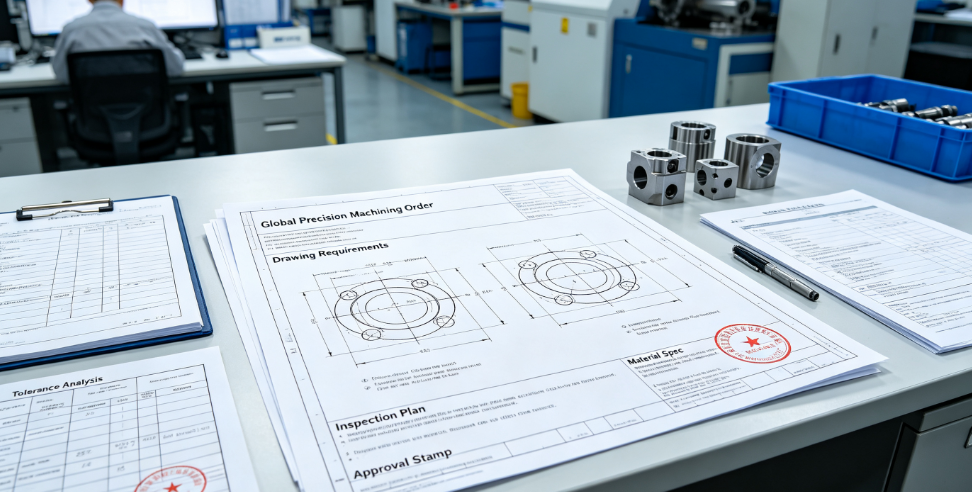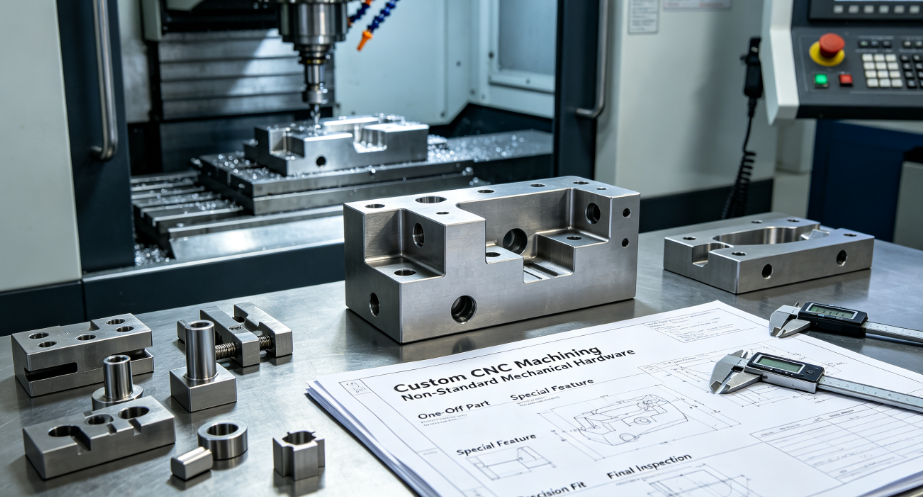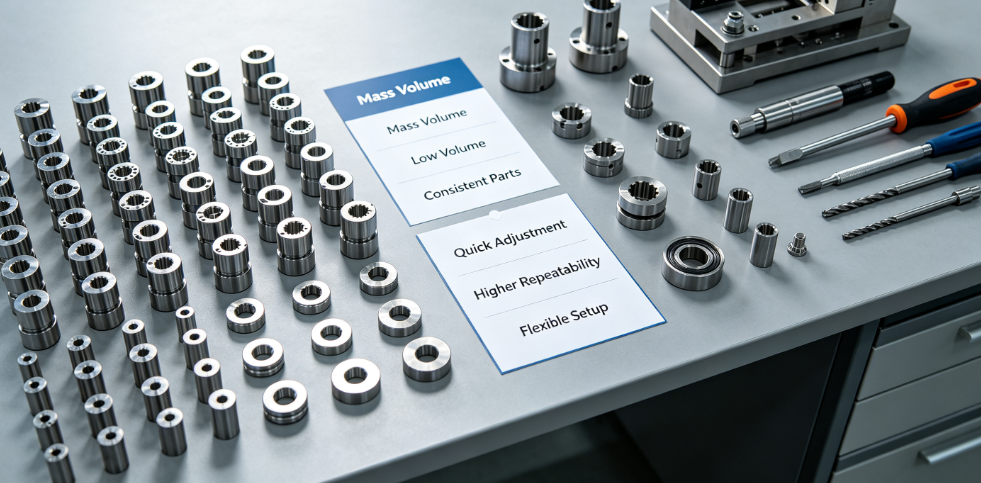
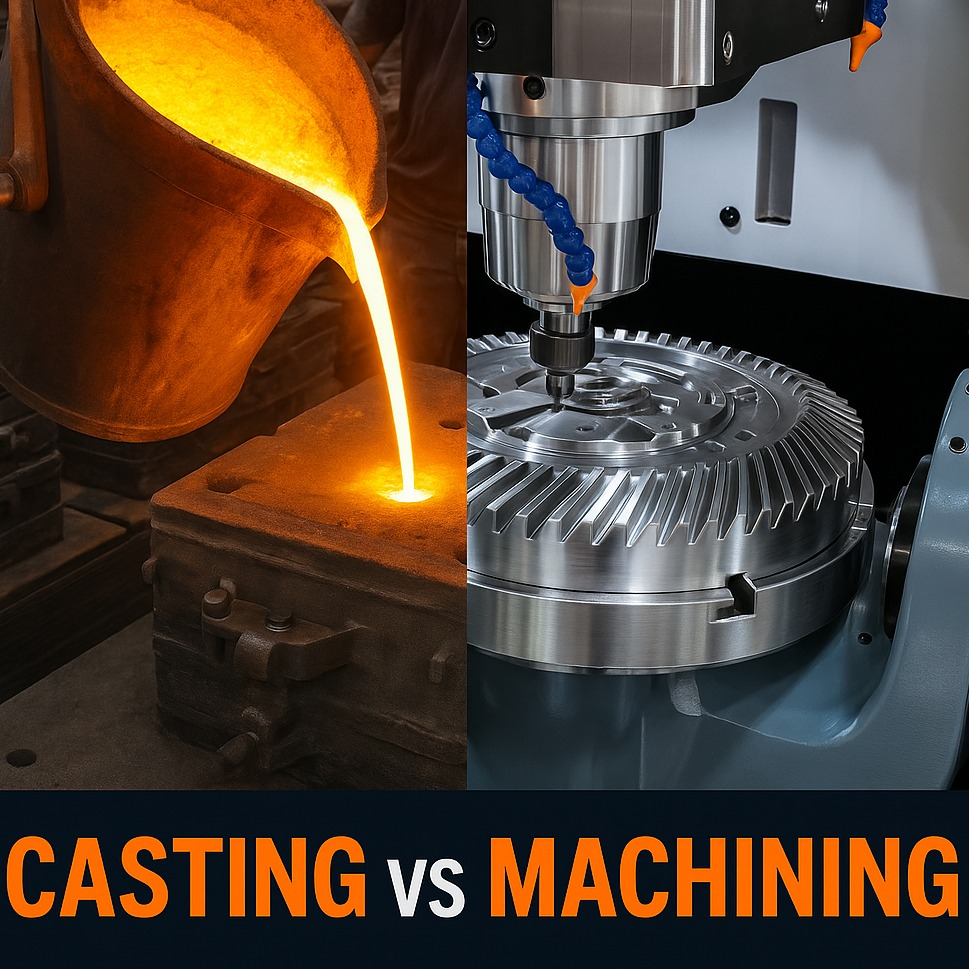
We hope you gain an understanding of the manufacturing processes used to produce components for various applications. These processes include welding, powder metallurgy, forming, injection molding, and more. Both casting and machining are mainstream manufacturing processes, yet they serve different practical applications. Choose the most suitable process according to your actual requirements.
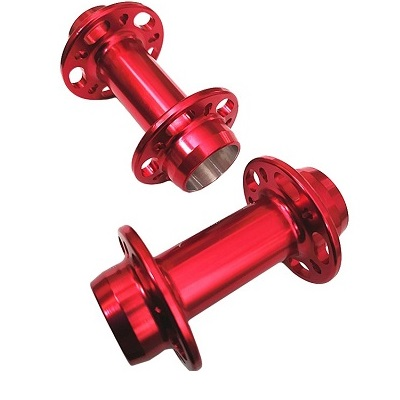
What Is Casting?
Complex parts such as turbine blades and engine blocks are typically cast by pouring molten metal into custom molds to solidify into finished components.
Overview of the Casting Process
Casting is a primary manufacturing process mainly used for metals. It consists of two core stages: melting and solidification. During melting, solid metal is converted into liquid form, poured into a mold, and then cooled and solidified in ambient air. There are several common types of casting processes:
Sand Casting
Sand molds are widely used for casting tools and related parts. Binders keep sand grains bonded, with molasses commonly used for sand molds. Perfect for large components, it’s cost-effective too.
Die Casting
Die casting uses steel molds for metal parts, ideal for aluminum and its alloys — gears are classic die-cast components.
Investment Casting
This casting process uses wax patterns for molds, ideal for critical aerospace parts like jet engine turbine blades. It delivers Ra 1.6–3.2 µm surface finish, far smoother than other casting methods.
Key Advantages of Casting
Major benefits of the casting process include:
Ideal for Mass Production
Reusable molds make multiple parts, cutting unit cost and perfect for high-volume casting production.
Capability to Create Complex Geometries
Finished molds mass-produce identical parts; complex components like pump impellers are typically cast.
What Is Machining?
Machining is another widely used method for manufacturing high-precision parts. It processes raw materials into the required shape mainly through cutting operations.
Overview of CNC Machining
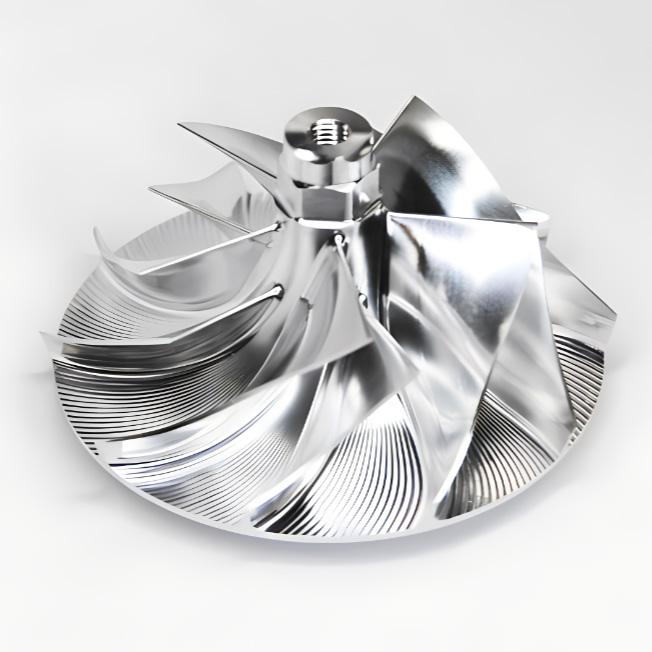
Machining produces various parts by removing excess material through cutting. Many cutting tools are available on the market, such as hacksaws, laser cutters, and CNC machines. CNC machines craft high-precision components.
Milling
Milling uses multiple rotating cutting tools to remove excess material from a workpiece and form the finished product. This process is mainly used to create complex, hard-to-design shapes.
Turning
Turning is primarily used for cylindrical parts. The workpiece rotates while the cutting tool remains stationary. One of the most common products made by turning is shafts.
Grinding
Grinding is a cutting process that achieves a surface finish of Ra 0.1–0.8 µm on bearings or molds. Used for surface cutting, widely applied in metallography.
Key Advantages of Machining
The main advantages of machining include:
High Precision and Accuracy
Machining processes, especially precision CNC machining, can achieve tolerances as tight as ±0.005 mm, making it a highly accurate manufacturing method widely used for aerospace components.
Wide Material Versatility
Machining is compatible with a broad range of materials, including wood, plastics, and metals, making it a highly versatile manufacturing process. Metalworking splits into hard and soft machining.
Types of CNC Machines Used in Machining
CNC machines are typically used for high-precision machining. Let’s look at the different types of CNC machines.
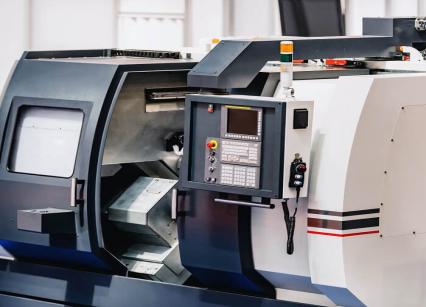
Horizontal vs Vertical CNC Machine Tools
This section provides a brief introduction to horizontal and vertical CNC machine tools.
| Horizontal CNC Machine | Vertical CNC Machine |
| Spindle orientation is parallel to the workpiece. | Spindle orientation is perpendicular to the workpiece. |
| Used for heavy-duty, large-scale components. | Used for small parts, including prototyping. |
| Larger footprint. | Chips continuously accumulate. |
Multi-Axis CNC Machine Tools
The main differences between two types of multi-axis CNC machine tools:
| Characteristic | 3+2 Axis Machining | 5-Axis Continuous Machining |
| Axis Motion | 3 linear axes + 2 rotary axes (locked position) | 5 axes moving simultaneously (X, Y, Z + A/B/C) |
| Accuracy (Tolerance) | ±0.025 mm | ±0.005 mm or better |
| Surface Roughness (Ra) | 0.8–3.2 µm | 0.1–0.4 µm |
| Applications | Simple geometries, batch production | Complex geometries, single-setup machining |
Casting vs Machining: Key Differences
Casting and machining differ fundamentally in material forming: casting shapes parts via melting and solidification, while machining cuts away excess material with tools.
1. Material Efficiency and Waste
Manufacturing technologies fall into two basic categories: formative manufacturing and subtractive manufacturing.
Formative Manufacturing vs Subtractive Manufacturing
Formative Manufacturing
Thanks to the melting and molding process, material waste is extremely low.
Mold flash can be remelted for reuse, further minimizing material loss.
Subtractive Manufacturing
Solid blanks are machined by grinding and milling, creating chips and material waste. Nesting optimization cuts waste efficiently.
2. Tolerance and Precision
Tolerance and precision greatly determine the service life and performance of a product.
High tolerance accuracy ensures reliable application in actual working conditions.
For strict dimensional tolerance and high precision requirements, CNC machining is highly recommended.
CNC Machining vs Casting: Tolerance Range Chart
This table illustrates the differences in tolerance and surface finish between machining and casting.
| Process Application | Standard Tolerance Range | Achievable Tight Tolerance | Typical Surface Roughness (Ra) |
| CNC Machining | ±0.025 – 0.125 mm | ±0.005 mm (precision) | 0.4–3.2 µm |
| Sand Casting | ±0.5 – 1.5 mm | ±0.25 mm (with force/finishing) | 12.5–25 µm |
| Die Casting | ±0.1 – 0.5 mm | ±0.05 mm | 1.6–6.3 µm |
| Investment Casting | ±0.25 – 0.75 mm | ±0.13 mm | 1.6–3.2 µm |
Complexity of Part Geometry
The complexity of part geometry is a key factor in choosing between casting and machining.
Casting for Complex Shapes
Casting, as a formative manufacturing method, is ideal for complex geometries.
It can easily produce hollow structures, organic contours, and intricate internal passages.
Casting is widely used in the automotive industry to manufacture engine cylinder blocks.
Machining for Intricate Details and Tight Tolerances
While casting excels at creating highly complex overall shapes,
machining delivers unmatched intricate details and tight dimensional tolerances.
High-precision CNC machines make robot joints, structural brackets and more.
4. Surface Finish and Aesthetics
| Parameter | Casting | Machining |
| Surface Roughness (Ra) | 3.2–25 µm (method-dependent)• Sand casting: 12.5–25 µm• Die casting: 1.6–6.3 µm• Investment casting: 1.6–3.2 µm | 0.1–6.3 µm (tool & material-dependent)• Roughing: 3.2–6.3 µm• Finishing: 0.1–1.6 µm |
| Surface Consistency | Variable (dependent on mold)• May have flow lines or parting lines | Highly uniform (CNC-controlled)• Repeatable across batches |
| Common Defects | • Porosity (gas cavities)• Cold shuts (incomplete fill)• Mold flash (excess material) | • Tool marks• Burrs (sharp edges)• Chatter marks (vibration) |
| Edge Sharpness | Rounded edges (due to draft angles) | Sharp edges (up to 90° achievable) |
| Required Post-Processing | • Sandblasting• Grinding• Polishing | • Deburring• Micro-finishing• Anodizing (for metals) |
This means casting is best for producing complex shapes, while machining can achieve high precision and tight tolerances.
Post‑Processing Technologies
For improved surface finish, both cast and machined parts use various post‑processing techniques, such as sandblasting, electroplating, anodizing, and more. These processes enable parts to resist corrosion and wear.
Is Casting Cheaper Than Machining?
The cost of any manufacturing technology depends on many factors, including product application, unit or batch production volume, and required precision level. A process that meets these criteria is generally considered more cost-effective.
Manufacturing Cost Comparison
The table below provides a cost comparison of different parameters between casting and machining.
| Factor | Casting | Machining |
| Tooling Cost | High ($10k–$100k+) | Low (CAM programming only) |
| Unit Cost | $1–$20 (scales with volume) | $50–$500+ |
| Material Utilization | 85–95% efficiency | 30–50% efficiency |
| Post-Processing | Usually required (+$2–$20) | Minimal (+$0.5–$5) |
| Best Suited For | 500+ unit volumes | Prototypes & hard metals |
For mass production, casting is far more cost-effective than machining. By contrast, machining offers better cost efficiency for prototyping and achieving tight tolerances.
Precision CNC Machining for Custom Carbide Projects
CNC machining surpasses casting for tight tolerances and high precision across diverse materials. Custom hard metal parts like Inconel 718 turbine blades and Ti-6Al-4V impellers are typically CNC-machined.
Select the Right Process According to Production Volume
This section provides comprehensive guidelines for choosing between casting and machining processes.
When to Choose Casting for Mass Production
Ideal for Large-Scale Production
Casting is an excellent and cost-effective manufacturing technology for mass production. It is suitable for producing over 1,000 identical parts. A single mold can manufacture up to 50 million automotive wheels per month.
Cost Efficiency in High-Volume Production
When producing 10,000 parts by casting, the unit cost can be reduced by 60–80%. In addition, casting generates far less material waste.
When to Choose Machining for Low-Volume or Custom Parts
Low Setup Cost for Prototyping
Machining is the optimal choice for small-batch production and prototyping. Manufacturing 10 prototype gears only costs around 1,500 US dollars.
Flexibility for Custom and Low-Volume Production
Machining offers great flexibility. It allows using different materials within one production batch and enables easy modification of part designs.
Material Considerations for Casting and Machining
Material factor is an important criterion when selecting casting or machining processes. You should choose the appropriate manufacturing method according to the material used.
Material Selection for Casting
Casting material selection is limited by melting point, chemical reactivity and pouring fluidity.
Common Metals and Alloys for Casting
Casting works best for materials such as aluminum with excellent fluidity, high-strength steel, ductile cast iron, and zinc with a low melting point.
Limitations of Casting Material Selection
Highly reactive materials are generally not suitable for casting, as they tend to form unwanted compounds in the molten state.
Materials with extremely high melting points, such as tungsten, cannot be cast.
Material Options for Machining
Machining is a versatile manufacturing technology that can easily process difficult-to-machine materials, including tungsten, plastics, and even composite materials.
Precise Control of Material Properties
Machining enables precise control over material properties, as shown in the table below.
| Property | Cast Aluminum | Machined Aluminum |
| Tensile Strength | 150–250 MPa | 270–310 MPa |
| Fatigue Life | 50,000 cycles | 200,000+ cycles |
The main reason is that machined parts contain no microcracks or voids, unlike castings.
Prototyping: Casting or Machining?
Which is better for prototyping: machined parts or cast parts?
Advantages of Cast Prototyping
Casting a prototype brings the following benefits:
- Complex geometry testing
- Material property verification
- Cost-effective for large-sized prototypes
Advantages of Machining in Prototyping
Machined prototypes offer these strengths:
- Higher speed and flexibility
- Broad material compatibility
- Precision verification
Limitations of Casting and Machining
Every manufacturing technology, no matter how advanced, comes with certain limitations.
Limitations of Casting
There are two major limitations of casting:
Limited Precision and Surface Finish
Casting typically achieves a tolerance of ±0.25 mm and a surface finish of Ra 3.2–25 µm. Post-processing operations are often required after casting.
Severe Material Waste in Low-Volume Production
In small-batch production, the material waste rate reaches 20–30%, which makes casting impractical for low-quantity manufacturing.
Limitations of Machining
Machining also has two notable drawbacks:
High Tooling and Labor Costs for Mass Production
Cutting tools are prone to breakage when machining hard materials, and producing machined parts requires 5 to 10 times more labor input.
Material Waste During Material Removal
Roughly 50–60% of raw material becomes chip waste, with only about 10% recyclable.
Conclusion
Casting and machining are both manufacturing processes selected according to actual project requirements.
If you need cost-effective mass production, casting is the preferred option. However, casting is not suitable for highly reactive materials or materials with extremely high melting points.
For small-batch production, or applications demanding high precision, high accuracy and tight tolerances, machining is the ideal choice.
On the downside, machining may incur higher costs due to tool wear and increased labor input.
FAQ
Is Die Casting Cheaper Than CNC Machining?
It depends on the production volume. Die casting is more cost-effective if the quantity of parts exceeds 5,000 pieces.
Which Is Stronger: Cast Strength or Machined Strength?
The strength of cast materials is generally higher than that of machined parts.