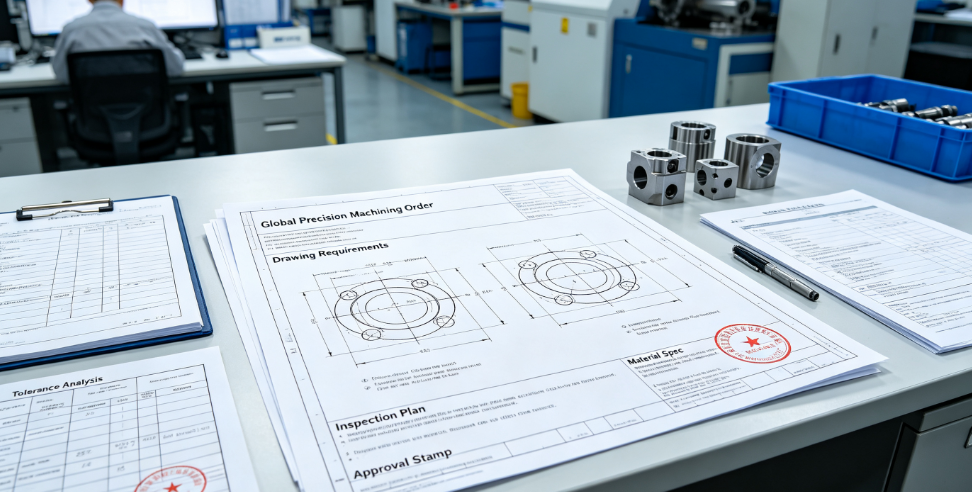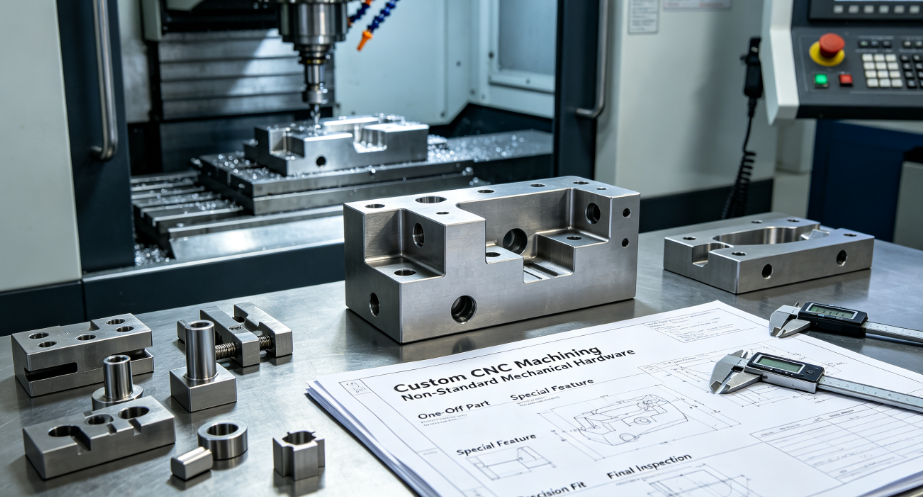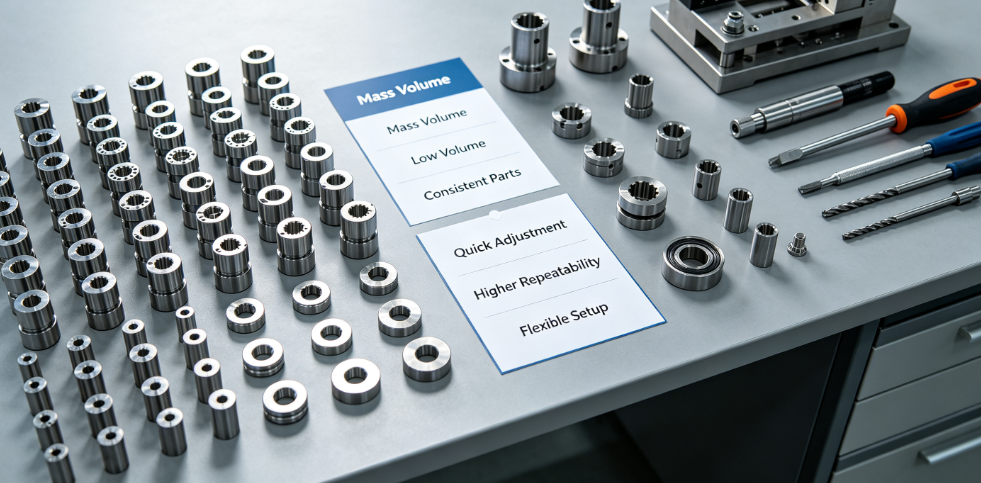
Why choose custom CNC bike parts for your project? Explore the key aspects of custom CNC bicycle components, from material selection to customization options, to help you make the best decision for your project.
Why Is CNC Machining an Ideal Choice for Custom Bicycle Parts?
When it comes to bicycle parts, there are a wide variety of manufacturing methods available. Whether it is daily commuter bikes or high-performance road bikes, they are popular among people of all age groups.
CNC precision machining is perfect for producing custom bicycle parts rather than standard off-the-shelf components.
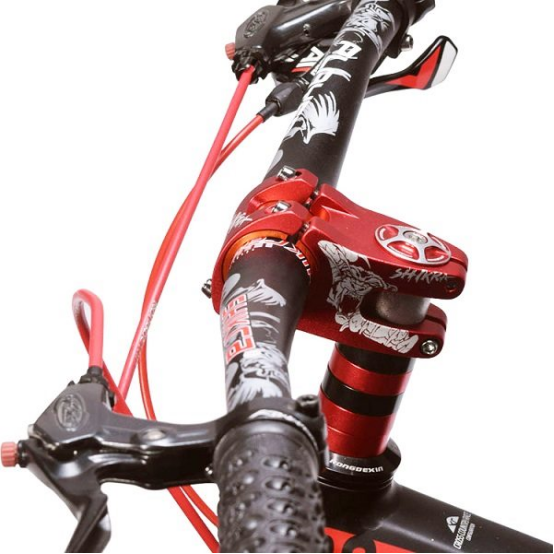
How Precision CNC Machining Improves Bicycle Performance
For custom-built bicycles, high-quality components are essential:
1. Seamless Assembly Accuracy ±0.02 mm
CNC stands for Computer Numerical Control. In this process, computers control the path, speed, and other parameters of cutting tools based on programmed instructions, enabling ultra-precision machining.
Tight tolerances achievable down to ±0.02 mm keep bearing seats perfectly concentric, pivots smooth, and drivetrains quiet. This delivers efficient power transfer for riders and extends component service life.
2. Complex Geometric Shapes
There is a wide range of CNC machine types available. For intricate complex geometries, 5-axis CNC machining is the standard choice. From a productivity perspective, 5-axis CNC machining processes more dimensions in a single setup with faster speed and higher precision.
Multi-axis milling creates hidden cable ports, sculpted brake arms, and lattice reinforcing structures in one clamping, reducing overall weight while maintaining structural strength.
3. Material Versatility
A single CNC machine can machine 6061 aluminum in the morning and switch to titanium or engineering plastics in the afternoon, using the optimal material for each component’s functional requirements.
Unlike many other manufacturing methods, CNC machining imposes fewer restrictions on material properties, offering outstanding flexibility for custom bicycle part design and material selection.
4. Rapid Prototyping
Need fast prototype turnaround? The full workflow from CAD design to CAM programming and final production is highly streamlined and efficient.
Digital CAM files can turn design sketches into functional test parts within just a few days, allowing designers to refine fit, clearance, and riding feel before full-scale mass production.
Why Are Custom Parts Crucial for High-Performance Bicycles?
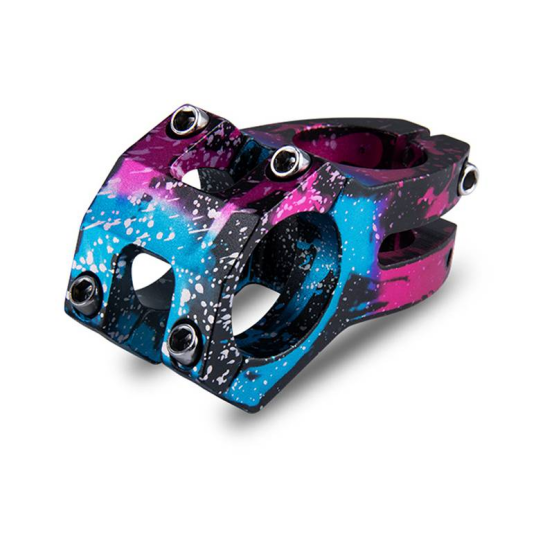
It depends on the type of high-performance bicycle required. Lighter components only make sense when high levels of rigidity and fatigue life are maintained. Replacing a cast e-bike motor housing with a milled 6061 aluminum housing reduces weight by 210 grams, while lowering the peak temperature by 8° during climbing tests.
Performance Changes After Switching to CNC Parts:
| Characteristic | Casting / Forging | CNC Machining | Practical Outcome |
|---|---|---|---|
| Dimensional Tolerance | ±0.15 mm | ±0.02 mm | Easier press-fit assembly |
| Minimum Wall Thickness | 2.5 mm | 0.8 mm | 20–30% weight reduction |
| Design Iteration Time | 4–6 weeks | 5–7 days | Faster updates |
| Impact Strength* | Baseline | +15% | Longer service life |
| Upfront Tooling Cost | High | Low | Ideal for 50-part scale projects |
What Are the Most Common Materials for Bicycle Parts?
A bicycle consists of a wide variety of components with both functional and aesthetic purposes. The top five most popular materials used for bicycles on the market are aluminum alloy, carbon fiber, titanium alloy, stainless steel, and magnesium alloy, which are applied to different parts across the whole bike.
List of Popular Bicycle Types
- Mountain bike
- Road bike
- City bike
- Hybrid bike
- E-bike
- Folding bike
- Track bike
- Touring bike
Frames, cockpits, and drivetrain systems rely on a range of alloys and composite materials. Below are the top material selections.
TOP 1 – Aluminum Alloy (6061 7075)
Aluminum alloy is undoubtedly one of the most popular materials for all types of bicycles. Thanks to its excellent strength-to-weight ratio and cost efficiency, it is widely adopted in the bicycle manufacturing industry. Both 6061 and 7075 aluminum alloys are commonly used for custom bicycle parts.
6061 Aluminum
6061 aluminum alloy is well known for its outstanding weldability and corrosion resistance, widely used in the production of bicycle frames and components. It delivers an ideal balance between strength and weight, suitable for all kinds of riding scenarios. Whether for custom daily city bikes or road bikes, 6061 aluminum alloy is a reliable choice.
AL6061-T6: Structural Parts for Custom City Commuter Road Bicycles
With balanced mechanical properties, AL6061-T6 is commonly used for bicycle frames, handlebars, and seat posts. It features excellent anodizing performance and can be finished in a variety of colors to enhance visual aesthetics.
7075 Aluminum Alloy
Compared with 6061 alloy, 7075 aluminum offers higher tensile strength, making it ideal for high-stress components such as suspension links and handlebar stems. It has lower corrosion resistance and is more difficult to weld. It is also less common than 6061 alloy.
AL7075‑T6: For High‑Performance Mountain Biking Racing Bicycles
AL7075‑T6 is well‑known for its exceptional strength, with a tensile strength of approximately 572 MPa and a yield strength close to 503 MPa. These properties make it the perfect choice for high‑stress parts including suspension links, crank arms, and stems.
TOP 2 – Carbon Fiber
Carbon fiber is famous for its outstanding stiffness‑to‑weight ratio, making it the top material choice for high‑performance custom road bikes and racing components. It can be molded into aerodynamic shapes, enabling innovative frame designs.
Cycling enthusiasts often praise its light weight, and many bicycle manufacturers use this premium material for frames, forks, wheel sets, handlebars, stems, and more.
TOP 3 – Titanium (Grade 5 Grade 9)
Titanium alloys, especially Grade 5 and Grade 9 Ti, are highly valued for their corrosion resistance, durability, and ride comfort. Although titanium frames are extremely long‑lasting, material and manufacturing costs are significantly higher than other metals. Titanium is even more expensive than carbon fiber.
Due to these characteristics, many manufacturers struggle to machine titanium properly. It is the superior material choice for custom gravel and touring bicycles that must perform reliably across diverse terrains and weather conditions.
If you plan to use this material in your custom solution, be sure to work with a machine shop that has extensive experience in titanium machining.
4th Place – Stainless Steel
Stainless steel features excellent strength and corrosion resistance, making it ideal for city bikes and cargo bikes. Its classic aesthetic is deeply favored by riders who prefer a traditional look.
However, stainless steel frames are heavier than aluminum or carbon fiber frames, which has an impact on riding performance.
TOP 5 – Magnesium Alloy
Magnesium alloy is one of the lightest structural metals and can achieve significant weight reduction. It is widely used for racing bike components such as wheel rims and frames, where every gram of weight matters.
Despite its many advantages, magnesium alloy remains less common due to complex manufacturing processes and susceptibility to corrosion.
Material Scorecard for Core Bicycle Performance:
| Property | 6061 Aluminum | 7075 Aluminum | Ti-6Al-4V Titanium | Carbon Fiber | AZ31 Magnesium |
| Density (g/cm³) | 2.70 | 2.81 | 4.43 | 1.6 | 1.78 |
| Yield Strength (MPa) | 240 | 505 | 880 | – | 200 |
| Corrosion Resistance | Good | Good | Excellent (grade dependent) | Depends on finish | Fair |
| CNC Machinability* | 85% | 60% | 30% | Not applicable | 45% |
| Cost Index (1 = 6061 baseline) | 1.0 | 1.6 | 5.0 | 4.5 | 1.3 |
Titanium vs Aluminum: Which Is Best for Your Brand Bicycle
Some riders believe titanium is more expensive yet no better than aluminum. To some extent, this is true. Although aluminum alloy is usually the first choice for bicycle manufacturing, titanium delivers superior material performance in specific applications and provides an premium riding experience for high-end customers.
Three Scenarios Where Titanium Outperforms Aluminum
For casual riders, a bicycle is merely a daily commuting tool and a companion for outdoor fitness. In such scenarios, bikes do not face harsh working conditions. Many bicycle manufacturers, however, also take more demanding usage scenarios into consideration:
- Winter commuting (salt corrosion resistance)
- Endurance racing (high fatigue limit)
- Long-distance bicycle touring (rugged and durable cargo racks)
Real-world example: After 50 kilometers of rough cobblestone roads, Grade 9 titanium seat posts only lose a small percentage of stiffness, while 6061 aluminum seat posts suffer far greater stiffness degradation.
Commuters riding in coastal salty environments report that titanium bolts remain spotless even after three winter seasons.
In these demanding scenarios, custom titanium bicycle components show outstanding advantages and greatly enhance the overall riding experience.
Three Reasons to Stick with Aluminum
- Cost-effective: Raw aluminum material costs only one-fifth of titanium billet.
- Rich color options: Hard anodizing or bright dipping available, customizable to any Pantone color.
- Complex long extrusion profiles enable aerospace-grade top tube production with minimal material waste.
Custom Bike Brands: Why Go Beyond Standard Parts?
Most bicycles on the market are assembled with standard off-the-shelf parts. Meanwhile, many bicycle brands are consistently committed to building their own branded bikes.
When developing branded bicycles, uniqueness stands out as one of the most critical considerations.
How to highlight brand uniqueness through custom bicycle parts and stand out from numerous competitors has always been a key concern for both new and established brands.
How Custom Design Elevates Your Brand Image
CNC badges with micro logos deliver a premium quality impression even before test rides.
Pantone-matched handlebar ends unify the color scheme across all model lines.
Serialized engraving enhances exclusivity, while grips designed around brand styling concepts have won industry recognition.
Branded CNC Custom Solutions for Different Bicycle Types
For many bicycle component brands such as Chris King, customization delivers tangible performance improvements to their products.
E-Bikes vs Traditional Bicycles
E-bikes require components that can withstand extra weight and integrated electrical systems. CNC machining can produce the following custom parts:
Custom battery trays: Featuring a waffle rib structure for enhanced strength with ventilation grooves, reducing overall weight by approximately 12%.
Custom mid-drive motor mounts: Designed with offset bosses to center motor mass without requiring frame modifications.
Traditional bicycles also benefit greatly from CNC machining:
- Lightweight components: Precision-machined parts reduce overall bike weight and improve riding performance.
- Custom geometry: Enables tailored frame and component designs to match specific riding styles.
Custom Parts for Gravel Bikes
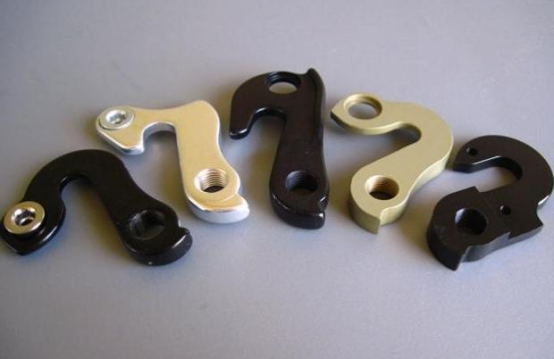
Hard-anodized 7075 derailleur hangers and bolt-on rack plates withstand harsh muddy riding conditions.
Custom luggage racks fitted with stainless steel inserts keep loads quiet on rough washboard roads.
TUOFA Precision Custom CNC Brand Bicycle Parts
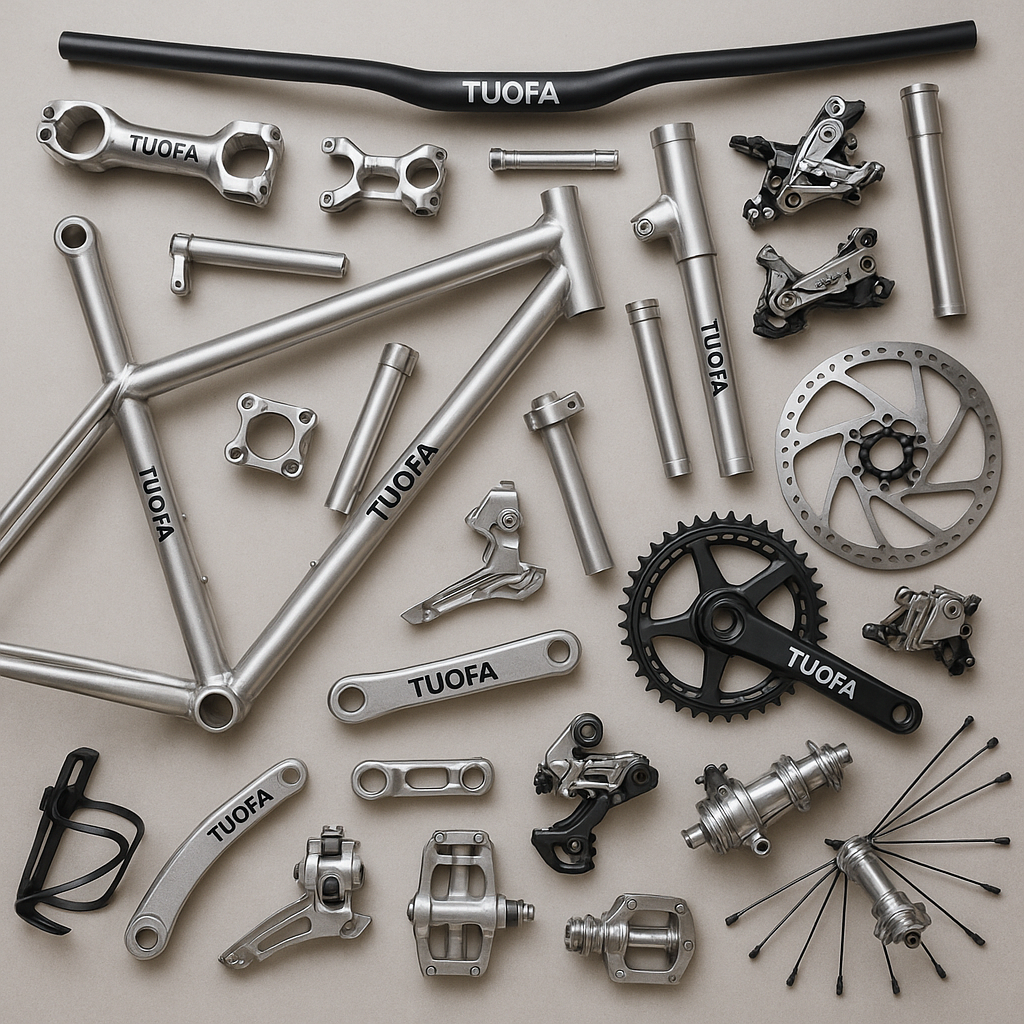
As a professional manufacturer, TUOFA has focused on delivering precision products for over 20 years, with extensive experience in custom bicycle components across aluminum alloy, stainless steel, and titanium alloy materials.
At Zorapid, our professional team provides far more than standard parts — we support the freedom of design. With TUOFA’s expertise, your product design achieves outstanding performance paired with premium aesthetics.
Custom Built On Demand
We offer fully tailored solutions to project requirements, including custom irregular-shaped protective housings, motor guards, OEM bottom bracket shells, insert assemblies, and decorative fittings.
Premium Material Selection
Available materials include 6061/7075 aluminum alloy, stainless steel, and titanium alloy, meeting diverse strength and weight requirements.
Structural Innovation Support
With deep industry experience in bicycle components, Zorapid also assists in design optimization. Our refined component designs deliver improved heat dissipation, reduced weight, and enhanced visual appeal in real-world use scenarios.
Common Surface Finishes for CNC Bicycle Parts
Aluminum Surface Finishes
- Anodizing offers over 20 colors and can seal surface pores.
- Brushed texture hides daily commuting scratches.
- Laser engraving adds permanent logos without paint.
Titanium Alloy Surface Finishes
- Sandblasting creates a matte surface that resists fingerprints.
- Thermal coloring produces iridescent hues for showcase components.
Choose your finish early
Conclusion
Custom CNC bicycle parts blend creative freedom with engineering standards. By selecting suitable materials, precision tolerances, and surface finishes tailored to different riding styles, manufacturers can build bicycles that meet bespoke requirements while maintaining cost efficiency in the short term.
The spindles may hum inside the workshop, yet the true reward unfolds on the road. Partner with Zorapid for professional CNC bicycle customization solutions, and bring remarkable surprises to your brand and customers.
FAQ
How Long Does CNC Prototyping Take for Bicycle Parts?
With in-stock materials and ready-to-use CAM files, small brackets and chain stays can be shipped within 2 to 3 working days.
Large multi-feature parts take about one week, and surface finishing may require an additional two days.