In-process inspection is a modern part inspection method that uses CNC machine tools to measure components while still in production.
This method ensures minimal dimensional deviation before parts move to the next process.
In today’s high-speed manufacturing environment, quality, efficiency and precision are critical.
In-process inspection helps machining workshops improve all three key metrics.
Below is a complete guide to in-process inspection in CNC machining.
What is On-Machine Inspection (OMI)?
On-Machine Inspection means measuring and verifying parts right during CNC machining. Unlike standard QA that checks parts after production, OMI monitors dimensions while manufacturing is ongoing.
Early error detection allows immediate machine parameter adjustments, preventing out-of-tolerance part production.
Definition of On-Machine Inspection
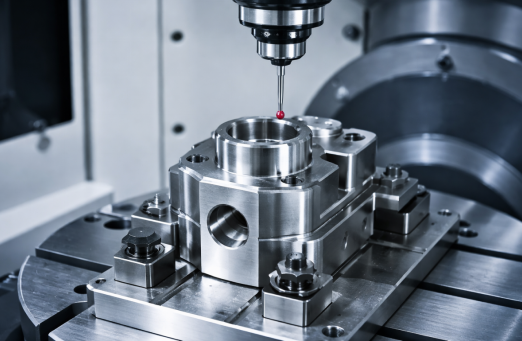
On-Machine Inspection (OMI) refers to the process of inspecting parts directly on a CNC machine, also known as in-machine measurement.
Parts remain fixtured on the machine for inspection without being removed or transferred to other testing equipment. This inspection method saves time and greatly boosts production efficiency.
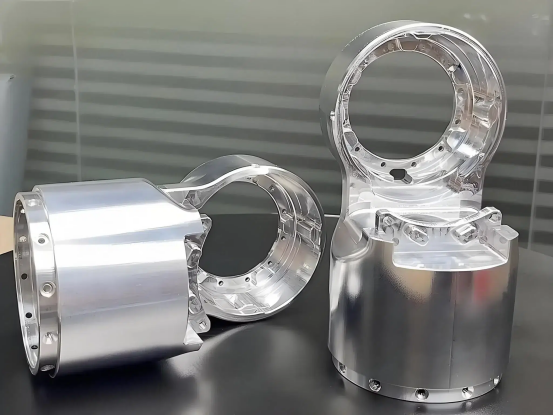
OMI in Inspection Workflow
To minimize dimensional errors in production, probes, sensors or touch-trigger systems are commonly used. These devices detect deviations at an early stage and enable immediate corrective adjustments. They ensure parts meet design dimensional requirements even before formal QA inspection.
Why Is In-Machine Inspection Critical in CNC Machining?
Traditional inspection requires removing parts from the machine for measurement, which is extremely time-consuming. Inspecting parts only after full production often leads to scrap due to dimensional errors.
By contrast, in-process measurement uses CNC probe tools to check part dimensions in real time while machining. It catches defects early before they get worse. For precision machined parts, in-machine inspection is a must—it saves time and cuts production costs.
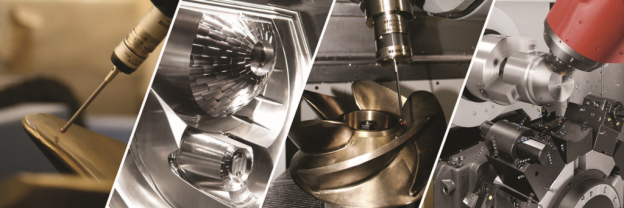
OMI vs CMM vs Offline Measurement
While On-Machine Inspection (OMI) ensures great dimensional accuracy, other measurement methods remain vital. CMMs are widely used for full dimensional checks on finished parts, delivering higher precision than OMI. VMMs work perfectly for tiny, ultra-precision parts — where OMI often falls short. Every method has its own best-fit application.
Common Inspection Methods
In manufacturing, the selection of inspection technology depends on accuracy requirement, testing speed and automation level.
Widely adopted methods include On-Machine Inspection (OMI), Coordinate Measuring Machine (CMM) and offline measurement.
These techniques coexist in most CNC machining workshops. They serve distinct roles in quality control rather than replacing one another.
- OMI delivers in-process and real-time feedback.
- CMM is used for final verification to ensure higher precision.
- Offline measurement enables fast, cost-effective dimensional inspection.
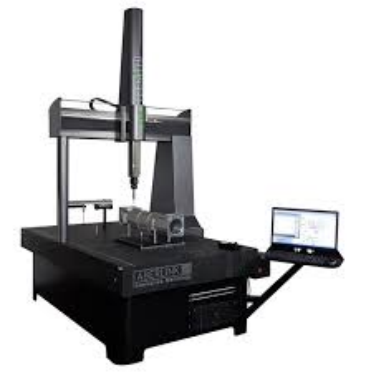
Coordinate Measuring Machine (CMM)
A Coordinate Measuring Machine (CMM) is typically used after mechanical machining. It precisely measures a part’s dimensions, surface profiles and geometric features.
Equipped with a three-axis moving probing system, the CMM collects accurate data points. It verifies tight tolerances, validates complex geometries, and inspects intricate machining features that cannot be reliably checked by manual tools.
It is mainly applied to first-piece inspection and final verification of CNC machined parts before shipment. Reports generated by CMM can be used for official QA/QC documentation.
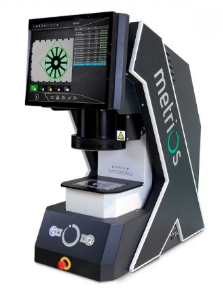
Video Measuring Machine (VMM)
Video Measuring Machine (VMM) is a non-contact method for inspecting precision parts. It adopts laser scanning technology to capture the 3D geometric profiles of components.
Compared with CMM, VMM is the optimal choice for small parts with complex geometries. It also excels at detecting surface defects such as porosity and cracks.
OMT
Measurements performed directly on CNC machines are defined as On-Machine Measurement (OMM). The tools used for this purpose are known as On-Machine Tools (OMT), mainly including sensors and probes.
Contact probes deliver precise measurements during CNC machining. They compensate tool length and radius offsets, plus inspect full workpiece dimensions. Probe systems greatly save tool change and setup time.
Some machine tools come with built-in sensors to measure part features and dimensions mid-cut. Collected sensor data is sent to the machine controller for real-time cutting parameter adjustment, boosting accuracy and preventing manufacturing defects.
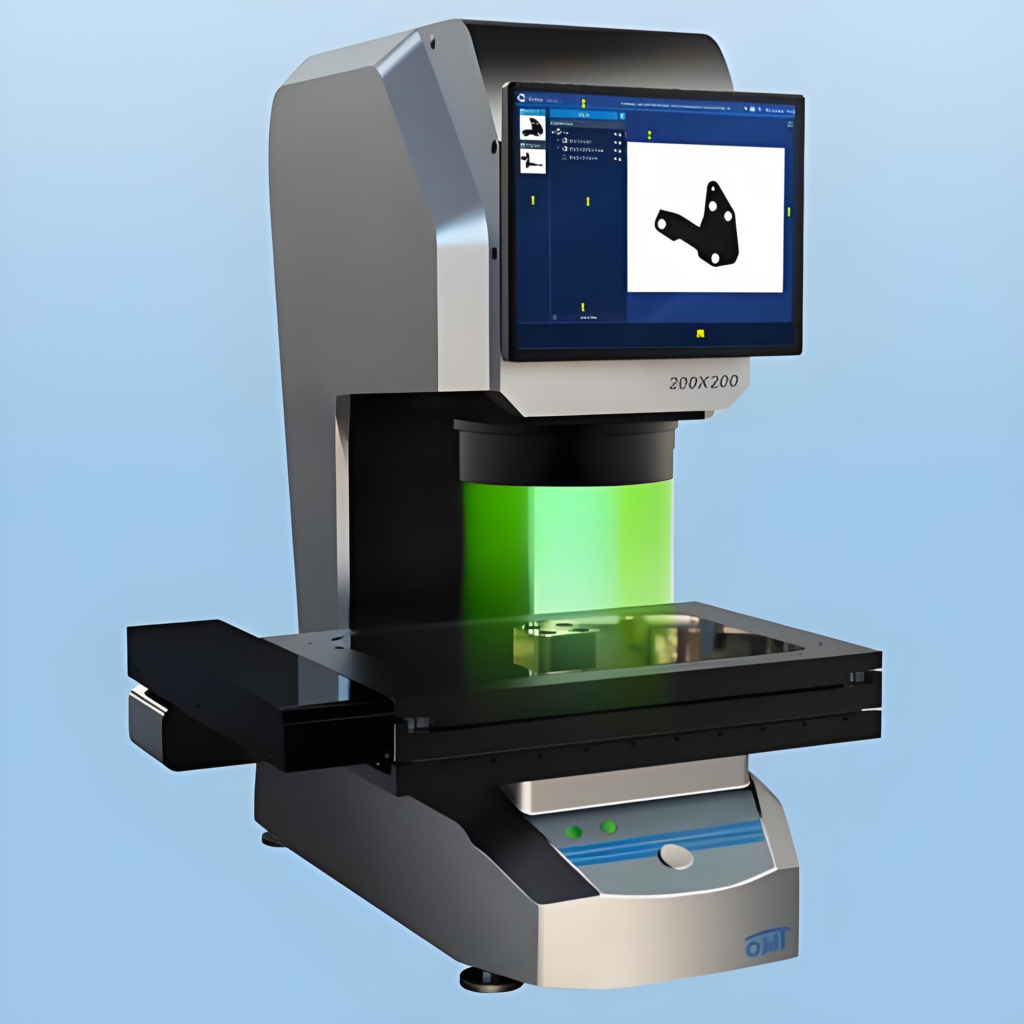
When to Use On-Machine Inspection vs Offline Inspection
The choice between offline inspection and on-machine inspection depends on part complexity, tolerance requirements and production volume.
Apply on-machine inspection in the following scenarios:
- Tight tolerances require continuous real-time monitoring.
- Tool wear compensation is needed.
- Scrap prevention is critical.
- Low-volume production runs.
Offline inspection applies to the following scenarios:
- Parts with simple and non-critical dimensions.
- Quick verification is sufficient.
- Limited access to dedicated inspection equipment.
- Operator-level inspection is acceptable.
Many workshops use offline inspection as follow-up verification to OMI, performing secondary checks without interrupting machining operations.
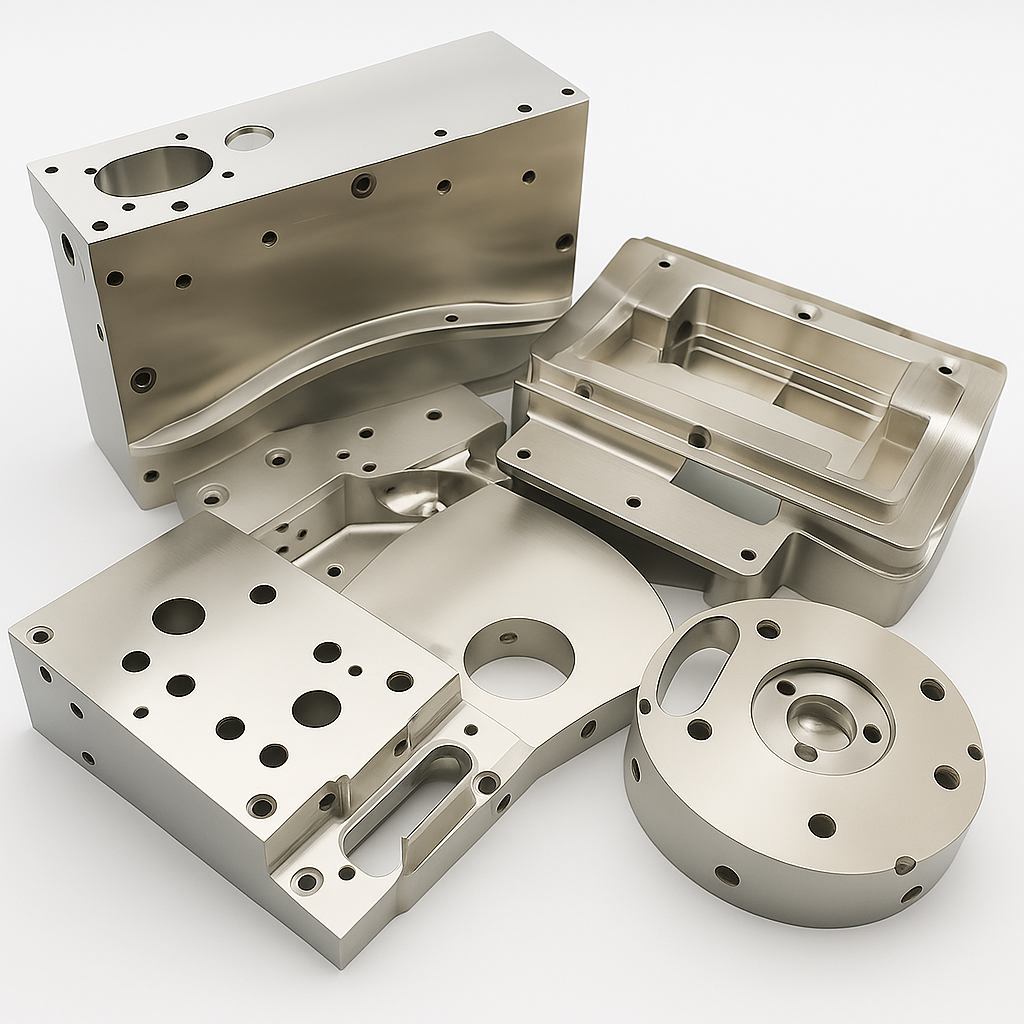
Key Steps of On-Machine Inspection
On-Machine Inspection (OMI) consists of a series of procedures designed to ensure accurate measurement, feedback and process control. Every step in the workflow is critical to integrating inspection into CNC machining.
Step 1: Probe Installation
Fit the CNC spindle with a touch-trigger or laser probe, matched to your inspection needs.
Key Notes for Probe Installation:
- Calibration relative to the machine coordinate system
- Proper mechanical mounting and alignment
- Probe verification
Correct probe installation ensures reliable measurement data throughout the entire inspection process.
Step 2: Workpiece Loading
Once the probe is installed, mount the workpiece into the fixture. Use OMI to verify proper positioning before starting machining or inspection.
Probing is performed in the following ways during this phase:
- Ensure accurate alignment of fixtures and parts
- Establish the coordinate system on the working surface
- Identify loading and clamping errors
Precise placement of tooling and workpieces guarantees proper setup and eliminates potential errors and deviations.
Step 3: In-Process Inspection
At this stage, parts under machining are inspected to check critical dimensions and features. There is no need to remove the workpiece from the machine; inspection is carried out at predetermined process stages.
This step enables the following capabilities:
- Early detection of tool wear or breakage
- Compensation for thermal drift and deflection
- Automatic tool offset adjustment
In-process inspection transforms OMI from a passive measurement function into an active process control tool.
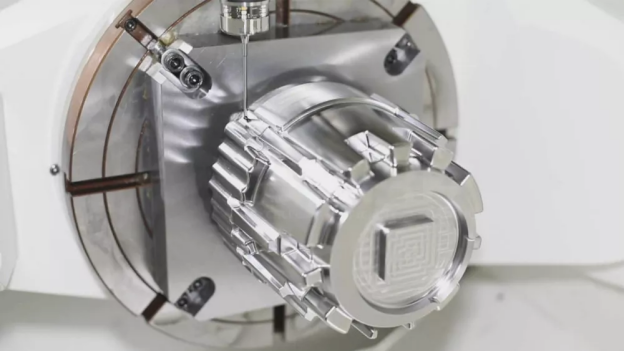
Step 4: Final Inspection
Once machining finishes, run on-machine inspection to verify part features right before unloading. It gives instant feedback.
The final on-machine inspection ensures the following:
- Verification of critical dimensions
- Validation of process stability
- Determination of whether additional offline inspection is required
While final OMI boosts efficiency, it only acts as a supplement to high-precision CMM inspection.
Advantages of On-Machine Inspection in CNC Machining
In CNC machining, stable and consistent product quality is the key to winning customer trust. Whether in aerospace, medical device, or semiconductor industries, even minor dimensional errors on parts may lead to serious failures.
For manufacturers, on-machine inspection is highly valuable, as it helps verify part quality during the machining process.
The following reasons make on-machine inspection a smart choice for producers and manufacturers:
Faster Dimensional Feedback
Transferring parts to separate inspection equipment consumes extra time. On-machine inspection eliminates this step entirely. Conducted directly during machining, it not only saves time but also accelerates overall processing speed.
Customer benefits include:
- Catch issues early in production, not just at final inspection or delivery.
- Faster design intent verification for prototyping.
- Faster feedback cycles allow customers to confirm key performance indicators more quickly.
- Reduced delays caused by inspection bottlenecks.
Higher Tolerance Compliance & Confidence
Running on-machine inspection mid-production catches errors early, cutting scrap and rework. Better machining precision lowers defects and builds stronger customer trust.
Customer Benefits
- Greater confidence in meeting tighter tolerance requirements.
- Minimize the risk of non-conforming parts in final inspection.
- Improve the functional reliability of precision components.
For customers needing precision parts and tight tolerances, overall quality risks drop significantly.
Shorten Lead Time for New Parts
On-machine inspection reduces scrap and rework, effectively cutting production costs. It also eliminates process delays and ensures parts meet tolerance requirements from the very start of machining.
When manufacturing the first article or launching new parts, on-machine inspection minimizes trial-and-error adjustment of machining parameters. Real-time dimensional feedback enables rapid process optimization.
Customer Benefits
- Accelerated approval process
- Shorter turnaround from design to production
- Reduced iteration cycles for prototyping
If you need to shorten lead time without compromising tolerance accuracy, feel free to contact us.
At Tuofa CNC Machining, our CNC machine tools are fully equipped with complete On-Machine Tools (OMT), enabling us to deliver high-quality parts within a short timeframe.
More Stable Quality in Long-Term Production
n the long run, on-machine inspection continuously tracks critical dimensions and compensates for tool wear and thermal variation.
Customer Benefits
- Consistent quality for mass-produced parts
- Minimal deviation between initial and final production batches
- Predictable performance of assembled components
Typical Application Cases of On-Machine Inspection
OMI is widely applied in CNC machining to improve processing reliability and reduce scrap rates. The following application cases represent the most practical scenarios of OMI, including setup verification, datum confirmation and in-process inspection.
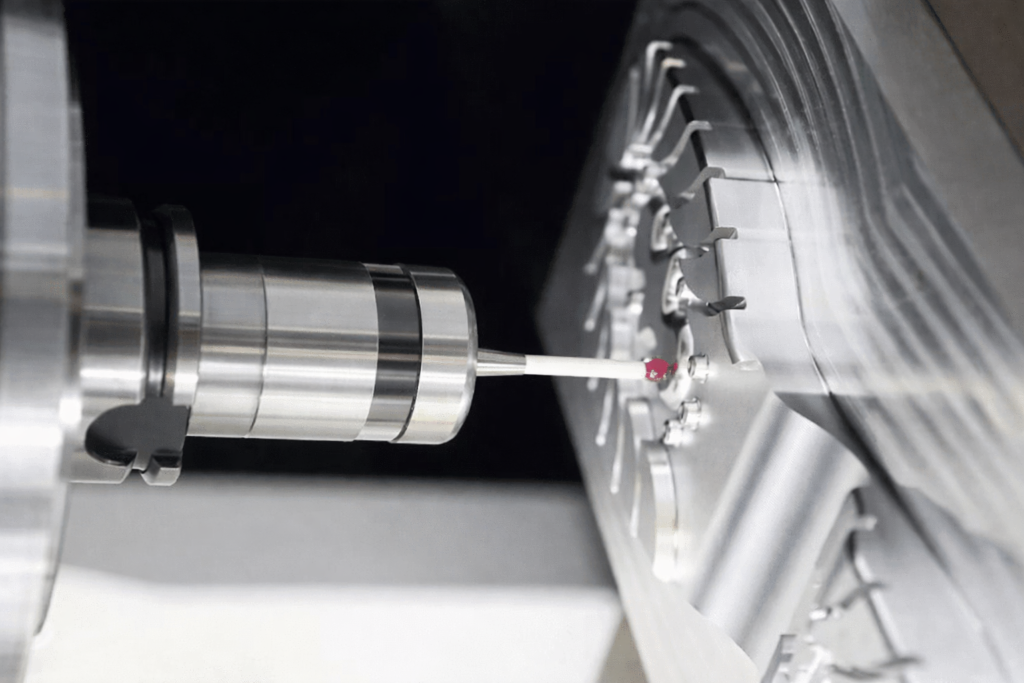
Setup Verification
One of the most common applications of on-machine inspection is setup verification. After the first workpiece is placed on the machine and positioned by fixtures, on-machine inspection is performed to verify whether the workpiece is correctly aligned with the machine coordinate system.
By inspecting the datum or reference surfaces before machining, operators can:
- Check fixture orientation
- Detect clamping and loading errors
- Prevent machining of improperly positioned parts
This reduces the rejection risk of the first article and ensures the machining process starts only after the setup is confirmed correct.
Datum Confirmation
Datum point confirmation ensures the part coordinate system is properly established before and during machining. OMI probes critical datum features such as planes, holes and edges to verify their position and orientation.
This is especially vital for the following scenarios:
- Multi-axis machining
- Complex GD&T requirements
- Parts requiring multiple operations with repeated repositioning
Accurate datum confirmation helps maintain dimensional consistency across different operations and machines.
In-Process Inspection of Key Features
OMI is commonly used to inspect critical dimensions during machining, rather than only checking after the part is fully finished. Such in-process inspection enables early detection of tool wear, tool deviation and thermal drift.
Typical inspected features include:
- Hole diameter
- Slot width
- Pocket depth
- Position of critical holes
Once deviation occurs, tool compensation values can be automatically adjusted to avoid scrap generation and ensure consistent product quality.
Conclusion
On-machine inspection has become an indispensable part of the CNC machining process. This technology accelerates inspection speed, ensures zero-defect parts, cuts costs, and helps maintain consistent product quality. Traditional measurement methods such as Coordinate Measuring Machines (CMM) remain essential for high-precision detailed inspection. On-machine measurement has thoroughly revolutionized the concepts of in-process inspection and production planning. By adopting appropriate tools and technologies, manufacturers can sustain their market competitiveness.
FAQ
Are Coordinate Measuring Machines (CMM) the same as CNC machine tools?
Coordinate Measuring Machines (CMM) and CNC machine tools sound similar, but they are not the same. A CMM is a dedicated device used to inspect and measure the geometric features of objects. A CNC machine tool is an automated system that manufactures parts according to programmed instructions.
How accurate is on-machine inspection?
On-Machine Inspection (OMI) delivers high precision in process control and error detection. It can inspect parts on the machine at micron-level accuracy and boost efficiency by enabling immediate corrections. However, its accuracy is greatly affected by the working environment, so it is not as precise as a Coordinate Measuring Machine (CMM).
Can on-machine inspection replace final inspection?
On-Machine Inspection (OMI) can almost never fully eliminate the need for final inspection. Nevertheless, it can significantly reduce reliance on final inspection, especially when quality control shifts from an inspection-based approach to a prevention-oriented strategy. Although on-machine inspection via probes fitted on CNC machines is highly accurate and allows real-time error correction, it is regarded more as a verification procedure rather than the final check before product shipment.
What is the main difference between on-machine inspection and in-process inspection?
The core difference lies in the timing, location of inspection activities, and their connection to production equipment. On-machine inspection is carried out using a probe installed on the CNC machine, while in-process inspection can be regarded as a comprehensive inspection strategy.