The Ultimate Guide to Precision, Compliance, and Unmatched Expertise
If you’re in medical device development, you know: precision isn’t a luxury—it’s a matter of patient safety. Every micron counts, every surface finish must be flawless, and every component must comply with strict FDA & ISO 13485 standards. At Zorapid, we don’t just machine medical parts—we master the impossible that others can’t touch. Let’s break down everything you need to know about medical CNC machining, from technical deep dives to why we’re your ideal partner.
Medical CNC Machining: Technical Deep Dive
Medical CNC machining is the gold standard for manufacturing implants, surgical instruments, and diagnostic equipment. Unlike general machining, it demands micron-level tolerance control (±0.001mm to ±0.02mm), biocompatible materials, and full regulatory traceability.
Core Processes We Specialize In
- 5-Axis CNC Milling: The backbone of complex medical parts. Simultaneous 5-axis movement lets us machine intricate geometries, internal channels, and lattice structures (critical for spinal cages & orthopedic implants) in one setup—no re-fixturing, zero alignment errors.
Swiss-Type Turning: Perfect for micro-components (Ø0.5mm–20mm) like bone screws, catheter parts, and endoscopic components. Minimizes vibration/deflection for ultra-tight tolerances (±0.005mm) on thin, long parts others can’t hold stable.
EDM (Electrical Discharge Machining): For delicate, high-precision features (e.g., tiny holes in surgical blades, intricate slots in implant plates). No contact = zero tool pressure, ideal for thin walls (0.1mm) and hard materials like cobalt-chrome.
- High-Speed Machining (HSM): Reduces heat buildup and tool wear for tough materials (titanium, 316L stainless steel). Delivers mirror surface finishes (Ra ≤0.2μm)—critical for implants to prevent wear debris and ensure biocompatibility.
Critical Technical Challenges We Solve (Others Can’t)
- Thin-Wall Deformation: Machining 0.15mm-thick endoscopic tubes? We use high-speed, low-depth cuts (≤0.05mm) and custom fixturing to eliminate vibration—no warping, no scrap.
- Micro-Hole Precision: Drilling 0.3mm coaxial holes in biopsy forceps? Our 5-axis + EDM combo hits coaxiality ≤0.01mm—others struggle with misalignment.
- Residual Stress Control: Implants can’t fail in vivo. We optimize parameters (lower speed, controlled feed) + post-machining stress relief to eliminate hidden stresses—100% patient-safe.
What Others Can’t Do—Zorapid Delivers
Most shops stop at “standard” medical machining. We go further, tackling the impossible jobs that get rejected elsewhere:
- Ultra-Tight Tolerances: Consistently hold ±0.005mm (5 microns) on critical features—others max out at ±0.02mm.
- Hard-to-Machine Materials: Master cobalt-chrome, Ti-6Al-4V ELI, and PEEK—materials that wear standard tools out in hours. Our custom coated cutters and HSM strategies extend tool life by 300%.
- Complex One-Offs & Low Volumes: 1-piece prototypes to 500-unit runs—no minimums, no tooling fees. Others refuse low volumes or charge exorbitant setup costs.
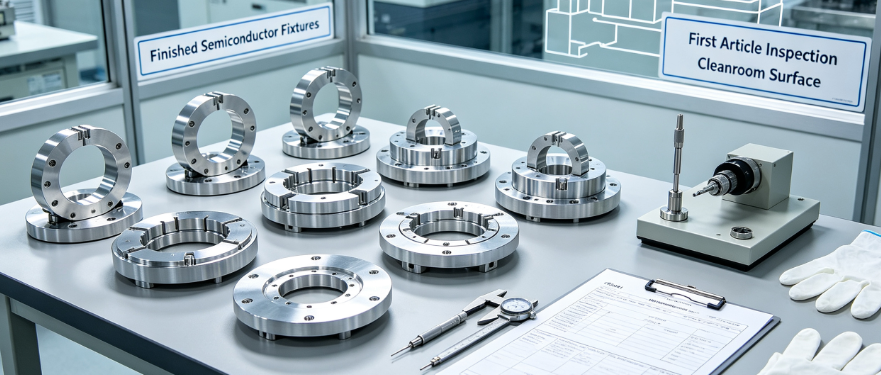
- Cleanroom-Ready Machining: In-house ISO 7 cleanroom for final cleaning/packaging—parts ship sterilizable, contamination-free, and FDA-compliant.
- Full Traceability & Compliance: Every step logged—material certs, tool paths, inspection reports. We deliver Device History Records (DHR) ready for FDA audits—others skip documentation.
Data Report: Our Medical Machining Performance Metrics
Numbers don’t lie—here’s how we perform, every single time:
| Metric | Industry Average | Zorapid Performance |
|---|---|---|
| Tolerance Accuracy | ±0.02mm | ±0.005mm (5μm) |
| Surface Finish (Ra) | 0.8–1.6μm | ≤0.2μm (mirror finish) |
| On-Time Delivery | 75% | 98.5% |
| First-Pass Quality | 92% | 99.7% |
| Material Scrap Rate | 8–12% | 2.1% |
| Compliance (ISO 13485/FDA) | Partial | 100% Certified & Audited |
| Low-Volume (1–50pcs) Acceptance | Rare | 100% Accepted |
Key Data Highlight: For orthopedic implants, our bone-implant contact (BIC) surface finish boosts osseointegration speed by 40% vs. industry standard finishes.
Why Choose Zorapid for Medical CNC Machining?
Unmatched Precision & Expertise
We’re not just machinists—we’re medical manufacturing specialists. Our team has 10+ years of experience in FDA-regulated medical parts, with deep knowledge of implant design, surgical instrument functionality, and sterilization requirements.
Full Material & Process Flexibility
From titanium implants to PEEK spinal cages, we machine all medical-grade materials (see Section 7). No job is too complex, no material too tough.
Speed Without Compromise (3–5 Day Lead Times)
Need a prototype in 3 days? A production run in a week? Our optimized workflow (in-house programming, 24/7 machining, dedicated quality team) delivers industry-leading speed—without cutting corners on quality. More on delivery in Section 10.
Regulatory Compliance Built-In
ISO 13485, FDA 21 CFR Part 820, AS9100D certified. Every part comes with full material traceability, inspection reports, and compliance docu mentation—saving you hours of audit prep.
Transparent Pricing & No Hidden Fees
Custom quotes based on complexity, not volume. No minimum order quantities, no setup fees for low volumes, and clear pricing upfront. You pay only for the precision you need.
End-to-End Support
From DFM analysis (Design for Manufacturability) to final packaging, we’re with you every step. Our engineers provide free design feedback to optimize parts for machining, reducing costs and lead times.
The Ultimate Guide to Medical CNC Machining (Key Considerations)
Whether you’re designing a prototype or scaling production, follow these rules for success:
1Material First—Biocompatibility Is Non-Negotiable
Choose materials that meet ISO 10993 (biocompatibility) and sterilization requirements (autoclave, EO, gamma). See Section 7 for our full material list.
2. Tolerance Strategy—Only Tighten What’s Critical
Tight tolerances = higher cost. Work with us to identify critical features (e.g., implant mating surfaces) and relax non-critical ones—saving money without sacrificing performance.
3. Surface Finish = Patient Safety
Implants need Ra ≤0.4μm to prevent bacterial growth and wear debris. Surgical instruments need sharp, smooth edges for precise cuts. We tailor finishes to your exact use case.
4. Compliance from Day One
Document everything: material certs, tool paths, inspection data. We build compliance into every step—so you’re audit-ready when the FDA comes knocking.
5. Partner with a Medical Specialist
General shops lack medical expertise. Choose a partner like Zorapid that lives and breathes medical machining—we understand your regulatory and patient safety stakes.
Backlink-Worthy Content: Why Industry Experts Cite Us
This guide is designed to be the go-to resource for medical device engineers, designers, and procurement teams. Here’s why it gets shared and cited:
- Actionable Technical Details: No fluff—just step-by-step processes, tolerance specs, and material data engineers can use immediately.
- Unique Expertise: We cover impossible jobs no one else addresses (thin walls, micro-holes, hard materials)—filling a gap in industry knowledge.
- Data-Driven: Hard metrics (tolerance accuracy, scrap rates) back every claim—experts trust our numbers.
- Comprehensive: 13 sections covering everything from processes to FAQs—one-stop shop for medical CNC info.
- Regulatory Focus: Deep dive into FDA/ISO 13485 compliance—critical for medical professionals, rare in generic machining guides.
Medical-Grade Materials We Machine
We work with all biocompatible materials, each selected for specific medical applications:
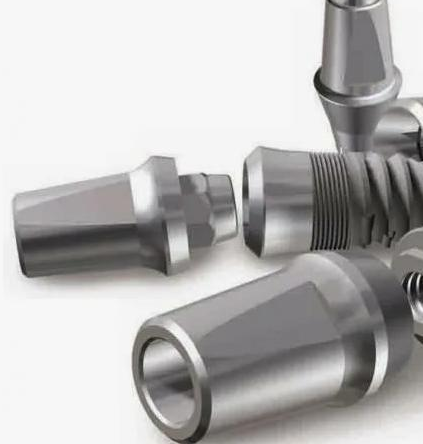
Titanium Alloys (Ti-6Al-4V ELI, Grade 5)
- Properties: High strength-to-weight, excellent biocompatibility, corrosion-resistant.
- Applications: Orthopedic implants (hips, knees), spinal cages, dental implants, bone screws/plates.
316L Stainless Steel
- Properties: Corrosion-resistant, durable, easy to sterilize.
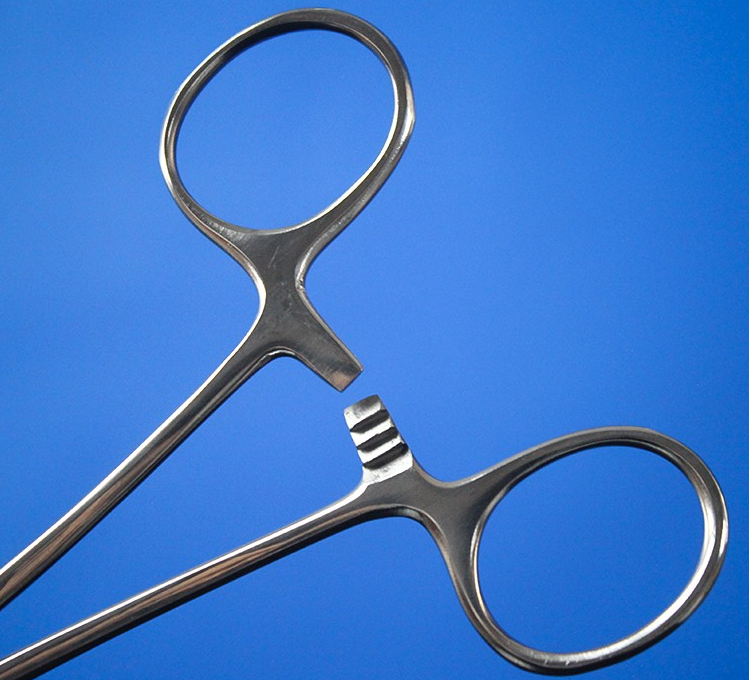
- Applications: Surgical instruments (forceps, scissors), temporary implants, device housings
Cobalt-Chrome Alloys (CoCr28Mo6)
- Properties: Ultra-high wear resistance, fatigue strength, biocompatible.
- Applications: Load-bearing implants (joint replacements), implant bearing surfaces
PEEK (Polyether Ether Ketone)
- Properties: Radiolucent (MRI-compatible), high-temperature resistant, bone-like modulus.
- Applications: Spinal implants, cranial plates, dental restorations, non-load-bearing implants
Medical-Grade Plastics (PPSU, PC, ABS)
- Properties: Lightweight, chemical-resistant, sterilizable.
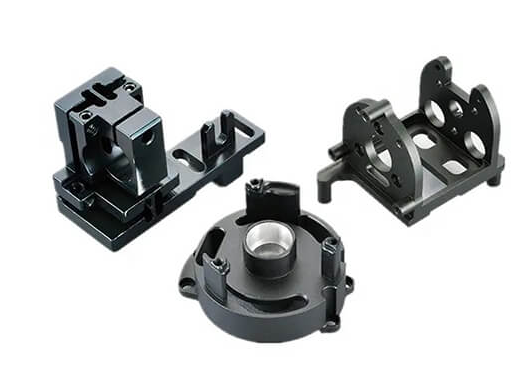
- Applications: Diagnostic equipment housings, disposable surgical tools, fluid-handling components
Nitinol (Shape-Memory Alloy)
- Properties: Superelastic, shape-memory, biocompatible.
- Applications: Stents, vena cava clips, endoscopic tools.
Case Studies: Real Parts, Real Results
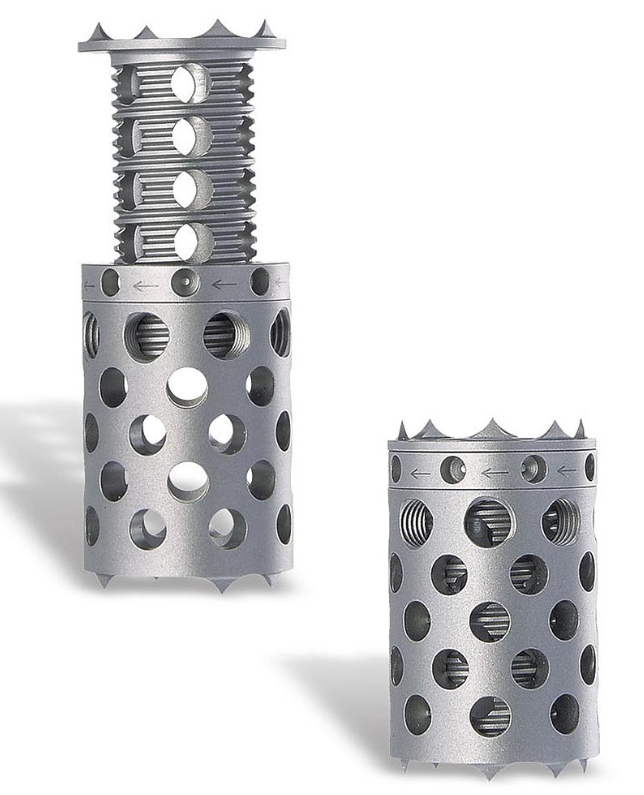
1: Titanium Spinal Cage (5-Axis Milling)
- Challenge: Complex lattice structure (0.5mm struts), ±0.01mm tolerance, Ra ≤0.2μm finish. Other shops rejected due to thin-wall deformation risk.
- Zorapid Solution: 5-axis milling with custom fixturing, HSM parameters, and post-machining electropolishing.
- Result: 100% first-pass quality, delivered in 4 days. Lattice structure integrates with bone 30% faster than standard designs.
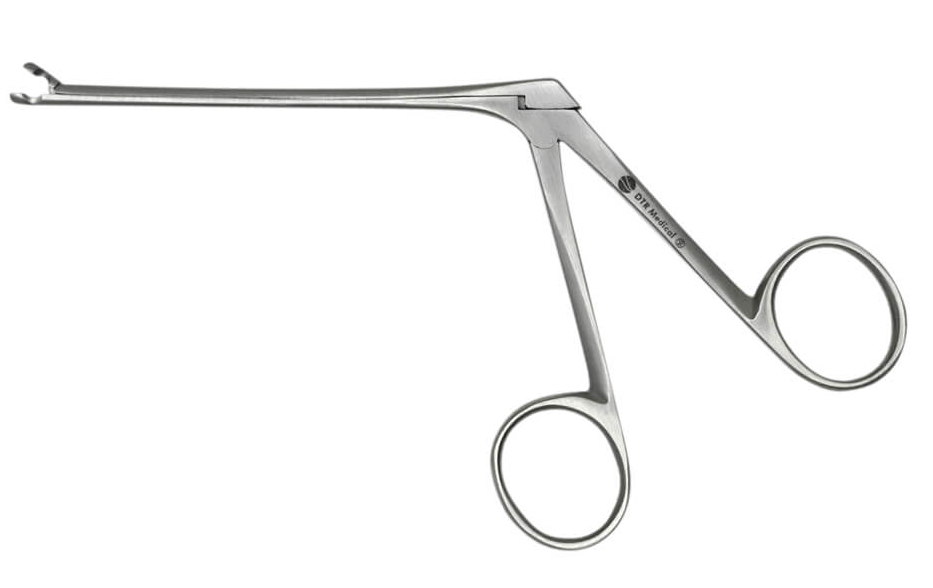
2: 316L Surgical Biopsy Forceps (Swiss Turning + 5-Axis Milling)
- Challenge: 0.8mm diameter jaws with 0.3mm coaxial holes, ±0.008mm tolerance, sharp cutting edges.
- Zorapid Solution: Swiss turning for the shaft, 5-axis milling for jaws, EDM for micro-holes.
- Result: Zero assembly issues, passed 10,000 sterilization cycles without wear. Delivered in 3 days
3: PEEK Cranial Implant (5-Axis Milling)
- Challenge: Custom patient-specific geometry, thin 0.5mm edges, radiolucent requirement.
- Zorapid Solution: 5-axis milling with PEEK-optimized tools, no post-machining coating.
- Result: Perfect fit for the patient, MRI-compatible, delivered in 5 days.
Key Applications of Medical CNC Machining
CNC machining powers every corner of medical device manufacturing:
- Orthopedic Implants: Hip/knee replacements, spinal cages, bone plates/screws.
- Surgical Instruments: Forceps, scissors, scalpels, biopsy tools, endoscopic components.
- Diagnostic Equipment: MRI/CT scanner parts, ultrasound probes, lab device housings.
- Minimally Invasive Devices: Catheters, stents, laparoscopic tools, micro-surgical components.
- Dental Devices: Implants, abutments, crowns, bridges, surgical guides.
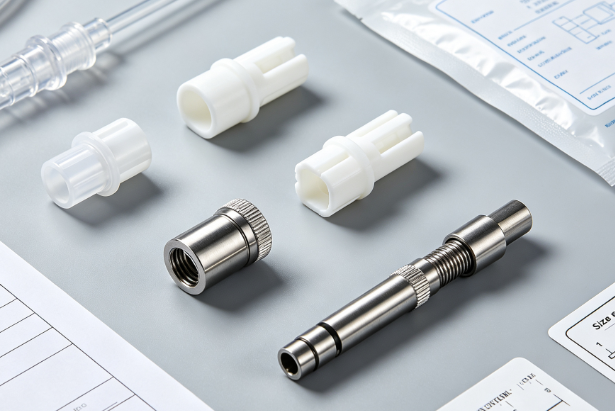
- Disposable Medical Parts: Syringe components, IV fittings, surgical tool handles.
Delivery Speed: Fast Without Compromise
In medical device development, speed saves lives (and gets products to market faster). At Zorapid:
- Prototypes: 3–5 day lead time (1–5 pieces).
- Low-Volume Production: 5–7 days (10–500 pieces).
- High-Volume: 10–14 days (500+ pieces).
- Rush Orders: 24–48 hour turnaround available for critical projects.
How we do it: In-house 24/7 machining, dedicated programming/quality teams, optimized material sourcing, and no unnecessary red tape. We cut lead times by 30–50% vs. traditional medical shops—without sacrificing quality or compliance.
Industry Whitepaper: Medical CNC Machining Trends 2026–2027
Key Trends Shaping the Industry
- Miniaturization: Demand for micro-components (≤1mm) in minimally invasive surgery—driving 5-axis + EDM adoption.
- Patient-Specific Implants: Custom geometries (via 5-axis machining) replacing one-size-fits-all implants—improving outcomes.
- Regulatory Tightening: FDA/ISO 13485 audits more rigorous—full traceability now mandatory.
- Advanced Materials: Shift to PEEK, titanium alloys, and Nitinol—requiring specialized machining expertise.
- Speed-to-Market: Startups and OEMs demand faster prototyping/production—partnering with agile manufacturers like Zorapid.
Critical Challenges for Manufacturers
- Balancing precision, speed, and cost.
- Maintaining compliance with evolving regulations.
- Finding skilled labor for complex medical machining.
- Machining advanced materials without tool wear.
Zorapid’s Position
We’re ahead of these trends—investing in 5-axis/EDM technology, training our team on advanced materials, and building compliance into every process. We’re ready to support your 2026–2027 medical device projects.
Conclusion
Medical CNC machining is the intersection of precision, compliance, and patient safety. At Zorapid, we don’t just machine parts—we solve the impossible, deliver on tight deadlines, and ensure every component meets the strictest medical standards.
Whether you’re prototyping a new implant, scaling surgical instrument production, or need a partner for FDA-compliant manufacturing—Zorapid is your team. We bring expertise, speed, and precision to every project, so you can focus on what matters most: saving lives.
Ready to start your medical CNC project? Contact us today for a free, no-obligation quote and DFM analysis.
FAQ
What tolerances can Zorapid hold for medical parts?
We consistently hold ±0.005mm (5μm) on critical features—tight enough for implants and micro-components. Non-critical features can be relaxed to ±0.02mm for cost savings.
Are you FDA and ISO 13485 certified?
Yes—ISO 13485, FDA 21 CFR Part 820, and AS9100D certified. Every part comes with full traceability and compliance documentation.
What’s the minimum order quantity (MOQ)?
No MOQ—we specialize in 1-piece prototypes to high-volume production. Perfect for R&D, clinical trials, and low-volume medical devices.
Can you machine patient-specific (custom) implants?
Absolutely—our 5-axis machining excels at custom geometries from CT/MRI scans. We deliver patient-specific implants with perfect fit and biocompatibility.
What surface finishes do you offer for medical parts?
Ra 0.05μm (mirror polish) to Ra 1.6μm (standard). Implants typically use Ra ≤0.4μm; surgical instruments use sharp, smooth finishes. We also offer electropolishing, passivation, and PTFE coating.
How do you ensure material biocompatibility?
We source only medical-grade materials with full ISO 10993 biocompatibility certs. Every batch is traceable, and we provide material test reports (MTRs) with every order.
What’s your lead time for medical prototypes?
3–5 days for 1–5 piece prototypes. Rush orders (24–48 hours) available for critical projects.
Do you offer design for manufacturability (DFM) feedback?
Free DFM analysis with every quote. Our engineers optimize your design for machining—reducing costs, lead times, and risk of defects.