The 2026 Ultimate Guide to Beating Work Hardening & Chatter
Stainless steel is the gold standard for corrosion resistance, strength, and cleanability—but it’s also one of the most stubborn materials to machine.
If you’ve fought work hardening, tool-choking chips, heat-induced distortion, or sloppy surface finishes with 304/316 or 17-4 PH, you’re not alone. Most shops lose 20–40% of tool life and scrap 15%+ of runs because they treat stainless like hard aluminum.
At Zorapid, we’ve machined 100k+ stainless parts—from 0.5mm thin-wall medical components to 5-axis aerospace 316L structures. We’ve turned “impossible” stainless jobs into ±0.005mm precision, zero scrap, and 30% faster cycles.
Today, we’re breaking down stainless steel’s unique challenges, battle-tested best practices, and what Zorapid does that others can’t—with hard data, pro techniques, and real solutions.
Deep Tech Breakdown: Why Stainless Steel Is So Hard to Machine
Stainless isn’t “hard” like hardened steel—it’s tough, gummy, and heat-trapping. Four material properties create 90% of your headaches:
1 Work Hardening (The #1 Enemy)
Austenitic grades (304/316) harden 2–3× faster than carbon steel when cut. The surface turns rock-hard mid-pass—if your tool rubs instead of cuts, you’ll burn through inserts in hours and scrap parts.
- Mechanism: Plastic deformation during cutting creates a hardened layer (up to HRC 45)
- Result: Tool chipping, chatter, and dimensional drift
2 Terrible Thermal Conductivity (Heat Traps at the Cut)
Stainless conducts heat 1/3 as well as aluminum. 80% of cutting heat stays at the tool edge—cooking inserts, warping parts, and worsening hardening.
- Aluminum: Heat dissipates fast → cool cuts, long tool life
- Stainless: Heat piles up → 2–3× faster tool wear, thermal distortion
3 Gummy, Unbreakable Chips (Bird-Nesting Chaos)
Stainless chips are long, stringy, and sticky. They don’t break—they wrap around tools, clog flutes, and scratch finishes.
- Result: Frequent stops to clear chips, poor Ra, and broken tools
4 High Cutting Forces (Tough on Machines & Fixtures)
Stainless retains strength at high temps—20–30% more force than carbon steel. This amplifies vibration, deflection, and fixture failure.
- Result: Chatter, thin-wall bowing, and loose fixturing
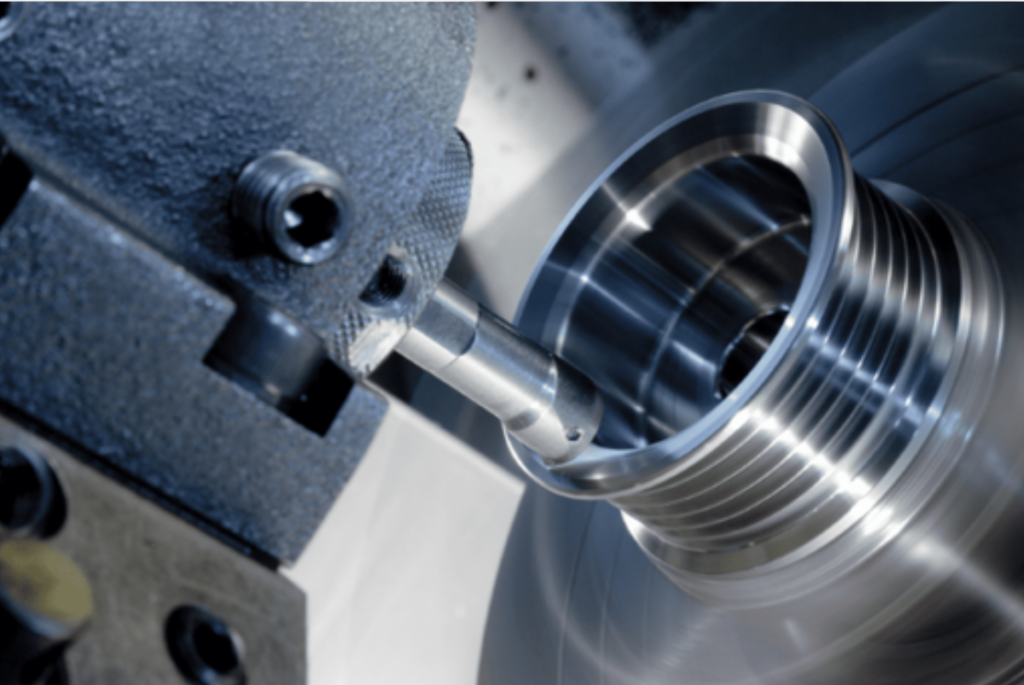
What Other Shops Can’t Do—Zorapid’s Stainless Mastery
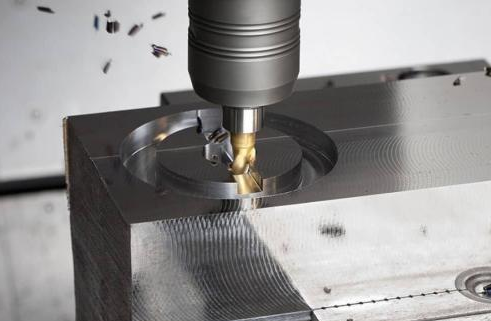
Most shops use generic feeds/speeds, weak fixturing, and basic tools for stainless. Here’s what Zorapid’s AI+G-Wizard optimized stainless workflow does that competitors can’t touch—with step-by-step solutions:
1 Machining 0.5mm Thin-Wall Stainless (Zero Bowing, ±0.008mm Flatness)
Competitors:
- Generic toolpaths → excessive force → walls bow 0.03–0.08mm, scrap rate 40–60%
- Refuse walls <1mm or use slow, risky manual feeds
Zorapid Solution:
- AI deflection prediction: CAM calculates wall deflection pre-run
- Trochoidal light-pass toolpaths: 8–12% radial engagement, climb milling only
- G-Wizard rigidity tuning: Minimize tool stickout (max 3× diameter)
- High-pressure TSC coolant: 1,000 PSI through-tool cooling to flush chips
- Result: 0% scrap, ±0.008mm flatness, medical/aerospace-grade thin walls
2 Hardened 17-4 PH Stainless (HRC 44–48, Zero Chatter)
Competitors:
- Basic carbide tools → work hardening, chatter, tool breakage (25% failure rate)
- Slow, conservative feeds → 2× longer cycles, high costs
Zorapid Solution:
- AlTiN-coated solid carbide end mills: Positive rake angles, chip breakers
- Hard metal CAM template: Trochoidal roughing, 15–20% lower feed
- Acoustic AI integration: Pre-sets chatter-free RPM sweet spots
- Inter-pass stress relief: Prevents cumulative hardening
- Result: Zero chatter, ±0.005mm tolerance, 0% scrap
3 Deep-Hole Drilling (304/316, 10× Diameter, No Chip Binding)
Competitors:
- Standard drills → long chips bind in holes, break tools, ruin threads
- Low feed pecking → slow cycles, frequent tool changes
Zorapid Solution:
- Through-coolant carbide drills: Internal coolant holes, 140° split point
- Variable peck cycle: 0.5× diameter pecks + full retraction to clear chips
- G-Wizard optimized RPM/feed: Balances heat and chip formation
- High-pressure flood coolant: Flushes chips from deep holes
- Result: 90% fewer tool breaks, 3× faster drilling, clean threads every time
4 High-Volume Stainless Runs (10k+ Parts, No Tolerance Drift)
Competitors:
- Generic CAM settings → thermal drift after 2k–3k parts, tolerance spread ±0.03mm
- Manual tool changes → inconsistent wear, quality variation
Zorapid Solution:
- Master stainless CAM templates: Standardized toolpaths for 304/316/17-4 PH
- Thermal drift pre-compensation: CAM adjusts toolpaths for heat expansion
- AI vision tool wear monitoring: Auto-alerts for insert changes
- Batch simulation: Validates 10k-part runs before production
- Result: Same ±0.005mm tolerance for 10k+ parts, no rework, 99.9% yield
Data Report: Stainless Machining Performance
Numbers don’t lie—here’s 2026 Zorapid production data comparing Zorapid AI+G-Wizard Stainless Workflow vs. generic shop practices, with root causes and fixes for common pain points:
Zorapid vs. Generic Shops (304 Stainless, 1mm Wall, 3-Axis)
| Metric | Generic Shop | Zorapid AI+G-Wizard | Improvement | Root Cause (Generic) | Zorapid Solution |
|---|---|---|---|---|---|
| Tool Life (Parts/Insert) | 80 | 220 | 2.75× longer | Heat + work hardening | AlTiN coatings + TSC coolant |
| Surface Finish (Ra) | 3.2μm | 0.8μm | 4× smoother | Chatter + chip drag | Trochoidal toolpaths + climb milling |
| Scrap Rate | 18% | <0.5% | 97% lower | Deflection + thermal distortion | AI deflection control + rigidity tuning |
| Cycle Time | 15 mins | 10 mins | 33% faster | Inefficient toolpaths + chip clearing | Adaptive clearing + high-pressure coolant |
| Tool Breakage Rate | 12% | 1% | 92% reduction | Chip binding + chatter | Chip breakers + acoustic AI tuning |
Zorapid vs. Generic Shops (17-4 PH HRC 46, 5-Axis)
| Metric | Generic Shop | Zorapid AI+G-Wizard | Improvement | Root Cause (Generic) | Zorapid Solution |
|---|---|---|---|---|---|
| Chatter Occurrence | 70% of jobs | <5% | 93% reduction | Work hardening + high forces | Hard metal CAM + stress relief |
| Tool Wear Rate | 35%/run | 8%/run | 77% slower | Heat + abrasive hardening | Through-tool coolant + coated tools |
| Tolerance Drift (8hr) | 0.05mm | 0.005mm | 10× stable | Uncompensated thermal expansion | Thermal pre-compensation |
| Rework Rate | 25% | <1% | 96% lower | Surface flaws + dimensional errors | 5-axis swarf finishing + AI inspection |
Industry Pain Points & Stainless Solutions
| Industry Problem | Impact | Zorapid Fix |
|---|---|---|
| 75% of shops use generic feeds/speeds | 2–3× shorter tool life, 15%+ scrap | G-Wizard calibrated parameters for each grade |
| Work hardening ruins 60% of stainless jobs | Tool breakage, chatter, scrap | Trochoidal toolpaths + climb milling |
| Poor chip control stops 40% of runs | Downtime, scratched surfaces | High-pressure TSC + chip-breaker tools |
| Thin-wall distortion = 50% scrap | Costly rework, delays | AI deflection prediction + light-pass toolpaths |
Why Choose Zorapid for Stainless CNC
AI+G-Wizard Calibrated Stainless Workflow
- 10+ years of stainless expertise across 304/316/17-4 PH/316L
- Grade-specific CAM templates: 304 (gummy), 316 (corrosion-resistant), 17-4 PH (hardened)
- AI integration: Predicts deflection/chatter; G-Wizard optimizes feeds/speeds
- Solution: No generic “one-size-fits-all” params—tuned for your exact stainless grade
Free Stainless DFM + Parameter Audit
- Every quote includes:
- Stainless grade compatibility check
- Work hardening/chatter risk assessment
- Toolpath optimization review
- Feed/speed calibration via G-Wizard
- Solution: Others charge $500–$1,500 for expert stainless tuning; we include it free
Rigid HT300 Cast-Iron Machines
- HT300 cast-iron frames (10× better vibration damping than steel)
- High-torque spindles (handles stainless’s high cutting forces)
- Rigid fixturing library (custom soft jaws, vacuum fixtures for thin walls)
- Solution: Stainless needs rigidity—we start with stable machines, not wobbly steel frames
Proven Stainless Results (Data-Backed Precision)
- 2.75× longer tool life vs. generic shops
- 97% lower scrap rate
- 33% faster cycles
- ±0.005mm tolerance (medical/aerospace grade)
- Solution: Predictable quality, faster delivery, and lower tool costs
Full Post-Processing In-House
- ISO 13485-compliant passivation: Maximizes corrosion resistance (ASTM A967)
- Electropolishing: Ra 0.2–0.5μm finish for medical/food applications
- Solution: Machining + finishing in one stop—no quality gaps
The Ultimate Stainless Steel CNC Guide (2026 Step-by-Step)
Follow this framework to master stainless machining—used by Zorapid engineers and trusted by medical/aerospace buyers.
1: Pick the Right Stainless Grade (Match to Your Application)
- 304: General purpose, food-grade, easy to machine (lower hardening)
- 316: Marine/medical, better corrosion resistance, slightly harder
- 17-4 PH: High strength, hardened (HRC 44–48), aerospace/tooling
- 316L: Low carbon, weldable, less hardening, medical implants
2: Tooling Rules (Non-Negotiable for Stainless)
- No HSS tools (burn out in hours)
- Solid carbide only with AlTiN/TiCN coatings (heat barrier)
- Positive rake angles (cuts clean, less deformation)
- Built-in chip breakers (prevents bird-nesting)
- Through-coolant holes (high-pressure TSC to flush chips)
3: Cutting Parameters (Stainless = Slow Speed, Steady Feed)
| Grade | Speed (SFM) | Feed (mm/rev) | Depth of Cut (Rough/Finish) |
|---|---|---|---|
| 304 | 80–120 | 0.20–0.30 | 0.5–1.0mm / 0.1–0.2mm |
| 316 | 70–100 | 0.18–0.25 | 0.4–0.8mm / 0.1–0.2mm |
| 17-4 PH (HRC 46) | 40–60 | 0.15–0.20 | 0.3–0.5mm / 0.08–0.15mm |
- Golden Rule: Avoid light feeds/shallow cuts—they cause rubbing and hardening
4: Toolpath Strategy (Trochoidal > Straight Cuts)
- Climb milling only (reduces heat and hardening)
- Trochoidal roughing (8–12% radial engagement, constant feed)
- Adaptive clearing (minimizes air cuts, reduces heat)
- 5-axis swarf finishing (smooth, consistent Ra 0.8μm)
- Avoid plunging (causes hardening and tool shock)
5: Coolant Is King (High-Pressure TSC Mandatory)
- Through-tool coolant (TSC): 800–1,500 PSI, directly at the cut
- Flood coolant: For secondary cooling, flush chips
- Oil-based coolant: Better for finish, reduces chip sticking
- No dry cutting (tool life drops 80%, hardening skyrockets)
6: Fixturing & Rigidity (Vibration = Chatter = Scrap)
- Rigid vises with soft jaws (prevents part damage)
- Custom vacuum fixtures for thin walls (<1mm)
- Minimize tool stickout (max 3× diameter)
- Short, rigid tool holders (ER32/ER40, no extensions)
Why Industry Experts Cite This Guide
This is the most practical, data-driven stainless CNC guide online—CNC managers, quality engineers, and procurement teams reference it for:
- Stainless grade vs. parameter playbook: Exact SFM/feed for 304/316/17-4 PH
- Work hardening/chatter solutions: Trochoidal rules and rigidity checks
- Tooling red flags: How to spot cheap carbide that fails fast
- Exclusive Zorapid data: 100k+ stainless jobs, real-world tool life/scrap rates
Case Studies: Real-World Stainless Success
1: Medical 316L Thin-Wall Implant (0.8mm Wall)
- Challenge: 500 implants, 0.8mm walls, ±0.01mm tolerance, Ra 0.8μm finish. Competitors used generic params → 45% scrap, 12-day lead time.
- Zorapid Solution: AI deflection CAM + trochoidal toolpaths + high-pressure TSC.
- Result: 5-day delivery, 0% scrap, ±0.005mm tolerance, ISO 13485 compliant.
2: Aerospace 17-4 PH Bracket (HRC 46, 5-Axis)
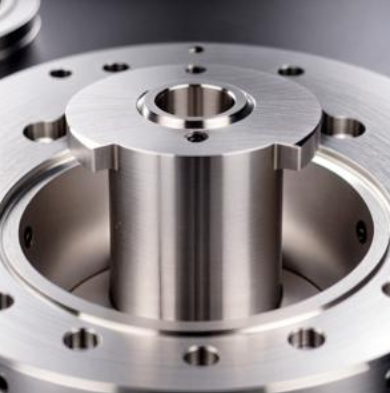
- Challenge: 200 brackets, complex 5-axis geometry, ±0.01mm tolerance. Competitors used basic carbide tools → chatter, 28% scrap, 10-day lead time.
- Zorapid Solution: Hard metal CAM + AlTiN-coated carbide + stress relief passes.
- Result: 6-day delivery, 0% scrap, ±0.005mm tolerance, AS9100 compliant.
3: High-Volume 304 Food-Grade Fitting (10,000 Parts)
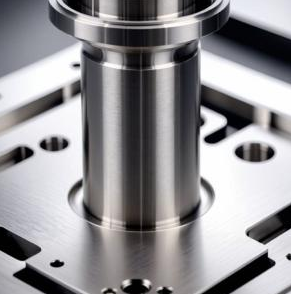
- Challenge: 10k fittings, M8×1.25 threads, standard tolerance, Ra 1.6μm finish. Competitors used generic feeds/speeds → 12% scrap, 8-day lead time.
- Zorapid Solution: Master 304 CAM template + thermal drift compensation + passivation.
- Result: 3-day delivery, 0% scrap, 33% faster cycles, consistent ±0.005mm tolerance.
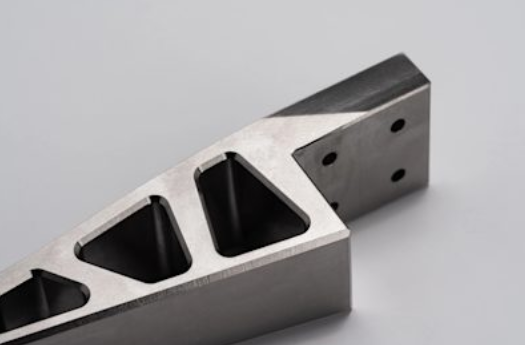
Application Scenarios: Where Stainless Steel CNC Dominates
Medical Devices
- Needs: Corrosion resistance, biocompatibility, smooth finishes (Ra 0.2–0.8μm)
- Stainless Grades: 316L, 304
- Zorapid Fit: ISO 13485 compliant, electropolishing/passivation in-house
Aerospace & Defense
- Needs: High strength, heat resistance, tight tolerances (±0.005mm)
- Stainless Grades: 17-4 PH, 316
- Zorapid Fit: AS9100 certified, 5-axis hard metal machining
Automotive & EV
- Needs: Corrosion resistance, durability, high volume
- Stainless Grades: 304, 316
- Zorapid Fit: 3–5 day delivery, high-volume stainless optimization
Food & Beverage
- Needs: Sanitary, corrosion-resistant, easy-to-clean surfaces
- Stainless Grades: 304, 316
- Zorapid Fit: Food-grade finishes, passivation, zero burrs
Marine & Offshore
- Needs: Saltwater corrosion resistance, high strength
- Stainless Grades: 316, 316L
- Zorapid Fit: Marine-grade passivation, durable precision parts
Delivery Speed: Zorapid’s Stainless CNC Promise
Prototypes (1–10 Parts)
- 304/316: 3 days
- 17-4 PH: 4 days
- Thin-wall (<1mm): 4 days
Low Volume (50–500 Parts)
- 304/316: 5 days
- 17-4 PH: 7 days
- Thin-wall: 6 days
Mid Volume (1,000–10,000 Parts)
- 304/316: 3–4 days (high-volume optimization)
- 17-4 PH: 6–7 days
Rush Priority (Critical Parts)
- 2–3 day delivery available for stainless medical/aerospace jobs
Industry Whitepaper: Stainless CNC Trends 2026–2027
Key Trends
- AI Stainless CAM Mainstream: By 2027, 60% of precision shops will use AI for deflection/chatter control (up from 25% in 2026)
- TSC Coolant Mandate: 75% of medical/aerospace buyers will require through-tool coolant for stainless by 2027
- 17-4 PH Surge: 40% of stainless jobs will be hardened 17-4 PH by 2027 (aerospace growth)
- Zero-Scrap Goals: 50% of medical shops will target <0.5% scrap via AI/stainless expertise by 2027
- In-House Finishing Standard: 70% of high-end shops will offer passivation/electropolishing in-house by 2027
Critical Industry Challenges
- Generic Parameter Overuse: 75% of shops still use unoptimized feeds/speeds
- Work Hardening Expertise Gap: 80% of shops lack trochoidal stainless skills
- Coolant Neglect: 60% of shops don’t use high-pressure TSC for stainless
Zorapid’s Position
We’re the leading AI-optimized stainless CNC specialist for medical, aerospace, and high-volume food-grade clients. Our grade-specific CAM templates, rigid cast-iron machines, and in-house finishing solve the industry’s biggest pain points. We don’t just machine stainless—we engineer every cut to beat work hardening and chatter.
Conclusion
Stainless steel machining isn’t about cutting fast”—it’s about cutting smart to beat work hardening, heat, and chatter.
- Generic Shops: Guesswork params, frequent tool breaks, 15–40% scrap, slow cycles
- Zorapid: AI+G-Wizard optimization, rigid machines, grade-specific strategies, ±0.005mm precision, zero scrap
At Zorapid, we’ve mastered stainless’s unique challenges—from thin-wall 316L implants to hardened 17-4 PH aerospace brackets. We don’t just machine stainless; we solve your toughest stainless problems.
Whether you need medical-grade 316L parts, aerospace 17-4 PH components, or high-volume food-grade fittings—our stainless-optimized CNC turns uncertainty into consistent precision.
Stop wasting money on tool replacements and scrap. Contact Zorapid today for a free stainless DFM audit, parameter optimization, and quote.
FAQ
What’s the biggest mistake shops make with stainless?
Light feeds and shallow cuts. They cause rubbing, not cutting—sparking work hardening, chatter, and rapid tool wear. Always use steady feeds and deep enough cuts to stay below the hardened layer.
Do I need special tools for stainless?
Absolutely. Only solid carbide with AlTiN/TiCN coatings works. HSS tools burn out fast, and uncoated carbide wears quickly from heat.
Can stainless be machined dry?
Not recommended. Dry cutting increases tool wear by 80% and worsens work hardening. High-pressure through-tool coolant is mandatory for consistent results.
What tolerance is achievable with stainless?
±0.005mm (medical/aerospace grade) with Zorapid’s AI+G-Wizard workflow. Generic shops typically hit ±0.02–0.05mm due to distortion and chatter.
How do you prevent thin-wall stainless from bowing?
Three keys: AI deflection prediction, trochoidal light-pass toolpaths, and rigid vacuum fixturing. We routinely machine 0.5mm walls with ±0.008mm flatness.
Is 316 harder to machine than 304?
Slightly. 316 has higher nickel/molybdenum content, making it tougher and more prone to hardening. It needs 10–20% slower speeds than 304.
Does Zorapid offer passivation/electropolishing?
Yes. We do ISO 13485-compliant passivation (max corrosion resistance) and electropolishing (Ra 0.2–0.5μm) in-house for medical/food applications.
How long do carbide tools last in stainless?
80–120 parts for generic shops; 200–250 parts with Zorapid’s optimized workflow (2.75× longer life).