Published by: Zorapid.Ltd
Hot-dip galvanized (HDG) steel is the go-to material for outdoor brackets, frames, enclosures and structural hardware. The thick zinc barrier stops rust and cuts long-term maintenance cost.
But the zinc coating creates endless headaches during sheet metal fabrication.
Bend too tight, and the zinc layer splits and flakes off. Weld without prep, and you get porous, weak welds plus toxic zinc oxide fumes. Cut the sheet and leave raw edges untreated, and rust spreads quickly under the remaining coating.
At Zorapid, we process hundreds of tons of galvanized steel every month for construction, HVAC and agricultural equipment projects. We have learned that most coating damage, weld failure and premature corrosion happen not from bad steel quality, but from skipped processing steps.
This practical guide breaks down critical precautions for every single fabrication stage: blanking, bending, drilling, welding, deburring and edge touch-up. We include AWS-compliant safety rules, shop-proven parameter tweaks, and simple fixes to keep the zinc layer intact and your parts corrosion-proof after machining.
If you keep fighting peeling coating and leaky welds on galvanized runs, these step-by-step rules will cut scrap and rework drastically.
Why Galvanized Steel Behaves Differently During Fabrication
First, understand the material’s core limitation so you avoid fighting the zinc layer.
- Zinc has low ductility The zinc coating only stretches 10–15%. The mild steel substrate stretches over 30%. Sharp cold bends tear the brittle zinc layer clean away from the base metal.
- Low boiling point creates welding trouble Zinc vaporizes at roughly 907°C, far below steel’s melting temperature. Trapped zinc gas creates bubbles and pinholes inside the weld pool, ruining joint strength.
- Heat creates thermal stress Local heating from cutting or welding warps thin galvanized sheets and lifts the zinc coating along the heat-affected zone (HAZ).
- Exposed bare steel triggers edge rust Any cut, ground or drilled surface removes the zinc barrier. Without immediate touch-up, red rust creeps inward under the intact coating.
Good fabrication of galvanized steel means balancing deformation, heat input and surface protection across every operation.
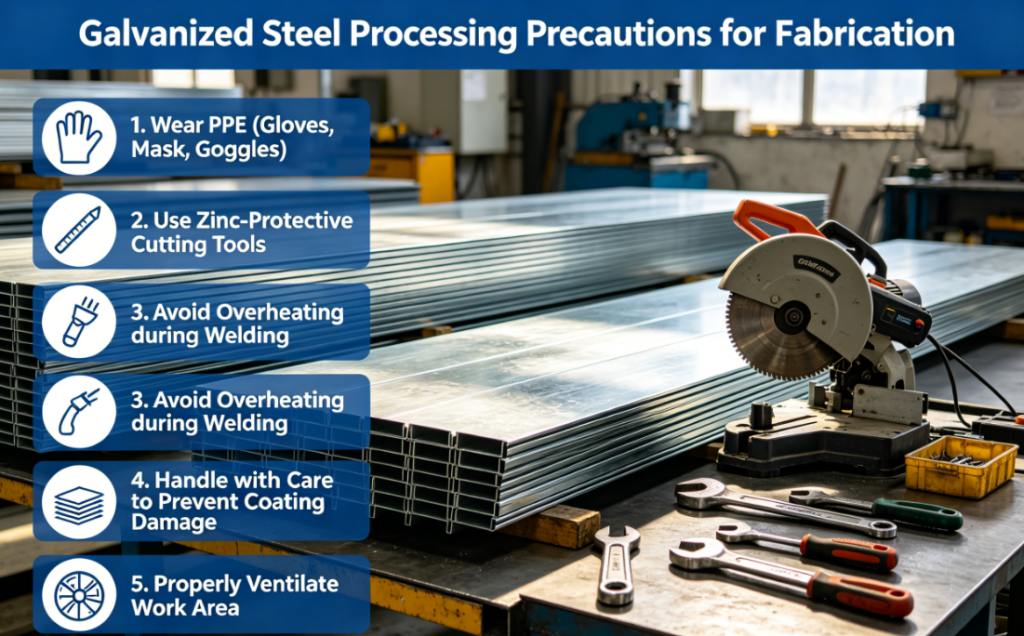
Blanking & Plasma / Laser Cutting Precautions
Cutting generates high heat, which burns, blisters and peels the zinc layer over a wide area. These rules minimize coating damage.
Key Processing Rules
- Limit heat input on thin galvanized sheet Use high-speed fiber laser cutting with pulsed mode instead of continuous beam. Lower heat keeps the zinc layer stable within 2–3mm of the cut line. Plasma cutting creates heavy heat zones. Only use plasma for thick plate, and plan extra edge trimming afterward.
- Use sharp, clean cutting wheels for abrasive saws Dull wheels create extra friction and burn the zinc surface. Always use metal-cutting discs rated for coated steel.
- Clamp sheets firmly to avoid shifting Vibration causes chipping along the cut edge, leaving jagged zinc flakes that peel later during bending.
- Deburr cut edges immediately Sharp burrs catch and tear the surrounding zinc coating during subsequent bending and forming.
Critical Post-Cutting Step
All bare steel on cut edges must be sealed right away. Do not leave raw steel exposed overnight.
Solution: Wire-brush clean the edge, then spray zinc-rich cold galvanizing compound to rebuild the protective barrier.
Safety Note
Thermal cutting releases zinc oxide fumes. Run local fume extractors and wear a metal-fume rated respirator in enclosed work cells.
Cold Bending & Forming
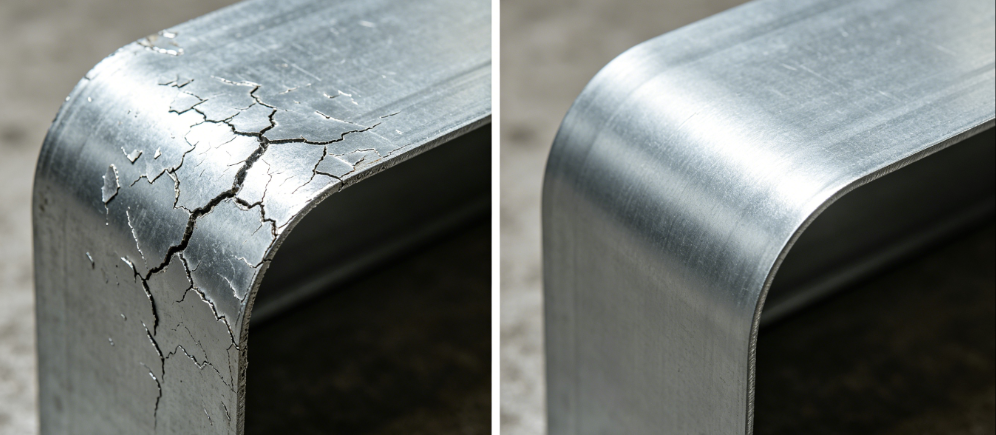
90% of coating failure on galvanized brackets comes from poor bend setup. The zinc cannot stretch around tight inside corners.
Non-Negotiable Bend Rules for HDG Steel
- Follow strict minimum inside bend radius
- Material thickness t ≤ 2.0mm: Minimum inside radius ≥ 1.5 × t
- Material thickness 2–6mm: Minimum inside radius ≥ 2.0 × t Never bend flat against a sharp zero-radius die. This will crack the zinc coating every single time.
- Use polished, smooth press brake tooling Rough die surfaces scratch and peel the zinc during forming. Polish the punch and die to prevent surface scuffing.
- Slow down bend speed Fast forming creates sudden tension across the zinc layer. Slow controlled stroke reduces surface cracking on outer bend surfaces.
- Avoid multiple reverse bending on the same location Back-and-forth folding fatigues the zinc intermetallic layer and makes it flake off completely.
What If Coating Still Cracks?
Grind off loose zinc flakes, clean the bare steel, then re-coat with cold galvanizing spray to restore corrosion protection.
Drilling, Punching & Hole Making Precautions
Punching and drilling tear the zinc around hole openings if you do not set up correctly.
- Keep punch edges sharp Blunt punches shear and tear the zinc layer around hole perimeters. Sharp tooling leaves clean, minimally damaged zinc edges.
- Add a small countersink only if required Countersinking removes the zinc ring around holes. If you must countersink, plan to reapply zinc primer on the bare machined ring afterward.
- Prevent galvanic contamination Do not let steel chips scratch intact zinc surfaces across the part. Chips create small bare spots that turn into rust points.
- Clear all zinc dust from holes Zinc dust left inside tapped holes ruins thread fit and traps moisture that causes hidden corrosion. Blow out all debris with compressed air.
Welding Galvanized Steel
Welding galvanized steel brings two major risks: porous weak welds and toxic zinc fume fever. We follow AWS standard procedures strictly on all structural jobs.
1: Prep the Weld Zone First (No Exceptions)
Grind away the full zinc coating 25mm (1 inch) on both sides of the weld joint. Remove all zinc down to clean base steel.
If you skip this step, trapped zinc vapor creates pinhole porosity that cuts weld tensile strength by 15–20%.
2: Welding Parameter & Wire Selection
- Preferred Process: MIG GMAW with silicon-alloy solid wire Silicon wire suppresses zinc-related porosity better than standard mild steel wire.
- Increase travel speed slightly Faster travel reduces heat input and limits zinc vapor generation in the HAZ.
- Use 100% argon or argon-CO₂ shielding mix Stable shielding gas pushes zinc vapor out of the molten weld pool and reduces spatter.
- Avoid slow cold welds Low heat lets zinc oxide float into the weld and form hard slag inclusions.
3: Post-Weld Zinc Restoration
The weld bead and surrounding ground area lose all galvanized protection.
- Let the joint fully cool
- Wire-brush scale clean
- Apply zinc-rich primer over the weld and heat-affected zone to match the original coating thickness
Non-Negotiable Fume Safety
Zinc oxide smoke causes metal fume fever (flu-like chills, headache, nausea).
- Always run fume extraction arms directly over the weld arc
- Enclosed welding bays require forced ventilation
- All operators wear NIOSH-approved fume respirators.
Deburring, Finishing & Edge Corrosion Protection
Fabrication leaves dozens of tiny bare steel spots that start rusting within days if left untreated.
We follow this finishing sequence for every galvanized batch:
- Remove all burrs, sharp edges and loose zinc flakes with wire brushes or light abrasive pads. Do not grind large areas unnecessarily.
- Clean oil, coolant and zinc dust off the entire part with degreaser. Residue stops cold galvanizing paint from bonding properly.
- Touch up every machined surface: cut edges, drilled holes, ground weld zones, chipped bend corners. Use zinc-rich cold galvanizing coating, not regular grey paint. Only zinc-based products maintain the sacrificial corrosion protection of the original hot-dip layer.
- Let the touch-up cure fully before packing. Trapped uncured coating sticks together and peels during shipment.
Common Mistake to Avoid
Do not apply topcoat paint directly over chipped zinc without first rebuilding the zinc barrier. Ordinary paint will bubble and fail quickly on bare steel.
The 6 Most Common Galvanized Fabrication Mistakes We Fix Weekly
Mistake 1: Zero-radius sharp bending
Tight bends crack the zinc layer wide open, leading to early edge rust.
Fix: Enforce minimum bend radius ≥1.5× material thickness on all HDG sheet.
Mistake 2: Skipping zinc grinding on weld joints
Trapped zinc creates porous, structurally weak welds that fail NDT inspection.
Fix: Strip zinc 1 inch back from every weld seam per AWS D19.0 rules.
3: Leaving cut edges bare with no zinc touch-up
Raw steel edges spread corrosion under the surrounding zinc coating.
Fix: Cold galvanizing spray on all machined edges immediately after cutting.
4: Slow high-heat laser/plasma cutting
Excessive heat blisters zinc over large areas, creating widespread coating loss.
Fix: Use pulsed laser settings to keep heat zones narrow.
5: Rough scratched tooling on press brakes
Scratches create hundreds of micro bare spots across the part surface.
Fix: Keep punches and dies polished smooth for galvanized forming runs.
6: Welding with poor ventilation
Uncontrolled zinc fumes lead to operator health risks and shop safety violations.
Fix: Local extraction arms are mandatory for all thermal work on HDG steel.
Zorapid Real Fabrication Case – Eliminate Zinc Peeling on Outdoor Brackets
Project Details
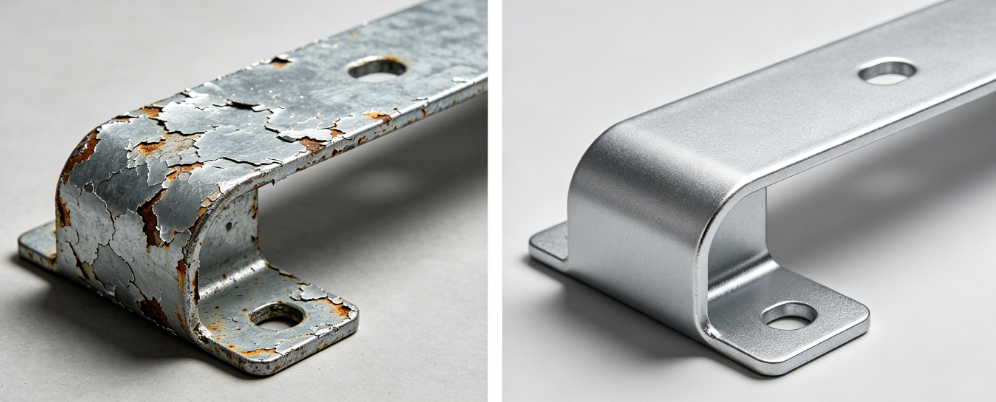
Hot-dip galvanized 2.5mm sheet steel equipment bracket, 4 folded corners + welded mounting tabs.
Initial Problems
- Zero-radius bends split the zinc coating on all four corners
- Welds contained heavy pinhole porosity from unground zinc layers
- Untreated cut edges developed red rust within two weeks of outdoor testing Total rework rate hit 29%.
Our Process Adjustments
- Revised all bend programs with inside radius = 2.0 × material thickness; polished press brake tooling
- Ground all zinc coating 25mm back from every weld joint; switched to silicon-alloy MIG wire
- Added a mandatory edge finishing step: wire brush + zinc-rich cold galvanizing touch-up on all cut and ground surfaces
- Controlled laser cutting heat with pulsed mode to limit zinc blistering along cut lines
Final Outcome
Zinc coating stayed intact across all bends. Welds passed full visual inspection with zero porosity. No edge corrosion appeared after 6 months of outdoor salt spray testing. Rework dropped below 1%.
Quick Fabrication Checklist For Galvanized Steel
Cutting: Use low-heat pulsed laser; deburr all edges; no plasma overheating on thin sheet
Bending: Minimum inside bend radius ≥1.5t; polished smooth tooling; slow forming stroke
Drilling: Sharp punches only; blow zinc dust out of all holes; re-countersunk areas with zinc primer
Welding: Grind zinc 25mm back from joints; use silicon MIG wire; run full fume extraction
Finishing: Wire-brush all loose zinc; touch up every bare steel spot with cold galvanizing zinc coating
Storage: Keep finished parts dry; do not stack wet components before touch-up fully cures
If you follow this checklist, you will eliminate nearly all coating damage and premature rust on galvanized fabrications.
How Zorapid Controls Galvanized Steel Quality Batch After Batch
With 20+ years of sheet metal fabrication for outdoor structural hardware, we standardize HDG steel processing to avoid coating failure:
- Free DFM review: We mark bend zones, weld seams and high-risk coating peeling areas before programming
- Tooling dedicated exclusively for galvanized runs, polished regularly to prevent zinc scratching
- AWS-compliant welding procedures with full zinc pre-grinding and fume safety protocols
- Mandatory edge touch-up station with zinc-rich cold galvanizing for all machined surfaces
- Post-fabrication visual inspection to confirm zero bare steel before packaging
We keep your galvanized parts corrosion-resistant, clean and structurally sound from blanking all the way through finishing.
Conclusion
Most galvanized steel fabrication issues do not come from bad zinc coating. They come from excess heat, sharp tight bends, unprepared weld joints and untreated bare cut edges.
Three core rules to lock in quality:
- Protect the brittle zinc layer by using generous bend radii and limiting heat input during cutting and welding.
- Always strip zinc fully back from weld seams to eliminate porosity and weak joints, following AWS standards.
- Rebuild the zinc barrier on every machined edge with cold galvanizing touch-up, or rust will spread under the intact coating.
Sticking to these precautions keeps your galvanized fabrications scratch-free, structurally solid and long-lasting in outdoor corrosive environments.
Send your bracket or frame drawings to Zorapid today. Our sheet metal team will lock in the right bending, welding and finishing process for your HDG steel parts and hold scrap rates low.
FAQ
Can I avoid zinc peeling entirely during cold bending?
Yes. Stick strictly to the minimum bend radius (1.5× to 2× sheet thickness) and use polished die tooling. Sharp zero-radius bends will always crack the zinc intermetallic layer.
How far do I need to grind zinc away before welding galvanized steel?
Follow AWS D19.0: remove all zinc coating 25mm (1 inch) on each side of the weld joint. This eliminates trapped zinc vapor and weld pinholes.
Is cold galvanizing spray as good as hot-dip coating for edge repair?
Zinc-rich cold compound delivers sacrificial cathodic protection matching the original HDG layer. It is the only approved touch-up for machined cut edges on galvanized fabrications.
What welding wire works best for galvanized steel to stop porosity?
Silicon-alloy solid MIG wire with argon shielding gas suppresses zinc-related gas pockets far better than standard mild steel wire.
Can I laser cut thin galvanized sheet without ruining the zinc layer?
Pulsed fiber laser with low heat input keeps zinc blistering limited to just 2–3mm along the cut line. Continuous high-power beams burn large sections of coating.