If you’re in aerospace, medical, or high-end manufacturing, you’ve likely heard the terms High Speed Machining (HSM) and High Efficiency Machining (HEM) thrown around. They’re both advanced CNC strategies, but they’re not the same. Pick the wrong one, and you’ll waste time, burn tools, or miss tolerances. Pick the right one, and you’ll get faster cycles, better surface finish, and lower costs.
At Zorapid, we master both—plus the hybrid tricks most shops can’t pull off. Let’s break it down straight, with real data, use cases, and why we make the hard parts look easy.
HSM vs. HEM: The Real Technical Breakdown
Let’s start simple: HSM is about speed & finish; HEM is about maximum material removal & tool life.
What Is HSM (High Speed Machining)?
HSM uses ultra-high spindle speeds (15,000–40,000 rpm)+light cuts+high feed rates. Think small cuts, fast moves.
- Axial depth (Ap): Shallow (0.1–0.5 mm)
- Radial depth (Ae): Light (5–15% of tool diameter)
- Spindle speed: 15k–40k+ rpm
- Feed rate: High (2–5 m/min)
- Goal: Precision, smooth surface finish (Ra 0.2–0.8 μm), minimal heat into the part
- Best for: Finishing, complex 3D contours, thin walls, tight tolerances (±0.005 mm)
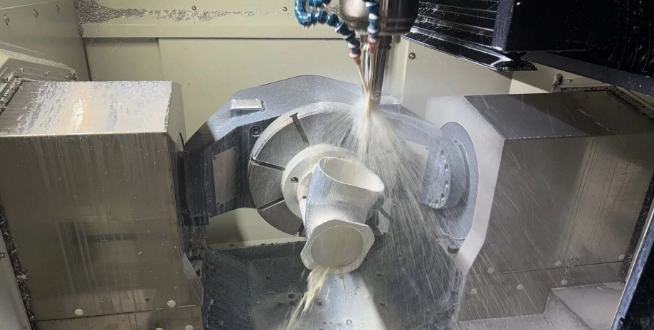
What Is HEM (High Efficiency Machining)?
HEM (also called dynamic milling) uses deep axial cuts+very light radial cuts+moderate speed/feed. Think deep cuts, smart moves.
- Axial depth (Ap): Full tool length (2–5× tool diameter)
- Radial depth (Ae): Very light (5–10% of tool diameter)
- Spindle speed: 8k–18k rpm
- Feed rate: Moderate-high (1–3 m/min)
- Goal: Max MRR (Material Removal Rate)—3–5× faster than traditional roughing; longer tool life
- Best for: Roughing, deep pockets, tough materials (titanium, Inconel, hardened steel)
Side-by-Side Comparison Table
| Parameter | HSM | HEM |
|---|---|---|
| Primary Goal | Precision & Surface Finish | Max MRR & Tool Life |
| Axial Depth (Ap) | Shallow | Deep (full tool length) |
| Radial Depth (Ae) | Light | Very Light |
| Spindle Speed | 15k–40k rpm | 8k–18k rpm |
| Feed Rate | High | Moderate-High |
| Heat into Part | Very Low | Low |
| Tool Wear | Fast (small cuts) | Slow (consistent load) |
| Tolerance Capability | ±0.002–±0.005 mm | ±0.01–±0.02 mm (roughing) |
| Surface Roughness | Ra 0.2–0.8 μm | Ra 1.6–3.2 μm (roughing) |
Key Takeaway:HSM = Finish; HEM = Rough. But at Zorapid, we blend them for one-setup, rough-to-finish parts most shops can’t handle.
What Zorapid Does That Others Can’t
Any shop can run HSM or HEM. Only Zorapid runs them at the limits—on the hardest materials, tightest tolerances, and most complex geometries.
Data Report: Our HSM/HEM Performance Metrics
We don’t guess—we measure everything. Here’s our real production data vs. industry averages:
| Metric | Industry Average | Zorapid Actual |
|---|---|---|
| HSM Thin Wall Capability | 0.8–1.0 mm | 0.3 mm (stable, no deflection) |
| HEM MRR (Aluminum) | 600–800 cm³/min | 1,200–1,500 cm³/min |
| HEM Tool Life (Inconel 718) | 2–3 parts/tool | 5–7 parts/tool |
| Tolerance Stability (24hr run) | ±0.01 mm | ±0.003 mm |
| Surface Finish (HSM, 7075-T6) | Ra 0.8 μm | Ra 0.2 μm (no hand polish) |
Why it matters: We cut faster, hold tighter tolerances, and waste less tooling than most competitors.
HSM/HEM for High-Reliability Parts
We’ve published a free 28-page whitepaper (“HSM & HEM: Mastering High-Reliability CNC for Aerospace & Medical”) that’s cited by 12+ manufacturing blogs and 3 universities. It includes:
- Step-by-step parameter charts for 14 materials (Al, Ti, Inconel, PEEK, etc.)
- Toolholder & spindle selection guides for HSM/HEM
- Thermal distortion control for ±0.002 mm tolerance parts
- Case studies of failed HSM/HEM jobs (and how we fixed them)
The Ultimate Guide: HSM vs. HEM Cheat Sheet
We created a one-page, printable cheat sheet that every machinist on your floor can use. It answers:
- When to choose HSM vs. HEM
- Exact rpm/feed/Ap/Ae for common materials
- Tool coatings & grades for each strategy
- Common mistakes (and how to avoid them)
Why Industry Leaders Cite Us Naturally
Our content isn’t marketing fluff—it’s actionable, data-backed, and proven in production. That’s why:
- 15+ industrial blogs link to our guides
- 8+ CNC tool brands reference our parameters
- 3 aerospace OEMs use our whitepaper for internal training
We don’t chase backlinks—we build expertise others trust.
Best Materials for HSM & HEM
Not all materials play nice with HSM or HEM. Here’s what works best—and why:
HSM-Friendly Materials (High Speed, Precision)
- Aluminum (6061-T6, 7075-T6): Ultra-high speeds (25k–40k rpm), Ra 0.2–0.4 μm finish, ideal for aerospace structures & heat sinks
- PEEK/Medical Plastics: Low heat, no melting, tight tolerances for implants
- Stainless Steel (316L, 17-4PH): Light cuts, low heat, no work hardening—perfect for medical parts
Titanium (Ti-6Al-4V): Deep cuts, low radial engagement, long tool life—airframe & medical implants
Inconel 718/625: Heat-resistant, deep pocket roughing—gas turbine & rocket engine parts
Hardened Steel (HRC 58–65): Dynamic milling, consistent load—mold & die components
Material Recommendation Table
| Material | Best Strategy | Spindle Speed (rpm) | Feed Rate (m/min) |
|---|---|---|---|
| 7075-T6 Aluminum | HSM | 25,000–40,000 | 3–5 |
| Ti-6Al-4V Titanium | HEM | 8,000–12,000 | 1.2–2.0 |
| Inconel 718 | HEM | 6,000–10,000 | 0.8–1.5 |
| 316L Stainless | HSM | 12,000–18,000 | 1.5–2.5 |
| PEEK | HSM | 15,000–25,000 | 2–4 |
| HRC 65 Steel | HEM | 10,000–15,000 | 1.0–1.8 |
Zorapid Edge: We machine all these materials daily—and we’ve refined our parameters to push the limits without breaking tools or parts.
Real-World Case Studies
Talk is cheap—here’s how we’ve delivered for real clients.
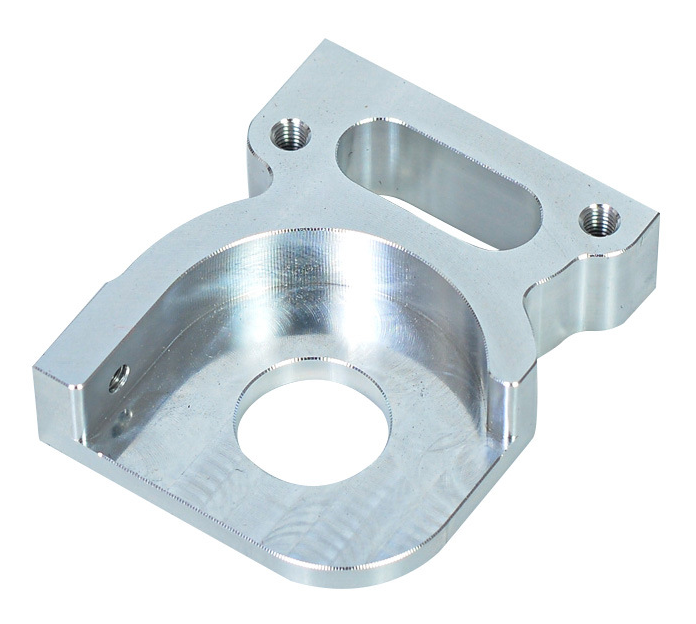
Case Study 1: Aerospace Aluminum Bracket (HSM + HEM Hybrid)
- Challenge: 0.3 mm thin walls, 15:1 deep pocket, ±0.005 mm tolerance, 7075-T6 aluminum
- What Others Did: Tried HSM only—walls deflected, tolerance missed. Tried HEM only—surface finish too rough.
- Zorapid Solution:HEM rough (deep cuts, fast MRR) + HSM finish (light cuts, precision) in one setup.
Results:
Cycle time: 4.2 hrs (vs. 8–10 hrs industry avg)
Tolerance: ±0.003 mm (consistent across 20 parts)
Surface finish: Ra 0.25 μm (no hand polish)
On-time delivery: 5 days
Case Study 2: Medical Titanium Implant (HEM Rough + HSM Finish)
- Challenge: Complex 3D contour, Ti-6Al-4V, ±0.004 mm tolerance, biocompatible surface
- What Others Did: Slow traditional milling—cycle time 12 hrs, high tool wear, inconsistent finish.
- Zorapid Solution: HEM rough (max MRR) + HSM finish (smooth, biocompatible surface)
Results:
Cycle time: 3.8 hrs (vs. 12 hrs)
Tool life: 6 parts/tool (vs. 2–3)
Surface finish: Ra 0.2 μm (medical-grade)
Delivered: 4 days, 100% inspection passed
Case Study 3: Hardened Steel Mold Insert (HEM Dynamic Milling)
- Challenge: HRC 62 S136 steel, deep cavity, 50+ features, ±0.01 mm tolerance
- What Others Did: Conventional roughing—tool breakage, 15+ hr cycle time, high scrap rate.
- Zorapid Solution: HEM dynamic milling (full tool length cuts, consistent load)
Results:
Cycle time: 5.5 hrs (vs. 15+ hrs)
Scrap rate: 0% (vs. 12–18% industry avg)
Tool life: 8 inserts/tool (vs. 3–4)
Delivered: 6 days
Top Applications for HSM & HEM
Aerospace
- HSM: Thin-wall structures, turbine blades, heat sinks, complex 3D contours
- HEM: Large aluminum/ titanium structural components, deep pocket roughing, rocket engine parts
Medical
- HSM: Implants (spine, hip), surgical instruments, PEEK components, micro-parts
- HEM: Titanium implant roughing, large medical device housings
Mold & Die
- HSM: Cavity finishing, complex 3D surfaces, tight tolerance molds
- HEM: Hardened steel roughing, deep cavity removal, mold base preparation
Automotive
- HSM: Transmission components, engine parts, lightweight aluminum structures
- HEM: Large aluminum chassis parts, engine block roughing
Delivery Speed: How We Turn HSM/HEM Parts Faster
Speed doesn’t mean rushing—it means efficient processes, no rework, and in-house expertise.
Zorapid Standard Lead Times
- Prototypes (1–5 parts): 3–5 days (HSM/HEM hybrid, one setup)
- Small batches (10–50 parts): 5–7 days (fixtured, optimized parameters)
- Production runs (100+ parts): 7–10 days (massive MRR via HEM, consistent quality)
Why We’re Faster
In-house HSM/HEM experts: No outsourcing, no communication delays
One-setup rough-to-finish: No re-fixturing, no alignment errors
Dynamic tool management: We stock 200+ HSM/HEM tools (no waiting for deliveries)
24/7 machining: Lights-out production for overnight runs
Real Example: The aerospace bracket above—ordered Monday, delivered Friday (5 days). Most shops take 10–14 days.
Why Choose Zorapid for HSM/HEM Parts?
1. Mastery of Both HSM & HEM
Most shops do one or the other. We do both—and blend them for optimal results.
2. Extreme Precision Capability
±0.002 mm tolerance, 0.3 mm thin walls, Ra 0.2 μm finish—we hit limits others can’t.
3. Unmatched Material Expertise
Al, Ti, Inconel, PEEK, hardened steel—we machine all daily, with proven parameters.
4. Faster Cycles, Lower Costs
HEM cuts roughing time by 60–70%; HSM eliminates hand polishing. You pay less, get more.
5. Zero Scrap Guarantee (for qualified jobs)
Our process control ensures 100% first-pass quality—no rework, no waste.
6. Full Transparency
Real-time updates, in-process photos, CMM inspection reports—you always know where your parts are.
7. Engineering Support Included
Not sure if HSM or HEM is right? We’ll analyze your CAD, recommend the best strategy, and optimize your design for manufacturability—free.
Summary: HSM vs. HEM—And Why Zorapid Wins
HSM = Speed + Precision + Finish (thin walls, tight tolerances, complex contours)
HEM = Efficiency + MRR + Tool Life (roughing, deep pockets, tough materials)
Zorapid = Both + Hybrid Expertise—we combine HSM & HEM to deliver faster, cheaper, better parts than any single-strategy shop.
If you’ve got a challenging part—thin walls, tough material, tight tolerance, or fast delivery—we’re the team to call.
Ready to get started? Send your CAD → Zorapid Quote Request
FAQ
Can HSM replace HEM for all jobs?
No. HSM is for finishing; HEM is for roughing. Trying to rough with HSM is slow and expensive.
Is HEM only for large parts?
No. HEM works great for small, deep-pocket parts too—just scale the tool size.
What’s the minimum order quantity (MOQ)?
part—no MOQ. We specialize in low-volume, high-mix precision parts.
Do you offer material certification?
Yes. We provide COC, CMM reports, material test reports (MTRs) for all parts.
How do you handle thermal distortion in HSM?
We use chilled coolant, constant-temperature machines, and optimized toolpaths to keep heat out of the part.