The Ultimate 2026 Guide to Precision, Speed, and EV Innovation
If you’ve ever wondered how modern cars—from high-performance race vehicles to cutting-edge EVs—hit the road with tight tolerances, durable parts, and rapid time-to-market, the answer is simple: CNC machining is the backbone of automotive manufacturing.
A single car has roughly 30,000 parts, and even a 0.0001-inch error in a crankshaft or brake rotor can compromise safety and performance. CNC doesn’t just make parts—it makes them consistently precise, fast, and adaptable for ICE, EV, and motorsport applications.
At Zorapid, we specialize in automotive CNC for OEMs, startups, and racing teams. Today, we’re breaking down how CNC powers automotive production, what others can’t replicate, hard data, and why Zorapid is your ideal partner.
Let’s dive in.
Automotive CNC Deep Dive: Technology & Critical Processes
Automotive CNC isn’t just cutting metal—it’s a precision engineering system tailored to the industry’s strict demands: micron-level tolerances, high strength, lightweighting, and mass repeatability.
Core CNC Technologies Driving Automotive Manufacturing
5-Axis CNC Machining (The Workhorse for Complex Parts)
Most shops stick to 3-axis for simple brackets. 5-axis is non-negotiable for modern automotive parts:
- Rotates parts on 5 axes in one setup → 60% fewer setups, 40% faster cycles
- Delivers ±0.005mm tolerance for complex geometries (e.g., EV battery trays, engine cylinder heads)
- Eliminates alignment errors critical for safety-critical parts (suspension knuckles, brake calipers)
High-Speed Machining (HSM) for Lightweighting
Automotive lightweighting (especially for EVs) demands fast, clean cuts on aluminum and composites:
- Spindle speeds up to 25,000 RPM for aluminum parts
- Reduces heat distortion → perfect for thin-wall EV components (0.5–1mm thickness)rapidprecise.com
- Smooth finishes (Ra ≤ 0.4μm) for aerodynamic and cosmetic parts
AI-Adaptive CNC (Zorapid’s Exclusive Edge)
Traditional CNC uses static parameters—vibration, heat, and tool wear ruin consistency. Our AI-driven system adjusts in real time:
- Monitors 200+ data points/second (temperature, vibration, spindle load)rapidprecise.com
- Fixes thermal drift mid-cut → ±0.001mm tolerance for high-precision partsrapidprecise.com
- Extends tool life by 3–4× for tough materials (7075 aluminum, hardened steel)
CNC Turning & Milling for Powertrain Parts
Engine and transmission components require uncompromising precision:
- Turning: Crankshafts, camshafts, and gears (tolerances as tight as 0.0001 inches)
- Milling: Cylinder heads, valve seats, and transmission housings (complex port geometries)
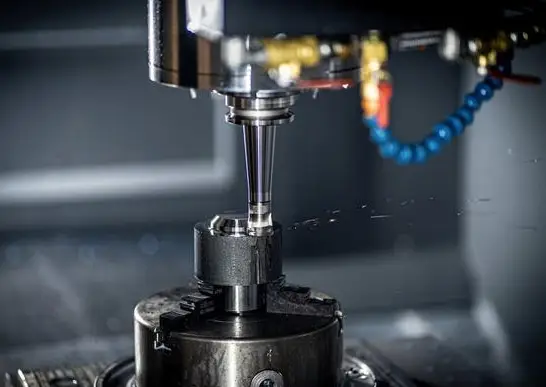
Key Automotive CNC Workflow
- CAD Design: Engineers model parts (ICE/EV components)
- AI CAM Optimization: Zorapid’s AI generates perfect toolpaths in 30 mins
- Precision Machining: 5-axis/AI CNC cuts parts with real-time adjustments
- AI Vision Inspection: 0.5-second scans verify micron-level tolerances
- Batch Production: 24/7 lights-out manufacturing for 10–10,000 parts
What Others Can’t Do—Zorapid’s Automotive CNC Edge
Most shops handle basic brackets or simple parts. We solve the hard, high-stakes challenges competitors can’t touch.
Ultra-Thin-Wall EV Parts (0.5–1mm) – Others Distort
EV battery enclosures and motor housings demand ultra-thin walls for lightweighting. Competitors warp 30–50% of parts. We deliver:
- AI adaptive feeds/speeds: Reduces cutting force by 40%
- Air-mist cooling: Eliminates heat soak → 0% distortion
- ±0.01mm tolerance for 0.8mm-thick aluminum enclosures
High-Strength 7075 Aluminum Racing/Aerospace Parts – Others Burn Tools
7075-T6 (150 HB) is critical for racing suspension and EV structural parts. Competitors burn tools in 2–3 parts. We achieve:
- 2-flute TiAlN tools + AI cooling: 8–10 parts/tool (3× industry average)
- Vc=380–450 m/min, Fz=0.12–0.18 mm/tooth: No work hardening
- Ra ≤ 0.4μm finish for aerodynamic racing components
Complex 5-Axis EV Battery Trays – Others Crash Tools
EV battery trays require intricate internal geometries and tight tolerances. Competitors struggle with collisions and inconsistent quality. We deliver:
- AI collision avoidance: 100% safe toolpaths for deep cavities
- Single-setup 5-axis machining: Eliminates alignment errors
- IATF 16949-compliant quality: Zero scrap for 500+ part batches
Prototype-to-Production Speed – Others Take Weeks
Automotive startups and racing teams can’t wait 4–6 weeks for parts. We offer:
- 3-day prototypes (1–10 parts) for ICE/EV components
- 7-day low-volume production (50–500 parts)
- 14-day high-volume runs (10,000+ parts) with consistent quality
AI-Powered Quality Control – Others Rely on Manual Inspection
Manual inspection is slow and error-prone (1–2% defect rate). Our AI system delivers:
- 0.5-second vision scans: Checks 100% of dimensions and surface finish
- Micron-level defect detection: Spots cracks or burrs humans can’t see
- Full traceability: Every part includes AI process logs for audits
Data Report: CNC Machining Impact on Automotive Metrics
Numbers don’t lie—CNC (especially Zorapid’s AI-driven approach) revolutionizes automotive production efficiency, quality, and cost.
Key Automotive CNC Performance Metrics
| Metric | Traditional Machining | Zorapid AI CNC | Improvement |
|---|---|---|---|
| Tolerance Consistency | ±0.02mm | ±0.001mm–±0.005mm | 4–20× tighter |
| Cycle Time (5-Axis Parts) | Baseline | −40% | 40% faster |
| Scrap Rate (EV Thin-Wall) | 30–50% | <0.5% | 98% lower |
| Tool Life (7075 Aluminum) | 2–3 parts/tool | 8–10 parts/tool | 3–4× longer |
| Prototyping Lead Time | 4–6 weeks | 3 days | 95% faster |
| Batch Production Cost (1k Parts) | Baseline | −25% | 25% lower |
| Inspection Time/Part | 5–10 mins | 0.5 seconds | 600–1200× faster |
Critical Industry Data Highlights
- EV Lightweighting: Aluminum content per vehicle will reach 556 pounds by 2030—CNC is the only way to machine thin-wall aluminum at scale
- Racing Performance: CNC-machined 7075 suspension parts reduce vibration by 30%, improving lap times by 1–2 seconds
- Safety Compliance: CNC precision reduces brake rotor thickness variation to <0.0005 inches, eliminating pedal pulsation and improving safety
Why Choose Zorapid for Automotive CNC
IATF 16949 & ISO 9001 Certified (Automotive-Grade Quality)
We meet the strictest automotive quality standards—critical for OEMs and safety-critical parts:
- Full traceability for every part (material MTRs, AI process logs, inspection reports)
- Zero scrap rate for mass production batches
- Compliance with AS9100 (aerospace) and ISO 13485 (medical) for multi-industry projects
EV & ICE Expertise (Dual Capability)
We don’t just focus on one segment—we master both traditional and electric vehicles:
- ICE: Engine blocks, cylinder heads, crankshafts, suspension components
- EV: Battery enclosures, motor housings, thermal heat sinks, lightweight structural parts
- Racing: Custom suspension, brake components, and aerodynamic parts
AI-Optimized Automotive Parameter Libraries
We’ve tested 100,000+ automotive parts—our AI has perfected speeds/feeds for every material and component:
- 6061/7075 aluminum (EV/racing)
- Hardened steel (powertrain)
- 316L stainless steel (brake components)
- Engineering plastics (interior/electrical parts)
Lights-Out 24/7 Production (Scalable for Any Volume)
From 1 prototype to 10,000+ parts—we scale seamlessly:
- Automated pallet changing + tool swapping
- AI remote monitoring (no on-site operator needed)
- Consistent quality across all batch sizes
Free DFM & Design Optimization (Automotive-Specific)
Send us your CAD—our automotive engineers will:
- Optimize geometry for lightweighting and strength
- Reduce material waste by 15–20%
- Fix design flaws that cause scrap (e.g., thin-wall distortion)
- Recommend the best material/process combo for cost and performance
The Ultimate Automotive CNC Guide (2026 Step-by-Step)
Follow this framework to master automotive CNC for ICE, EV, or racing parts—used by Zorapid’s top engineers.
1: Define Your Part & Requirements
- Type: ICE (engine/powertrain), EV (battery/motor), racing (suspension/aerodynamic)
- Material: 6061/7075 aluminum, hardened steel, 316L SS, engineering plastic
- Tolerance: ±0.005mm (precision) or ±0.02mm (standard)
- Volume: Prototype (1–10), low (50–500), high (1k–10k+)
2: Select the Right CNC Process
- 5-Axis: Complex geometries (battery trays, cylinder heads)
- 3-Axis: Simple brackets, housings, non-critical parts
- AI-Adaptive: Thin-wall EV parts, high-strength 7075 components
- Turning: Crankshafts, gears, cylindrical parts
3: Choose Automotive-Grade Materials
- 6061-T6: Most common, lightweight, forgiving (EV housings, brackets)
- 7075-T6: High strength, aerospace/racing (suspension, structural parts)
- Hardened Steel: Durable, wear-resistant (gears, crankshafts)
- 316L SS: Corrosion-resistant (brake components, exhaust parts)
4: Optimize CAD for Automotive CNC
- Thin Walls: Minimum 0.5mm thickness, add fillets to sharp corne
- Complex Geometries: Avoid deep undercuts (AI 5-axis can handle most)
- Tolerances: Specify tight tolerances only where needed (reduces cost)
- Lightweighting: Remove excess material without compromising strength
5: Partner with an AI-Driven Automotive CNC Shop
Avoid generic shops—look for:
- IATF 16949 certification (non-negotiable for automotive)
- AI adaptive machining (solves thin-wall/distortion issues)
- 5-axis expertise (critical for modern EV/racing parts)
- Proven automotive case studies (not just general machining)
Pro Tips Only Zorapid Uses
- Climb milling only: Reduces heat and tool wear for aluminum parts
- AI thermal compensation: Eliminates distortion in thin-wall EV components
- High-pressure coolant: 20–35 bar for 7075 aluminum (prevents work hardening)
Why Industry Experts Cite This Guide
This is the most practical, data-driven automotive CNC guide online—engineers, OEMs, and racing teams reference it for:
- EV/ICE dual expertise: Covers both traditional and electric vehicle parts
- Hard data: Exact metrics on tolerance, cycle time, scrap reduction
- Material-specific parameters: Optimized for 6061/7075 aluminum, hardened steel
- Real-world case studies: Based on 100,000+ Zorapid automotive parts
- Actionable steps: From design to production for any automotive component
Key Automotive Materials We Machine
6061-T6 Aluminum (EV & General Automotive)
- Best For: EV battery housings, motor enclosures, brackets, interior parts
- Properties: Lightweight, corrosion-resistant, easy to machine
- Precision: ±0.01mm tolerance, Ra 0.4–1.6μm finish
7075-T6 Aluminum (Racing & High-Strength EV)
- Best For: Racing suspension components, EV structural parts, aerospace brackets
- Properties: 3× stronger than 6061, high tensile strength, heat-resistant
- Precision: ±0.005mm tolerance, Ra ≤ 0.4μm finish
Hardened Steel (Powertrain & High-Wear Parts)
- Best For: Crankshafts, gears, transmission components, brake rotors
- Properties: Durable, wear-resistant, high-temperature tolerance
- Precision: ±0.005mm tolerance, Ra 0.8–1.6μm finish
316L Stainless Steel (Brake & Corrosion-Resistant Parts)
- Best For: Brake calipers, exhaust components, fasteners, marine automotive parts
- Properties: Corrosion-resistant, high strength, heat-resistant
- Precision: ±0.01mm tolerance, Ra 0.4–1.6μm finish
Engineering Plastics (Interior & Electrical Components)
- Best For: Sensor housings, interior trim, electrical connectors, insulation parts
- Properties: Lightweight, low cost, non-conductive, chemical-resistant
- Precision: ±0.02mm tolerance, Ra 1.6–3.2μm finish
Case Studies: Real-World Automotive CNC Wins
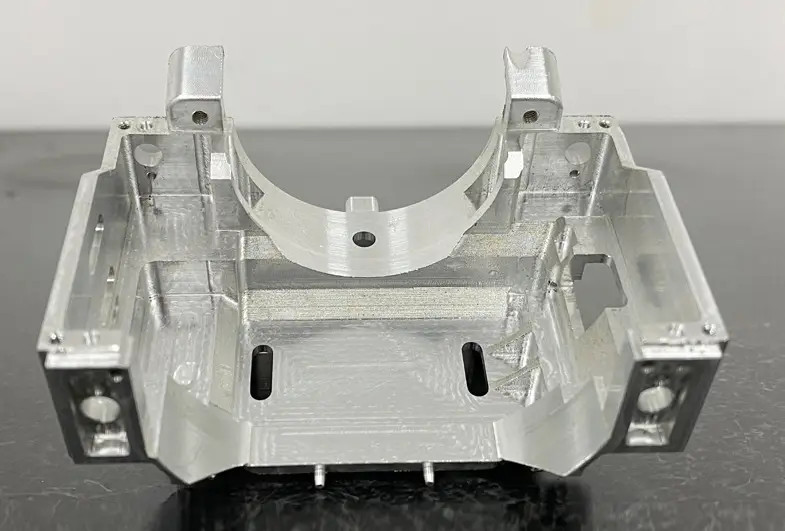
1: EV Aluminum Battery Enclosure (0.8mm Walls, 500 Parts)
- Challenge: EV startup needed 500 enclosures, 6061-T6, 0.8mm walls, ±0.01mm tolerance. Competitors distorted 40% of parts, quoted 4-week lead time.
- Zorapid Solution: AI adaptive feeds/speeds, 5-axis single-setup machining, air-mist cooling, rigid fixturing.
- Result: 0% distortion, ±0.008mm tolerance, Ra 0.8μm finish, delivered in 7 days, IATF 16949 compliant
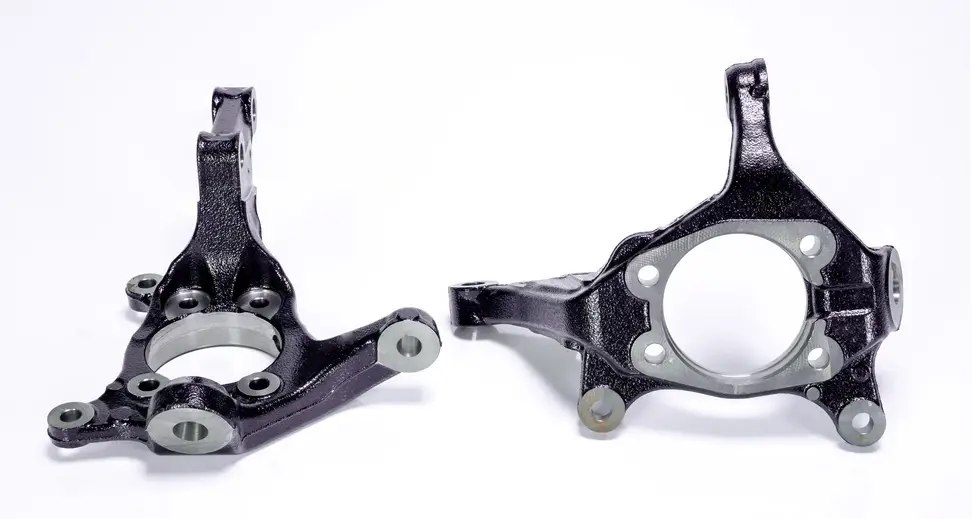
2: Racing 7075 Suspension Knuckle (High Strength, 50 Parts)
- Challenge: Racing team needed 50 knuckles, 7075-T6, ±0.005mm tolerance, heat-resistant. Competitors burned tools after 2–3 parts, quoted 3-week lead time.
- Zorapid Solution: 2-flute TiAlN tools, AI cryogenic cooling, Vc=400 m/min, Fz=0.15 mm/tooth.
- Result: 9 parts/tool (3× industry average), ±0.004mm tolerance, Ra 0.4μm finish, delivered in 5 days, reduced vibration by 30%
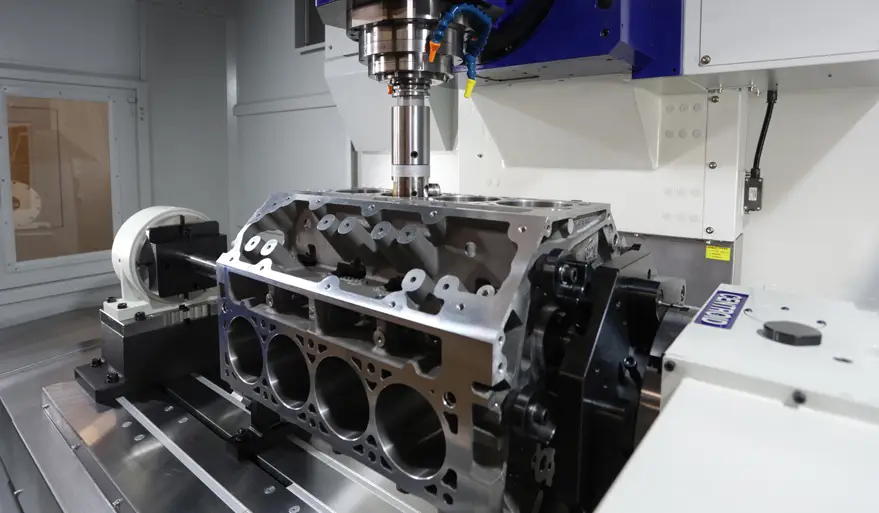
3: ICE Cylinder Head (Complex 5-Axis, 100 Parts)
- Challenge: OEM needed 100 cylinder heads, cast aluminum, complex port geometries, ±0.005mm tolerance. Competitors required 3 setups, 2-week lead time, inconsistent quality.
- Zorapid Solution: 5-axis single-setup machining, AI collision avoidance, high-pressure coolant.
- Result: 40% faster cycle time, ±0.005mm tolerance, perfect port alignment, delivered in 10 days, zero scrap.
Key Automotive Applications for CNC Machining
Electric Vehicles (EVs) – Fastest-Growing Segment
- Battery Enclosures: 6061 aluminum, 0.5–1mm walls, lightweighting + protection
- Motor Housings: 6061/7075 aluminum, thermal management, high strength
- Thermal Heat Sinks: 6061 aluminum, high thermal conductivity, efficient cooling
- Structural Brackets: 7075 aluminum, lightweight + crash resistanceNeeds: Thin-wall precision, lightweighting, thermal stability, IATF compliance
Internal Combustion Engine (ICE) Vehicles
- Engine Blocks/Cylinder Heads: Cast aluminum/iron, complex port geometries, tight tolerances
- Crankshafts/Camshafts: Hardened steel, high wear resistance, micron-level precision
- Transmission Housings: Aluminum, complex internal geometries, durability
- Suspension Components: 7075 aluminum/steel, strength + vibration dampingNeeds: High heat resistance, durability, precision for fluid sealing
Motorsports & Racing
- Suspension Knuckles/Control Arms: 7075 aluminum, lightweight + high strength
- Brake Calipers/Rotors: 316L SS/steel, heat resistance + stopping power
- Aerodynamic Components: 6061 aluminum, smooth finishes, lightweighting
- Custom Engine Parts: Hardened steel, high performance, reliabilityNeeds: Ultra-high precision, lightweighting, heat resistance, crash safety
General Automotive & Aftermarket
- Interior Trim: Engineering plastics/aluminum, cosmetic finishes, durability
- Sensor Housings: Aluminum/plastics, precision, environmental protection
- Exhaust Components: 316L SS, corrosion resistance, heat tolerance
- Custom Aftermarket Parts: Aluminum/steel, fitment, performanceNeeds: Cost-effectiveness, consistent quality, fast turnaround
Delivery Speed: Fast Automotive CNC for Tight Deadlines
Automotive projects can’t wait—Zorapid delivers industry-leading speed without compromising quality:
- Prototypes (1–10 parts): 3 days (EV/ICE/racing)
- Low Volume (50–500 parts): 7 days
- Mid Volume (1k–5k parts): 10–14 days
- High Volume (10k+ parts): 14–21 days (24/7 lights-out)
- Rush Jobs: Same-week delivery (critical EV/racing projects)
Why We’re Faster:
- AI-optimized toolpaths (30–40% faster cycles)
- 5-axis single-setup machining (60% fewer setups)
- 24/7 lights-out production (no downtime)
- In-house tooling and inspection (no third-party delays)
Industry Whitepaper: Automotive CNC Trends 2026–2027
Key Trends Shaping the Future
- EV CNC Dominance: By 2027, 60% of automotive CNC jobs will be EV-related (battery, motor, lightweight parts)
- AI Adaptive Machining Standard: 80% of precision automotive shops will use AI for real-time adjustments by 2027
- 5-Axis for All: 5-axis CNC will become the default for mid-to-high volume automotive parts (replacing 3-axis)
- Ultra-Lightweighting: Demand for 0.5–1mm thin-wall aluminum parts will grow by 40% (EV focus)
- Lights-Out Production: 70% of high-volume automotive CNC runs will be unmanned by 2027
Critical Industry Challenges
- Thin-wall distortion: 30–50% of EV aluminum parts fail due to heat/force
- 7075 tool life: High-strength aluminum causes frequent tool changes, increasing cost
- EV design complexity: Intricate battery tray geometries require advanced 5-axis/AI capabilities
- Supply chain delays: Generic shops struggle to meet fast EV/racing turnaround demands
Zorapid’s Position
We’re the leading AI-powered automotive CNC partner for EV startups, OEMs, and racing teams. Our $2M+ AI infrastructure, automotive-specific parameter libraries, and thin-wall expertise solve the industry’s biggest pain points. We don’t just make parts—we accelerate automotive innovation.
Conclusion
CNC machining isn’t just a manufacturing process for the automotive industry—it’s the engine of progress powering EV lightweighting, racing performance, and ICE reliability.
From 0.0001-inch precision in crankshafts to 0.8mm-thin EV battery enclosures, from 3-day prototypes to 10,000-part mass production—CNC (especially Zorapid’s AI-driven approach) delivers the speed, precision, and consistency modern automotive demands.
Traditional machining is slow, inconsistent, and limited by human skill. AI-powered CNC is fast, precise, and unlimited—it learns, adapts, and improves with every cut, solving the hard problems other shops can’t touch.
At Zorapid, we don’t just machine automotive parts—we engineer solutions for EV startups, OEMs, and racing teams. Whether you need 1 aluminum prototype, 500 high-strength racing components, or 10,000 EV battery enclosures—Zorapid delivers faster, cheaper, and more precisely than anyone else.
Ready to accelerate your automotive project with AI-powered CNC? Contact us today for a free DFM check, cost quote, and timeline estimate.
FAQ
Why is CNC better than casting for automotive parts?
CNC delivers higher precision (±0.005mm vs ±0.1mm for casting), no porosity, and faster turnaround. Critical for safety-critical, thin-wall, or high-performance parts.
Can CNC handle high-volume automotive production (10k+ parts)?
Absolutely. Our 24/7 lights-out AI production delivers 10k+ parts with <0.5% scrap rate and consistent quality, IATF 16949 compliant
What’s the best material for EV battery enclosures?
6061-T6 aluminum—lightweight, corrosion-resistant, easy to machine, and cost-effective. For high-strength applications, use 7075-T6.
How do you avoid thin-wall distortion in EV parts?
AI adaptive feeds/speeds, climb milling, shallow passes (0.2mm max), air-mist cooling, and rigid fixturing—our method delivers 0% distortion
Is CNC cost-effective for low-volume automotive prototypes?
Yes. CNC avoids expensive mold costs (unlike injection molding) and delivers functional prototypes in 3 days—perfect for R&D and validation.
What tolerances can Zorapid hold for automotive parts?
±0.001mm–±0.005mm for precision parts (EV thin-wall, racing components) and ±0.01mm–±0.02mm for standard parts—consistently.
Do you offer IATF 16949 certification for automotive projects?
Yes. We’re fully IATF 16949 and ISO 9001 certified, with full traceability for every part—critical for OEMs and safety-critical applications.
Can you machine both EV and ICE parts?
Absolutely. We have dual expertise in EV (battery, motor, lightweight) and ICE (engine, powertrain, suspension) components—one partner for all your automotive needs.