Published:Zorapid.Ltd
New industrial equipment startups operate under tight runway, uncertain market demand, and frequent design iterations. Unlike mature OEMs that order thousands of identical machine parts, early-stage teams only need 1–100 complete machine units for beta testing, field trials, and limited pre-orders.
Standard mass-production factories are built for high throughput, with rigid minimum order quantities (MOQs) designed to amortize setup labor, raw material bulk purchases, and custom tooling costs.This creates critical startup bottlenecks:
- Forced overstock ties up limited cash in unused custom metal, plastic, and electronic components
- Mass manufacturers deprioritize small orders, leading to unpredictable lead time delays
- High per-unit price premiums for small batches eat into thin early-stage profit margins
- Multiple disjointed suppliers for CNC, sheet metal, and molding create coordination and quality consistency gaps
- Special high-grade industrial alloys (cast iron, titanium, Inconel) carry raw stock minimums small orders cannot absorb.
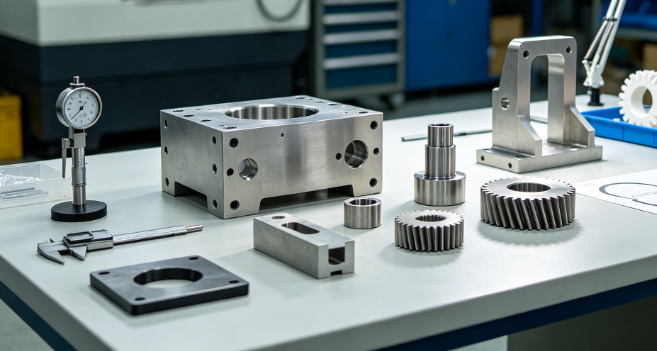
What Is Low MOQ for Industrial Machinery Components
MOQ standards vary drastically by manufacturing process; below is the baseline definition of low-volume for industrial equipment hardware:
- CNC Machining (5-axis, Swiss turning, large gantry bases): Low MOQ = 1–100 pcs; mass factory standard MOQ = 500+ pcs.
- Sheet Metal Custom Fabrication: Low MOQ = 1–50 pcs; stamping mass production MOQ = 500+ pcs
- Injection Molding (plastic housings, grips): Low MOQ prototype soft tool = 50–500 pcs; hard mass mold MOQ = 10,000+ pcs.
- SLM Metal 3D Printing (Ti/Inconel custom structural parts): Low MOQ = 1–50 pcs, no hard tool MOQ barrier
- Standard off-the-shelf hardware (bearings, motors, connectors): Low MOQ = distributor split stock 1–20 pcs; factory direct MOQ = 100–1000 pcs
For complete industrial machine units, low MOQ startup batches typically fall between 1–20 finished machines for field beta trials.
6 Core Sourcing Barriers Startups Face With Small Batch Industrial Parts
All low-MOQ friction stems from factory fixed overhead that cannot be spread across few units:
- High setup amortization burden CNC programming, mold fabrication, fixture building, and machine calibration require 2–8 hours of skilled labor regardless of order size. Factories set high MOQs to recover this fixed cost without taking losses on small runsh.
- Raw material bulk purchase minimums Suppliers of industrial steel, aluminum bar stock, engineering plastics, and specialty alloys only sell full sheets, full bars, or full reels. Startups end up paying for 90% unused material waste for a handful of parts.
- Low machine utilization for small orders Large production lines prioritize high-volume clients. Small startup batches get pushed to off-hours shifts, creating 3–10 day unplanned lead time extensions.
- Per-unit cost inflation (30%–200% premium) Without volume discounts, every piece absorbs full setup, material waste, and labor overhead, inflating BOM costs and machine selling prices.
- Fragmented multi-supplier coordination Sourcing CNC from one shop, sheet metal from another, molded parts from a third creates disjointed quality control, mismatched finishing standards, and cross-vendor delay chains.
- Unpredictable design iteration costs Startups revise machine frames, brackets, and housings frequently during beta testing. High-MOQ mass factories charge full rework fees for minor CAD changes and refuse small reorder top-ups.
Supplier Screening Checklist – Factories Built for Low-Volume Industrial Orders
Eliminate mass-production-focused vendors immediately; only shortlist suppliers that pass all low-MOQ startup criteria:
- Explicitly accepts 1–100 piece custom industrial component orders with no mandatory minimum surcharges
- Maintains small-diameter, small-sheet raw material inventory for specialty industrial alloys (no forced full bar/sheet buys)
- Dedicated small-batch production shifts separate from mass manufacturing lines to avoid priority delays
- Full in-house multi-process capability: CNC, sheet metal, molding, finishing, inspection (minimize outsourced third-party delays)
- Free DFM analysis optimized for low-volume cost reduction and MOQ reduction
- Flexible tooling options: prototype soft molds, modular zero-point CNC fixtures to cut upfront tool investment
- Transparent itemized quoting: separate setup fees, material, machining, finishing (no hidden lump-sum pricing)
- Clear tiered pricing discounts for growing batch sizes as your startup scales
- Able to provide full compliance documentation (MTR, FAIR, COA) for industrial equipment safety audits
- English-speaking mechanical engineering team for fast design iteration communication
Red flag vendors to reject instantly:
- Refuse orders under 500 units without negotiation
- Force purchase of full raw material stock for tiny part runs
- Outsource all secondary processes (deburring, coating, inspection) to external subcontractors
- No dedicated small-batch production scheduling, all orders prioritized by volume
8 Proven Tactics to Negotiate Flexible Low MOQ With Manufacturers
These strategies address the factory’s core cost concerns instead of just demanding lower quantities, making negotiation far more successful.
1. Accept a controlled per-unit price premium
Offer to pay 15–25% higher unit cost in exchange for reduced MOQ. This covers the factory’s unamortized setup labor and eliminates their risk of losing money on small runs.
Example: Standard MOQ 500 pcs at $12 each; negotiate 100 pcs at $14.80 each.
2. Consolidate multiple part SKUs into one single order
Combine brackets, frames, covers, and fasteners sharing the same material and production line to hit the supplier’s total order value threshold, even if individual part quantities stay low.
3. Lock in a yearly volume forecast agreement
Sign a non-binding annual letter of intent committing to a larger total volume over 12 months, with quarterly staggered small batch releases. Factories prioritize predictable long-term demand and relax MOQ rules for committed startup partners.
4. Separate one-time setup fees from per-part pricing
Pay a one-time, refundable setup charge upfront (refunded once cumulative orders hit the standard MOQ). This removes the factory’s need to recover tooling/fixture costs through high minimum quantities.
5. Request split batch staggered delivery
Agree to the supplier’s stated MOQ total, but schedule partial shipments: ship 50 units immediately for beta testing, hold remaining inventory at the factory and ship monthly as orders roll in. You avoid upfront cash and inventory storage costs while the factory meets their volume requirement.
6. Standardize shared materials and geometry
Simplify custom designs to use the supplier’s in-stock standard raw material sizes, standard radii, and off-the-shelf hardware. Less custom material cutting reduces their waste risk and lowers MOQ barriers.
7. Position orders as trial pilot batches with scaling roadmap
Clearly communicate your startup’s growth timeline: “This 20-machine pilot batch is for field testing; we plan to scale to 300+ units annually once customer feedback validates the design.” Most manufacturers support startup trial orders with relaxed MOQs for future repeat business potential.
8. Source hybrid rapid manufacturing where applicable
Replace high-MOQ injection molded housings with 5-axis CNC machined plastic prototypes for early beta; use SLM additive for one-off complex structural frames to eliminate mold MOQ entirely.
Design for Low MOQ (DFLM) – Cut Small-Batch Costs & Minimum Quantities
Design choices directly dictate your MOQ floor and small-batch unit price. Apply these DFLM rules before sending RFQs to slash sourcing overhead:
- Minimize custom unique geometries Reuse identical brackets, mounting frames, and housings across multiple machine variants to consolidate order quantities and amortize setup costs across more parts.
- Avoid custom hard tooling where possible Choose modular CNC fixtures, soft prototype injection molds, and additive manufacturing over dedicated hard stamping/mold tooling for early low-volume batches. Hard tooling creates rigid high MOQs to recover steel fabrication costs.
- Balance wall thickness and feature complexity Overly intricate micro cutouts, deep undercuts, and extreme thin walls extend machine setup and cycle time, pushing suppliers to raise minimum order thresholds. Simplify non-critical features for pilot batches.
- Standardize material grades and stock sizes Select raw materials the supplier already holds in small inventory rolls/bars instead of rare specialty alloys requiring full bulk stock purchases.
- Delay specialty cosmetic finishing for early prototypes Skip powder coating, hard anodizing, or custom silk screening on beta test units; order raw machined parts first to eliminate coating batch MOQ requirements entirely.
- Eliminate multi-stage secondary assembly where feasible Consolidate multiple welded sheet metal pieces into a single 5-axis machined component to reduce separate part SKUs and split MOQ overhead across dozens of individual hardware items.
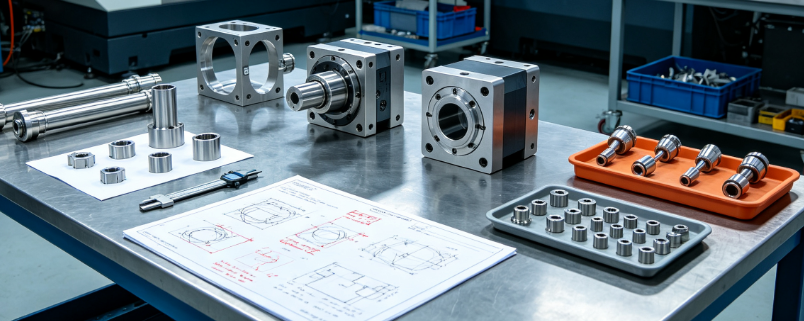
Sourcing Workflow Breakdown By Industrial Part Type (CNC, Sheet Metal, Molding, Additive)
1. CNC Machined Structural Frames & Brackets (Low MOQ 1–100)
Best low-volume workflow: Simultaneous 5-axis single-setup machining with modular zero-point fixturing.
Low MOQ advantage: No hard tooling required; CAD edits only require updated CAM programs, no die rework.
Cost hack: Group all machine frame components into one single production run to split setup labor across multiple parts.
2. Custom Sheet Metal Enclosures & Chassis (Low MOQ 1–50)
Best low-volume workflow: Laser cut + CNC brake fabrication, avoid progressive stamping until scaling past 500 units.
Low MOQ advantage: Zero stamping die investment; small batches require no upfront tool cost amortization.
3. Plastic Housings & Grips (Low MOQ 50–500)
Best low-volume workflow: Aluminum soft prototype molds instead of hardened steel mass molds.
Low MOQ advantage: Soft mold fabrication cost is 70% lower than hard tooling, drastically reducing required minimum order size to recover investment.
4. Complex Lightweight Structural Parts (Low MOQ 1–50)
Best low-volume workflow: SLM metal 3D printing (Ti, aluminum, Inconel).
Low MOQ advantage: No fixtures, molds, or custom tooling at all; one-off prototypes and small batches carry identical setup overhead with no volume pressure.
5. Off-The-Shelf Standard Hardware (Bearings, Motors, Connectors)
Best low-volume workflow: Industrial component distributors offering split stock, no factory direct bulk MOQs.
Low MOQ advantage: Distributors break factory bulk reels/bars into small quantities for startup pilot batches.
Cash Flow & Inventory Risk Control for Low-Volume Startup Procurement
Startups’ biggest low-MOQ risk is trapped capital in unsold inventory. Deploy these guardrails:
- Set strict batch sizing caps aligned with pre-order customer volume Only order enough components to fulfill confirmed beta customer pre-orders + 10% spare test units; never overbuy to hit supplier MOQ thresholds blindly.
- Negotiate consignment inventory storage Ask suppliers to hold excess ordered parts on their premises for 3–6 months, shipping partial batches as customer orders arrive. You only pay for parts upon shipment.
- Tiered phased procurement split across design stages Stage 1 (Proof of concept): 1–5 complete machine prototypes, minimal cosmetic finishing, raw machined parts only Stage 2 (Field beta trials): 10–20 full finished machines with full compliance documentation Stage 3 (Limited pre-production): 50–100 units, lock optimized DFM design to lower per-unit pricing
- Track total landed cost, not just unit price Compare full costs including shipping, inspection, rework risk, and inventory storage fees. A slightly higher unit price with flexible low MOQ often delivers lower total startup spend than forced bulk overstock.
- Prioritize single-source full-service manufacturers Consolidate CNC, sheet metal, molding, and finishing with one supplier to cut multiple separate setup fees and cross-vendor shipping overhead.
Real Startup Client Case: Small Batch Automation Machine Sourcing Optimization
A new industrial automation startup designed compact PCB test stations, initial target pilot batch: 12 complete machines.
Original Sourcing Pain Points
- Mass CNC factory required MOQ 50 structural frames, forcing the startup to pay for 38 unused frame blanks and tie up $7,200 in inventory
- Separate sheet metal and molding vendors created three separate setup fees, inflating total BOM cost by 42%
- Hard steel injection mold quoted with 10,000 unit MOQ, impossible for early-stage pilot batches
- 4-week lead time delays from outsourced third-party finishing and inspection
Zorapid Low-MOQ Sourcing Solution
- Unified single-source workflow: CNC frames, sheet metal chassis, soft aluminum prototype molds all produced in-house with no separate vendor setup charges
- DFM redesign simplified structural brackets to use standard in-stock aluminum bar stock, eliminating raw material bulk purchase waste
- Soft prototype injection mold cut required plastic component MOQ from 10,000 down to 100 units, matching pilot batch size
- Consolidated all 12 machine part SKUs into one single production run to amortize CNC setup fees across all hardware
- Staggered partial shipment of finished machines to align with customer pre-order delivery windows
Final Outcome
Total component inventory investment reduced by 68%, per-machine BOM cost dropped 31%, full pilot batch delivered in 7 business days. After successful field trials, the startup scaled to 80-unit quarterly batches with pre-negotiated tiered volume pricing discounts.
Low MOQ vs Mass Production Sourcing Tradeoff Comparison Table
| Evaluation Metric | Low MOQ Startup Small Batch Sourcing | Mass Production High-Volume Sourcing |
|---|---|---|
| Upfront Tooling Investment | Minimal (soft molds, modular fixtures, additive no tooling) | High (hard stamping dies, steel injection molds, dedicated jigs) |
| Per-Unit Component Cost | 30–200% price premium | Low bulk discounted unit pricing |
| Minimum Order Barrier | 1–100 pcs, flexible negotiation | 500–10,000 pcs rigid MOQ |
| Design Iteration Flexibility | Fast, low-cost CAD revisions, small reorder top-ups | Costly full tool rework for minor geometry changes |
| Lead Time Consistency | Fast dedicated small-batch production shifts | Small orders deprioritized behind mass runs |
| Inventory Cash Tie-Up | Minimal, order only confirmed demand | Large bulk stock required to meet MOQ |
| Best Startup Stage | Pre-production beta, field trials, NPI validation | Mature product with consistent recurring orders |
Common Costly Startup Sourcing Mistakes & Fixes
- Mistake: Award RFQs to large mass-production factories for prototype batches Fix: Target specialized high-mix low-volume manufacturers built for startup small orders, avoid OEM mass lines that deprioritize tiny batches.
- Mistake: Accept supplier MOQ without negotiation or alternative tiered pricing Fix: Use the 8 negotiation tactics above to exchange long-term volume commitments or modest unit price premiums for reduced minimum quantities.
- Mistake: Over-spec custom materials and complex geometry without DFM review Fix: Complete free low-MOQ DFM analysis before finalizing CAD to eliminate unnecessary raw material bulk purchase requirements and extended setup time.
- Mistake: Split component production across dozens of separate vendors Fix: Consolidate as many part SKUs as possible with one full-service manufacturer to eliminate multiple setup fees and cross-vendor delay risks.
- Mistake: Order full cosmetic finished parts for early proof-of-concept prototypes Fix: Skip plating, coating, and custom engraving on early test hardware to remove secondary process MOQ barriers entirely.
- Mistake: Ignore staggered delivery consignment inventory options Fix: Lock in total MOQ volume but split shipments to avoid upfront full inventory payment and storage costs.
Long-Term Supply Chain Roadmap: Scale From Low MOQ to Serial Production
Startups can build a seamless scaling pipeline with their low-volume supplier to avoid switching vendors mid-growth:
- Stage 1 (0–100 machines): Low-MOQ prototype & pilot batches, soft tooling, modular CNC fixtures, frequent DFM design tweaks
- Stage 2 (100–500 machines): Lock finalized CAD geometry, upgrade soft molds to semi-hard tooling, unlock mid-volume tiered pricing discounts
- Stage 3 (500+ serial production): Transition to hard stamping dies, multi-cavity injection molds, automated high-volume production cells, lowest bulk unit pricing Key advantage of sticking with one supplier: All validated CAM toolpaths, mold geometry, and DFM standards carry over between low-volume and mass runs, eliminating re-qualification scrap and delay risks.
FAQ
Is there any manufacturer that accepts 1-off single industrial machine frame orders?
Yes. Dedicated high-mix low-volume suppliers like Zorapid operate modular zero-point CNC fixturing and SLM additive lines with zero mandatory minimum order quantities, supporting 1-piece prototype structural frames with no bulk material surcharges.
How much extra per-unit cost should a startup budget for low-MOQ small batches?
Expect a 15–80% unit price premium for 1–50 piece runs vs mass production pricing; the premium shrinks as batch sizes grow toward 100 units. Negotiation and consolidated SKU ordering can cut this premium by half.
Can I avoid paying full raw material bulk stock prices for specialty alloys like titanium or cast iron?
Partner with suppliers that maintain small-size bar/sheet inventory of industrial specialty metals. These vendors absorb leftover material waste instead of passing full bulk stock costs to small-batch startup buyers.
Are soft prototype injection molds a viable low-MOQ alternative for industrial plastic housings?
Absolutely. Aluminum soft molds cost 60–75% less than hardened steel mass molds and support 50–500 production shots, perfectly matching startup pilot batch sizes without 10,000+ hard mold MOQ requirements.
What documentation do low-MOQ industrial batches need for equipment safety compliance?
Reputable low-volume suppliers provide full MTR material certificates, FAIR first article inspection reports, and dimensional CMM scan logs with every small batch, matching the same audit standards as mass production orders.
Wrap-Up
Low-MOQ sourcing for new industrial equipment startups does not require accepting inflated costs, long delays, or risky overstock inventory — it only requires partnering with manufacturers purpose-built for high-mix, small-batch production, instead of mass OEM factories optimized for thousands of identical parts.
The core solution to all startup sourcing pain points is unifying multi-process manufacturing under one roof, paired with startup-focused DFM optimization, flexible MOQ negotiation frameworks, and phased batch delivery to protect limited cash runway.
Zorapid’s entire precision manufacturing division caters exclusively to early-stage industrial machinery startups, offering zero mandatory minimum orders, in-house CNC, sheet metal, soft mold injection, SLM additive, and full QA inspection without third-party outsourcing. We support seamless scaling from 1-off prototype frames to hundreds of serial production machines, with consistent quality and fully audit-ready compliance documentation at every batch tier.
Request Your Free Low-MOQ Industrial DFM Review & Transparent RFQ Quote
Share your complete machine BOM, CAD files, target pilot batch quantity, and budget constraints. Our industrial sourcing engineering team will deliver a full low-volume manufacturability report, outline actionable MOQ reduction tweaks, and provide tiered pricing for small pilot batches and future scaled production.