Published:Zorapid.Ltd
Disposable medical tools include syringes, pipette tips, microfluidic test cassettes, blood collection tubes, and 96/384-well assay plates. These run continuous high-cycle mass production, often hitting 500,000 to 5,000,000 shots per mold before rebuild.
Unlike industrial consumer molds, medical disposable tooling faces three unavoidable stressors that eliminate generic mold steel options:
- Corrosive resin off-gassing: PVC, PP additives, flame retardants, and medical lubricants release acidic vapors that pit unprotected steel cavities. Pitting transfers permanent blemishes to disposable parts and fails visual inspection.
- Strict cleanroom & biocompatibility rules: Mold surfaces must be ultra-smooth, easy to sanitize, zero particle shedding, and avoid metal ion leaching onto tissue/reagent-contact parts.
- Millions of repetitive ejection cycles: Thin micro ribs, tiny micro channels, and high-speed ejection wear cavity surfaces rapidly; frequent re-polishing cuts production uptime and raises scrap rates.
Choosing cheap non-stainless steel for high-cycle medical disposable molds creates expensive long-term losses: unplanned mold repairs, consistent cosmetic defects, and audit non-compliance. This guide ranks steel grades by cycle capacity, regulatory suitability, and total cost of ownership for mass disposable medical manufacturing.
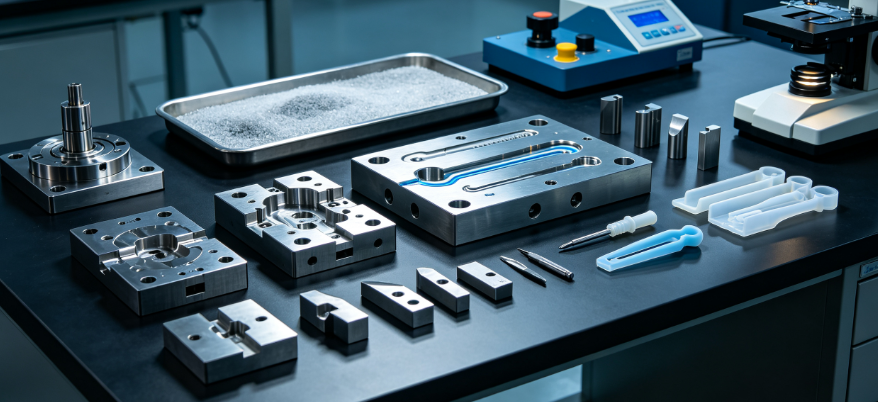
6 Non-Negotiable Core Criteria for Medical High-Cycle Mold Steel
Every candidate steel must satisfy all six benchmarks before medical mass production qualification:
- Corrosion resistance Resist acid vapor from medical resins, daily water-based mold cleaning, and periodic cleanroom sanitization. Stainless martensitic grades (13%+ Cr) are mandatory for >200,000 shot runs.
- Ultra-high polishability (medical mirror finish) Achieve Ra ≤0.02 μm mirror surface (VDI 0–3) for transparent PP/PC disposable parts. Smooth cavities ease demolding, reduce micro flash, and eliminate reagent trapping on part surfaces.
- High wear resistance for multi-million cycles Resist abrasion from repeated ejection, thin-wall resin flow, and minor glass-filled medical polymers without rapid surface dulling. Target hardness HRC 48–54 for long service life.
- Ultra-clean ESR/VAR remelted metallurgy Low inclusion rating (<1.5 grade) prevents tiny pinholes, speckles, and surface blemishes on disposable optical fluidic parts; required for ISO 13485 audit trails.
- Dimensional stability over continuous thermal cycling Minimal thermal expansion and low residual stress to hold micron tolerances across millions of shots, critical for microfluidic channel precision.
- Regulatory traceability & low outgassing Full material COA, batch traceability, low heavy metal content, compatible with USP Class VI / ISO 10993 medical compliance documentation.
Top Mold Steel Grades Ranked by Disposable Medical Use Case
Premium Stainless Steels (S136 / Stavax ESR / 1.2083) – 1M+ Shot High-Cycle Workhorses
This is the standard steel for all high-volume disposable medical molds targeting 1,000,000+ production cycles.
- Core composition: 13.5% chromium martensitic stainless, ESR vacuum remelted, hardened to HRC 48–52
- Key high-cycle strengths
- Full corrosion resistance against PVC, PP, PC, and all medical additive vapors — no surface pitting over years of cleanroom washing
- Industry-leading mirror polish down to Ra 0.01 μm, perfect for transparent syringes, microfluidic cassettes, optical well plates
- Balanced toughness + wear resistance; minimal surface degradation after 2–5 million shots
- Low inclusion microstructure eliminates speckle defects on thin disposable walls
- Best disposable medical applications Multi-cavity syringe molds, blood tube molds, 384-well microplates, transparent pipette tips, disposable diagnostic cartridges
- Cycle life ceiling: 2,000,000–5,000,000 shots with routine light maintenance
Pre-Hardened Mirror Steel (NAK80) – Medium-High Volume Clear Medical Parts
Pre-hardened to HRC 40–42, no post-machining heat treatment deformation risk.
- Advantages: Excellent mirror polish, fast mold turnaround, good machinability for complex microfluidic geometry
- Limitations: Only mild corrosion resistance; will rust if exposed to unventilated PVC/acidic resin vapors long-term
- Suitable batch range: 200,000–800,000 shots, non-corrosive PP/PE medical resins only
- Ideal use: NPI pilot molds, medium-run disposable clear housings, non-PVC fluidic parts
Economical Pre-Hardened (718H / P20) – Low-Medium Cycle Prototype / Short Run
Pre-hardened HRC 30–36, low upfront steel cost.
- Advantages: Fast machining, low initial mold investment
- Critical limitations for medical mass production:
- No stainless corrosion resistance; rapid surface rust/pitting with medical additives
- Soft matrix wears fast above 100,000 shots, loses gloss finish quickly
- Cannot achieve medical-grade mirror polish (minimum Ra 0.05 μm)
- Only for: 1–100k shot prototype disposable molds, short-run clinical trial parts with non-corrosive PE resin
Hot Work H13 (1.2344) – Abrasive Filled Medical Resins Only
HRC 48–52 hot work steel, high thermal fatigue and abrasion resistance.
- Advantages: Handles glass-filled PP/PC medical compounds that wear stainless steel faster
- Limitations: Zero corrosion resistance; requires full nickel plating for medical cleanroom use
- Narrow use case: Disposable medical parts with >20% glass filler, non-transparent, non-PVC formulations
- Not recommended for clear optical disposable consumables due to poor polishability vs S136
Steel Grade Head-To-Head Comparison Chart
| Evaluation Metric | S136 / Stavax ESR Stainless | NAK80 Pre-Hardened Mirror | 718H / P20 Pre-Hardened | H13 Hot Work Steel |
|---|---|---|---|---|
| Max stable medical cycle life | 2–5 million shots | 200k–800k shots | <100,000 shots | 1–1.5 million (plated) |
| Corrosion resistance (medical vapors) | Excellent | Fair (no PVC) | Poor | Very poor (must plate) |
| Mirror polish capacity (medical standard) | Ra ≤0.01 μm (VDI 0–3) | Ra ≤0.015 μm | Ra ≥0.05 μm | Ra ≥0.03 μm |
| Hardness production range | HRC 48–52 | HRC 40–42 | HRC 30–36 | HRC 48–52 |
| ESR ultra-clean metallurgy | Standard option | Limited | No | Optional upgrade |
| Compatibility with PVC/acidic resins | Fully compatible | Long-term rust risk | Severe pitting | Must nickel plate |
| Upfront steel raw material cost | Highest | Mid-range | Lowest | Mid-high |
| Best disposable medical fit | Mass high-cycle transparent consumables | Medium-run non-PVC clear pilot molds | Short-run NPI prototype molds | Glass-filled opaque disposable parts |
Material Matching Guide: Steel vs Common Disposable Medical Resins
Match mold steel to your polymer to avoid premature mold degradation:
- Polypropylene (PP) – Syringes, well plates, pipette tips
- 1M shots: S136 / Stavax ESR (mandatory)
- 200k–800k shots: NAK80 acceptable
- PVC flexible tubing / IV disposable components (acidic plasticizer vapors)
- Only S136 stainless steel; all non-stainless grades pit rapidly
- Polycarbonate (PC) transparent diagnostic cassettes
- High-cycle: S136 mirror finish; medium batch: NAK80
- Glass-filled PP/PC (reinforced disposable surgical housings)
- High abrasion: H13 with nickel plating, or upgraded S136 with nitriding surface treatment
- LDPE/HDPE non-corrosive low-additive packaging
- Short runs: 718H; mass production: S136 for consistent gloss
Heat Treatment & Surface Boosts to Extend High-Cycle Mold Life
For disposable molds targeting multi-million cycles, add these surface treatments to extend steel service life 30–60%:
- Vacuum hardening + double temper for S136 Eliminates residual stress, stabilizes dimensions over millions of thermal cycles; prevents micro-cracking on thin mold ribs.
- Low-pressure nitriding (stainless steel compatible) Raises surface hardness to HRC 60+, boosts ejection wear resistance without ruining mirror polish; ideal for high-speed multi-cavity disposable molds.
- Electroless nickel plating (for H13 / non-stainless grades) Creates corrosion barrier for H13 used on glass-filled medical resins; re-plating required every 500k shots.
- Ultra-fine diamond polishing sequence Step-down grit polishing (6μm → 0.25μm) locks in long-lasting mirror finish, reduces flash and cleaning frequency in cleanrooms.
Critical DFM Rules to Maximize Steel Service Life for Disposable Medical Molds
Poor mold geometry accelerates steel wear and corrosion even with premium S136 steel:
- Avoid sharp 90° internal cavity corners; minimum 0.5mm radii to eliminate stress concentration and polishing wear hotspots
- Balance wall thickness across disposable part geometry to reduce uneven thermal loading on mold steel
- Design wide, evenly distributed vents to trap corrosive resin vapors away from polished cavity surfaces
- Add polished ejector pin surfaces; rough pin edges scratch mold steel after thousands of ejection strokes
- Separate corrosive PVC runner zones from main cavity surfaces to limit acid exposure on critical mirror steel
- Use symmetrical multi-cavity layout to equalize heating and wear across all mold inserts
Real Client Case: 2 Million Shot 384-Well Microplate Mold Steel Upgrade
A diagnostics OEM manufactured disposable 384-well assay plates (PP resin, 16-cavity mold, target 2M shots).
Original Low-Cost Steel Pain Points
- Initial mold built with 718H pre-hardened steel; after 80,000 shots gloss faded, micro well surfaces developed fine scratches
- Minor PP additive vapors created surface discoloration requiring weekly full re-polishing (8 hours downtime per week)
- Scrap rate hit 7% due to uneven surface finish on optical well bottoms, failing lab visual inspection
Zorapid S136 Stainless Steel Solution
- Switch cavity inserts to ESR S136 vacuum hardened to HRC 50, full medical mirror polish
- Low-pressure nitriding surface treatment to boost ejection wear resistance
- Mold vent redesign to isolate resin vapors from polished micro-well surfaces
Final High-Cycle Outcome
Mold sustained consistent quality past 2,100,000 shots. Weekly re-polishing eliminated entirely, scrap rate dropped to 0.8%. Total long-term production cost reduced by 32% despite higher upfront steel investment.
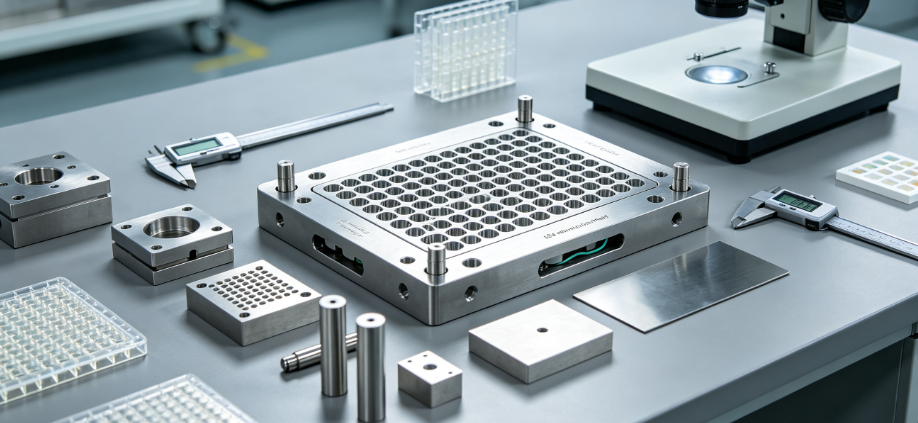
Common Mold Steel Failure Modes in High-Cycle Medical Production & Fixes
- Cavity surface pitting / rust spots Root cause: Non-stainless steel + corrosive medical resin vapors Fix: Replace inserts with S136 stainless; optimize vent layout to reduce vapor contact
- Gloss fading / fine scratches after 200k+ shots Root cause: Low hardness pre-hardened steel insufficient wear resistance Fix: Upgrade to S136 + nitriding surface hardening
- Micro burr transfer to disposable parts from worn mold edges Root cause: Soft steel ejection zone wear Fix: Harden steel to HRC 48+; add radii to all sharp mold parting lines
- Dimensional drift across millions of cycles Root cause: Poorly stress-relieved steel, uneven thermal expansion Fix: Specify double temper vacuum heat treatment for stainless mold inserts
Sourcing Checklist for Medical-Grade Mold Steel
Before purchasing steel for disposable medical high-cycle molds, verify these mandatory items:
- ESR/VAR vacuum remelted metallurgy with low inclusion certification (<1.5 grade)
- Full material COA batch traceability matching ISO 13485 audit requirements
- Certified chromium content ≥13% for stainless medical grades (S136/Stavax)
- Hardness test reports matching specified HRC range after heat treatment
- Low outgassing lab test data for cleanroom disposable production
- Manufacturer documentation confirming no toxic heavy metal segregation
- Polish test sample demonstrating medical mirror Ra ≤0.02 μm finish capability
FAQ
Is S136 always required for disposable medical molds running over 1 million shots?
Yes. Non-stainless pre-hardened steels lack sufficient corrosion and wear resistance to maintain consistent cosmetic and dimensional quality through multi-million cycles, and repeated re-polishing creates costly production downtime.
Can NAK80 steel be used for PVC disposable medical molds?
Not recommended for long high-cycle runs. PVC plasticizer vapors will slowly corrode NAK80’s non-stainless matrix, creating permanent pitting defects on transparent disposable parts within 300,000 shots.
How much longer does nitriding extend S136 mold service life for disposable multi-cavity tools?
Controlled low-pressure nitriding adds 40–60% cycle life by raising surface hardness, reducing ejection scratch wear on micro thin disposable features, without sacrificing mirror polish quality.
Does mold steel choice impact medical regulatory documentation?
Yes. Auditors require full steel material traceability, metallurgy purity certificates and corrosion resistance test records. S136 stainless comes with standardized medical-grade material documentation that simplifies FDA/MDR compliance.
For glass-filled disposable PP medical parts, S136 or H13 is better?
H13 with electroless nickel plating delivers higher abrasion resistance for heavy glass loading. If optical transparency is required, nitrided S136 remains the preferred option despite slightly lower raw abrasion resistance.
Wrap-Up
Mold steel raw material only accounts for 15–20% of total mold cost, yet it dictates scrap rates, maintenance downtime, and usable cycle life for millions of disposable medical tools. Short-term savings on cheap pre-hardened steel lead to costly mid-production mold rebuilds and compliance audit risks for medical OEMs.
For high-volume disposable medical production targeting 1,000,000+ shots, ESR S136 / Stavax stainless steel is the only sustainable choice, balancing corrosion resistance, medical mirror polish, wear performance, and regulatory traceability. Medium pilot batches can safely use NAK80, while 718H/P20 is limited exclusively to short-run NPI prototype molds.
Zorapid’s medical mold division standardizes S136 stainless inserts for all mass disposable medical multi-cavity tools, paired with heat treatment and surface boosting processes to maximize mold cycle life while meeting ISO 13485 cleanroom and biocompatibility standards.
Request Your Free Medical Mold Steel Selection Recommendation
Share your disposable part design, resin type, target production shot volume and cosmetic requirements. Our mold engineering team will recommend the optimal steel grade, heat treatment and surface finish to balance upfront mold cost and long-term production stability.