Published:Zorapid.Ltd
Sheet metal enclosures, machine frames, EV battery covers and medical housings rely on surface finishing for three core goals: corrosion protection, cosmetic appearance, and wear resistance. Powder coat, anodize, and mechanical polish are the three most widely specified finishes for custom fabricated sheet metal parts. Each has distinct limits on material compatibility, dimensional shift, chemical resistance, thermal performance and total batch cost.
Many design engineers pick finishes based only on visual look, ignoring hidden risks: coating thickness eating into mating tolerances, poor chemical resistance for cleanroom environments, or high long-term wear failure on sliding contact surfaces. This guide standardizes apples-to-apples comparison for low-volume prototype and mass production sheet metal batches, covering aluminum, cold rolled steel, and stainless steel substrates.
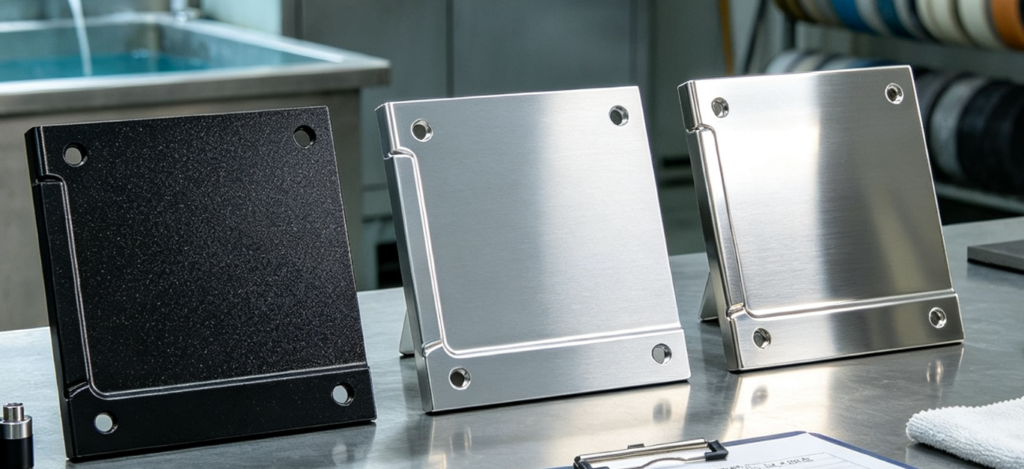
Core Working Principle of Each Finish Process
Powder Coating
Dry electrostatic plastic powder is sprayed onto cleaned metal sheet, then baked at high temperature to melt and fuse into a solid protective film. Applies to steel and aluminum alike. Film thickness 40–100 μm.
Anodizing (Aluminum Only)
Electrochemical oxidation grows a hard aluminum oxide layer directly into the base metal surface (not a separate top coat). Two industrial grades: Type II decorative thin film, Type III hard thick wear-resistant coat. Thickness 5–50 μm.
Mechanical Polishing
Physical abrasive grinding, buffing and tumbling removes machining burrs, scratches and surface texture. Two common variants: fine brushed satin finish, high-gloss mirror polish. No added coating layer — only modifies the original metal surface. Zero dimensional thickness gain.
Full Side-by-Side Comparison Chart
| Evaluation Metric | Powder Coating | Aluminum Anodizing (Type II / III) | Mechanical Polished (Brushed / Mirror) |
|---|---|---|---|
| Supported Base Materials | CR Steel, Aluminum, Stainless Steel | Aluminum only (1050/5052/6061) | Aluminum, Stainless Steel, Brass |
| Added Surface Thickness | 40–100 μm (shrinks internal dimensions) | 5–12 μm Type II / 20–50 μm Type III | 0 μm (material removed, no buildup) |
| Corrosion Resistance | Excellent (full barrier seal) | Excellent (integral oxide layer) | Moderate (stainless good; bare aluminum oxidizes fast) |
| Wear / Scratch Hardness | Moderate (can chip under heavy impact) | Very Hard (Type III hard coat scratch resistant) | Low (polished surfaces scratch easily) |
| Chemical & Solvent Resistance | Good; strong acids break down coating | Excellent, resistant to most oils, coolants, cleaners | Poor; chemicals stain polished metal surface |
| Color Customization | Full RAL color range, matte/satin/gloss/textured | Clear, black, gold, grey limited dye colors | Only natural metallic silver tone |
| Masking Feasibility for Datums | Yes, mask threaded holes / sealing surfaces | Yes, masking preserves bare aluminum contact zones | No masking required (no coating buildup) |
| Cleanroom Low-Outgassing Performance | Moderate (plastic resin can offgas) | Excellent, inorganic oxide no outgassing | Excellent pure metal surface |
| Per-Part Finishing Cost (1–50 prototypes) | Medium-Low | Medium | Medium-High (labor intensive buffing) |
| Mass Production Unit Cost | Lowest | Medium | Highest |
| Typical Lead Time | 2–4 business days | 3–5 business days | 3–6 business days |
| Heat Resistance | Max ~120°C before coating degradation | Up to 180°C stable, no delamination | Matches base metal thermal limit |
| Key Visual Trait | Uniform solid opaque color, hides sheet metal scratches | Metallic aluminum base visible under tinted oxide layer | Reflective brushed or mirror metallic surface |
Deep Dive Into Each Finish: Pros, Cons & Standard Specs
Powder Coating (Steel & Aluminum Sheet Metal)
Core Advantages
- Works on steel and aluminum, unified finish for mixed-material assemblies
- Unlimited color matching, textured matte finishes hide fabrication burrs and surface scratches
- Superior corrosion barrier for unprotected cold rolled steel that would rust bare
- Lowest mass production finishing cost, wide outsourcing availability
- Impact barrier protection for outdoor equipment exposed to moisture and salt spray
Limitations
- Plastic film adds thickness; mating threaded holes, sealing datums must be masked to avoid tolerance loss
- Hard impacts chip or peel coating; cannot repair local damage without full rework
- Standard powder resins release minor VOC/outgassing, not ideal for ultra-clean semiconductor wafer equipment
- Temperatures over 120°C permanently discolor or soften coating
- Cannot achieve transparent metallic reflective appearance
Best Fit Applications
EV battery outer trays, industrial machine enclosures, outdoor automation frames, low-cost prototype chassis, painted cosmetic consumer hardware.
Aluminum Anodizing (Type II Clear / Type III Hard Coat)
Core Advantages
- Oxide layer grows into aluminum substrate — never peels, chips or delaminates
- Inorganic zero-outgassing surface, certified for medical, lab and semiconductor cleanrooms
- Type III hard coat delivers extreme scratch and abrasion resistance for sliding contact surfaces
- Maintains natural metallic aluminum look with subtle tint options (clear, black, bronze)
- Stable under continuous moderate heat up to 180°C, no thermal softening
Limitations
- Aluminum-only process; cannot be applied to steel or stainless sheet metal
- Limited color palette vs powder coat; no bright custom color matching
- Hard coat Type III adds up to 50 μm thickness, requires dimensional allowance on tight-fit features
- Visible sheet metal grain, bend marks and weld seams show through thin Type II film
- Higher per-unit cost than powder coating for large batch runs
Best Fit Applications
Medical device aluminum housings, semiconductor test fixtures, EV high-voltage PCU covers, precision lab equipment, lightweight aerospace sheet brackets.
Mechanical Polished Sheet Metal (Brushed / Mirror Polish)
Core Advantages
- Zero coating thickness change; no masking required for tight tolerance datums, threads or sealing surfaces
- Premium high-end metallic aesthetic for visible customer-facing hardware
- Pure metal surface with zero resin outgassing, compatible with all cleanroom standards
- No risk of coating peeling, chipping or thermal degradation at high temperatures
- Stainless steel polished panels gain improved passive corrosion resistance
Limitations
- Labor-intensive buffing creates highest finishing cost for large sheet metal batches
- Surfaces are soft and scratch extremely easily during assembly and shipping
- Bare polished aluminum oxidizes and stains without secondary sealant
- Weld marks, deep burrs and deep scratches cannot be hidden; base metal quality must be flawless
- Only natural silver metallic finish, no color customization possible
Best Fit Applications
Premium medical lab equipment panels, stainless cleanroom cabinets, high-end consumer display frames, decorative aerospace interior trim, optical equipment housings.
Material Compatibility Rules for Each Finish
Powder Coat
- Cold Rolled Steel (CRS): Ideal, mandatory phosphate pre-treatment to prevent rust
- 5052 / 6061 Aluminum: Fully compatible
- 304 / 316 Stainless Steel: Compatible, but powder coat rarely used (stainless naturally corrosion resistant)
Anodizing
- Only aluminum sheet alloys (5052, 6061 recommended)
- Steel, stainless, copper: Not compatible, cannot form anodic oxide layer
Mechanical Polish
- 5052/6061 Aluminum: Brushed polish common; mirror polish requires extensive buffing
- 304/316 Stainless Steel: Top choice for mirror polished corrosion-resistant panels
- Brass sheet: Decorative polishing only, not structural industrial hardware
DFM Design Rules to Avoid Finishing Defects
Powder Coat DFM Rules
- Reserve 0.05–0.1 mm thickness allowance on all mating sealing surfaces; mask threads and precision datums
- Design full drain holes on closed enclosures to remove pre-treatment wash liquid (prevents coating bubbling)
- Minimize deep blind pockets that trap cleaning chemicals and cause uneven coating adhesion
- Grind all heavy weld spatter and sharp burrs — coating amplifies surface irregularities
Anodizing DFM Rules
- For Type III hard coat: Add minimum 0.03 mm dimensional stock allowance on tight tolerance features
- Avoid dissimilar metal fasteners in contact with aluminum during anodizing process (galvanic staining)
- Uniform sheet thickness prevents uneven oxide growth and color variation across bent panels
- Mask electrical contact lugs; contact points leave small unanodized bare aluminum marks
Mechanical Polish DFM Rules
- Eliminate deep weld discoloration, heavy burrs and deep surface scratches before polishing (cannot be hidden)
- Add generous internal radii to sheet metal corners for consistent buffing access
- Separate thin fragile sheet sections with support tabs to avoid bending during aggressive abrasive buffing
- Specify protective PE film packaging post-polish to prevent transit scratches
Real Client Case: EV Equipment Enclosure Finish Selection Tradeoff
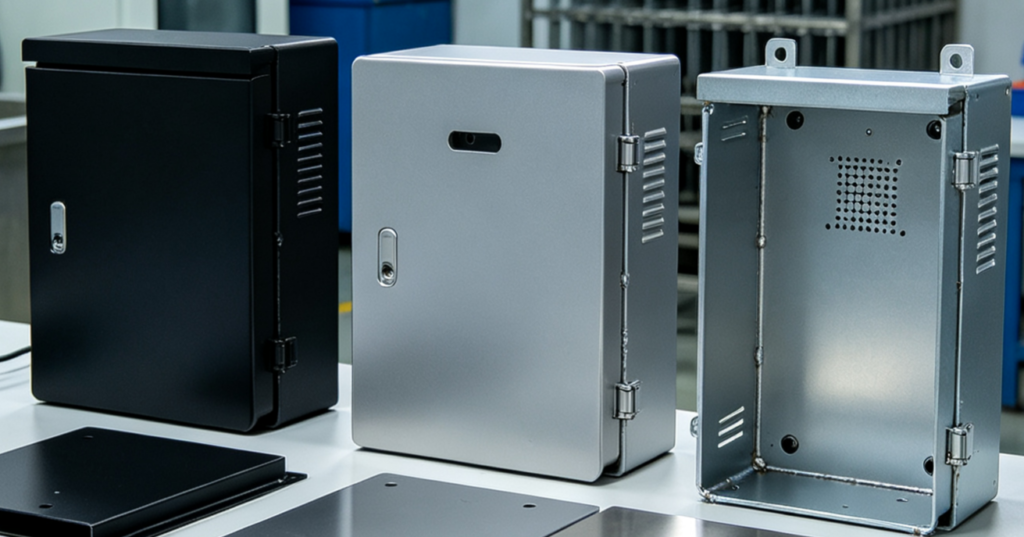
An EV startup needed 25 aluminum power control unit sheet metal enclosures for field beta testing, low-outgassing cleanroom requirement, tight sealing mating surfaces.
1: Matte Black Powder Coat
- Pros: Lowest finishing cost, uniform black cosmetic appearance
- Cons: Minor resin outgassing risk for high-voltage internal components; all sealing datums required labor-intensive masking
- Total finishing lead time: 3 days
2: Black Type II Anodize
- Pros: Zero outgassing, integral scratch-resistant oxide layer, no masking thickness tolerance risk
- Cons: Higher per-unit finishing cost, visible sheet bend grain texture under black dye
- Total finishing lead time: 4 days
3: Brushed Mechanical Polish
- Pros: Zero coating thickness shift, cleanroom compliant
- Cons: Silver metallic finish did not match brand black aesthetic, highest polishing labor cost
Final Client Outcome
The team selected black Type II anodizing to meet low-outgassing EV safety specs, accepting slightly higher cost to eliminate masking labor and outgassing audit risks.
Common Finishing Defects & Root-Cause Fixes
Powder Coat Defects
- Bubbling / peeling coating Root cause: Incomplete alkaline degreasing, trapped cleaning fluid inside closed enclosures Fix: Add drain holes, extend multi-stage pre-treatment wash cycle
- Thin coating on internal pocket surfaces Root cause: Faraday cage effect blocks electrostatic powder penetration Fix: Adjust spray gun angles, extend coating dwell time for deep cavities
Anodizing Defects
- Uneven color blotching across bent aluminum panels Root cause: Unbalanced sheet metal cold work stress from sharp bending radii Fix: Standardize minimum bend radius, homogenize aluminum alloy temper
- Sealing stain marks on clear anodize Root cause: Impure deionized water final rinse Fix: Upgrade DI water system, controlled low-temperature sealing bath
Polished Finish Defects
- Random fine scratch lines across mirror surface Root cause: Dirty buff media, unprotected handling post-polish Fix: Replace abrasive buff pads, apply full PE protective film immediately after polishing
- Hazy dull spots on brushed aluminum Root cause: Inconsistent abrasive grain sequence, uneven buff pressure Fix: Step down grit sequence gradually, uniform fixture support during polishing
Quick Selection Cheat Sheet By End Application
- Outdoor steel machine frames, low-cost colored chassis → Powder Coat
- Medical / semiconductor aluminum enclosures, high-temp EV hardware → Type II / III Anodize
- Premium cleanroom stainless panels, decorative visible equipment housings → Mechanical Polished (Brushed / Mirror)
- Sliding wear-contact aluminum surfaces requiring scratch resistance → Type III Hard Anodize
- Budget prototype mixed steel + aluminum assemblies → Powder Coat
- Zero tolerance for coating thickness shift on precision sealing datums → Mechanical Polish
FAQ
Can anodizing be applied to stainless steel sheet metal?
No. Anodizing is an electrochemical oxidation process exclusive to aluminum alloys. Stainless steel requires passivation or polishing instead.
How much dimensional offset should I account for powder coat vs hard anodize?
Powder coat 40–100 μm buildup; Type II anodize 5–12 μm; Type III hard coat 20–50 μm. Polished surfaces remove minor material with zero thickness gain.
Which finish performs best for cleanroom low-outgassing requirements?
Anodizing and mechanical polish are inorganic, zero-outgassing. Standard powder coat resin releases trace volatile organics and is not recommended for wafer-grade semiconductor environments.
Is polished stainless steel naturally corrosion resistant without extra coating?
Yes. The polishing process compresses the stainless passive chromium oxide layer, improving inherent rust resistance compared to raw unpolished sheet.
Can I touch up chipped powder coat on production enclosures?
Spot touch-ups create visible color mismatch; full stripping and re-coating is required for uniform appearance. Anodize and polished surfaces cannot be locally repaired.
Wrap-Up
Powder coat delivers unbeatable color variety and low mass production cost for steel and aluminum general equipment enclosures, but carries coating thickness shift and minor outgassing drawbacks.
Anodizing is the premium inorganic finish exclusive to aluminum, ideal for medical, semiconductor and EV hardware where zero outgassing and long-term abrasion resistance are mandatory, with only limited tint color options.
Mechanical polishing creates flawless metallic high-end aesthetics with zero dimensional buildup, perfect for precision datum-critical parts and stainless cleanroom panels, though buffing labor drives up finishing costs significantly.
Zorapid offers all three finishing processes in-house for custom sheet metal prototype and low-volume batches. Our design team reviews your enclosure material, tolerance specs, operating environment and cosmetic requirements to recommend the lowest total-cost finish without sacrificing functional compliance.
Request Free Sheet Metal Finish DFM & Cost Comparison Review
Share your sheet metal CAD, base material alloy, operating temperature, cleanroom/outgassing requirements and target aesthetic. We will provide side-by-side itemized pricing, dimensional allowance guidelines and lead time estimates for powder coat, anodize and polished finishes.