Published:Zorapid.Ltd
If you’ve ever gotten behind the wheel of a modern car, you’ve definitely noticed it: sleek, ultra-thin, seamless dashboard control panels that feel premium, lightweight, and perfectly flush with the interior design. No bulky edges, no awkward gaps, no cheap plastic flex—just clean, refined functionality.
And every single one of those high-end dashboard control buttons, touch panels, switch covers, and trim pieces relies on one game-changing manufacturing tech: thin-wall plastic molding.
For automotive OEMs, interior designers, and parts suppliers across Europe and North America, thin-wall molding isn’t just a production method. It’s the secret to building modern, fuel-efficient, stylish, and durable car dashboard control parts that meet strict EU and US automotive quality standards.
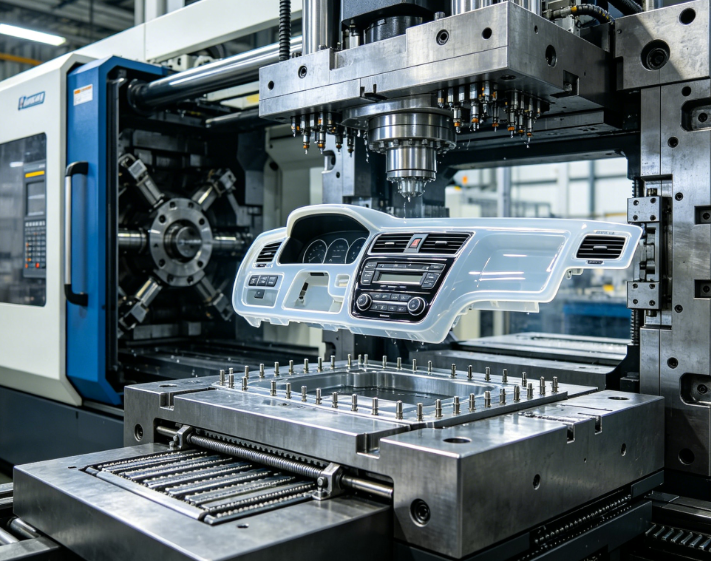
What Exactly Is Thin-Wall Plastic Molding for Automotive Dash Parts?
Let’s keep it simple (no overly technical jargon, we promise).
Thin-wall plastic molding is a specialized injection molding process built to produce ultra-light, ultra-thin plastic components while maintaining full structural strength and precision tolerances.
For automotive dashboard control parts specifically, manufacturers typically define thin-wall as parts with wall thicknesses between 0.8mm and 2.0mm—far thinner than standard plastic injection molded parts (usually 2.5mm–4mm).
This process is custom-tailored for dashboard control components including:
- Touch control panel covers
- Air conditioner switch trims
- Volume & media control button housings
- Steering wheel dashboard control caps
- Instrument panel decorative thin trim
- Hidden sensor & indicator plastic covers
Unlike regular molding, thin-wall molding uses high-pressure, high-speed injection to fill ultra-thin mold cavities perfectly. The result? Lightweight, dimensionally stable parts that fit modern car interior design trends perfectly.
Why European & US Automakers Prefer Thin-Wall Molding for Dashboard Controls
We work with dozens of EU and North American automotive clients, and one question comes up weekly: Why switch to thin-wall molding for dashboard control parts if standard molding works?
The answer boils down to design freedom, cost savings, regulatory compliance, and user experience—four non-negotiables for Western automotive markets.
1. Unmatched Lightweighting for Fuel Efficiency & EV Range
Every gram counts for modern cars, especially electric vehicles dominating the EU and US markets. Thin-wall molded dashboard parts reduce component weight by 30–50% compared to traditional thick plastic parts.
Lighter interiors mean lower overall vehicle weight, better fuel economy for gas cars, and extended battery range for EVs—key selling points for European and American consumers and critical for meeting EU CO2 emission standards and US EPA efficiency regulations.
2. Premium Aesthetics for Modern Car Interior Design
Today’s Western car buyers hate bulky, clunky plastic interiors. They want sleek, minimalist, seamless dashboards with flush controls, thin borders, and invisible assembly lines.
Thin-wall molding delivers ultra-thin edge profiles, zero sink marks, uniform surface texture, and perfect flatness. It enables the floating control panel, slim button, and hidden trim designs that define luxury European and American vehicle interiors.
3. Strict Dimensional Precision for Flawless Assembly
Dashboard control parts need ultra-tight tolerances. Even a 0.1mm deviation can cause stuck buttons, uneven gaps, or loose panel fits—defects Western automakers never accept.
Professional thin-wall molding production maintains ±0.05mm precision tolerances, ensuring every control part fits perfectly during automated assembly, eliminates rattling noises, and delivers consistent tactile feedback for buttons and switches.
4. Lower Long-Term Production Costs
Yes, thin-wall molding requires higher-precision molds and machines upfront—but it saves massive money in mass production:
- Less plastic resin usage per part
- Faster cycle times with high-speed injection
- Near-zero post-production rework and defect rates
- Higher automation compatibility for large-batch orders
For EU/US tier-1 suppliers, this translates to 15–25% lower per-unit costs on annual bulk orders.
5. Superior Heat & UV Resistance for Dash Environments
Car dashboards face extreme conditions: direct sunlight, high interior temperatures in summer, cold winter frost, and long-term UV exposure.
Custom thin-wall molded dashboard control parts use automotive-grade engineered plastics that resist yellowing, warping, cracking, and fading—meeting US SAE automotive standards and EU REACH environmental regulations.
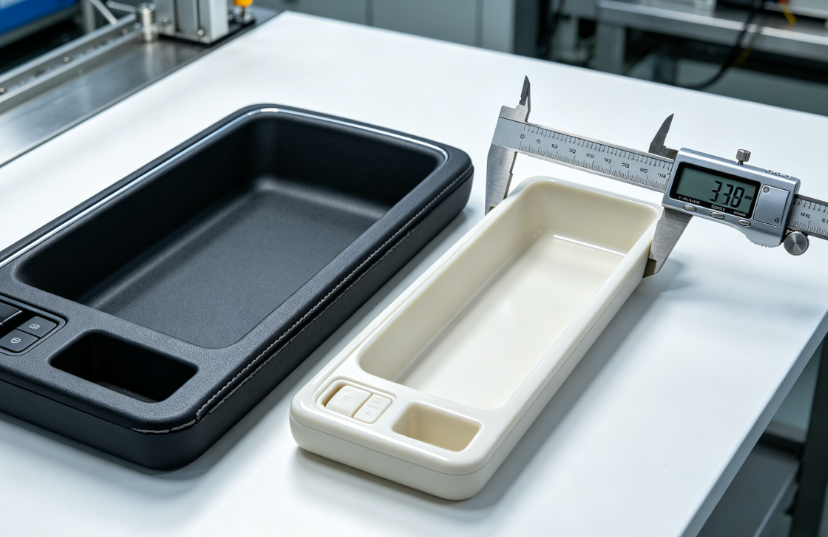
Top Materials Used for Car Dashboard Thin-Wall Control Parts
Material selection makes or breaks thin-wall molding results, especially for Western automotive compliance. These are the 4 most popular, market-approved materials for dashboard control components:
1. ABS (Acrylonitrile Butadiene Styrene)
The most versatile choice for standard dashboard buttons, switch trims, and control covers. It offers excellent rigidity, smooth moldability, low shrinkage, and great surface finish. Fully compliant with general EU and US automotive interior standards, ideal for cost-effective mass production.
2. PC (Polycarbonate)
Used for high-strength thin-wall panels, touch control covers, and transparent indicator parts. PC delivers exceptional impact resistance, heat resistance, and clarity. Perfect for luxury vehicle dashboards that require scratch-proof and shatter-proof performance.
3. PC+ABS Blend
The gold standard for premium European and American car dashboard controls. It combines PC’s toughness and heat resistance with ABS’s moldability and surface quality. It resists warping in high heat, supports ultra-thin wall designs, and delivers a premium soft-touch finish after texture treatment.
4. TPU/TPV
For flexible thin-wall control gaskets, soft-touch button skins, and anti-vibration dash trim parts. Provides elasticity, wear resistance, and noise reduction for high-end vehicle interiors.
Key Design & Production Rules for Perfect Thin-Wall Dash Parts
After working with hundreds of Western automotive clients, we’ve summarized the critical rules to avoid defects and ensure top-tier thin-wall molding results:
- Minimum wall thickness: Maintain 0.8mm–1.0mm for small control parts; 1.2mm–2.0mm for larger panel components (prevents short shots and incomplete filling)
- Uniform wall thickness: Avoid abrupt thickness changes to eliminate warpage, sink marks, and internal stress
- Optimized gate design: Precision side gates or point gates for ultra-thin cavities to ensure even plastic flow
- Strict cooling system control: Balanced mold cooling to prevent post-molding deformation in thin parts
- Automotive-grade surface treatment: Matte texture, fine grain, or UV coating to resist fingerprints, scratches, and UV aging
FAQ
Is thin-wall plastic molding safe for long-term automotive dashboard use?
Absolutely yes. Professional thin-wall molding uses automotive-certified materials that meet US SAE, EU REACH, and RoHS standards. While parts are thinner, the high-pressure injection process compacts the plastic structure, ensuring high structural stability, anti-aging performance, and resistance to vibration, heat, and UV damage. All parts pass strict automotive durability testing.
What’s the minimum wall thickness you can achieve for dashboard control parts?
0.8mm for small, simple control buttons and trim parts. For larger dashboard panels with complex structures, we recommend a safe thickness of 1.2mm–1.5mm to guarantee full filling and structural integrity without excess weight.
Can thin-wall molded dash parts support custom textures and colors?
100% customizable. We support fine grain texture, matte finish, glossy finish, soft-touch coating, laser etching, and custom color matching (OEM standard color codes). All surface treatments comply with Western automotive interior aesthetic and durability requirements.
Are thin-wall molding parts more expensive than standard molded parts?
Higher upfront mold cost, lower mass production cost. Thin-wall molds require higher precision steel and tighter processing control, so initial tooling costs are slightly higher. However, mass production saves 15–25% on material and cycle time costs, making it more cost-effective for long-term bulk orders.
What lead time can EU/US clients expect for thin-wall dash part projects?
Standard mold lead time: 18–25 days for custom dashboard control parts. Mass production delivery: 7–12 days after sample confirmation. We support urgent project schedules for Western automotive clients with priority production lines.
Do you provide compliance certificates for EU and US market sales?
Yes. We provide full certification documents including REACH, RoHS, SAE automotive standard test reports, material safety data sheets (MSDS), and quality inspection reports to support your market entry and customer audits.
Can thin-wall parts avoid rattling and assembly gaps in car dashboards?
Yes, with precision molding. Our thin-wall process maintains ±0.05mm tolerance, paired with professional mold fitting technology. This eliminates uneven gaps, loose fits, and in-car rattling issues—one of the top requirements for European and American vehicle interiors.
Final Thoughts
Thin-wall plastic molding is no longer a premium option for modern automotive dashboard control parts—it’s an industry standard for EU and US vehicle manufacturing.
It delivers the perfect balance of lightweight efficiency, premium aesthetics, strict quality compliance, and cost-effective mass production, helping automakers and suppliers build competitive, high-quality car interiors that Western consumers love.
If you’re looking for reliable thin-wall molding solutions for custom car dashboard control parts, Zorapid’s professional automotive molding team is ready to provide free design consultation, sample testing, and OEM/ODM mass production services.