Published by: Zorapid Precision Manufacturing
If you run a 5-axis machining center, you already know the risk.
One wrong rotary angle, a bad post-processor output, or an untested tool orientation, and you get a brutal tool collision.
Broken spindle, smashed fixture, scrapped high-value billet, plus 3–7 days of machine downtime. A single crash can burn $15,000 to $40,000 before you even count lost customer orders.
Most programmers only run the basic CAM built-in simulation, and that’s where nearly every collision starts. CAM only checks ideal toolpaths. It never reads the final post-processed G-code, never simulates real machine kinematics, and misses interference between the spindle head, tool holder, rotary table and workholding.
At Zorapid, we run every 5-axis NC program through VERICUT full machine simulation before we touch a physical workpiece.
This one step wipes out nearly all collision risks, and cuts our prove-out time by 70%.
Today we break down exactly how VERICUT stops five-axis tool clashes, cuts your financial loss, and stabilizes your multi-axis production schedule.
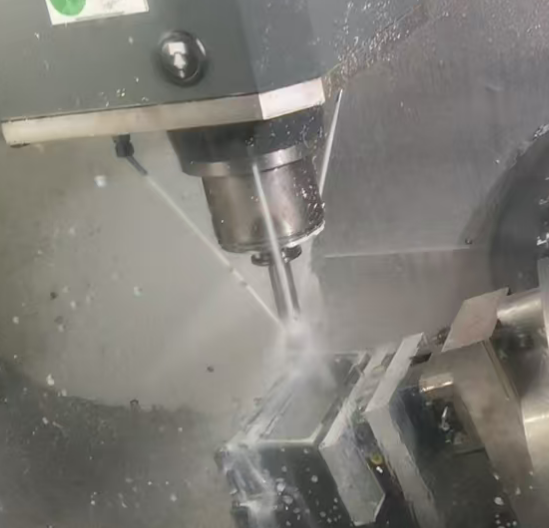
Why 5-Axis Collisions Keep Happening
Let’s be honest. Standard CAM simulation is only a visual check of the part cutting path. It has three fatal blind spots for simultaneous 5-axis work:
- No real G-code validation CAM simulates what you programmed. It does NOT test the actual G-code the machine will execute. Post-processor bugs, axis direction flip, over-travel errors only show up after post-processing — long after CAM simulation passes clean.
- No full machine swept volume check 5-axis rotary axes swing the spindle across a huge working envelope. CAM rarely models the entire machine structure: spindle housing, A/C rotary table, vise, extended tool holders. The tool tip looks safe, but the holder slams into the fixture mid-cycle.
- No near-miss detection Tight clearances for turbine blades, medical impellers and thin-wall aerospace parts create hidden interference. CAM cannot flag near-collisions that turn into crashes once the machine accelerates into position.
Real Cost Breakdown of One 5-Axis Crash
| Damage Item | Typical Cost |
|---|---|
| Broken tool + tool holder | $800–$2,500 |
| Ruined fixture & vise | $3,000–$8,000 |
| Scrapped In718 / Ti-6Al-4V blank | $5,000–$18,000 |
| Spindle repair + machine calibration | $12,000–$30,000 |
| Production downtime + delayed shipments | Lost customer contracts |
Traditional trial-and-error prove-out on the machine is pure gambling. You test expensive equipment with unvalidated code, and the odds always swing against you on complex 5-axis jobs.
How VERICUT Eliminates Five-Axis Tool Collisions (Zorapid’s Standard Workflow)
VERICUT runs verification directly on your final G-code, with a 1:1 digital twin of your exact 5-axis machine model. We follow this strict process on every multi-axis order at our 3,000㎡ smart manufacturing center:
1: Build the exact machine digital twin
We import the full 3D model: machine frame, rotary axes, spindle, table, plus all fixtures, custom vises and the full tool assembly (tool + holder + extension). No simplified geometry. Every moving part matches the real machine’s kinematics, axis limits and rotation direction.
2: Simulate post-processed NC code, not CAM toolpaths
We feed the final post G-code straight into VERICUT. The software runs line by line exactly like your CNC controller. It catches post-processor mistakes, coordinate shift errors and rotary axis overtravel that CAM completely ignores.
3: Full swept-volume collision checking
VERICUT scans the entire 3D space every moving component travels through. It detects these interference cases automatically:
- Tool tip vs workpiece gouging
- Tool holder / spindle vs fixture & rotary table
- Machine housing clashing with the rotating A/C table
- Near-miss clearances we set to 0.2mm safety buffer
No missed blind spots. Every swing of the 5-axis head gets fully checked before the program hits the shop floor.
4: Fix errors in the virtual world
If VERICUT flags a collision point, we adjust tool orientation, rework the toolpath or tweak the post processor right inside the simulation report. We never run uncorrected code on physical machines.
Result at Zorapid: Zero unplanned 5-axis machine crashes over 2 years of high-volume aerospace and medical multi-axis production.
Zorapid Exclusive: Our VERICUT 5-Axis Verification Protocol
Most manufacturers only run basic collision checks. We add three extra layers to lock out all risk on complex parts like blisks, titanium implants and semiconductor cavity components:
- Controller emulation We match Fanuc / Siemens controller logic inside VERICUT. Acceleration blocks, rotary wrap-around and soft limits behave exactly the same as the real machine. No unexpected axis flip during continuous 5-axis movementVericut.
- Full tool assembly simulation We never cut corners by only modeling the cutting tool. Long carbide extensions and big ER holders are the #1 cause of spindle-fixture collisions. We include every piece of the tool stack in the digital model.
- Batch near-miss scanning We run automatic clearance analysis across the full cycle. Tight gaps on deep-cavity 5-axis parts get flagged long before they turn into hard impacts.
This protocol lets us run high-tolerance ±0.005mm 5-axis jobs without prove-out downtime, and keep our uptime above 97% month over month.
Real Zorapid Case Study: 5-Axis Blisk Machining Without Collision Loss
Project Background
Aerospace customer ordered an IN718 blisk (integrated bladed rotor) with full 5-axis simultaneous milling. The part uses long-reach tool holders, with less than 1mm clearance between the spindle and the rotary table during tilting cycles.
Old Risk Without VERICUT
Our original CAM simulation showed zero interference. But the post-processed G-code shifted the A-axis rotation range, which would have slammed the spindle into the fixture on the first run. A crash would have scrapped the $12,000 superalloy blank and damaged our five-axis HMC spindle.
VERICUT Simulation Outcome
We loaded the full machine digital twin + complete tool assembly into VERICUT. The software instantly marked the spindle-fixture collision at the 320th NC block. We adjusted the tool vector angle and revised the post processor inside 45 minutes.
Final Result
- Zero physical machine test runs needed
- No scrap, no tool breakage, no downtime
- First-off part passed CMM inspection on the first attempt
- We cut program prove-out time from 3.5 hours down to 40 minutes per setup
Direct Financial Gains: Stop Collision Loss With VERICUT Simulation
For every 5-axis program we verify in VERICUT, we lock in three clear profit improvements:
- Eliminate crash repair cost No spindle overhauls, no broken tooling, no wrecked fixtures. We avoid $15k+ one-time loss per potential collision.
- Cut prove-out time by 65–75% No more single-block slow jog testing on the machine. The simulation validates everything offline. Your 5-axis centers run cutting cycles instead of waiting on program testing.
- Zero high-value part scrap Titanium, Inconel, PEEK and aerospace aluminum blanks cost a fortune. VERICUT catches gouging and interference before you cut a single chip, so you never waste premium raw material.
For small-to-medium precision job shops, this simulation workflow adds 15–22% more available machine hours every month, with far fewer emergency production delays.
Industries That Benefit Most From VERICUT 5-Axis Collision Check
Zorapid runs full VERICUT verification for all multi-axis orders across these strict sectors:
- Aerospace & defense: Blisks, turbine shafts, structural 5-axis components (IN718, Ti-6Al-4V)
- Medical device: PEEK implants, titanium surgical parts, micro 5-axis cavities
- Semiconductor: Wafer test chambers, thin-wall vacuum components
- Automotive motorsports: Complex mold cores, manifold 5-axis machining
- Marine energy: High-tolerance impellers and flow control parts
For all parts with tilted spindle movement and tight fixture clearance, VERICUT simulation is no longer optional — it’s mandatory to avoid costly machine loss.
Why Choose Zorapid for Verified 5-Axis CNC Machining?
- Full VERICUT G-code simulation on every multi-axis program We never skip digital verification. Every NC file gets swept-volume collision check before machining starts.
- 1:1 machine digital twin library We have pre-built 5-axis machine models for all our DMG and Mazak machining centers, matched with exact post processor files.
- ISO certified NPI workflow DFM analysis + VERICUT simulation + five-axis cutting + CMM inspection, all in one seamless process.
- No surprise crashes, no unexpected scrap Our offline simulation eliminates collision risk entirely, so your prototype and low-volume batch orders stay on schedule.
- Fast turnaround Offline program validation slashes setup time. We deliver first articles 2–4 days faster than shops that rely on manual machine prove-out.
Conclusion
Five-axis tool collisions don’t happen because of bad luck. They happen because teams rely only on CAM simulation and test programs on expensive physical machines.
VERICUT runs full G-code verification on a complete digital twin, catches hidden spindle, holder and fixture interference, and blocks costly machine damage before production begins.
At Zorapid, we bake VERICUT collision simulation directly into our 5-axis standard process. We turn risky trial runs into fully validated virtual testing, cut collision loss to zero, and keep your high-precision multi-axis jobs on time and on budget.
If you have complex 5-axis parts facing tight clearances and crash risks, send us your CAD files. We can run a quick VERICUT interference check and quote your machining project with full simulation guaranteed.
FAQ
Can VERICUT catch errors that CAM simulation misses?
Yes. CAM simulates toolpaths; VERICUT simulates the final post-processed G-code with full machine kinematics. It finds post bugs, rotary overtravel and spindle-fixture clashes CAM cannot detectVericut.
Do I need to model the full tool holder for collision checking?
Absolutely. Extended holders are the top cause of 5-axis collisions. Only simulating the cutting tool leaves 70% of interference risks undetected. We always include the full tool assembly at Zorapid.
Does VERICUT slow down programming lead times?
No. Offline simulation cuts machine prove-out hours drastically. The small time spent on virtual checking saves many more hours of slow single-block testing on your CNC equipment.
Can VERICUT check near-miss clearances besides hard collisions?
Yes. We set safety buffer zones from 0.1mm to 0.5mm. The software alerts us on tight clearances that would lead to crashes during machine acceleration.