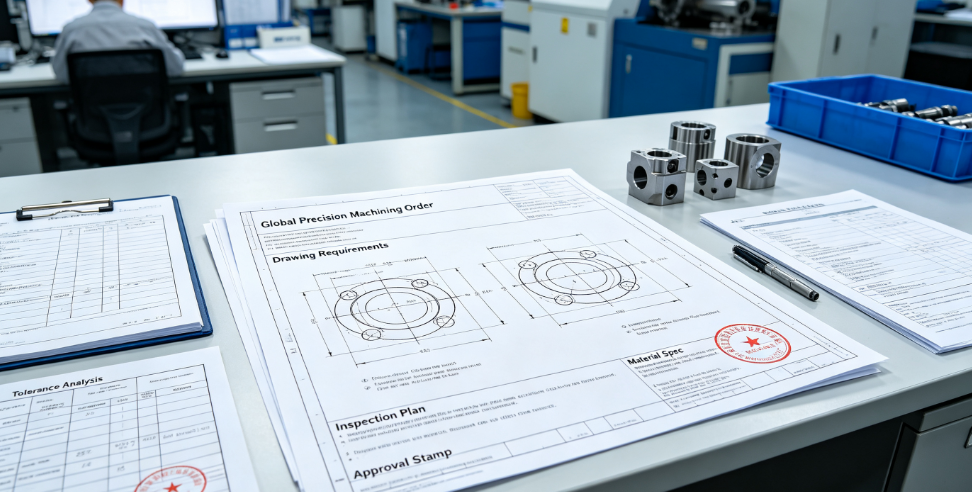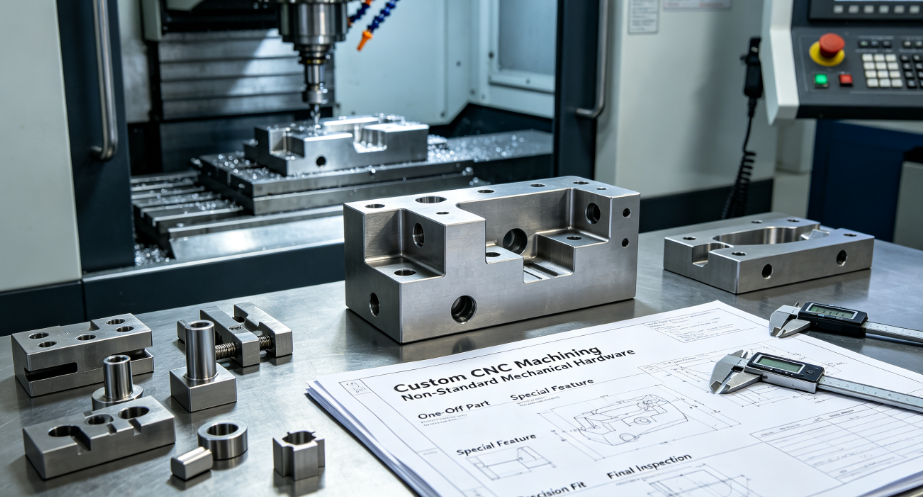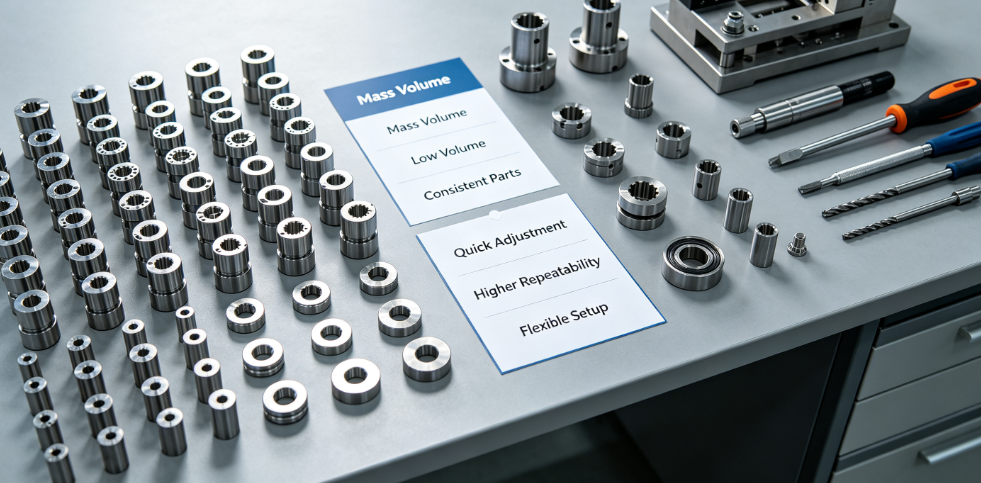
Hey product designers & mechanical engineers! If you’ve ever wasted 5+ days waiting on CNC setup only to scrap your prototype after one design tweak, this guide’s made exactly for you. Every R&D team struggles with the same tough call: CNC machining or 3D printing for rapid prototyping? CNC nails precision & production-grade material strength, but 3D printing crushes lead time, complex geometry & low-quote iteration cost for early-stage prototyping. We break down every detail from process tech, industry stats, real customer cases to why Zorapid becomes your go-to prototyping partner. Let’s dive in
In-Depth Technical Process Breakdown
CNC Machining (Subtractive Manufacturing)
CNC starts with a solid block stock (aluminum, PEEK, stainless steel bar). Programmers write G-code, install cutters & custom fixture clamps, then the machine carves away excess material bit by bit to form final parts—think carving a statue from marble block.
- Pros in prototyping: Full isotropic material property, ultra-tight tolerance, smooth raw surface finish without heavy post-processing
- Core limitation: Cutter access restriction; any enclosed internal channel, trapped undercut or organic lattice structure can’t be fully machined, requiring split multi-piece assembly then bonding
- Standard workflow: CAD → CAM programming → Fixture setup → Rough cutting → Fine finish → Deburr → QC | Total prep alone takes 1~3 working days before cutting starts
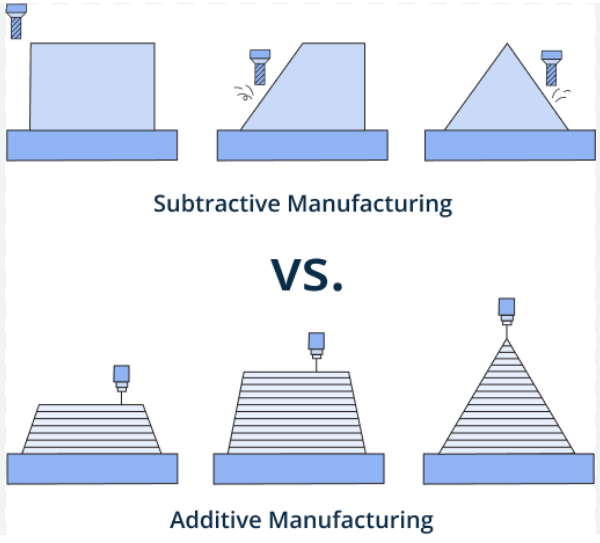
3D Printing (Additive Manufacturing, 3 mainstream industrial types for prototype)
Build part layer upon layer directly from CAD file, zero fixture/custom tooling needed—upload STEP file, hit print, done:
- SLA Resin Printing (Most popular appearance prototype):UV light cures liquid resin layer by layer, fine detail for cosmetic mockup, tolerance ±0.1~0.2mm
[IMG2: SLA transparent resin medical housing prototype real photo] - SLS Nylon Printing (Functional plastic prototype):Laser sinters nylon powder bed, self-support for fully enclosed hollow structure, flexible TPU printable for rubber-like elastic parts
[IMG3: SLS lattice cooling manifold real component] - SLM Metal Printing (High-end metal functional prototype):Laser melts metal powder (Ti-6Al-4V, Inconel718, 316L) layer-wise, one-piece complex metal impossible via CNC
Quick Rule of Thumb for Tech Pick: Pick 3D print if your design has hidden internal flow channels/lattices; choose CNC only for simple solid parts needing ±0.005mm ultra-precision functional test.
Common Prototyping Pain Points + Zorapid Targeted Solutions
| Core Industry Difficulty | Root Cause | Zorapid Custom Fix |
|---|---|---|
| ① CNC 3~7day lead kills urgent design iteration | Heavy CAM programming + fixture customization | 3D print no setup, ship most plastic prototypes in 24~72h; hybrid “3D rough form + CNC fine finish” for precision hybrid parts |
| ② Complex inner cavity design impossible to machine into single piece | Cutter cannot reach enclosed inner geometry | SLM/SLS one-shot integrated forming, eliminate split assembly gap error |
| ③ Multiple design revisions blow up CNC cost | Every new revision = re-program + re-fixture | Print all 3~8 revised versions in same batch with fixed low unit cost |
| ④ 3D print layer line rough surface poor cosmetic | Natural layer stacking texture | In-house polishing, sandblasting, painting & anodizing post-processing workshop to reach CNC-level finish |
| ⑤ 3D printed metal part dimensional drift | Layer shrinkage during powder melting | Pre-compensate CAD model size + post CNC secondary finish to tighten tolerance to ±0.02mm |
Industry Statistical Report + 2025–2030 Future Market Forecast Data
Current Real-World Cost & Lead Time Data (Global Rapid Prototyping Industry Benchmark)
Turnaround Time Benchmark
- 1~5pcs simple plastic prototype: 3D print = 1~3 working days | CNC = 3~7 working days
- Complex metal single part: SLM 3D print = 3~5 days | CNC 5-axis machining =7~14 days
Future Market Prediction 2025–2030
- Global additive manufacturing prototype market CAGR: 20.9%, total market value hit $10B by 2030; medical & aerospace 3D prototype demand grows fastest at 27.2% YoY
- Industry survey: 62% global R&D engineers plan to shift early-stage concept prototyping from CNC to 3D printing by 2027 to shorten new product launch cycle by 30%+ (2026 AM industry whitepaper)
Core Benefits to Pick Zorapid for Your 3D/CNC Hybrid Prototyping
Zorapid’s 3000㎡ smart manufacturing center owns full in-house industrial equipment matrix: SLA/SLS/SLM 3D printers + 5-axis CNC machining centers + full post-treatment line (polish, anodize, medical-grade surface finishing):
- Hybrid one-stop service: No need to source separate 3D print & CNC vendors; early iteration 3D print + final precision functional CNC finish under single order, save 2~3 extra transit days
- Ultra-fast lead promise: Standard plastic 3D prototype 1~3day delivery; SLM metal prototype 3~5day lead matching your tight R&D timeline
- Free pre-order DFM review: Our engineer checks your CAD file pre-production, flag impossible CNC structure & recommend cheaper 3D optimized design for free, avoid wasted prototype cost
- ISO13485/AS9100 certified: Qualified for medical implant & aerospace-grade prototype production, full dimensional inspection report (FAI) attached with every shipment
- 1pc minimum order: No MOQ lock-in for prototype, perfect for small batch iterative testing
Ultimate Step-by-Step Decision Guide (When Exactly You Choose 3D Over CNC)
Check your project against below checklist → Pick 3D printing if you hit ≥2 points:
Early-stage concept / form-fit mockup for investor/trade show demo
Part has internal fluid channels, bionic lattice, trapped undercut impossible for CNC cutting
Need 3+ design revision iterations within 1 week
Order quantity ≤50pcs for prototype testing
Tight deadline: need finished sample within 72h
Exception Rule: Switch back to CNC immediately if:
Need production identical raw stock material (solid PEEK, bulk titanium bar) + tight tolerance ≤±0.03mm for destructive load functional test, batch over 100pcs
Pro Tip from Zorapid Engineer: Hybrid workflow = 3D print all early design iterations → final validated design CNC machine for formal qualification test (most global OEM’s standard R&D flow)
Full Material Advantage Comparison Table (Plastic + Metal Grades Specified)
Plastic Materials Comparison
| Material Grade | CNC Performance | 3D Print Available Grade | Best Scenario |
|---|---|---|---|
| ABS/PC | Full isotropic strength, high surface clarity | SLA ABS-like resin | Appearance prototype |
| PEEK Medical Grade | Full medical ISO compliance, high heat resistance | Limited high-temp FDM PEEK | Medical structural final prototype prefer CNC |
| TPU Flexible Rubber | Cannot machine solid flexible stock | SLS/FDM TPU 90A~60A shore | Elastic grip/seal prototype only 3D printable |
Metal Materials Comparison
| Alloy Grade | CNC Machining | SLM 3D Print | Advantage Side |
|---|---|---|---|
| 6061/7075 Al | Low cost, high machinability | SLM aluminum available | Simple solid aluminum=CNC; complex cavity=3D |
| Ti-6Al-4V Grade5 | High cutting cost, long lead | Standard SLM printable | Bionic porous implant=3D; solid fixture=CNC |
| Inconel718 Superalloy | Hard-to-cut, high tool wear | SLM specialized powder | Complex turbine prototype=3D |
Core takeaway: CNC owns bulk solid stock material superiority; 3D wins flexible/porous/custom composite material unavailable via machining.
Real Customer Case Analysis With Actual Part Images
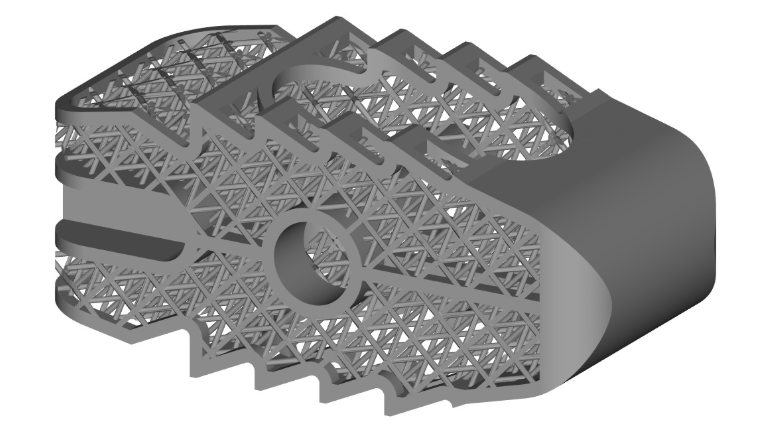
Case1: Medical Orthopedic Implant (US medical device startup)
- Client Pain: CNC solid titanium cage needed split multi-piece assembly; post-assembly gap affects bone fusion test, required 20 revised samples within 5 working days for in-vitro biotest
- Zorapid Solution: SLM Ti-6Al-4V one-piece 3D print with bionic porous lattice, all 20 variant samples finished & shipped in 4.5 days
- Final Outcome: Client cut prototype cost 62% vs CNC, finished pre-clinical test 3 weeks ahead of schedule
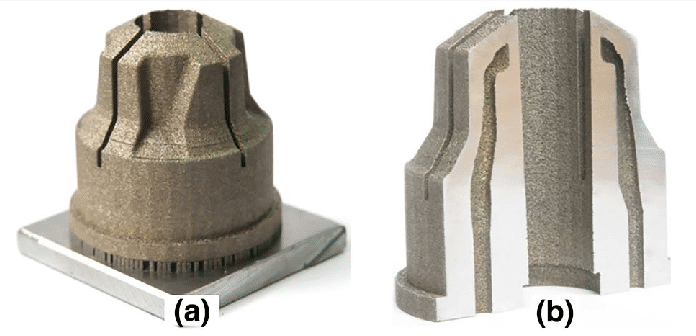
Case2: Semiconductor Test Fixture Internal Cooling Manifold (EU semiconductor OEM)
- Client Pain: Conformal spiral cooling channel inside manifold impossible to CNC machine as single part; split CNC assembly leaks liquid during thermal cycling test
- Zorapid Fix: SLS PA12 GF nylon one-shot integrated printing, zero assembly seam, passed full thermal leakage test in first trial run
Case3: Consumer Electronics CES Demo Enclosure
- Demand: Full cosmetic prototype ready for CES exhibition in 48h; 4 appearance revisions required
- Result: 4 different design versions printed simultaneously, finished polishing & paint within 2 days, client successfully exhibited on schedule
Core Application Scenarios Where 3D Printing Beats CNC Consistently
- Medical Device R&D: Custom orthopedic implant, surgical tool bionic handle, ventilator internal fluid manifold (porous/complex flow path only 3D feasible)
- Aerospace Rapid Prototype: Turbine small component lightweight lattice structure, UAV internal heat sink with hidden cooling channel
- Semiconductor Test Tool: Custom test fixture conformal cooling core, small batch iteration fixture for chip validation
- Consumer Hardware Early R&D: Earphone/ wearable internal structural mockup, multi-version casing fit check before mold opening
- Automotive New Energy Parts: EV battery internal cooling insert, lightweight topology optimized suspension bracket
Detailed Delivery Speed Breakdown
| Prototype Type | 3D Print Standard Lead | CNC Standard Lead | Zorapid Express Option |
|---|---|---|---|
| Small cosmetic resin part(SLA) | 1~2 working days | 3~4 days | 24h rush order available |
| Nylon functional part(SLS) | 2~3 days | 4~6 days | 48h priority production |
| SLM metal complex part | 3~5 days | 7~12 days | 3day express metal print |
Zorapid unique edge: In-house surface treatment workshop avoids outsourcing finish delay, no extra waiting days for painting/anodizing unlike most third-party prototype factories
Full Blog Summary
At the end of the day, it’s never 3D replaces CNC fully—they complement each other in full product development lifecycle:
Pick 3D Printing for Rapid Prototyping: Early concept validation, complex internal geometry, multi-version quick iteration, tight short lead, order below 50pcs
Reserve CNC Machining: Final production-grade functional prototype, ultra-tight tolerance (<±0.03mm), simple solid bulk parts over 100pcs batch testing
Zorapid delivers the best of both worlds: hybrid 3D+CNC all-in-one prototyping to cut your R&D lead time & prototype cost at once, supporting global clients’ US/EU/Asia new product development from design to finished sample.
FAQ
Are 3D printed parts strong enough for real functional testing?
Industrial SLS nylon/SLM metal reaches 90%+ of CNC solid stock mechanical property; for critical high-load test parts, Zorapid uses “3D near-net shape + CNC precision finish” hybrid process to hit full CNC-level strength & accuracy.
Can Zorapid do post-processing (anodize, polish, medical sterilization surface) for 3D printed parts?
Yes, full in-house finishing line for resin/metal parts, we match cosmetic finish same as CNC machined component per your spec.
When should I switch prototype from 3D to CNC during development?
After your final design locks with zero further revision, switch to CNC for formal certification & destructive testing prototype with production raw stock material.
Does Zorapid ship worldwide to US/EU? How about customs lead?
Door-to-door DHL/Fedex air shipping; finished prototype depart factory within same day after QC pass, most EU/US destination arrive in 3~5 business days after shipment.
What’s the minimum order quantity for 3D print prototype at Zorapid?
Strict 1pc MOQ free of setup fee, no hidden engineering charge, free DFM design suggestion before order confirmation.