Published:Zorapid.Ltd
Raise your hand if you’ve stared at your CAD file and thought:
Should I go 3D print or CNC machine this part? I don’t want to blow my budget or miss my launch deadline.
If that’s you, this breakdown is built exactly for product designers, mechanical engineers, startup founders, and procurement managers across North America, Europe, and Australia.
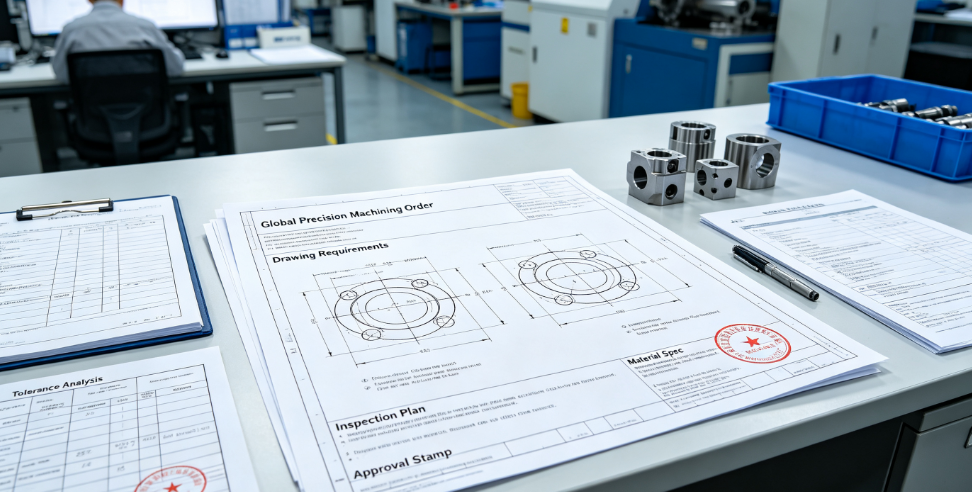
At Zorapid, we run both full in-house 5-axis CNC workshops and industrial SLM/SLA/SLS 3D printing lines every single day. We quote thousands of custom parts monthly, so we’ve seen every cost trap and lead time headache between these two manufacturing methods.
No confusing textbook jargon. Just straight, shop-floor real data: how pricing shifts with part count, design complexity, material choice, and rush orders. Plus clear charts, visual examples, and a full FAQ to settle every last doubt.
Quick Core Basics: Additive vs Subtractive Manufacturing
Before diving into cost and lead time, let’s clear up the core difference in plain English:
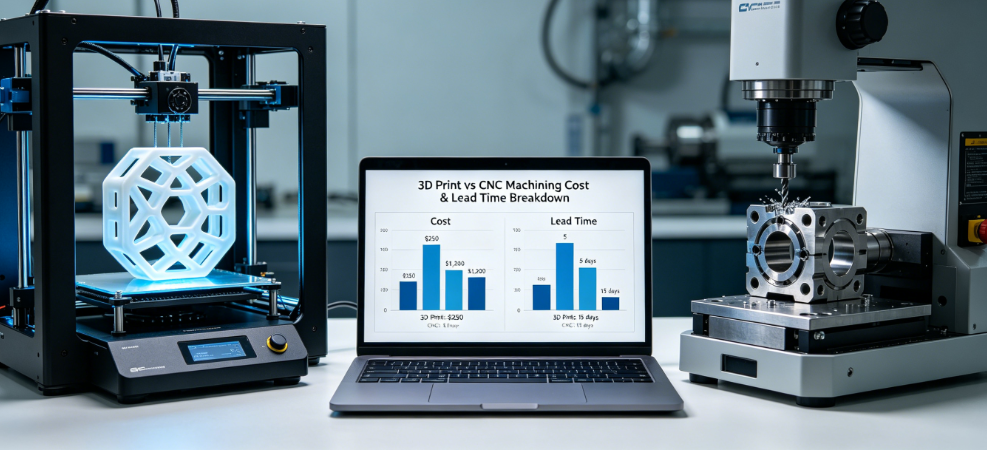
- 3D Printing (Additive Manufacturing) Builds your part layer by layer from raw resin, nylon, or metal powder. No custom fixtures, no lengthy toolpath programming. Upload your CAD, hit print, done. Perfect for organic, lattice, internal channel geometries you can’t machine.
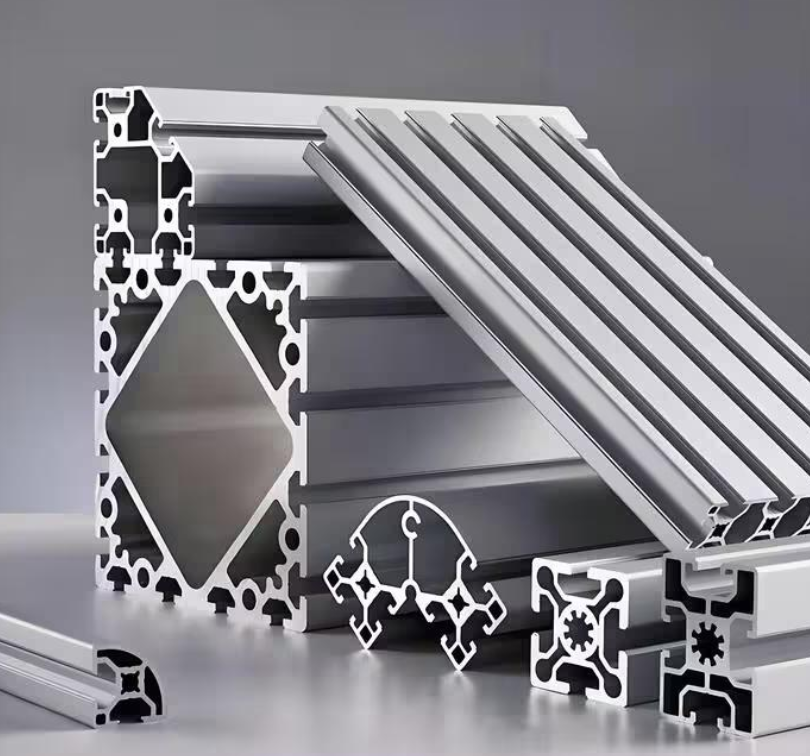
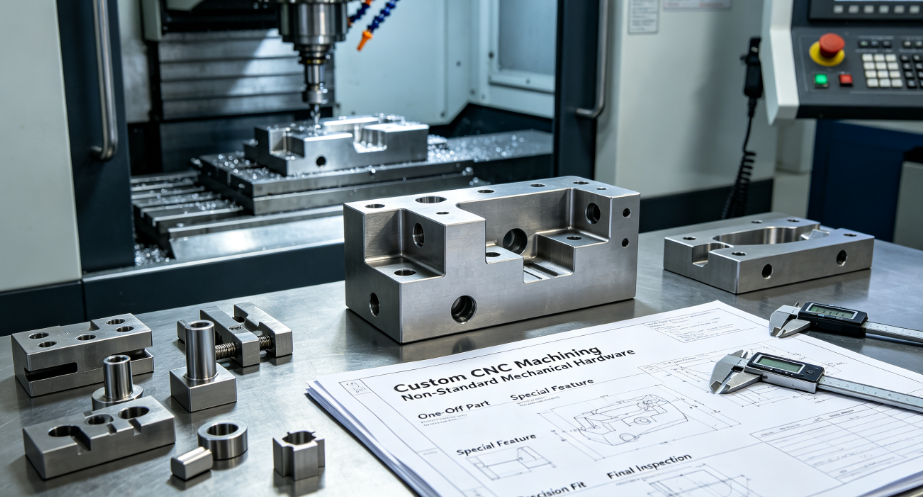
CNC Machining (Subtractive Manufacturing) Starts with a solid metal/plastic billet, cuts away excess material with rotating cutting tools. Requires fixture setup, CAM programming, multiple machining passes, and manual finishing. Delivers ultra-tight tolerances, superior material strength, and flawless surface finish for functional production parts.
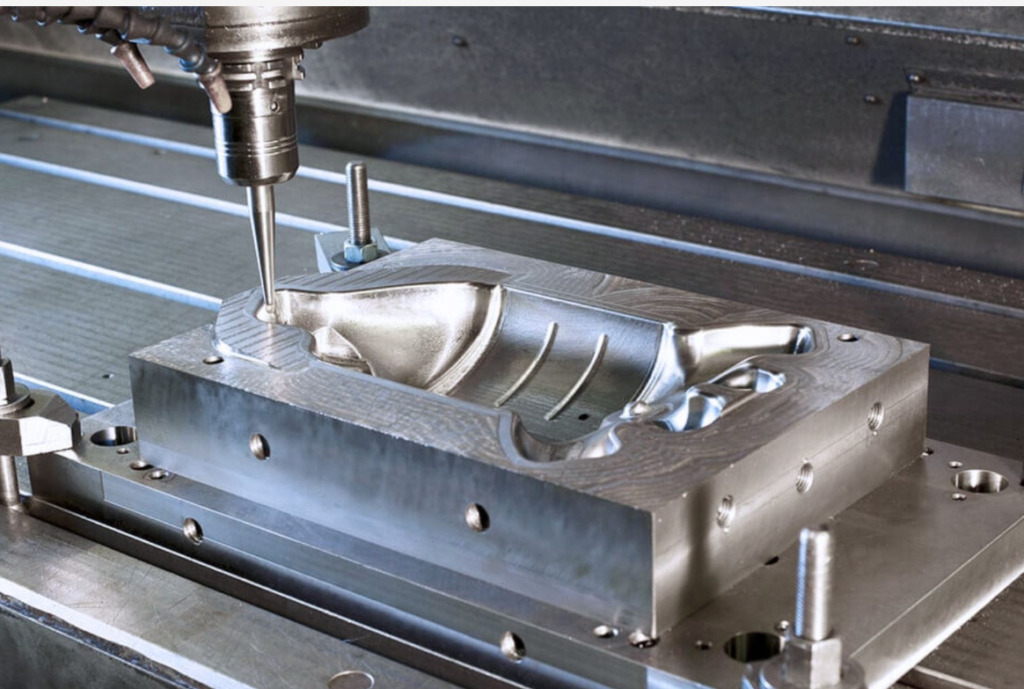
Full Lead Time Breakdown: 3D Print vs CNC Machining
Lead time is usually your first pain point when launching prototypes. Below are Zorapid’s standard & rush turnaround windows for 2026, split by order quantity.
1–5 Units (One-Off Prototypes, Iteration Testing)
- Industrial 3D Printing (SLA/SLS/SLM)
- Standard lead time: 1–3 business days
- Rush overnight: Same-day dispatch (available for resin & nylon)
- No prep delay: CAD file validation only takes 1–2 hours; zero fixture setup time
- CNC Machining (Plastic / Aluminum / Stainless Steel)
- Standard lead time: 4–7 business days
- Rush expedited: 2–3 business days (20–30% rush surcharge)
- Hidden prep delay: CAM programming, fixture clamping, tool calibration adds 1–2 full days before cutting even starts
10–100 Units (Small Batch Pre-Production)
- 3D Print: 4–8 days; per-unit build time stacks, no scaling speed gains
- CNC Machining: 5–9 days; setup cost amortizes, cycle time per part shrinks drastically
100+ Units (Low-Volume Production)
- 3D Print: 10–18 days; slow layer-by-layer stacking becomes costly & slow at scale
- CNC Machining: 7–12 days; one-time setup pays off, consistent fast batch runs
Lead Time Winner Cheat Sheet
- Fastest single prototype iterations: 3D Printing
- Fastest medium/large batch production: CNC Machining
- Complex internal geometries impossible to machine: 3D Printing only
Real-World Cost Breakdown (Zorapid 2026 Pricing Benchmarks)
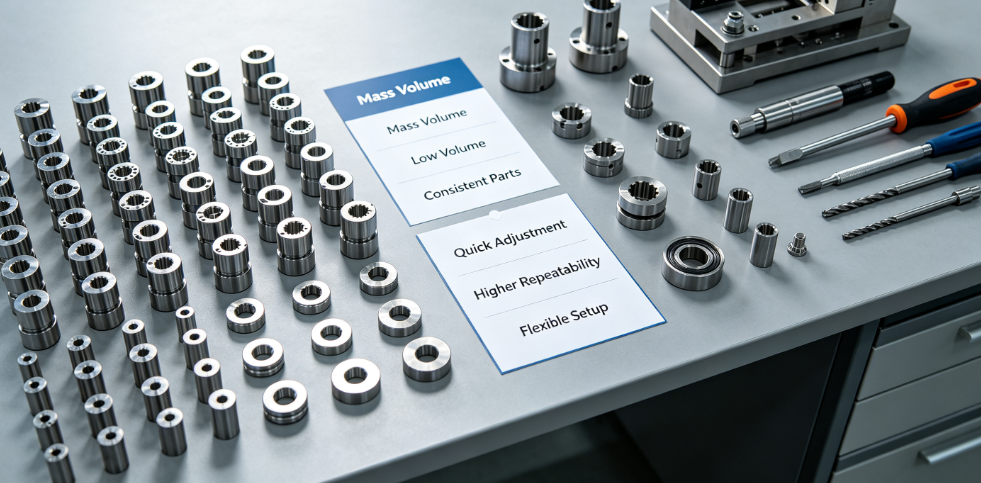
Cost math is where most engineers get stuck. The critical rule: 3D printing wins at quantity 1, CNC wins at higher volumes, with a crossover point around 50–100 standard parts.
We split costs into two core buckets: one simple plastic bracket, one complex medical metal housing.
Upfront Setup Expense
This is the biggest price gap driver:
- 3D Printing: $0 setup cost. No custom jigs, no CAM toolpath labor. Upload CAD, print immediately.
- CNC Machining: Fixed setup fee ($80–$300 per unique part). Covers programming, fixture cutting, machine calibration. This fee hits you once per design, regardless of order size.
Per-Part Unit Price Scaling
Simple Nylon Plastic Bracket (No Internal Lattices)
| Order Qty | 3D Print Total Cost | CNC Machining Total Cost | Cheaper Option |
|---|---|---|---|
| 1 pc | $45 | $180 | 3D Print |
| 10 pcs | $320 | $620 | 3D Print |
| 60 pcs | $1,650 | $1,580 | CNC |
| 150 pcs | $3,800 | $2,900 | CNC |
Complex Titanium Medical Lattice Housing
| Order Qty | Metal SLM 3D Print Total | CNC Machining Total | Cheaper Option |
|---|---|---|---|
| 1 pc | $220 | $1,450 | 3D Print |
| 10 pcs | $1,900 | $6,800 | 3D Print |
| 80 pcs | $14,200 | $12,600 | CNC |
Cost Factor 3 – Hidden Extra Fees
3D Printing Add-Ons
- Post-processing (sand, polish, paint): $10–$60 per piece
- Metal heat treatment: $40–$120 per metal build plate
- Custom certification docs (medical/aerospace): Flat $75 fee
CNC Machining Add-Ons
- Tight tolerance GD&T (<±0.005mm): 25–40% price uplift
- Anodizing, bead blasting, passivation: Batch pricing (low per-unit cost for high qty)
- Multiple secondary machining operations (drilling, tapping): Hourly labor surcharge
Cost Winner Cheat Sheet
- 1–20 complex unique prototypes: 3D Printing cheaper
- 50+ simple functional parts: CNC Machining cheaper
- High-strength certified metal production runs: CNC long-term cost advantage
Side-by-Side Full Comparison Table
| Metric | 3D Printing (SLA/SLS/SLM) | CNC Machining (3/5 Axis) |
|---|---|---|
| Upfront Setup Cost | $0 | $80–$300 fixed fee |
| Single Part Lead Time | 1–3 days | 4–7 days |
| 100-Part Batch Lead Time | 10–18 days | 7–12 days |
| Best For Quantity | 1–50 units | 50+ units |
| Complex Internal Lattices | Fully capable | Impossible without multi-part assembly |
| Standard Tolerance | ±0.003” to ±0.010” | ±0.0005” ultra-precise |
| Raw Material Strength | Layer bonding weakness; lower tensile strength | Full solid billet, full material mechanical properties |
| Surface Finish Base | Visible layer lines (requires polishing) | Smooth as-machined finish, mirror polish achievable |
| Rush Order Surcharge | 10–15% | 20–30% |
| Material Options | Resin, Nylon, Titanium, Aluminum, Stainless Steel | All plastics, all industrial metals, engineering alloys (IN718, Ti-6Al-4V, PEEK) |
When Should You Choose 3D Printing?
Pick additive manufacturing with Zorapid if any of these match your project:
- You only need 1–20 prototype iterations, fast design testing
- Your part has lattices, conformal cooling channels, hollow organic shapes
- You’re on a tight deadline (need parts in under 3 days)
- You constantly tweak CAD files; rework new designs without extra setup fees
- Low-budget concept validation before mass production
When Should You Choose CNC Machining?
CNC is your top solution for these use cases:
- 50+ units of functional, load-bearing production parts
- Medical, aerospace, automotive components requiring full material certification
- Ultra-tight tolerances, precision assembly fits, threaded holes, press fits
- High-temperature, high-stress operating environments (3D print layer bonds fail here)
- Premium surface finishes: anodizing, hard coating, mirror polishing
Zorapid’s Hybrid Manufacturing Hack
Most clients don’t realize you don’t have to pick just one process—we combine both for maximum savings.
Common hybrid workflow we use daily:
- 3D print 2–3 iterations fast to lock your design geometry (low cost, 2-day turnaround)
- Once CAD is finalized, switch to CNC machining for your full production batch This cuts your overall development timeline by 40% and avoids expensive CNC rework on untested designs.
FAQ
At what quantity does CNC become cheaper than 3D printing?
For standard plastic parts, the cost crossover hits around 50–60 units. For metal components, the break-even point lands at roughly 70–100 pieces. Below that volume, 3D printing eliminates expensive CNC setup fees to save money.
Can 3D printed parts match CNC precision tolerances?
No. Top-tier SLA resin hits ±0.003”, industrial SLM metal sits around ±0.008”. Standard CNC easily holds ±0.0005mm tight GD&T tolerances required for aerospace, medical implants, and semiconductor tooling.
Why is single-piece CNC so much more expensive than 3D print?
CNC carries mandatory fixed overhead: CAM programming time, custom fixture manufacturing, machine setup labor, and tool wear costs. These charges apply once per design, which crushes pricing when you only order one unit. 3D printing has zero setup overhead, so single prototypes stay low-cost.
Does rush order lead time cost more for both processes?
Yes, but surcharges differ. 3D printing rush fees run 10–15% because we simply prioritize your print plate. CNC rush surcharges hit 20–30%—we have to pull skilled machinists and dedicated 5-axis machines off existing batch orders to prioritize your part.
Are 3D printed metal parts as strong as CNC metal billet parts?
Not structurally equivalent. SLM metal prints have microscopic layer boundaries that reduce tensile strength and fatigue resistance. CNC machined stock bar has uniform, full-density material properties ideal for load-bearing critical components.
Can Zorapid handle both 3D printing and CNC machining in one order?
Absolutely. Our 3,000㎡ manufacturing center runs both production lines in-house. We offer one unified quote, single shipping batch, and consistent quality control for mixed prototype + production runs. Our hybrid manufacturing service eliminates coordinating two separate suppliers.
How much extra lead time does post-processing add for each method?
Basic polishing for 3D prints adds 0.5–1 day. CNC secondary finishing (anodizing, passivation) adds 1–3 days depending on coating specs. We include all post-processing timelines upfront in every formal quote from Zorapid.
Which process is better for medical device components?
Depends on stage:
- Early-stage custom implant prototypes: SLM 3D printing for patient-specific lattice structures
- Final FDA-certified production implants: CNC machining for traceable certified raw stock and consistent mechanical performance
Final Quick Decision Flowchart (For Fast Reference)
- Less than 30 parts + complex internal geometry → 3D Print
- Over 50 parts + tight tolerance / high strength → CNC Machining
- Iterative design testing first, then production → Hybrid Zorapid combined service
Closing Call to Action (Zorapid Brand Tie-In)
Still unsure which manufacturing route balances your budget and deadline?
Zorapid’s engineering team offers free DFM reviews and dual cost/lead time quotes for every CAD file you send. We operate full in-house 5-axis CNC, SLA/SLS/SLM 3D printing facilities, with ISO & AS certified quality control for aerospace, medical, automotive, and semiconductor clients worldwide.
Upload your 3D model today for a no-obligation side-by-side cost & lead time breakdown.