Published:Zorapid.Ltd
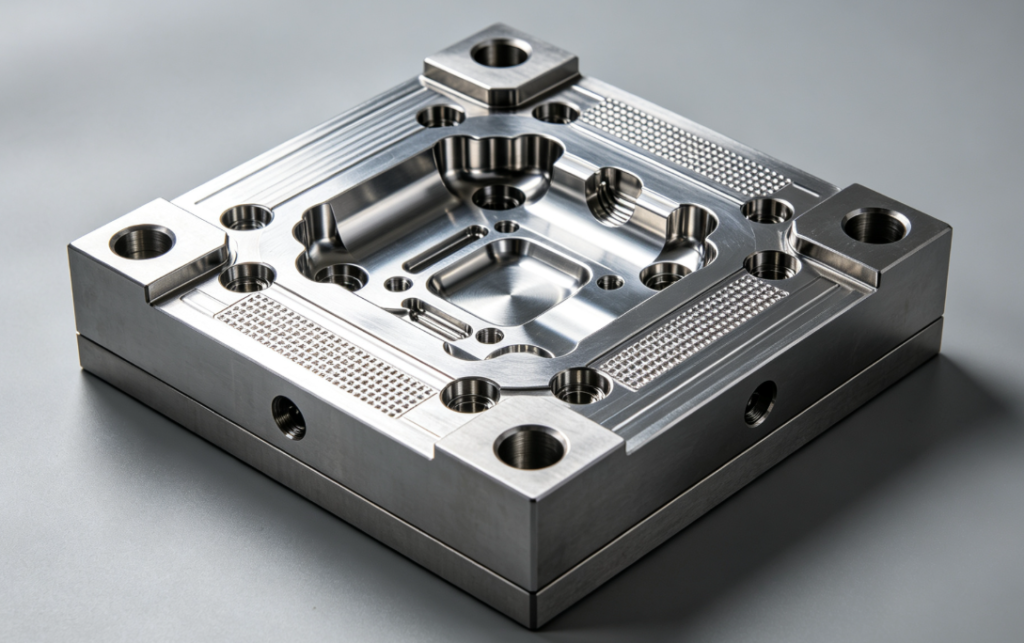
Let’s talk about complex mold dies. You know the ones — deep cavities, sharp corners, intricate details, hard tool steel. The kind of molds that make engineers lose sleep and machinists throw their calipers.
When you’re making these kinds of molds, you’ve got two heavy hitters in your corner: 5-axis CNC machining and wire EDM.
Both can make incredible parts. Both have their strengths. And if you pick the wrong one for the job? You’re looking at longer lead times, higher costs, and parts that don’t quite hit the mark.
In this guide, we’re breaking down exactly how these two processes compare, when to use each one, and why the best shops use both.
First, Let’s Make Sure We’re on the Same Page
Before we dive into the comparison, let’s quickly cover what each process actually does.
5-Axis CNC Machining: The Workhorse
5-axis CNC is basically milling on steroids. The cutting tool can move in five directions at once — X, Y, Z, plus two rotational axes.
What does that mean?
- The tool can reach almost any angle on the part
- You can machine complex surfaces in one setup
- No more moving the part from machine to machine
- Better surface finish because you can use shorter, stiffer tools
It’s fast, it’s versatile, and it’s great for removing lots of material quickly.
Wire EDM: The Precision Specialist
EDM stands for Electrical Discharge Machining. Wire EDM uses a thin brass or molybdenum wire that zaps tiny bits of metal away with electrical sparks. No contact, no cutting force, just pure precision.
What does that mean?
- It can cut through any conductive material — no matter how hard
- It makes perfectly square internal corners (something milling can’t do)
- It can cut extremely complex shapes
- It holds incredibly tight tolerances
- No burrs, no tool marks, excellent surface finish
It’s slow compared to milling, but it can do things milling simply can’t.
The Head-to-Head Comparison
Alright, let’s get into the good stuff. How do these two stack up?
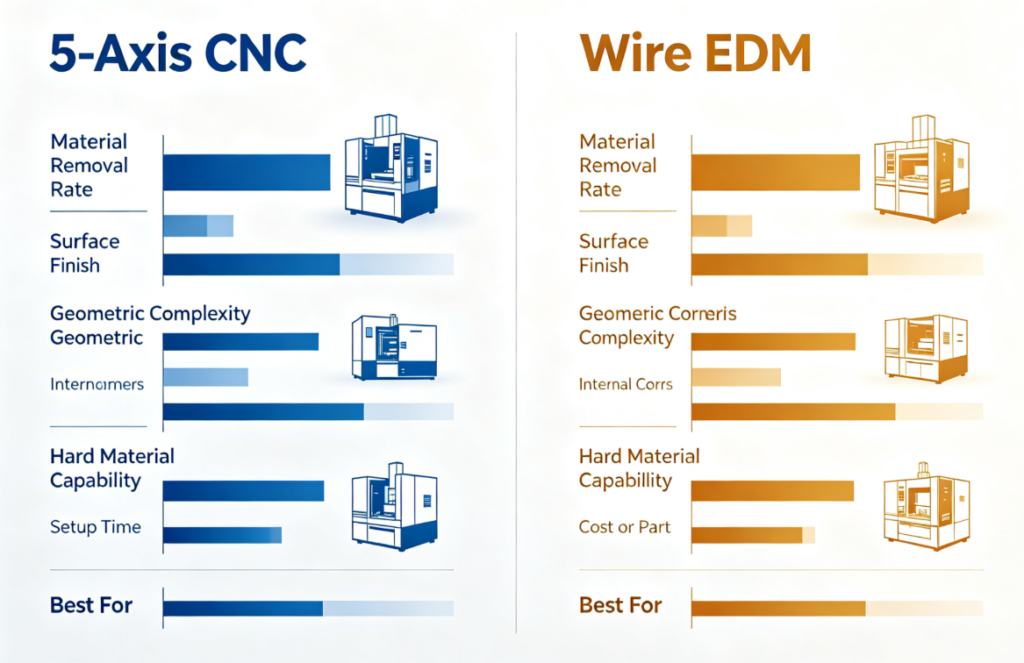
Material Removal Rate (Speed)
Winner: 5-axis CNC — by a mile.
5-axis milling removes material fast. We’re talking cubic centimeters per minute. Wire EDM? It’s more like cubic millimeters per minute.
For roughing out a mold cavity, 5-axis is 10-20x faster. If you’ve got a lot of material to remove, milling is the only way to go economically.
Wire EDM catch: It doesn’t matter how hard the material is. Milling slows down on hard steel. EDM doesn’t care. So on very hard materials (HRC 60+), the gap narrows.
2. Surface Finish
Winner: Wire EDM — barely.
Both can produce excellent surface finishes, but wire EDM has a slight edge.
- Wire EDM: Ra 0.2-0.8μm standard, can go lower with skim cuts. No tool marks, no burrs.
- 5-axis CNC: Ra 0.4-1.6μm with a good finish pass. Can get better with polishing, but that adds time and cost.
For mold surfaces that need mirror finish? Both will need polishing, but EDM leaves a more uniform base to work from.
3. Internal Corners
Winner: Wire EDM — no contest.
This is where EDM really shines.
Milling tools have radius. Even a tiny end mill has a corner radius. So you can never get a perfectly sharp internal corner with milling. You’ll always have a fillet.
Wire EDM? The wire is the tool. A 0.25mm wire makes a 0.125mm internal radius. Thinner wires (0.1mm, 0.05mm) can go even smaller.
For mold details that need sharp corners — like snap fits, fine ribs, or intricate gear profiles — wire EDM is basically the only game in town.
4. Geometric Complexity
Winner: It depends.
Both can handle complex shapes, but they excel at different kinds of complexity.
- 5-axis CNC: Great for complex 3D surfaces, organic shapes, deep cavities with undercuts. If you can model it in 3D, 5-axis can probably machine it.
- Wire EDM: Great for 2D and 2.5D shapes with extreme precision. Think punch and die sets, gear profiles, splines, intricate cutouts. It’s not great for 3D surfaces (though 4-axis EDM can do some).
Rule of thumb: Complex 3D surfaces → 5-axis. Complex 2D profiles → wire EDM.
5. Hard Material Capability
Winner: Wire EDM.
Wire EDM doesn’t care how hard your material is. HRC 30, HRC 50, HRC 65 — it’s all the same to EDM. The sparks don’t care about hardness.
5-axis CNC? Harder materials mean slower feed rates, more tool wear, higher costs, and more frequent tool changes.
For hardened tool steels (S136, H13, D2, etc.), especially after heat treatment, wire EDM really pulls ahead. You can machine after hardening without worrying about tool deflection or wear.
6. Tolerance Capability
Winner: Wire EDM — slightly.
Both can hold very tight tolerances, but wire EDM has the edge for precision.
- Wire EDM: ±0.002-0.005mm is standard production tolerance. Can go tighter with careful setup.
- 5-axis CNC: ±0.005-0.01mm is typical for production. Can go tighter on good machines with skilled operators.
The difference is consistency. Wire EDM holds tighter tolerances more consistently, especially on small features and hard materials.
7. Setup Time & Flexibility
Winner: 5-axis CNC.
Setting up a 5-axis job takes time — fixturing, tooling, program verification — but once it’s set, you can run parts quickly and make changes easily.
Wire EDM setup is simpler in some ways (no cutting tools to worry about), but threading the wire, setting start holes, and programming can take time. And if you need to make a design change? You might need new start holes, new wire paths, the whole works.
For prototypes and iterations where you might make changes, 5-axis is usually faster and more flexible.
8. Cost
Winner: It depends on the job.
This is the big one. And the answer is: it depends.
- For high-volume material removal: 5-axis is cheaper (faster = cheaper)
- For small, precise features: Wire EDM can be cheaper (no expensive small tools that break)
- For hard materials: Wire EDM becomes more competitive (milling slows down a lot)
- For simple 2D shapes: Wire EDM is often cheaper (simple programming, simple setup)
Rough cost comparison:
- 5-axis CNC: $80-$150/hour
- Wire EDM: $60-$120/hour
But hourly rate is only half the story. The real question is: how many hours does each process take?
A job that takes 2 hours on 5-axis might take 10 hours on wire EDM — so 5-axis is cheaper even at a higher hourly rate. But a job that takes 50 hours on 5-axis (because of tiny tools and hard material) might take 15 hours on EDM — so EDM wins.
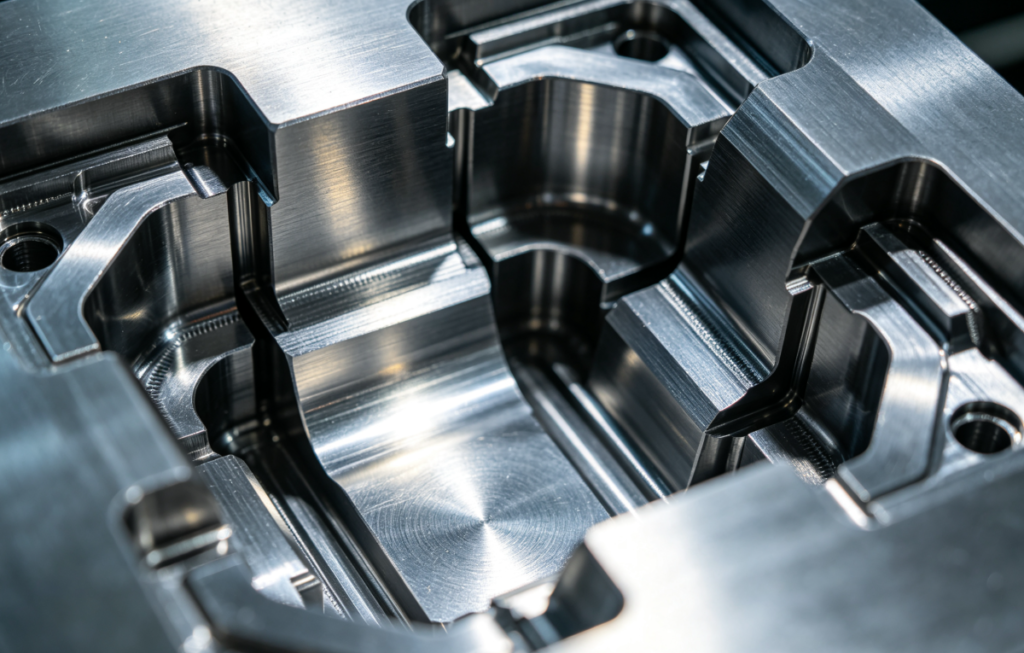
When to Use 5-Axis CNC
Pick 5-axis CNC when:
You need to remove a lot of material quickly — roughing out mold bases, large cavities
Have complex 3D surfaces — organic shapes, contoured surfaces, deep cavities
You need fast turnaround on prototypes — quick setup, easy design changes
The material is soft to medium hardness — aluminum, P20, pre-hardened steels
You need good surface finish on large areas — 5-axis can do beautiful finish passes
You’re working with non-conductive materials — EDM only works on conductive materials
Typical mold applications:
- Mold base machining
- Large cavity roughing and finishing
- Complex 3D mold surfaces
- Electrodes for EDM (ironic, we know)
- Mold plates and components
When to Use Wire EDM
Pick wire EDM when:
You need sharp internal corners — nothing beats EDM for this
You’re working with very hard materials — hardened tool steels, carbides
You need extremely tight tolerances — ±0.002mm or better
Have complex 2D profiles — punches, dies, gears, splines
You need burr-free edges — EDM leaves no burrs, no secondary deburring needed
You’re cutting thin, fragile features — no cutting force means no deflection or breakage
Typical mold applications:
- Mold inserts with sharp corners
- Punch and die sets
- Small, intricate mold features
- Hardened mold components
- Thin-walled mold features
- Gear and spline profiles
The Best Answer? Use Both
Here’s the secret that top mold shops know: you don’t have to choose.
The best mold making strategy uses both processes. Each one does what it’s best at.
Typical Hybrid Mold Making Workflow:
1: 5-axis CNC roughing
- Remove 80-90% of the material fast
- Leave 0.2-0.5mm stock for finishing
- Machine all the easy-to-reach features
2: Heat treatment (if needed)
- Harden the mold insert to HRC 48-54
- Yes, it will warp a little — that’s why we left stock
3: Wire EDM finishing
- Cut the critical features to final size
- Sharp internal corners, tight tolerances
- Doesn’t matter that the material is now hard
- Corrects any distortion from heat treatment
4: 5-axis CNC finishing (optional, for 3D surfaces)
- Finish the 3D cavity surfaces
- Use high-speed milling for excellent surface finish
5: Polishing & final inspection
- Mirror polish on cavity surfaces
- Final CMM inspection
- Mold assembly and tryout
The result? A better mold, faster, and often cheaper than trying to do everything with one process.
Real-World Example: Medical Device Housing Mold
A medical device company came to us with a mold insert for a small plastic housing. The mold had some tricky features — deep ribs, sharp internal corners, and a mirror finish requirement.
The specs:
- Material: S136 tool steel, hardened to HRC 48-52
- 12 deep ribs with 0.15mm internal corner radius
- Cavity surface: mirror finish Ra < 0.05μm
- Tolerance: ±0.005mm on critical dimensions
- Quantity: 1 mold insert
1: All 5-axis CNC
- Time: 65 hours
- Cost: ~$7,500
- Problem: Can’t get sharp enough internal corners with milling
- Problem: Hard material = lots of tool wear, inconsistent results
2: All Wire EDM
- Time: 120+ hours (the 3D cavity surfaces don’t work well with EDM)
- Cost: ~$10,000+
- Problem: Can’t do the 3D cavity surfaces efficiently
3: Hybrid (what we did)
- 5-axis roughing + semi-finishing: 18 hours
- Wire EDM for ribs and sharp features: 22 hours
- 5-axis finish milling on cavity: 10 hours
- Polishing: 8 hours
- Total: 58 hours
- Total cost: ~$6,200
The results:
- 17% cheaper than all-CNC
- 38% cheaper than all-EDM (which wouldn’t have even worked well)
- Perfect sharp corners from EDM
- Excellent 3D surface finish from 5-axis
- Tolerances held easily — Cpk > 1.67 on critical dimensions
- Delivered 3 days ahead of schedule
That’s the power of using the right tool for each job.
The Zorapid Mold Making Advantage
Lots of shops do 5-axis. Lots of shops do EDM. But not many do both really well — and even fewer do them in-house, under one roof.
Here’s why that matters:
One Shop, One Point of Contact
No coordinating between a milling shop and an EDM shop. No shipping parts back and forth. Finger-pointing when something goes wrong. We handle the whole process.
Better Process Integration
Because both processes are in-house, we can optimize the hand-off between them. know exactly how much stock to leave for EDM. We know which features to mill and which to EDM. We don’t have to guess or over-compensate.
Faster Turnaround
No shipping time between operations. No waiting for another shop’s schedule. Parts go from 5-axis to EDM to inspection without leaving our facility.
Consistent Quality
One quality system, one set of standards, one final inspection. You don’t have to worry about the milling shop and EDM shop using different measurement methods or standards.
FAQ
Which is more accurate, 5-axis CNC or wire EDM?
Wire EDM is generally more accurate and consistent, especially for small features and hard materials. Standard production tolerance for wire EDM is ±0.002-0.005mm, while 5-axis CNC typically holds ±0.005-0.01mm. That said, a good 5-axis machine with a skilled operator can hold very tight tolerances too — it just takes more time and effort.
Can wire EDM make 3D shapes?
Basic wire EDM is 2-axis (X and Y), so it makes straight, vertical cuts. 4-axis wire EDM can do tapered cuts and some simple 3D shapes by tilting the wire, but it’s not the same as 5-axis milling for complex 3D surfaces. For true 3D cavity surfaces, 5-axis CNC is the way to go. For complex 2D profiles, wire EDM is unbeatable.
What’s the smallest internal corner radius each can make?
It depends on the tool/wire size, but roughly:
- 5-axis CNC: 0.1mm radius with a 0.2mm end mill (but tiny tools break easily and are slow)
- Wire EDM: 0.05mm radius with 0.1mm wire (standard), 0.025mm radius with 0.05mm wire (fine wire, more expensive)
So EDM can make much sharper internal corners, and do it consistently without tool breakage.
Which is cheaper for mold making?
It depends on the mold. For large molds with lots of material removal and 3D surfaces, 5-axis CNC is cheaper. For small molds with lots of sharp corners, intricate features, or hard materials, wire EDM can be cheaper. In most cases, a hybrid approach using both processes gives the best result at the lowest total cost.
Does wire EDM leave a recast layer? Is that a problem for molds?
Yes, wire EDM leaves a very thin “recast layer” or “white layer” — usually 2-20μm thick, depending on settings. This layer is harder and more brittle than the base material. For most mold applications, it’s not a problem, especially with skim cuts (which reduce the recast layer significantly). For critical high-wear surfaces, you might want to polish or grind it off. We always use skim cuts for mold work to minimize the recast layer.
What materials can wire EDM cut?
Any conductive material. That includes all steels (tool steel, stainless, carbon steel), aluminum, copper, brass, titanium, carbide, and more. It can’t cut non-conductive materials like plastic, ceramic, or glass. For mold making, this is rarely a limitation since almost all mold materials are conductive.
Can you use 5-axis CNC on hardened tool steel?
Yes, but it’s slower and harder on tools. For pre-hardened steels (HRC 30-40), 5-axis works great. For fully hardened steels (HRC 48-60), you can do it with hard milling techniques — special carbide end mills, high spindle speeds, light cuts — but it’s slower and tool wear is higher. That’s why many shops prefer to EDM hardened features instead.
What surface finish can each process achieve?
Rough guide:
- 5-axis CNC: Ra 0.4-1.6μm standard, Ra 0.2μm with high-speed finish passes
- Wire EDM: Ra 0.4-0.8μm standard, Ra 0.1-0.2μm with multiple skim cuts
Both can achieve excellent finishes. For mirror polish mold surfaces (Ra < 0.05μm), both will need polishing after machining. EDM leaves a more uniform base that polishes more consistently.
How do I decide which process to use for my mold?
Ask yourself these questions:
- Are there sharp internal corners? → If yes, you need EDM for those features
- Are there complex 3D surfaces? → If yes, you need 5-axis for those
- Is the material very hard? → If yes, EDM becomes more competitive
- Is there a lot of material to remove? → If yes, start with 5-axis roughing
- How tight are the tolerances? → Very tight → lean toward EDM
Most complex molds need both. We can help you figure out the best approach during the DFM review.
Do you offer both 5-axis CNC and wire EDM in-house?
Yes, both processes are done in our facility. That means we control the whole process — from roughing to EDM to finishing to inspection — without sending parts out. Faster turnaround, better quality control, and one point of contact for you.
What’s the typical lead time for a complex mold insert?
It depends on size and complexity, but roughly:
- Simple insert: 1-2 weeks
- Medium complexity: 2-3 weeks
- Complex multi-cavity mold: 3-6 weeks
We’ll give you an exact timeline with your quote. Rush options are available for urgent projects.
How do I get started with my mold project?
Send us your mold design or part drawings. Tell us the material, quantity, and any special requirements. We’ll do a free DFM review, recommend the best process approach (5-axis, EDM, or hybrid), and give you a complete quote with timeline. No obligation, no sales pitch — just engineering.
Ready to Make Better Molds Faster?
If you’re tired of:
- Choosing between speed and precision
- Coordinating between multiple shops
- Paying for processes that aren’t optimal
- Getting molds that don’t quite meet spec
Then let’s talk.
We don’t just do 5-axis. We don’t just do EDM. do both — really well — and we use the right tool for every feature. The result? Better molds, faster delivery, and often lower total cost.
Send us your mold design today. We’ll review it, recommend the best process approach, and give you a real quote with a real timeline.
No fluff. No compromises. Just precision molds, made right.
Zorapid — 5-Axis CNC + Wire EDM for Complex Mold Dies
3000㎡ Smart Manufacturing Center | Zhongshan, Guangdong