Published:Zorapid.Ltd
Most injection mold suppliers provide lump-sum total pricing without itemized breakdowns, leaving buyers unable to judge fair value or identify inflated line items. Mold pricing is split into fixed one-time tooling costs (paid once upfront) and variable cost tiers driven by cavity count, part complexity, steel grade and compliance requirements.
Two identical-looking plastic housings can have 2x different mold quotes due to unseen differences: stainless S136 vs low-cost P20 steel, full hot runner vs cold runner, full NADCAP surface treatment, medical PPAP documentation or multi-axis EDM for deep undercuts.
This guide fully dissects every line item in a formal injection mold quotation, distinguishes soft prototype molds from mass production hard molds, reveals common hidden surcharges, and provides an audit checklist to validate vendor pricing transparency before awarding tooling orders.
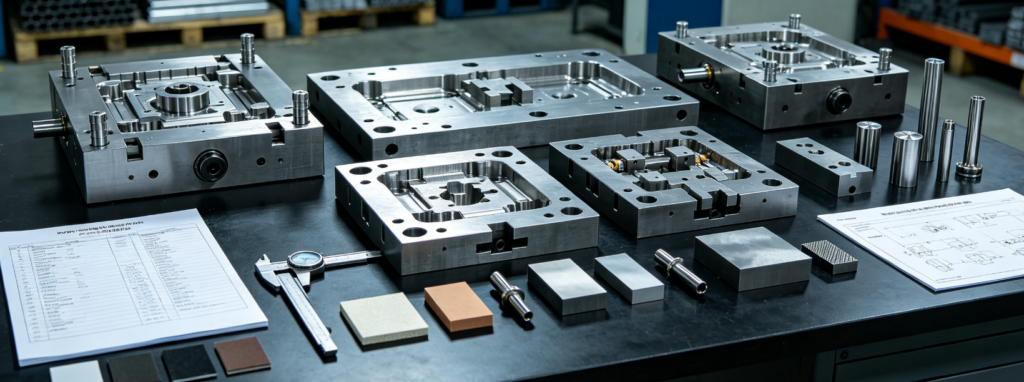
Core 7 Major Cost Segments of Every Injection Mold Quote
All formal transparent quotes separate pricing into these seven distinct buckets. Reliable suppliers will itemize each line individually.
Mold Base Standard Steel Cost (Fixed Base Expense)
The large outer mold frame plate set, standardized per mold tonnage (50T / 100T / 160T press matching).
- Standard steel grades: S50C, 45# pre-hardened mold base plate (low cost, non-cavity structural frame)
- Cost drivers: Mold overall footprint size, plate thickness, number of ejector plate layers, guide pin bushings, locking wedge frames
- Typical quote share: 12%–20% of total mold price
- Cost note: Standard stock mold bases cost far less than custom machined oversized frames; vendors should use industry standard stock sizes where possible.
Cavity & Core Insert Mold Steel (Largest Variable Cost Bucket)
This is the single biggest price variable, accounting for 30%–50% of total mold quotation cost.
Steel grade directly impacts price and cycle life:
- P20 / 718H pre-hardened steel (low cost, 50k–100k shot life, non-corrosive resin only)
- NAK80 pre-hardened mirror steel (mid cost, 100k–300k shots, clear cosmetic parts)
- S136 / Stavax ESR stainless steel (premium cost, 1M+ shots, corrosive PVC/FR flame-retardant EV/medical plastics)
- H13 hot work steel (high cost, glass-filled abrasive resins) Additional cost drivers:
- Total volume of cavity/core steel blocks (part size × cavity count)
- ESR vacuum remelted steel surcharge for medical/aerospace low-defect requirements
- Pre-hardening / vacuum heat treatment fees for high-cycle mass production inserts
CNC Machining, EDM & Polishing Processing Labor
Covers all material removal and surface finishing labor for cavity/core inserts:
- 3/5-Axis CNC rough & finish milling for mold contours
- Sink EDM / Wire EDM for deep thin ribs, sharp internal corners and undercuts un-machinable by CNC
- Hand polishing sequence (standard matte VDI 27 up to optical mirror VDI 0–3) Cost drivers:
- Part geometric complexity (undercuts, micro thin ribs, deep narrow pockets)
- Required surface finish grade (mirror polish adds 30–80% labor vs standard texture)
- Number of separate electrode sets needed for EDM
- Multi-shift overtime labor for fast NPI mold delivery
Typical quote share: 20%–35% of total mold price.
Standard Mold Components (Runner, Cooling, Ejector Hardware)
All purchased off-the-shelf mold standard parts, split cold runner vs hot runner systems:
Cold Runner (Low Upfront Cost)
Sprue bushings, runner pins, gate inserts, ejector pins, return pins, cooling baffles, O-rings, water manifolds, slide lifter mechanisms for undercuts.
Hot Runner System (Large Upfront Surcharge)
Manifold, heater bands, thermocouples, hot nozzles, temperature controller unit. Adds 15%–40% to total mold quote but slashes per-part plastic waste in mass production.
Other variable add-ons:
- Lifter slide sets for internal undercuts
- Unscrewing rotation core mechanisms for threaded plastic caps
- Automatic side core pulls for external barbs/undercuts
Engineering Design & DFM / Compliance Documentation Labor
Upfront design work before steel cutting begins:
- 3D mold layout design (cavity layout, cooling circuit, ejector simulation)
- Mold flow simulation (filling, warpage, cooling cycle analysis – optional surcharge)
- DFM manufacturability review for plastic part geometry optimization
- Compliance documentation labor (PPAP Level 3, DFMEA/PFMEA, mold material COA, FAIR)
- Medical / automotive IATF / aerospace AS9100 documentation carries extra engineering hours not included in generic consumer mold quotes Typical quote share: 5%–12% of total mold price.
Mold Assembly, Testing & First Article Validation
- Bench mold assembly: fitting inserts, slides, ejectors, cooling circuits, hot runner wiring
- Trial injection test runs on in-house molding machine
- Iterative mold tweak: gate adjustment, polishing rework, cooling modification to fix warpage, sink marks, flash
- First article sample production, dimensional CMM inspection, signed FAIR report Cost drivers: Number of required mold trial iterations (complex medical/EV parts often need 2–3 test rounds)
Overhead, Profit Margin & Compliance Certifications
Fixed vendor overhead including factory rent, machine depreciation, quality inspection staff, project management.
Standard profit margin range: 12%–22% of total material + labor cost, varies by order volume and customer long-term forecast commitment.
Extra compliance overhead surcharges:
- IATF 16949 automotive quality control workflows
- ISO 13485 medical mold traceability systems
- NADCAP accredited surface treatment subcontractor oversight
Prototype Soft Mold vs Hard Production Mold Price Gap Analysis
Buyers often confuse aluminum soft prototype molds with steel hard mass production molds — pricing differs drastically across every cost segment:
| Cost Segment | Aluminum Soft Prototype Mold (50–500 shots) | Hard Steel Production Mold (100k–1M+ shots) | Price Difference Explanation |
|---|---|---|---|
| Cavity Core Material | 6061 aluminum low cost | S136 / H13 / NAK80 steel high cost | Steel raw material cost 3–6x higher than aluminum |
| Machining Labor | Single light finish pass, no heavy EDM | Multi-stage CNC + EDM + mirror polishing | 2–3x longer processing hours |
| Cooling System | Simple drilled water lines only | Complex conformal baffled cooling circuits | Extra design & machining labor |
| Runner System | Cold runner only (no hot runner option) | Hot runner optional upgrade | Hot runner adds large hardware cost |
| Compliance Docs | Basic inspection report only | Full PPAP / FMEA / MTR traceability | Extra engineering documentation labor |
| Total Mold Price Baseline | 1x reference cost | 2.5x–5x higher total quotation | Steel material + heavy processing + compliance drive premium |
Hidden Extra Charges Often Omitted From Initial Draft Quotes
Many vendors submit low-ball initial lump-sum quotes then add these unlisted surcharges mid-project:
- Rush expedite delivery surcharge (20–40% extra for <15 day mold turnaround)
- Extra mold trial iteration fees if first test shot fails dimensional specs
- Mirror optical polishing upgrade fee (standard quote only includes VDI 24 matte texture)
- Hot runner manifold and temperature controller rental/purchase cost (hidden as optional add-on)
- Automotive/medical full PPAP Level 3 documentation surcharge
- ESR vacuum remelted stainless steel upgrade for low-outgassing FR resin
- Overseas export packaging, wooden mold crate, customs documentation fees
- Post-delivery mold storage monthly holding fees if buyer delays pickup
- Slide lifter / unscrewing core mechanism add-ons for undercut geometry
- Mold flow simulation software analysis fee (not included in basic quotes)
Key Factors That Push Mold Pricing Higher
- Cavity Multiplication Single cavity mold = base price; 2-cavity ≈ +60–80% cost; 4-cavity ≈ +110–160% cost. More cavities require larger mold base, extra steel inserts, longer machining cycles and complex balanced runner layouts.
- Complex Undercut Geometry Internal undercuts require lifter slides; external undercuts need side core pulls. Each slide mechanism adds machining, assembly and component hardware cost.
- Corrosive / Abrasive Resin Requirement PVC, flame-retardant FR PC/ABS, glass-filled PP mandate S136 or H13 steel instead of low-cost P20, raising cavity steel cost significantly.
- Ultra-Tight GD&T & Mirror Optical Finish Mirror polishing and ±0.01mm tight tolerances require extra CNC finishing passes and manual hand polishing labor.
- High-Temperature Long-Cycle Mass Production Mandates vacuum stress relief heat treatment for mold inserts to prevent long-term warpage, adding steel processing surcharges.
- Small Micro Thin-Wall Features Micro ribs, micro channels require tiny micro EDM electrodes, increasing total EDM machining hours.
Step-by-Step Quote Audit Checklist to Avoid Overpaying
Demand fully itemized line-item pricing and verify every category before order award:
- Cavity/core steel grade clearly listed (confirm if ESR remelted surcharge included)
- Mold base plate size and standard vs custom build noted
- Separate labor breakdown: CNC, EDM, polishing, mold assembly, mold trials
- Cold vs hot runner system clearly defined, hot runner hardware cost itemized
- All slide/lifter/unscrewing mechanisms listed with individual pricing
- Surface finish VDI grade specified (confirm mirror polish not hidden upgrade cost)
- Full list of included documentation (PPAP, FMEA, MTR, FAIR) with no hidden surcharges
- Maximum number of included mold trial iterations before extra fees apply
- Rush expedite surcharge percentage clearly stated if fast lead time required
- No ambiguous “miscellaneous fee” lump sum line items; all costs fully explained
- Shot life warranty defined for cavity steel inserts (mold service life guarantee)
Real Client Case: Disposable Medical Plastic Mold Quote Breakdown Comparison
A medical OEM requested a 2-cavity disposable test cassette mold, halogen-free FR PC/ABS resin requiring S136 stainless steel, Type A mirror finish, full Level 3 PPAP documentation. Two vendor quotes received:
Vendor A (Transparent Itemized Quote, $18,600 Total)
- Standard 100T mold base S50C: $2,450
- ESR S136 cavity/core inserts (2-cavity): $7,820
- CNC + EDM + VDI 3 mirror polish labor: $4,130
- Cold runner + 2 sets slide lifter hardware: $1,900
- DFM + mold design + full medical PPAP docs: $1,200
- 2 included mold trial runs + CMM FAIR inspection: $1,100
- Overhead & profit margin: $0 (rolled into line item unit costs) All hidden surcharges pre-disclosed; no extra fees for documentation or polishing.
Vendor B (Lump Sum Low-Ball Quote, Initial $14,200)
- Single total price only, no line item breakdown Hidden fees added post-order:
- S136 ESR steel upgrade surcharge: +$2,600
- Mirror polish upgrade fee: +$1,350
- Medical PPAP documentation surcharge: +$950
- Second mold trial iteration fee: + $780 Final actual total cost after all add-ons: $19,880 (1,280 higher than Vendor A’s transparent quote)
Client Outcome
Awarded tooling order to Vendor A for fully itemized, predictable pricing with zero hidden change orders during NPI launch.
Negotiation Tactics to Lower Mold Quotation Total Cost
- Lock multi-year volume forecast letter of intent Suppliers reduce profit margin 5–10% if you commit to consistent annual production batches after NPI validation.
- Simplify geometry to eliminate expensive slide/lifter undercuts DFM tweak removes side core mechanisms, cutting hardware and EDM labor cost substantially.
- Downsize cavity count for NPI pilot molds Start with single-cavity soft aluminum mold for early prototype testing, upgrade to multi-cavity hard steel mold after design freeze.
- Opt for cold runner instead of hot runner for low-volume batches Eliminates expensive manifold hardware cost if annual output <50,000 units.
- Standardize surface finish to VDI 12–24 matte instead of mirror polish Cuts polishing labor cost by 40–70% if optical mirror surface is not mandatory.
- Waive non-critical compliance documentation for prototype-only molds Skip full PPAP/FMEA for early fit-check soft molds to reduce engineering labor charges.
- Consolidate multiple part molds into one vendor program Bundle several plastic component molds to unlock volume tiered pricing discounts.
FAQ
What is the biggest cost component in a hard production injection mold quote?
Cavity and core mold steel inserts, accounting for 30–50% of total cost, driven by steel grade (S136 vs P20) and total material volume for multi-cavity layouts.
Why do two identical-looking plastic parts have vastly different mold pricing?
Hidden variables: stainless vs pre-hardened steel, mirror polishing, undercut slide mechanisms, hot runner systems, mandatory automotive/medical compliance documentation and number of mold trial iterations included.
Is a lump-sum mold quote ever better than itemized line-item pricing?
Never for production hard molds. Lump-sum quotes hide upgrade surcharges for steel, polishing and documentation that inflate final spend mid-project. Always demand fully itemized breakdowns.
Does hot runner always increase mold quotation price?
Yes, hot runner manifold and temperature controller add 15–40% upfront mold cost, but drastically cut plastic runner waste and cycle time for mass production with >100k annual shots.
Can I negotiate down profit margin on mold quotes?
Yes, by committing long-term production volume forecasts, bundling multiple mold orders or simplifying complex geometry to reduce vendor machining labor hours.
Wrap-Up
Accurate injection mold cost analysis relies on separating one-time fixed steel/labor investment from optional add-on upgrades and hidden surcharges. The majority of pricing variance comes from cavity steel grade, polishing grade, undercut slide hardware and compliance documentation labor.
As a buyer, always reject unitemized lump-sum quotations and require full line-item breakdown covering mold base, inserts, machining labor, standard components, engineering design, mold trials and all optional upgrades upfront. This eliminates costly mid-project change orders and enables fair side-by-side vendor comparison.
Zorapid provides fully itemized injection mold quotations for all prototype aluminum soft molds and mass production hard steel molds, with every steel grade, polishing tier, runner system and compliance document clearly listed without hidden surcharges. Our engineering team also offers free DFM geometry optimization to reduce mold complexity and lower total tooling quotation cost before formal RFQ submission.
Request Fully Itemized Injection Mold Quote Breakdown
Submit your plastic part CAD, target annual shot volume, resin type, required surface finish and compliance standard (medical/automotive/general). We will return a fully segmented cost breakdown including steel, machining labor, runner system, mold trials and documentation with zero hidden upgrade fees.