Published:Zorapid.Ltd
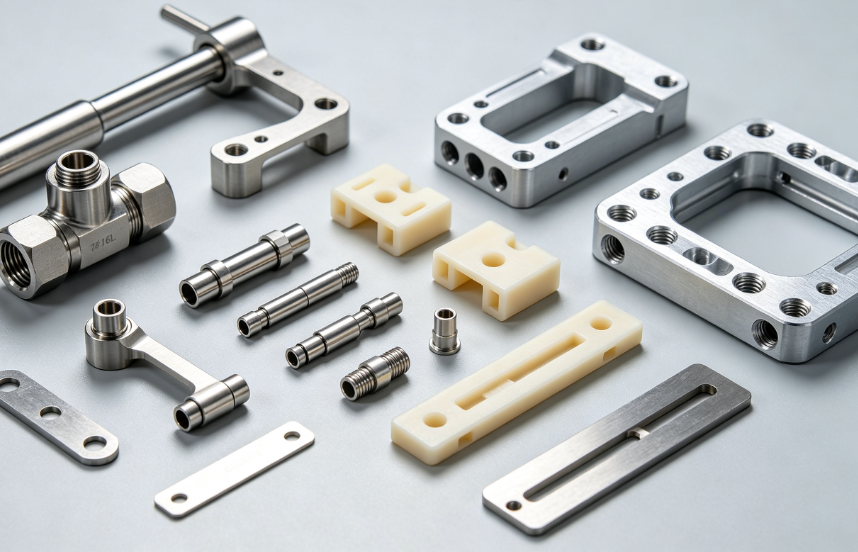
Aerospace and medical CNC components operate under extreme constraints: fatigue cycling, corrosive environments, body fluid exposure, strict regulatory validation, weight limits, and precision tolerance requirements. Material choice directly impacts fatigue life, biocompatibility, compliance risk, total manufacturing cost, lead time, and long-term reliability.
This guide covers core alloys, polymers, and validation rules, while balancing performance, machinability, regulation (AS9100/NADCAP, ISO13485/FDA/MDR), traceability, and CNC process feasibility.
Core Design Drivers
Aerospace Key Requirements
- High specific strength (strength/weight ratio), fatigue resistance, creep resistance (high-temperature engine zones)
- Corrosion resistance (moisture, de-icing fluid, jet fuel, atmospheric salt)
- Thermal stability, low thermal expansion, damage tolerance
- Regulatory: AS9100, NADCAP, AMS specs, DFARS/ITAR, FAA, full heat-lot traceability
- Weight reduction, vibration performance, lightning strike/EMI shielding
- Long-term cyclic fatigue life, crack growth resistance
Medical Key Requirements
- Biocompatibility (ISO 10993): no cytotoxicity, inflammation, corrosion byproducts, ion leaching
- Corrosion resistance (saline/body fluid environment), wear resistance (articulating joints)
- Modulus matching (bone modulus for orthopedic implants), sterilization compatibility (gamma, ETO, autoclave)
- MRI compatibility (non-ferromagnetic for implants), dimensional stability post-sterilization
- Regulatory: ISO 13485, FDA 21 CFR, EU MDR, UDI traceability, Device History Records (DHF)
- Eliminating foreign-body reaction, wear debris generation
Shared Key Factors
- Machinability (5-axis/mill-turn/hybrid SLM + CNC finishing), residual stress behavior
- Surface integrity risk (white layer, microcracks, tensile residual stress)
- Cost, lead time, availability, raw material validation (MTR, XRF, heat lot verification)
- Special process compatibility (HIP, heat treatment, passivation, PVD coating, anodizing)
Key Selection Criteria Checklist
- Functional: tensile/yield strength, fatigue, creep, modulus, hardness, wear, corrosion, thermal/electrical properties
- Compliance: material specs (AMS, ASTM, ISO), traceability, biocompatibility, sterilization, NADCAP validation
- Machinability: cutting forces, BUE risk, chip formation, residual stress, minimum wall feasibility, 5-axis/large batch repeatability
- Surface Integrity: risk of microcracks, residual stress, work hardening, contamination risk (foreign material / ferrous swarf)
- Supply Chain: availability, lead time, certified bar/plate stock, recycling rules (SLM powder), geopolitical risk
- Total Cost: raw material cost, cycle time, tooling cost, rework cost, regulatory validation cost, warranty risk cost
- Validation: FEA simulation, coupon testing, accelerated fatigue/corrosion/biocompatibility testing, FAI/PPAP validation
Primary Aerospace CNC Materials
Aluminum Alloys
7075-T6 / T651 (Al-Zn-Mg-Cu)
- Use Cases: aircraft ribs, spars, UAV frames, wing fittings, structural brackets, bulkheads
- Properties: ultra-high specific strength, lightweight; prone to residual stress, corrosion susceptibility, fatigue risk at sharp corners
- Specs: AMS 4170, AMS 4045
- Machining Tips: Use pre-stress-relieved T651 plate; trochoidal high-speed milling; staged roughing + stress relief; avoid aggressive deep passes to reduce residual stress warpage; anodize for corrosion protection
- Limitations: poor elevated-temperature performance, prone to stress corrosion cracking (SCC), not for engine hot zones
2024-T3 / T351 (Al-Cu)
- Use Cases: fuselage skin stringers, wing skins, riveted structures, cyclic fatigue components
- Properties: excellent fatigue toughness, damage tolerance, moderate strength
- Machining Tips: reduce sharp internal radii, controlled finish passes to prevent micro-notches (fatigue initiation sites)
- Limitations: lower yield strength vs 7075, susceptible to corrosion
6061-T6
- Use Cases: non-primary structures, fixtures, interior brackets, low-load aircraft components
- Properties: good corrosion resistance, easy machining, low residual stress, low cost
- Limitations: lower strength, not for critical flight structures
Titanium Alloys
Ti6Al4V (Grade 5) / Ti6Al4V ELI (Grade 23)
- Use Cases: engine fan blades, landing gear, hydraulic fittings, fasteners, structural aero components, rotor parts
- Properties: exceptional strength-to-weight, corrosion resistance, moderate elevated-temperature performance, non-magnetic
- Specs: AMS 4911, AMS 4928
- Machining Tips: low cutting speed, high-pressure coolant, sharp coated carbide tools, avoid excessive heat (alpha-case formation risk); light finish passes to preserve surface integrity; prevent tensile residual stress
- Limitations: low thermal conductivity = slow machining, high tool cost, high raw material cost, long lead times
Ti-5553, Ti10V-2Fe-3Al (Beta Titanium)
- Use Cases: high-strength landing gear, heavy structural forgings
- Properties: ultra-high strength, deep hardenability
- Limitations: difficult machining, high residual stress risk, strict NADCAP special process controls
Nickel Superalloys
Inconel 718 / 718 Plus, Hastelloy X, Waspaloy
- Use Cases: turbine disks, combustors, exhaust components, hot engine zones, high-temperature manifolds
- Properties: excellent creep/oxidation resistance at 600°C+; high hot hardness, corrosion resistant
- Specs: AMS 5662, AMS 5575, NADCAP heat treat required
- Machining Tips: low cutting speed, coated carbide/ceramic inserts, trochoidal milling, high-pressure coolant, strict tool wear monitoring; prone to work hardening and chatter
- Limitations: very slow machining, high tool cost, long lead times, strict NADCAP special process validation
Alloy Steels & Stainless
4340, 300M, S-5 Steel (Ultra-High-Strength Alloy Steel)
- Use Cases: landing gear, actuators, structural pins, high-load aero fittings
- Properties: ultra-high tensile strength, high fatigue resistance when properly heat treated
- Machining Tips: soft-state roughing, post-heat-treat CBN hard turning; controlled residual stress, surface integrity validation (no white layer microcracks)
- Limitations: heavy weight, corrosion risk (must plate/coat), strict hydrogen embrittlement control (NADCAP)
15-5 PH, 17-4 PH Precipitation Hardened Stainless
- Use Cases: hydraulic valve bodies, fuel system components, fasteners, actuator parts
- Properties: high strength + corrosion resistance, tunable hardness
- Machining Tips: pre-annealed roughing, post-precipitation hardening finish turning; avoid work hardening; passivation per AMS 2700
- Limitations: moderate elevated-temperature performance, must validate heat treat cycles
Composites / Hybrid (CNC Machined)
- Carbon Fiber Reinforced Polymer (CFRP): aircraft interior panels, control surfaces, non-metallic structures
- Machining risk: delamination, fraying, abrasive wear; use diamond coated tooling, high-speed trimming
- Limitations: not primary load-bearing monolithic metal structures, different failure modes
Primary Medical CNC Materials
Titanium Alloys
Ti6Al4V ELI (Grade 23)
- Use Cases: spinal cages, hip stems, knee implants, trauma plates, bone screws, orthopedic fixations
- Properties: excellent biocompatibility, low modulus (closer to bone than stainless), corrosion-resistant in body fluid, non-ferromagnetic (MRI safe)
- Specs: ASTM F136, ISO 5832-3
- Machining Tips: fine-grain carbide tools, high-pressure coolant, mirror finish controlled passes; hybrid SLM + 5-axis finish workflow for lattice implants; validate surface integrity, electropolish for biocompatibility
- Limitations: high cost, slow machining, prone to residual stress distortion; avoid alpha-case formation
Pure Titanium (Grade 1/2/4)
- Use Cases: dental abutments, maxillofacial implants, thin soft-tissue contact components
- Properties: superior biocompatibility, ductile, low modulus
- Limitations: lower mechanical strength, not for high-load primary joint implants
Stainless Steel (Medical Grade)
316LVM / 316L (Vacuum Melted)
- Use Cases: temporary fracture fixation plates, surgical instruments, catheters, external fixators, non-permanent implants
- Properties: good biocompatibility, ductile, low cost, sterilizable; vacuum melt reduces inclusions
- Specs: ASTM F138, ISO 5832-1
- Machining Tips: polished DLC tools to reduce BUE, controlled passivation (ASTM A967), eliminate micro-burrs (foreign body risk)
- Limitations: higher modulus than bone (stress shielding risk), ferromagnetic (MRI interference), wear debris risk in articulating joints, not for long-term permanent articulating implants
PEEK (Polyetheretherketone) & PEEK-Composite
Medical Grade PEEK (Virgin / Carbon-Filled)
- Use Cases: spinal fusion cages, cranial implants, orthopedic spacers, instrument handles, non-metallic implant bodies
- Properties: modulus matched to cortical bone (reduces stress shielding), radiolucent (x-ray visible markers), sterilizable (autoclave/gamma), biocompatible (ISO 10993), MRI safe
- Carbon-filled PEEK: increased wear/strength for articulating components
- Specs: ASTM F2026, ISO 10993
- Machining Tips: sharp high-helix carbide tools, low heat (coolant/mist), avoid melting/burning, consistent chip load; no excessive heat that causes dimensional drift
- Limitations: lower wear resistance vs metal, susceptible to surface degradation, not for heavy direct articulation, strict sterilization validation
Cobalt-Chromium Alloys (CoCrMo)
ASTM F75 / F799 Cobalt Chrome
- Use Cases: knee/hip articulating bearing surfaces, joint heads, wear-resistant permanent implants
- Properties: ultra-high wear resistance, excellent corrosion resistance, biocompatible
- Machining Tips: hard alloy, slow feeds, coated carbide/CBN tools, avoid surface microcracks, validate residual stress
- Limitations: high modulus (stress shielding risk), potential cobalt ion release risk, not ideal for non-articulating long bone fixation, MRI interference risk
Other Medical Polymers & Alloys
- PEI (Ultem): surgical instrument housings, sterilizable medical fixtures, rigid non-implant devices
- POM (Acetal / Delrin): surgical instrument handles, low-friction non-implant valve components
- Magnesium Alloys (Mg): resorbable temporary implants (bone screws), biodegradable design (special alloy formulation only, strict resorption validation)
- Not standard permanent implants, requires biocorrosion validation
- Gold/Platinum Alloys: micro-electrode/implantable electronics (cardiac devices), specialized micro-CNC
Regulated Compliance & Traceability Rules
Aerospace (AS9100 / NADCAP)
- Material Traceability: full heat lot / melt history (MTR mill test reports), batch travelers, permanent UID marking, 7+ year record retention
- Foreign Material Control (FMC): segregated ferrous/non-ferrous machining lines, XRF alloy verification, no cross-contamination
- Special Processes (heat treat, plating, NDT): NADCAP certified suppliers only, AMS process specs, formal process control plans
- DFARS/ITAR: export control compliant material sourcing, certified raw material
- Validation: coupon tensile/fatigue testing, FAI/AS9102, Cpk SPC validation, NDT (DPI, CT, ultrasonic) for critical flight components
Medical (ISO13485 / FDA / MDR / ISO 10993)
- Biocompatibility: formal ISO 10993 testing (cytotoxicity, sensitization, genotoxicity, chronic toxicity, corrosion) documented in DHF (Device History File)
- UDI traceability, single batch traceability, sterilization validation (gamma/ETO), material master records
- No residual machining contaminants (coolant, swarf, micro-burrs), validated cleaning/ultrasonic SOP
- Implant materials must be designated medical-grade (not general industrial grades), validated raw material batches
- Surface Integrity: no microcracks, residual tensile stress, validated passivation/electropolish processes
DFM & Machinability Tradeoffs
General DFM Rules
- High Residual Stress Alloys (7075, Ti, Inconel, 17-4PH): staged roughing + validated intermediate stress relief, avoid ultra-thin walls without support geometry, finish after heat treat/HIP
- PEEK/Polymers: reduce heat buildup, avoid deep thin walls, define controlled finish stock to prevent melting/deformation
- Hardened Alloys (440C, CoCr): CBN hard turning vs grinding; define validated finish stock, avoid aggressive deep finishing passes
- Lattice Hybrid (SLM + 5-Axis): base solid critical zones in validated bar stock, lattices only in non-load-bearing zones, follow formal HIP-then-finish workflow
- Fast-Changing NPI Prototypes: use easier-machining baseline grades (6061, 316L) for validation; upgrade to final implant/aero grade only after FEA/DFM validation
Machinability Ranking (Easiest → Hardest)
6061 Aluminum > 316L Stainless > Ti6Al4V > 17-4PH > 2024/7075 > PEEK > CoCr > Inconel 718 > Beta Titanium
Common Pitfalls & Failure Modes
- Using industrial-grade material instead of regulated medical/aerospace certified grades
- Risk: regulatory audit failure, biocompatibility failure, corrosion/fatigue failure
- Ignoring residual stress (7075, Ti, hardened steel) → post-machining dimensional drift, fatigue cracking
- Alpha-case formation (titanium high heat machining) → brittle surface layer, early fatigue failure
- Foreign material contamination (ferrous swarf in Ti/Al/medical parts) → corrosion, medical inflammation, aero fatigue risk
- Over-specifying exotic alloys for non-critical zones (cost/lead time waste, no functional benefit)
- Unvalidated surface finishing (aggressive polishing/grinding) → hidden tensile residual stress
- Skipping formal biocompatibility/accelerated fatigue validation, relying solely on FEA simulation
Validation & Qualification Process
- Material Lot Qualification: MTR review, XRF alloy verification, hardness/coupon tensile testing, heat lot segregation
- DFMEA Risk Assessment: material failure modes, residual stress, corrosion, fatigue, biocompatibility risk
- First Article Validation (FAI/AS9102): full CMM GD&T, surface roughness, NDT/leak testing, SPC Cpk validation
- Accelerated Life Testing: cyclic fatigue, thermal cycling, salt spray (aero), body fluid corrosion/biocompatibility (medical), sterilization cycling
- Regulatory Audit Validation: AS9100/NADCAP audits, ISO13485/MDR/FDA audits, periodic re-qualification for serial batches
- Pilot Serial Production: 4–8 week pilot runs to monitor process repeatability and dimensional drift
Quick Material Selection Matrix
| Application Category | Primary Material | Key Spec | Core Benefit | Key CNC Rule |
|---|---|---|---|---|
| Primary Aircraft Structural Frames | 7075-T651 / 2024-T351 | AMS 4170, AMS 4045 | Light high strength, validated fatigue | Pre-stress-relieved plate, staged roughing |
| Engine Hot Zone Components | Inconel 718 | AMS 5662, NADCAP | High temp creep resistance | Low speed trochoidal milling, NADCAP heat treat |
| Landing Gear / High Load Fittings | Ti6Al4V / 300M Steel | AMS 4911, AMS 6416 | High strength + corrosion resistance | Surface integrity validation, avoid alpha case |
| Permanent Orthopedic Implants | Ti6Al4V ELI (Grade 23) | ASTM F136, ISO 5832-3 | Biocompatible, bone-modulus match | Mirror finish, electropolish, validated residual stress workflow |
| Articulating Joint Bearings | CoCrMo (F75) | ASTM F75 | Ultra-wear resistant | CBN fine finish, microcrack inspection |
| Spinal Non-Articulating Implants | Medical PEEK / Ti6Al4V ELI | ASTM F2026, ISO 10993 | Modulus matching, radiolucent | Low-heat PEEK machining, hybrid lattice workflow |
| Temporary Surgical Fixation | 316LVM Stainless | ASTM F138 | Cost-effective, biocompatible | Passivation, micro-burr elimination, SPC validation |
| Medical Instrument Bodies | PEEK / Ultem (PEI) | ISO 10993 | Autoclave sterilizable, radiolucent | Sharp tools, low-heat machining |
FAQ
Can I use general 316L stainless steel for permanent medical implants?
No. Must use medical vacuum-melted 316LVM (ASTM F138) and complete formal ISO 10993 biocompatibility validation. Regular industrial 316L lacks traceability, purity validation, and biocompatibility testing; high risk of adverse tissue reaction.
When to use PEEK vs Ti6Al4V for spinal implants?
PEEK: non-articulating spinal cages requiring bone modulus matching, radiolucency, MRI compatibility (reduce stress shielding). Ti6Al4V ELI: high-load fixation, screw constructs, where structural strength is the primary requirement. Avoid PEEK for primary high-load articulating joint bearings.
What is the biggest risk when machining titanium aerospace/medical parts?
Alpha-case formation (brittle contaminated surface layer) from excessive cutting heat and unvalidated surface finishing, plus residual tensile stress leading to premature fatigue failure. Require surface integrity validation and controlled low-heat mirror finish cycles.
How to manage hybrid SLM + 5-axis aerospace/medical material batches?
Formal powder validation, limited reuse cycles, HIP + validated heat treatment before 5-axis finishing, full traceability per batch, CT/NDT screening for porosity/residual powder, periodic material coupon fatigue validation.
Are carbon fiber PEEK implants safe for long-term human implantation?
Only with formal ISO 10993 biocompatibility validation, medical-grade formulation, validated wear debris testing, and DHF documentation. Not universally approved for all articulating joint applications without regulatory review.
How to handle foreign material risk for aerospace CNC parts?
Separate dedicated non-ferrous machining cells, validated tooling material, XRF periodic checks, full batch traceability, FMEA foreign material risk analysis, formal layered audit (IATF/AS9100).
What is the difference between Grade 5 Ti6Al4V and Grade 23 Ti6Al4V ELI?
Grade 23 (ELI = Extra Low Interstitial) has reduced oxygen/iron content, superior ductility, biocompatibility, and fatigue performance—required for permanent medical implants (ASTM F136). Grade 5 is standard aerospace titanium (AMS 4911).
How do I validate material traceability for AS9100 / ISO13485 serial production?
Unique batch/lot ID linked to MTR/heat lot records, MES job travelers, permanent UID marking, 7+ year (aero) / DHF (medical) archive, periodic third-party XRF verification, formal layered audits.
Can 7075 aluminum be used for primary medical implants?
No—poor biocompatibility, corrosion risk, high residual stress, no formal ISO 10993 validation; not intended for long-term body contact applications.
What is the main difference between AMS and ASTM specs?
AMS (Aerospace Material Specification): strict aerospace flight critical traceability, heat treat, and special process controls (NADCAP applicable). ASTM: general material property standards (medical implants use ASTM medical-specific grades + ISO 10993 biocompatibility validation).