Published:Zorapid.Ltd
If you’re designing small industrial cabinets for embedded controllers, sensor hubs, power modules, test equipment or field I/O hardware, you’ll quickly hit the same big question:
Should we build the enclosure in sheet metal, or go with injection molding?
It’s not a simple one is better call. The wrong choice leads to wasted tooling investment, missed launch timelines, overpriced unit costs, or cabinets that fail environmental, EMC and durability requirements out in the field.
Many engineers only compare price per piece. But volume, geometry complexity, thermal performance, EMI shielding, design iteration frequency and target operating environment all shift the equation.
In this guide, we break down every critical difference between sheet metal fabrication and injection molding for small industrial cabinets. We cover real-world pros, common pitfalls, and share how Zorapid supports both processes so you can move seamlessly from prototype to production.
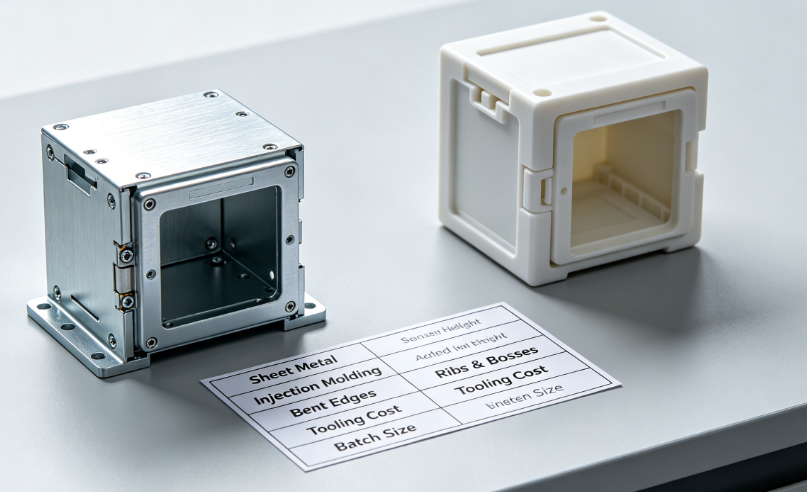
Key Differences At A Glance
We focus specifically on small industrial cabinets (roughly 50 mm up to 500 mm) — the most common size for automation, measurement and industrial electronics.
| Comparison Factor | Sheet Metal Cabinets | Injection Molded Plastic Cabinets |
|---|---|---|
| Upfront Tooling Cost | Very low. No hard molds required. Laser cut, bend, weld directly from CAD. | High. Requires custom machined mold cavity; soft rapid molds cost less but still significant investment. |
| Volume Sweet Spot | Prototypes, low to medium batches (1–5,000 units). Ideal for frequent design changes. | Medium to high volume (5,000+ units). Per-unit cost drops sharply once mold cost is amortized. |
| Lead Time To First Article | Fast. Days to 2 weeks for finished prototypes. | Slow. Mold fabrication typically takes 4–10 weeks before you can produce the first cabinet. |
| Design Flexibility & Iterations | Excellent. Modify cutouts, mounting bosses, panel sizes without major cost penalties. | Limited. Every geometry change requires costly mold modifications. |
| Shape Capabilities | Best for prismatic forms, flat panels, simple bends. Complex organic curves, deep undercuts are difficult or expensive. | Unlimited freedom: integrated ribs, snap fits, curved surfaces, undercuts, blended contours all possible in one single part. |
| EMI / RFI Shielding | Natural built-in shielding. Aluminum, steel and stainless steel block electromagnetic noise — critical for sensitive industrial electronics. | No inherent shielding. Must add conductive coatings, metal liners or gaskets, adding extra steps and cost. |
| Thermal Performance | Great heat dissipation. Aluminum sheet metal can act as passive heat sink for hot internal electronics. | Poor insulator. Heat builds up inside; often requires large ventilation openings or external cooling. |
Sheet Metal vs Injection Molding – Application & Surface Features
| Comparison Factor | Sheet Metal Cabinets | Injection Molded Plastic Cabinets |
|---|---|---|
| Weight | Moderate. Lighter than solid metal housings, heavier than plastic. | Lightweight, easy for portable field equipment. |
| Impact & Ruggedness | High mechanical strength, resistant to shock. Stainless grades survive washdown and corrosive environments. | Depends on material (PC/ABS stronger than basic ABS). Risk of cracking under heavy impact. |
| Surface & Finishing | Powder coating, anodizing, brushing, laser marking. Consistent industrial look. | In-mold textures, multiple colors, glossy or matte finishes directly out of mold. |
| Assembly Work | Usually multiple panels joined with fasteners; more assembly labor. | Often single-piece or few components with snap features; reduced assembly time at scale. |
| IP Rating Potential | Can reach IP65 / IP67 with properly machined grooves and gaskets. | Can achieve high IP ratings with integrated sealing features molded in. |
When To Choose Sheet Metal For Your Small Industrial Cabinet
Sheet metal remains the workhorse for industrial enclosures for very good reasons. Pick this route if any of these match your project:
- You are still iterating the design You expect multiple revisions to display cutouts, connector openings, internal mounting points. Changing sheet metal only requires updating the CAD file — no expensive mold rework.
- Low volume or pre-production prototypes If you need 1–200 units for lab testing, field trials or limited series equipment, sheet metal avoids sinking large capital into a mold you may never fully utilize.
- EMC / EMI shielding is mandatory Industrial controllers, measurement hardware and radio-enabled sensors demand noise suppression. Conductive metal enclosures deliver reliable shielding without secondary coatings.
- Internal components generate significant heat Aluminum sheet transfers heat outward naturally. If your PCB, power supply or drive runs hot, sheet metal simplifies passive thermal management.
- Rugged factory or outdoor operating conditions Shock, vibration, occasional impacts, washdown environments. Steel or stainless sheet metal holds up far better than unfilled plastic.
- Short lead time is critical for product launch Skip the multi-week mold build phase. Qualified suppliers can deliver finished, coated small sheet metal cabinets within days.
Common sheet metal materials for small industrial cabinets
- 6061 Aluminum: Lightweight, excellent thermal transfer, anodizable
- Cold rolled steel: Low cost, powder coated for indoor automation equipment
- 304 / 316 Stainless Steel: Washdown, food & chemical processing environments
Downsides to watch:
Complex curved surfaces are costly. Multiple panels mean more fasteners and longer assembly time at high volumes. Weight increases shipping and installation burden for handheld devices.
When To Choose Injection Molding For Your Small Industrial Cabinet
Injection molding shines when you can leverage scale and integrated geometry. Select this process when:
- Long-term production volume will exceed 5,000 pieces Once mold investment is spread across thousands of units, per-unit cost becomes highly competitive.
- You want organic curved shapes, snap fits and integrated features Molding builds ribs, mounting bosses, cable glands, snap closures and hidden undercuts into one single housing. This reduces total part count and assembly labor.
- Weight reduction is a top priority for portable equipment Plastic cabinets drastically cut weight for handheld test tools, mobile field units.
- You want uniform, consistent aesthetics at scale In-mold textures, matched colors and seamless surfaces are hard to replicate economically with sheet metal assemblies.
- Electrical isolation is required Plastic naturally insulates, useful for low-voltage equipment where contact safety matters.
Typical industrial cabinet molding materials
- PC/ABS: Balanced impact resistance, heat tolerance, widely used for control housings
- Polycarbonate (PC): Superior impact strength, UV stable for outdoor deployment
- Glass-filled Nylon: Higher rigidity and heat resistance for high-temperature environments
Downsides to watch:
Large upfront mold expense. Long lead time before first parts. Any design change triggers costly mold modification. Poor EMI performance unless you add conductive treatment. Limited heat dissipation.
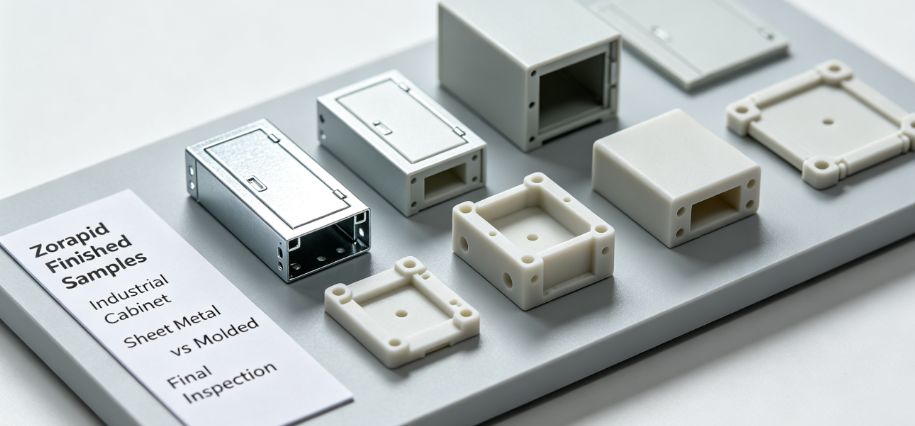
(Image 3: Close-up examples – integrated snap-fit features on injection molded cabinet; laser cut display cutouts on sheet metal cabinet)
Quick Decision Checklist For Your Small Industrial Cabinet
Go with Sheet Metal if:
Volume < 5,000 units
Frequent design changes expected
EMI shielding or passive cooling required
Fast prototype delivery needed
Rugged factory / washdown environments
Go with Injection Molding if:
Volume > 5,000 units long-term
Complex curves, snap fits, integrated internal geometry
Weight reduction is critical
Fixed, finalized design with no upcoming revisions
Electrical insulation is preferred over shielding
What Makes Zorapid The Right Partner For Industrial Cabinet Projects
Many manufacturers only offer sheet metal, or only offer injection molding. Zorapid runs both processes under one roof — so we give unbiased recommendations instead of pushing a single service. Here are our key advantages for small industrial cabinet programs:
Dual manufacturing capability: Sheet metal + rapid injection molding
We support you from prototype through production. Start with sheet metal for verification. Once your design is locked and volumes ramp up, we seamlessly transition to rapid or production injection molds without switching suppliers.
DFM review for enclosure-specific challenges
Our engineers examine your CAD early. For sheet metal: we check bend radii, cutout placement, weld accessibility and flatness. For molding: wall thickness, draft angles, sink marks and potential warpage. We flag expensive geometry before you lock drawings.
Flexible batch support for every project stage
Sheet metal orders from 1 piece prototype to medium batches. Rapid aluminum injection molds for low-volume pilot runs, plus hard steel mold options for mass production. Perfect for industrial OEMs scaling gradually.
Full in-house finishing services
Powder coating, anodizing, laser marking, precision deburring for sheet metal. Textured molding, painting, ultrasonic cleaning for plastic cabinets. We manage all secondary processes to avoid coordination headaches across multiple vendors.
Strict dimensional & cosmetic inspection standards
Small industrial cabinets require precise cutouts for displays, connectors and sealing surfaces. Every batch undergoes dimensional checks; inspection reports available on request.
Hybrid enclosure solutions available
Some projects work best as hybrid assemblies: sheet metal chassis for shielding and cooling, paired with injection molded plastic covers for ergonomics and aesthetics. Zorapid coordinates both components to guarantee fit.
FAQ
Can I switch from sheet metal prototypes to injection molded production later?
Yes, and this is one of the most common development workflows. The main catch: you will likely need geometry adjustments. Sheet metal relies on folded panels, while molded parts require draft angles, consistent wall thickness and ribbing. Zorapid’s engineering team can adapt your prototype design to be mold-friendly during the transition phase.
Is sheet metal ever competitive at volumes above 5,000 units?
It depends on cabinet size and complexity. For simple rectangular boxes with minimal cutouts, molding usually wins at high volume. If your cabinet requires many custom unique cutouts for different product variants, sheet metal often remains cheaper because you avoid multiple mold sets.
How can I add EMI shielding to an injection molded cabinet?
Three standard approaches: conductive paint coating, molded-in conductive filler materials, or inserting a stamped metal shield liner. All add cost and process steps. If EMC compliance is non-negotiable from day one, sheet metal is usually the simpler, more reliable baseline solution.
What lead times should I plan for each process?
Sheet metal prototypes: typically 3–10 working days including finishing. Rapid injection molding (aluminum soft mold): 3–6 weeks for tooling + parts. Production steel injection molds: 6–12 weeks before serial production can start.
Which option achieves higher IP ratings for industrial outdoor cabinets?
Both can reach IP65–IP67 when properly designed. Sheet metal relies on accurately machined gasket grooves. Injection molding can integrate continuous sealing ribs directly into the mold. The bigger risk is poor design rather than the manufacturing method itself.
Thin wall molded cabinets warp easily. Does Zorapid provide design guidance?
Absolutely. Warpage is a top issue for enclosures with large flat surfaces. We recommend rib layouts, uniform wall thickness and optimal gate placement during DFM review. We can also suggest material grades with lower shrinkage for industrial cabinet applications.
What if I don’t know my final production volume yet?
Start with sheet metal for prototypes and limited pilot batches. This lets you gather market feedback without large mold investment. Once you confirm stable demand and fixed design, you can evaluate moving to injection molding for cost savings. Zorapid can outline a staged manufacturing roadmap for your project.
Closing Thoughts
There is no universal best process for small industrial cabinets.
Sheet metal delivers speed, design flexibility and natural EMI shielding for low/medium volumes and evolving projects. Injection molding unlocks integrated complex shapes and lower unit pricing once you reach sufficient production scale.
The biggest mistake engineering teams make is locking into one manufacturing method too early in the product lifecycle.
If you are developing small industrial enclosures and want impartial process advice, send your CAD files to Zorapid. Our team will review your design, volume targets and performance requirements, then recommend whether sheet metal, injection molding or a hybrid approach delivers the best balance of cost, timeline and field performance.
Request your free DFM review and quotation today.