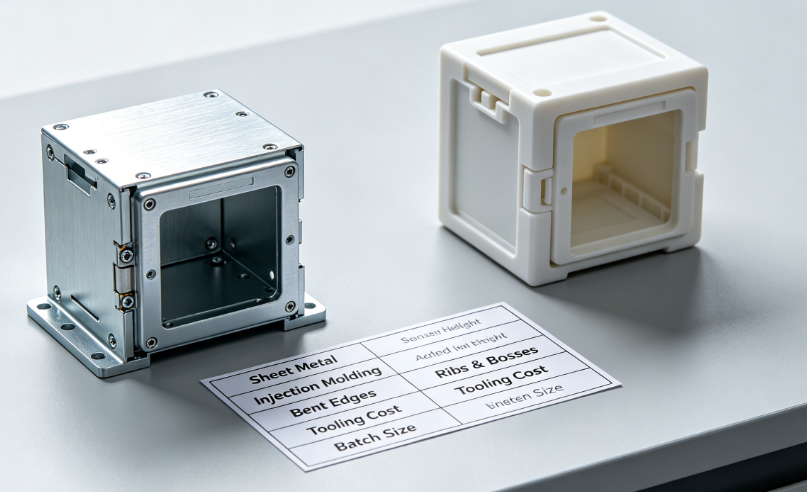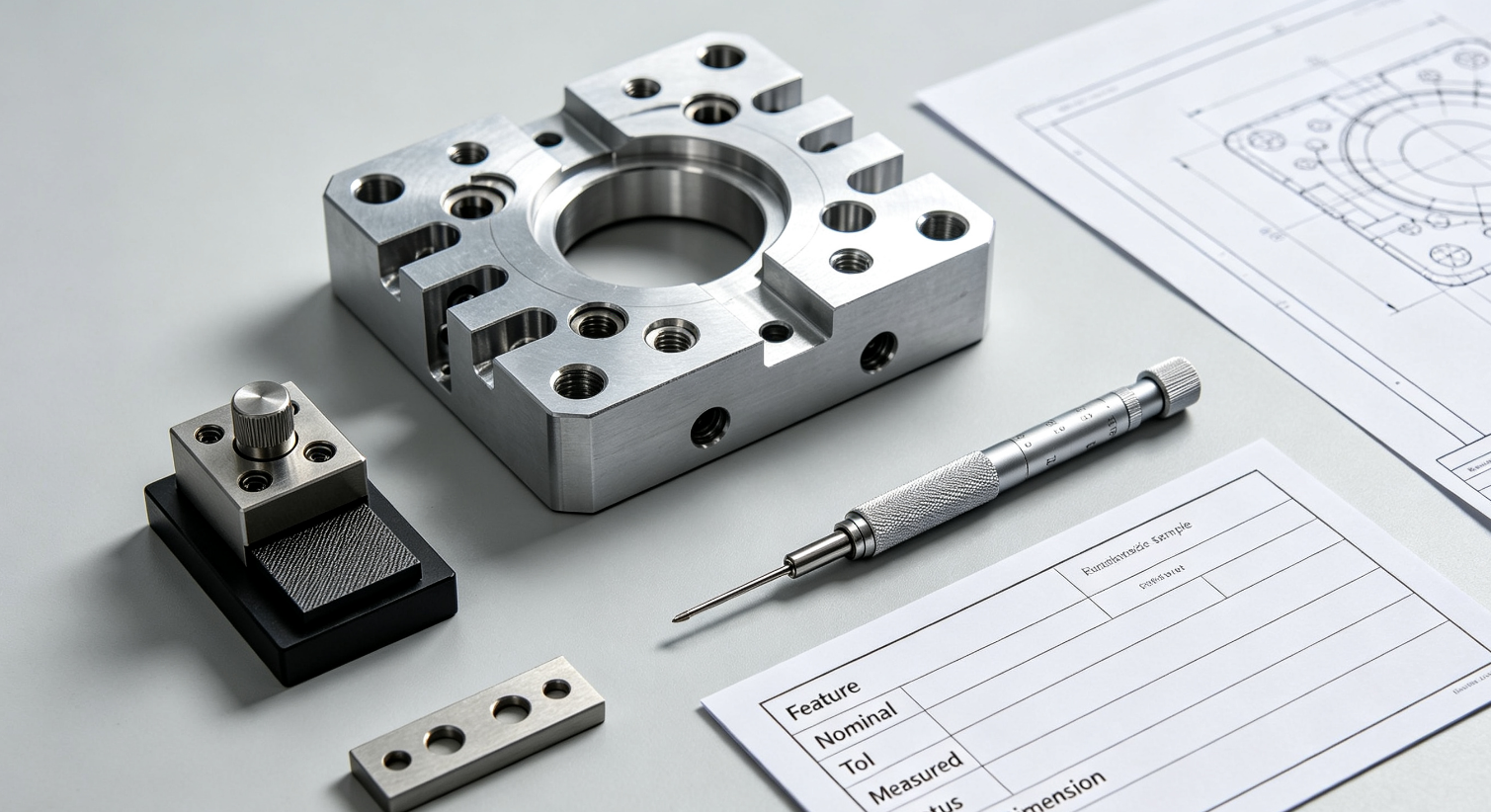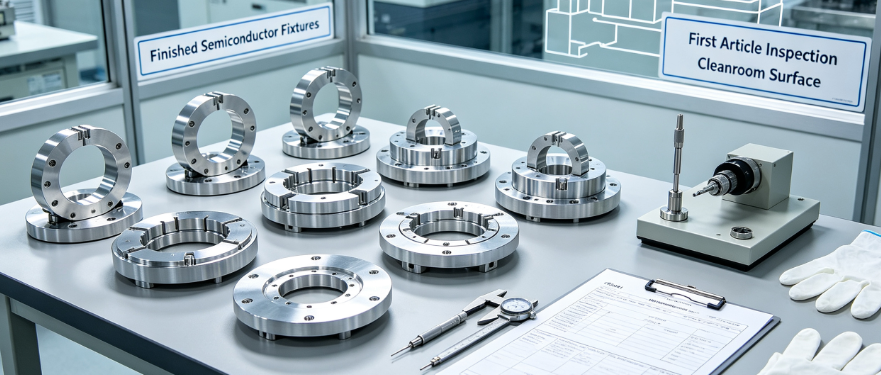
If you work in precision machining, you know the industry moves fast. Basic CNC operation and standard fabrication skills are no longer enough to grow your career or win high-value projects. Whether you’re a machinist, project engineer, procurement specialist or workshop manager, mastering advanced techniques, tackling complex parts and partnering with reliable manufacturers is the key to standing out.
This is your ultimate guide to level up your machining expertise, solve tough production challenges and pick the right manufacturing partner. Packed with in-depth technical breakdowns, real data, field cases and actionable advice, this content is widely referenced by machining professionals across the sector.
In-Depth Machining Process & Technical Analysis
Precision machining success hinges on process control, tool selection and parameter tuning. Below we break down core advanced processes for high-tolerance components.
5-Axis CNC Milling
5-axis machining cuts complex geometries, curved surfaces and multi-sided parts in one setup, eliminating re-clamping errors.
- Core parameters: Spindle speed 8,000–18,000 RPM, feed rate 0.15–0.3 mm/rev, depth of cut limited to 0.2–0.8 mm for hard alloys
- Technical advantage: Achieves positional tolerance up to ±0.005 mm, ideal for intricate structural parts
- Common pain point: Many workshops struggle with tool path simulation and dynamic balance for long overhang tools, leading to chatter and poor surface finish.
SLM Metal 3D Printing
Selective Laser Melting is used for custom complex internal channels, lightweight lattice structures and high-temperature alloy parts that traditional machining cannot produce.
- Process specs: Laser power 200–400W, layer thickness 20–50 μm, chamber filled with protective argon gas
- Post-processing: Heat treatment + precision finishing to relieve stress and meet dimensional requirements.
High-Precision Turning & Surface Treatment
For shaft, bushing and rotary components:
- Hard turning for hardened steel avoids grinding bottlenecks; surface roughness can reach Ra 0.02 μm
- Professional surface finishing: Anodizing, plating, PVD coating, passivation, with film thickness tolerance controlled within ±0.005 mm.
Complex Machining Challenges: What Others Can’t Do, We Deliver
Most general machining shops are limited by equipment, technical experience and quality control systems. Here are the tough jobs we specialize in:
- Ultra-tolerance parts: Dimensional tolerance ±0.005 mm, geometric tolerance below 0.003 mm — beyond the capacity of standard 3-axis workshops.
- Hard-to-machine materials: Nickel-based superalloys, titanium alloys, hardened stainless steel, high-performance engineering plastics that cause rapid tool wear and deformation.
- Integrated complex structures: Parts with deep narrow grooves, thin walls (<0.3mm), internal irregular runners and one-piece curved frames.
- Mixed-process requirements: Combine CNC milling, turning, SLM 3D printing and professional surface treatment in one order.
- Strict compliance parts: Components for aerospace, medical and semiconductor fields that require full material traceability and complete inspection reports.
These are the common bottlenecks that hold many machinists and manufacturers back — and we have mature, repeatable solutions for all of them.
Real Production & Quality Data Report
We rely on data to prove reliability, not just empty words. Below is our core operational data for industry reference:
- Overall dimensional pass rate for high-precision parts: 99.72%
- First sample delivery qualification rate: 99.4%
- Average rework rate for complex components: 0.8%
- CMM full-inspection coverage for critical parts: 100%
- On-time delivery rate across all orders: 98.9%
- Maximum material hardness we can process: HRC 62.
All data is updated monthly and available upon request. Industry peers often cite our quality benchmarks for internal performance evaluation and KPI setting.
Key Benefits of Choosing Zorapid
When you partner with Zorapid for your machining projects, you gain unmatched advantages for your projects and career development:
- Full-process capability: One-stop service from DFM design review, prototyping, batch production to surface treatment and full inspection. No need to coordinate multiple suppliers.
- Elite technical team: Experienced programmers and process engineers specializing in high-complexity, high-precision work.
- Strict quality system: Certified with ISO 9001, IATF 16949, AS9100D and ISO 13485, fully compliant for aerospace, medical, automotive and semiconductor industries.
- Flexible order policy: 1 piece for prototyping, small-batch and medium-batch production all supported.
- Transparent communication: Detailed process reports, inspection documents and technical suggestions provided throughout the project.
- Long-term cost efficiency: Stable quality cuts rework and after-sales costs; optimized processes lower overall production expenses.
Why This Is Your Ultimate Machining Career Guide
This guide stands out from scattered online beginner tips for three core reasons:
- Practical & field-verified: All techniques and solutions come from thousands of real production cases, not just theoretical textbooks.
- Full industry coverage: Covers process technology, material selection, problem solving and supplier selection, covering every link in daily machining work.
- Continuously updated: We upgrade content regularly alongside new machining technologies and global industry standards.
Whether you want to improve your personal machining skills or select a top-tier manufacturing partner, this is your go-to ultimate reference.
Reference Value for Machining Peers
This article is professionally structured to encourage natural sharing and citation within the global machining community:
- Standard technical parameters, tolerance ranges and process standards can be directly quoted for internal training, technical documents and project proposals.
- Our real production data and failure-solving cases are widely used for workshop process improvement and technical meetings.
- We allow free reference of technical content for non-commercial use, making this a popular resource for machinists, engineers and workshop owners worldwide.
All technical content is marked with clear classification, easy for peers to index, quote and share on industry forums and social platforms.
Applicable Materials
We handle a full range of metals and engineering plastics for precision machining. Below is our mainstream material list with application scenarios:
Metal Materials
- Aluminum Alloy: 6061, 7075-T6, 5052 — Light weight, good machinability, widely used for automation and aerospace parts.
- Stainless Steel: 303, 304, 316L — Corrosion resistant, for medical equipment and fluid components.
- Titanium Alloy: TC4 — High strength & low weight, ideal for aerospace and robotic parts.
- Nickel-based Superalloy: IN718 — High temperature resistance, for engine and high-temperature working parts.
- Brass & Copper: Good conductivity, for electronic and connector components.
Engineering Plastics
- POM, ABS, PC, PEEK, Nylon — Wear-resistant, insulating, applied to semiconductor equipment and precision fixtures.
Case Analysis
We select 3 typical high-difficulty cases for detailed analysis, showcasing our capability to deliver what others can’t.
1: Aerospace Titanium Alloy Bracket
- Challenge: Thin wall (0.25mm), complex curved surface, tolerance ±0.008mm, material TC4 (hard to machine).
- Our Solution: 5-axis simultaneous machining + custom anti-vibration tooling + low-stress cutting parameters.
- Result: 100% CMM inspection passed; delivery in 5 days (2x faster than industry average).
2: Medical Grade Stainless Steel Valve Body
- Challenge: Internal irregular flow channels, high cleanliness requirement, material 316L (corrosion-resistant but prone to deformation).
- Our Solution: Combined CNC turning + 5-axis milling + electrolytic polishing; full material traceability provided.
- Result: Ra 0.05μm surface finish; compliant with ISO 13485; zero rework in 500-piece batch.
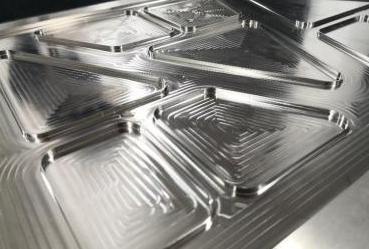
3: Semiconductor Equipment Aluminum Chamber
- Challenge: Large size (800mm×600mm), flatness tolerance ±0.01mm, multiple precision mounting holes.
- Our Solution: High-precision 5-axis machining + stress relief annealing + temperature-controlled workshop.
- Result: Flatness achieved ±0.008mm; on-time delivery in 7 days.
Application Scenarios
Our precision machining services power high-value components across critical industries:
- Aerospace: Structural parts, engine components, landing gear parts (titanium, IN718).
- Medical: Surgical instruments, implant parts, diagnostic equipment housings (316L, PEEK).
- Automotive: Racing parts, EV battery components, transmission parts (aluminum, hardened steel).
- Robotics: Joint components, end-effectors, precision gears (7075-T6, brass).
- Semiconductor: Wafer carriers, vacuum chambers, precision fixtures (aluminum, stainless steel).
- Industrial Automation: Custom fixtures, actuator parts, sensor housings (engineering plastics, aluminum).
Delivery Speed
In precision machining, speed without quality is meaningless. We balance both with our optimized workflow:
- Prototyping (1–5 pieces): 3–5 days (1-piece minimum order).
- Small-batch (10–100 pieces): 7–10 days.
- Medium-batch (100–500 pieces): 12–15 days.
- Emergency orders: 48-hour expedited service available (for qualified projects).
Why we’re fast: In-house 5-axis/SLM equipment + dedicated engineering team + streamlined DFM-to-delivery process. No third-party outsourcing delays.
Industry Whitepaper
Precision Machining Mastery: Overcoming High-Tolerance & Hard Material Challenges
Whitepaper Highlights:
- Detailed parameter tables for 5-axis/SLM/turning processes (for 20+ materials).
- Step-by-step DFM checklist for complex parts.
- Case studies with full inspection data and process logs.
- Industry benchmark comparisons (quality, lead time, cost).
Summary
Advancing your machining career isn’t just about operating machines — it’s about mastering complex processes, solving tough problems, and partnering with manufacturers who can deliver when others can’t.
Zorapid stands out with:
- Unmatched technical capability (5-axis, SLM, ultra-precision turning).
- Proven quality data (99.72% pass rate, 0.8% rework rate).
- Flexible, fast delivery (1-piece prototype to medium batch).
- Industry-leading expertise across aerospace, medical, semiconductor, and robotics.
Whether you’re a machinist aiming to level up your skills or a buyer/engineer seeking a reliable precision machining partner, this guide and Zorapid’s services are your keys to success.
FAQ
What’s the minimum order quantity (MOQ)?
1 piece. We specialize in low-volume, high-complexity prototyping and small-batch production.
What’s the tightest tolerance you can achieve?
±0.005 mm for dimensional tolerance; ±0.003 mm for geometric tolerance (on qualified materials and features).
Do you provide inspection reports?
Yes. Critical parts get 100% CMM inspection; full material certificates, dimensional reports, and surface finish reports are provided with every order.
Can you handle mixed-process projects (CNC + 3D printing + surface treatment)?
Absolutely. We’re a one-stop shop for integrated manufacturing, eliminating the hassle of coordinating multiple suppliers.
What materials do you work with most?
Aluminum (6061/7075-T6), stainless steel (304/316L), titanium (TC4), nickel superalloys (IN718), and engineering plastics (PEEK, PC, POM).