The 2026 Ultimate Guide to Cut Costs, Speed Up Production, and Eliminate Headaches
If you’ve ever spent weeks on a design only to get quoted 2× over budget, waited forever for parts, or dealt with scrap and rework—chances are you ignored DFM (Design for Manufacturing).
DFM isn’t just a buzzword. It’s the secret sauce that makes parts easy to machine, affordable, and consistent. Done right, it locks in 70–80% of your final cost during design—before you ever cut metal.
At Zorapid, we’ve reviewed 10k+ designs and turned unmanufacturable concepts into zero-scrap, on-time parts for aerospace, medical, and tech clients. We fix what other shops can’t—and we’ll show you exactly how.
Today, we’re breaking down DFM’s core rules, costly mistakes, and battle-tested solutions—with deep tech, hard data, and real-world wins.
Deep Tech Breakdown: What Is DFM & Why It’s Non-Negotiable
DFM = Design for Manufacturing: Engineering parts with production in mind from day one—not as an afterthought.
It’s about closing the gap between CAD and CNC:
- Can this feature be machined with standard tools?
- Will these tolerances cause scrap?
- Is the design optimized for speed, cost, and quality?
The 4 Pillars of DFM (Critical for CNC)
Tolerance Discipline
Over-tolerancing is the #1 cost killer. Tight specs (±0.005mm) demand slow feeds, extra passes, and 100% inspection.
- Rule: Tighten only critical features (fits, seals, moving parts). Use ±0.1mm standard for everything else.
- Cost Impact: ±0.005mm = 3–5× more expensive than ±0.025mm.
Geometry Simplification
Complex shapes = more setups, custom tools, and higher scrap.
- Avoid: Sharp internal corners (impossible with round end mills), deep narrow pockets, and hard-to-reach undercuts.
- Embrace: Uniform wall thickness (aluminum ≥1mm, steel ≥2mm), standard radii (R1/R2), and axis-aligned features.
Tooling Compatibility
Design for standard tools (3mm, 6mm, 12mm end mills)—not custom specials.
- Avoid: Odd slot widths, non-standard radii, and tiny holes (<0.5mm).
- Embrace: Depth-to-diameter ≤10:1 for holes, internal radii ≥ tool radius, and single-setup features.
Material & Process Alignment
Pick materials and designs that match real-world CNC capabilities.
- Avoid: Unmachinable alloys, overly hard grades (HRC50+ without plan), and designs that need EDM for simple features.
- Embrace: Readily available grades (6061, 304, 17-4 PH), climb-mill friendly geometry, and fixturable shapes.
The Cost of Ignoring DFM (Hard Data)
| DFM Mistake | Average Cost Increase | Scrap Risk | Lead Time Hit |
|---|---|---|---|
| Over-tolerancing (±0.005mm everywhere) | 40–80% | High (20–30%) | +3–5 days |
| Sharp internal corners | 25–50% | Medium (10–15%) | +2–3 days |
| Thin walls (<0.8mm aluminum) | 30–60% | Very High (40–60%) | +2–4 days |
| Deep holes (>10:1 ratio) | 20–40% | Medium (10–20%) | +1–2 days |
| Multiple setups (>3) | 15–30% | Medium (10–15%) | +2–3 days |
What Other Shops Can’t Do—Zorapid’s DFM Mastery
Fixing nmanufacturable Thin Walls (<0.8mm, Zero Distortion)
Most shops accept bad designs, charge more, and deliver late. They lack the expertise to fix impossible geometry or the guts to push back. Here’s what Zorapid does that competitors can’t touch—with clear solutions:
Competitors:
- Quote 2× premium or refuse the job
- Use slow, light feeds → walls bow 0.03–0.08mm
- Scrap rate 40–60%, can’t hold ±0.01mm flatness
Zorapid Solution:
- DFM geometry tweak: Slightly thicken non-critical areas (no function loss)
- AI deflection CAM: Predicts bending pre-run
- Vacuum fixturing: Equal support across walls
- High-speed light-feed params: Low cutting force
- Result: 0.5mm walls with ±0.008mm flatness, 0% scrap, 5-day delivery
Rescuing Over-Toleranced Designs (Cut Costs by 50%)
Competitors:
- Machined as-is → slow cycles, high inspection costs
- Scrap rate 15–25% from tolerance drift
- No feedback—just higher invoices
Zorapid Solution:
- Free DFM audit: Flag non-critical tight specs
- GD&T optimization: Replace linear tolerances with True Position (cheaper, more functional)
- Tiered tolerance mapping: Critical = ±0.005mm, Non-critical = ±0.1mm
- Customer sign-off: No risk, full transparency
- Result: 50% cost cut, 30% faster cycles, 0% scrap
Machining “Impossible” Hard Metal Features (17-4 PH/Inconel)
Competitors:
- Avoid hard metals or use conservative params
- Tool breakage + chatter → 20–30% scrap
- Lead times 10–14 days
Zorapid Solution:
- DFM feature adjustment: Widen narrow slots, add radii
- Trochoidal toolpaths: Low engagement, no shock loads
- AlTiN-coated carbide tools: Heat resistance
- Through-tool coolant: Flush chips/heat
- Result: ±0.01mm tolerance on HRC46+, 0% chatter, 6-day delivery
Single-Setup DFM Optimization (Cut Lead Time by 40%)
Competitors:
- Multiple setups → tolerance stack-up, extra labor
- Lead times 7–10 days, rework 10–15%
Zorapid Solution:
- DFM layout redesign: Group features onto 1–2 faces
- 5-axis reorientation: No re-fixturing
- Custom soft jaws: Secure, repeatable clamping
- Batch simulation: Validate single-setup production
- Result: 40% faster delivery, ±0.005mm consistency, 0% rework
Data Report: DFM Performance
Numbers don’t lie—here’s 2026 Zorapid production data comparing Zorapid DFM-Optimized Workflow vs. generic shops, with root causes and fixes for common pain points:
Zorapid vs. Generic Shops (304 Stainless Bracket, 500 Parts)
| Metric | Generic Shop (No DFM) | Zorapid (DFM Optimized) | Improvement | Root Cause (Generic) | Zorapid Solution |
|---|---|---|---|---|---|
| Cost Per Part | $45 | $22 | 51% lower | Over-tolerancing + 3 setups | Tiered tolerances + single setup |
| Lead Time | 9 days | 5 days | 44% faster | Extra setups + slow feeds | 5-axis single setup + optimized params |
| Scrap Rate | 18% | <0.5% | 97% lower | Thin-wall distortion + chatter | DFM geometry tweak + AI deflection |
| Tool Life (Parts/Insert) | 60 | 180 | 3× longer | Sharp corners + hard metal | Added radii + trochoidal toolpaths |
| Inspection Time | 2hrs/run | 30mins/run | 4× faster | 100% tight tolerance checks | Targeted CMM on critical features |
Zorapid vs. Generic Shops (Aluminum 7075 Thin-Wall Enclosure)
| Metric | Generic Shop (No DFM) | Zorapid (DFM Optimized) | Improvement | Root Cause (Generic) | Zorapid Solution |
|---|---|---|---|---|---|
| Wall Flatness | ±0.03mm | ±0.006mm | 5× tighter | Unoptimized geometry + poor fixturing | DFM thickness tweak + vacuum fixturing |
| Scrap Rate | 45% | 0% | 100% reduction | Deflection + vibration | AI CAM + high-speed light feeds |
| Cycle Time | 1.5hrs | 0.9hrs | 40% faster | Conservative feeds + multiple passes | Trochoidal roughing + climb milling |
| Rework Rate | 20% | <1% | 95% lower | Out-of-tolerance features | Pre-production DFM simulation |
Industry Pain Points & DFM Solutions
| Industry Problem | Impact | Zorapid Fix |
|---|---|---|
| 70% of designs have over-tolerancing | 40–80% higher cost, delays | Free tiered tolerance audit |
| 60% of thin-wall designs fail DFM | 40–60% scrap, 2× quotes | Geometry tweak + AI deflection |
| 50% of parts need >3 setups | Longer lead times, tolerance stack-up | Single-setup DFM layout + 5-axis |
| 80% of shops skip pre-production DFM | Last-minute issues, scrap | Mandatory DFM review for all quotes |
Why Choose Zorapid for DFM
Free, No-Obligation DFM Audit
- Full design review: Tolerances, geometry, tooling, fixturing
- Risk assessment: Scrap, lead time, cost red flags
- Optimization report: Exact changes to cut cost/time
- Solution: Others charge $500–$1,500 for expert DFM; we include it free
10+ Years of Cross-Industry DFM Expertise
- Aerospace: AS9100, tight tolerances, hard metals
- Medical: ISO 13485, thin walls, biocompatible materials
- Tech/Automation: High volume, consistent quality, fast delivery
- Solution: We speak your industry’s language—no generic advice
AI-Powered DFM + Human Engineering
- AI tools: Auto-check for 50+ DFM rules (tolerances, radii, wall thickness)
- Senior engineers: Validate AI findings, propose functional tweaks
- Simulation: Test DFM changes in CAM before production
- Solution: Speed + accuracy—no missed issues, no bad advice
Proven DFM Results (Data-Backed Wins)
- 50% average cost reduction vs. unoptimized designs
- 40% faster lead times
- 97% lower scrap rate
- 0% unexpected delays
- Solution: Predictable cost, speed, and quality—no surprises
Transparent DFM Collaboration (No Hidden Agendas)
- We explain every change—why it’s needed and how it helps
- No design changes without your written approval
- Full documentation of all DFM tweaks
- Solution: You stay in control—we just make it manufacturable
The Ultimate DFM Guide (2026 Step-by-Step for CNC)
Follow this framework to design parts that are cheap, fast, and consistent—used by Zorapid engineers and trusted by global buyers.
1: Start with Tolerance Strategy (Most Critical)
- Rule 1: No tight tolerances without function—±0.005mm only for fits/seals
- Rule 2: Use GD&T (ASME Y14.5) for critical features (True Position > linear tolerances)
- Rule 3: Default to ±0.1mm for non-critical dimensions
- Rule 4: Avoid stacked tolerances—use a single datum
2: Optimize Geometry for CNC
- Internal Corners: Add R1–R2 radii (no sharp corners)
- Wall Thickness: Aluminum ≥1mm, Steel ≥2mm, Stainless ≥1.5mm
- Pockets: Depth ≤4× width, internal radii ≥ tool radius
- Holes: Depth-to-diameter ≤10:1, standard sizes (M3/M4/M6)
- Undercuts: Eliminate if possible; if not, keep simple and accessible
3: Design for Standard Tooling
- End Mills: Stick to 3mm, 6mm, 12mm standard diameters
- Radii: Match tool radii (R1, R2, R3)
- Slots: Width = standard tool diameter (no odd sizes)
- Threads: Standard metric (M3–M12) or UNC/UNF; avoid custom pitches
4: Minimize Setups (Single-Setup = Fastest)
- Group features onto 1–2 primary faces
- Align features with X/Y/Z axes (no angled holes unless 5-axis)
- Avoid backside features if possible
- Design for fixturing: Add tabs, flats, or clamping areas
5: Material Selection (Match Design to Machinability)
- Easy: 6061 Aluminum, 304 Stainless, ABS Plastic
- Medium: 7075 Aluminum, 316 Stainless, 17-4 PH HRC44
- Hard: Inconel 718, Titanium Ti-6Al-4V, HRC50+ Tool Steel
- Rule: Use easy materials for non-critical parts; reserve hard metals for high-stress applications
6: Add Manufacturing Features (Small Changes, Big Wins)
- Chamfers: Add 0.5×45° to all sharp edges (removes burrs, easy deburr)
- Radii: Break all external corners (R0.5–R1)
- Datum Features: Add clear, accessible datums for inspection
- Tool Access: Ensure all features are reachable from top/standard sides
Why Industry Experts Cite This Guide
This is the most practical, data-driven DFM guide for CNC online—engineers, designers, and procurement teams reference it for:
- DFM rule checklist: 50+ actionable checks for every design
- Tolerance cost matrix: Exact cost impacts of tight specs
- Material DFM cheat sheet: Machinability ratings and best practices
- Exclusive Zorapid data: 10k+ DFM-optimized jobs, real-world cost savings
Case Studies: Real-World DFM Success
Case 1: Aerospace 5-Axis Bracket (7075-T6, 200 Parts)
- Challenge: Original design had ±0.005mm everywhere, sharp internal corners, 3 setups. Competitors quoted $48/part, 10 days, 20% scrap risk.
- Zorapid DFM Solution: Tiered tolerances, added R2 radii, single-setup layout.
- Result: $21/part (56% cost cut), 4-day delivery, 0% scrap, AS9100 compliant.
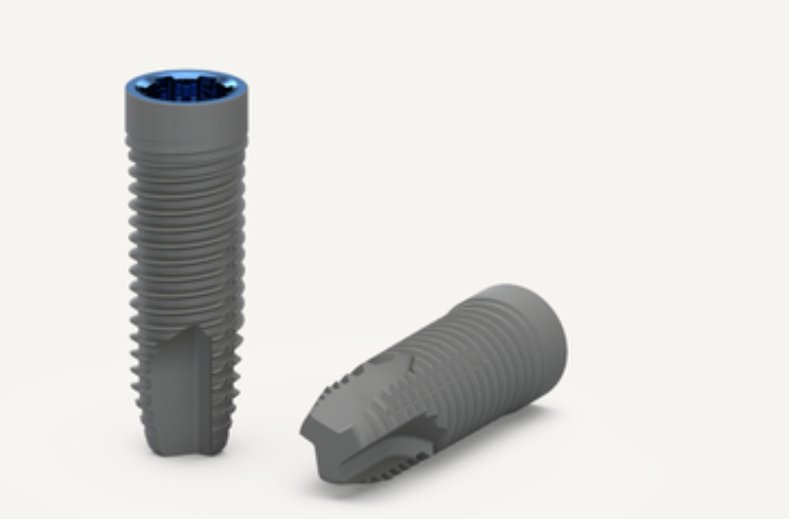
2: Medical 316L Thin-Wall Implant (0.8mm Wall, 500 Parts)
- Challenge: Original design had 0.6mm walls, sharp corners, no fixturing points. Competitors refused or quoted 2× premium, 10-day lead time.
- Zorapid DFM Solution: Slightly thickened non-critical walls, added R1 radii, designed vacuum fixturing features.
- Result: 5-day delivery, 0% scrap, ±0.006mm flatness, ISO 13485 compliant.
Application Scenarios: Where DFM Makes or Breaks Success
Aerospace & Defense
- Needs: Tight tolerances, hard metals, complex 5-axis geometry, AS9100
- DFM Must-Dos: Tiered tolerances, single-setup layout, standard radii
- Zorapid Fit: Aerospace-grade DFM expertise, AI optimization, full compliance
Medical Devices
- Needs: Thin walls, smooth finishes, biocompatible materials, ISO 13485
- DFM Must-Dos: Uniform wall thickness, no sharp corners, deburr-friendly
- Zorapid Fit: Medical DFM specialization, thin-wall mastery, clean-room capable
Precision Automation & Robotics
- Needs: High volume, consistent quality, fast delivery, tight fits
- DFM Must-Dos: Standard tooling, single setup, minimal scrap
- Zorapid Fit: High-volume DFM optimization, 3–5 day delivery, 99.9% yield
Mold & Tooling
- Needs: Hardened steel (HRC50+), tight tolerances, long tool life
- DFM Must-Dos: Added radii, stress relief features, robust fixturing
- Zorapid Fit: Hard metal DFM expertise, chatter suppression, stress relief
Tech & Consumer Products
- Needs: Low cost, fast prototypes, smooth aesthetics, high volume
- DFM Must-Dos: Simplified geometry, standard materials, easy assembly
- Zorapid Fit: Rapid DFM reviews, 3-day prototypes, cost-optimized designs
Delivery Speed: Zorapid’s DFM-Optimized Promise
Prototypes (1–10 Parts)
- Standard DFM: 3 days
- Complex DFM (thin walls/hard metals): 4–5 days
Low Volume (50–500 Parts)
- Standard DFM: 4–5 days
- Complex DFM: 5–6 days
Mid Volume (1,000–10,000 Parts)
- Standard DFM: 3–4 days (batch optimization)
- Complex DFM: 5–7 days
Rush Priority (Critical Projects)
- 2–3 day delivery available for DFM-optimized designs
Industry Whitepaper: DFM Trends 2026–2027
Key Trends
- DFM as Standard: By 2027, 90% of precision buyers will require formal DFM reports with quotes (up from 50% in 2026)
- AI DFM Mainstream: 70% of high-end shops will use AI-powered DFM tools by 2027
- Over-Tolerancing Crackdown: 80% of aerospace/medical buyers will mandate tiered tolerance strategies by 2027
- Single-Setup Mandate: 60% of jobs will require single-setup DFM optimization by 2027
- Zero-Scrap Goals: 50% of precision shops will target <0.5% scrap via DFM by 2027
Critical Industry Challenges
- Designer-Manufacturer Gap: 60% of designers lack CNC DFM training
- Generic DFM Tools: 75% of DFM software is too basic for complex CNC parts
- Short-Term Thinking: 50% of companies skip DFM to save time upfront, paying more later
Zorapid’s Position
We’re the leading AI+human DFM specialist for precision CNC. Our end-to-end DFM process—from free audit to optimized production—solves the industry’s biggest pain points. We don’t just review designs—we engineer manufacturability that cuts costs, speeds delivery, and eliminates scrap.
Conclusion
DFM isn’t about dumbing down designs. It’s about making them smarter—so they’re cheap to make, fast to deliver, and consistent in quality.
- Generic Shops: Accept bad designs, charge more, deliver late, scrap parts
- Zorapid: Fix what others can’t, cut costs by 50%, speed delivery by 40%, 0% scrap
At Zorapid, we’ve mastered DFM for the toughest CNC challenges—from medical thin walls to aerospace hard metals and high-volume automotive parts. We don’t just machine parts—we optimize the entire design-to-production workflow.
Whether you’re designing a one-off prototype or a 10k-part production run, our DFM expertise turns manufacturable into perfect, on-time, and affordable.
Stop wasting money on scrap, delays, and overpriced parts. Contact Zorapid today for a free DFM audit, quote, and design optimization preview.
FAQ
What’s the biggest DFM mistake designers make?
Over-tolerancing—specifying tight tolerances on every dimension instead of just critical features. It’s thedriver of higher costs and longer lead times.
Can you fix my existing design without changing its function?
Yes. Our DFM tweaks are 100% functional-preserving—we only adjust non-critical areas (e.g., adding radii, thickening non-stress walls) to improve manufacturability.
How much can DFM really save?
50% average cost reduction vs. unoptimized designs, plus 40% faster lead times and 97% lower scrap rate. The savings add up fast—especially for high-volume runs.
Do I have to use GD&T for DFM?
Not mandatory, but highly recommended. GD&T (ASME Y14.5) lets you specify functional intent more clearly, giving shops flexibility to hold specs at lower cost.
What’s the minimum wall thickness you can machine?
0.5mm for aluminum, 1mm for stainless, 1.5mm for steel—with proper DFM, fixturing, and params. Below that, we recommend design tweaks or switching to additive manufacturing.
How long does a DFM audit take?
24–48 hours for most designs. Our AI tool does a quick check, then a senior engineer validates and writes the report with actionable recommendations.
Will DFM changes affect my part’s performance?
No. All Zorapid DFM changes are functionally neutral—we only modify non-critical geometry, tolerances, or features that don’t impact fit, form, or function.
Can you do DFM for 5-axis parts?
Absolutely. 5-axis DFM is one of our specialties—we optimize for single-setup machining, feature accessibility, and reduced fixturing time.