Publisher: Zorapid.Ltd
Hard-to-machine materials always destroy tool life and ruin surface finish if you use general-purpose cutters.
Nickel superalloys work-harden instantly. Titanium sticks to tool edges and creates built-up edge.
Hardened mold steel burns cutting inserts. Abrasive filled plastics wear down ordinary carbide in minutes.
Most shops just keep buying cheaper cutters and slowing down spindle speed, but they still face frequent tool breakage, high scrap and sky-high tooling cost.
The real fix is simple: match substrate, coating, flute geometry and edge preparation strictly to the material’s unique machining behavior.
At Zorapid, we run high-volume CNC batches on Inconel 718, Ti‑6Al‑4V, 17‑4PH, D2, S136, PEEK GF30 and PTFE every day for European and North American aerospace, medical and stamping clients.
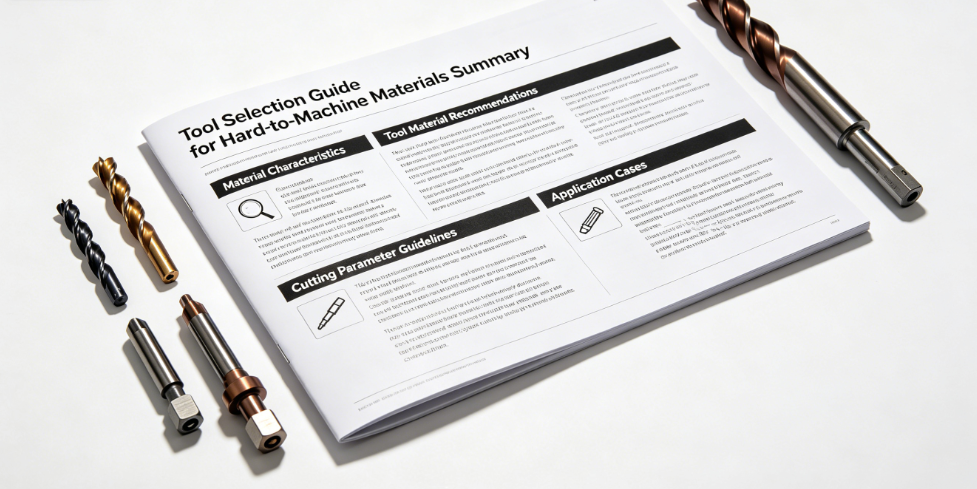
We have condensed our years of on-site testing into a concise tool selection summary that eliminates guesswork.
Today we break down every critical rule, with a one-page quick reference you can save directly to your machine control.
Four Core Rules For All Difficult Materials
Before picking any tool, stick to these four ground rules that apply across all hard-to-cut alloys and polymers.
- Match substrate toughness to cutting load Fine-grain carbide resists abrasive wear; higher cobalt content prevents chipping under interrupted cuts. For HRC 58+ steel, switch from carbide to solid CBN inserts. For abrasive filled plastics, use PCD diamond tips.
- Choose coating based on heat and chemical reaction
- High-temperature cutting (hard steel, superalloys): AlTiN / TiSiN thermal barrier coatings
- Sticky reactive metals (titanium, stainless steel): Low-friction AlCrN to stop built-up edge
- Sharp-edge plastic machining: No coating at all — polished uncoated carbide avoids extra friction.
- Optimize flute count for chip evacuation Titanium and nickel alloys produce thick hot chips. Use fewer flutes with large chip gullets. Hard steel finishing uses more flutes for stable light finishing passes. Never overcrowd flutes on sticky metals.
- Control edge hone carefully Work-hardening alloys need a tiny micro-hone to prevent edge chipping. Soft ductile plastics require zero edge hone; even a tiny rounded edge creates stretching burrs.
Tool Selection for High-Temperature Superalloys
Material trouble points
Extreme work hardening, poor heat conductivity, hot crater wear on cutting edges. Slow cutting speed makes surface hardening even worse.
Full Tool Spec
- Substrate: Ultra-fine micrograin carbide (WC grain <0.5μm), medium cobalt content for impact resistance. Avoid coarse-grain general-purpose carbide.
- Coating: Nano AlTiN or TiSiN high-temperature PVD coating, oxidation resistance above 900°C.
- Flute geometry: 3-flute end mills only. Large chip pockets to evacuate hot chips fast. Positive rake to lower cutting force.
- Edge prep: Light 0.02~0.03mm micro-hone to stop edge chipping during interrupted cuts.
- Tool type: Solid carbide for roughing; indexable ceramic inserts for high-speed rough removal on large forgings.
Common Mistake To Avoid
Using 4-flute standard steel end mills. Chips get trapped, heat builds up, and the work-hardened layer eats away the cutting edge in minutes.
Titanium Alloy (Ti‑6Al‑4V Grade 5) Tooling Rules
Material trouble points
Strong chemical adhesion; material welds onto tool flutes forming built-up edge. High tensile force creates chatter on thin walls.
Full Tool Spec
- Substrate: Tough sub-micrograin solid carbide with high cobalt to resist chipping.
- Coating: AlCrN low-friction coating. Low chemical reactivity stops titanium from sticking to the tool face. Never use thick AlTiN coatings that increase friction.
- Flute design: Strictly 2 or 3 flutes with oversized chip gullets. No 4-flute cutters for rough milling titanium.
- Rake angle: High positive rake to shear material instead of plowing it. Keep cutting force low.
- Edge condition: Minimal hone, just enough to prevent minor chipping.
Quick Win
Polish flute surfaces. Smooth polished flutes drastically reduce chip welding and double tool life on long milling cycles.
Martensitic & Precipitation Hardened Stainless Steel
Material trouble points
Continuous built-up edge, low thermal conductivity, mild work hardening on cut surfaces.
Full Tool Spec
- Substrate: Fine-grain solid carbide.
- Coating: AlTiN or AlCrN. AlCrN works best for high-feed finishing to stop BUE (built-up edge).
- Flute count: 4 flutes for finishing; 3 flutes for roughing with heavy stock removal.
- Geometry: Slightly positive rake, sharp cutting edge with controlled micro-hone.
- Alternative: DLC coated tools for high-volume production to eliminate edge welding entirely.
Hardened Tool Steel
Material trouble points
High abrasive wear, thermal cracking on sharp corners, heavy flank wear on long finishing runs.
Full Tool Spec
- HRC 48~54: AlTiN nano-coated micrograin solid carbide ball end mills. Short rigid shank to eliminate vibration.
- HRC 55~62: Switch to solid CBN (cubic boron nitride) inserts for finishing. CBN holds hardness at extreme cutting temperatures where carbide softens quickly.
- Flute count: 4~6 flutes for light finishing passes. Low radial engagement reduces cutting load and thermal shock.
- Edge prep: Defined micro-hone to prevent thermal edge chipping during dry hard milling.
- Coating: TiSiN nano coating for maximum hot hardness and crater wear resistance.
Abrasive Engineering Plastics
Material trouble points
Filled grades abrade cutting edges rapidly; unfilled PEEK and PTFE stretch and form whisker burrs if the edge is dull or rounded.
Two Separate Tool Sets
- Unfilled virgin PEEK / PTFE: Uncoated polished solid carbide, high positive rake (12°~18°), zero edge hone. Any coating adds friction and heat, causing melting and tearing.
- Glass/carbon filled PEEK (GF30 / CF30): PCD polycrystalline diamond tipped tools. Diamond resists abrasive fiber wear 10 times longer than carbide, and keeps a perfectly sharp edge clean for thousands of parts.
Critical rule: Never use honed metal-cutting inserts for plastic turning. Blunt edges plow material instead of shearing cleanly.
Section 6: Quick Reference Master Table
| Work Material | Recommended Substrate | Best Coating | Flute Count | Edge Preparation |
|---|---|---|---|---|
| Inconel 718 Superalloy | Ultra-fine micrograin carbide | Nano AlTiN / TiSiN | 3 flutes | 0.02~0.03mm micro-hone |
| Ti‑6Al‑4V Titanium | High-cobalt sub-micrograin carbide | AlCrN low-friction | 2~3 flutes | Minimal light hone |
| 17‑4PH / 316 Stainless | Fine-grain solid carbide | AlCrN / AlTiN | 3 rough / 4 finish | Controlled micro-hone |
| D2 / S136 HRC <54 | Micrograin carbide | TiSiN / AlTiN | 4~6 flutes | Defined micro-hone |
| Hardened Steel HRC >55 | Solid CBN inserts | No coating | Indexable insert | Heavy edge hone |
| Virgin PEEK & PTFE | Polished solid carbide | Uncoated (no coating) | 2 flutes | Zero edge hone |
| GF30 / CF30 Filled PEEK | PCD diamond tip | Polished diamond surface | 2 flutes | Zero edge hone |
6 Most Common Tooling Mistakes That Waste Money
- Using 4-flute steel end mills on titanium & Inconel → chip clogging and rapid edge wear
- Applying AlTiN coating on PTFE plastic → extra friction creates melted burrs
- Using unhoned sharp carbide on hard steel & superalloys → edge chipping under thermal load
- Running regular carbide on glass-filled PEEK → abrasive fibers wear the tool away within a few dozen parts
- Long overhang tooling without vibration damping → chatter ruins finish and accelerates flank wear
- Mixing roughing and finishing tool geometry → inconsistent chip load creates unpredictable tool life
Zorapid Standard Tooling Workflow For Difficult Materials
- Classify material by work hardening, abrasion and heat resistance
- Select substrate first (carbide / CBN / PCD) based on hardness and abrasion
- Pick coating strictly matched to thermal load and chemical reactivity
- Set flute count and rake angle to optimize chip evacuation and cutting force
- Tune edge hone: small hone for metals, zero hone for ductile plastics
- Match tool overhang and holder rigidity to avoid vibration
Measurable Shop Result:
Poor mismatched tooling: 1~2 hour tool life + frequent rework
Optimized material-matched tool selection: Tool service life extended by 2.5~4 times, scrap rate from poor surface quality reduced below 2%.
Real EU Client Case
A German aerospace job shop ran Inconel 718 structural forgings with standard 4-flute AlTiN steel end mills.
Each cutter only lasted 45 minutes, with heavy crater wear and work-hardened surface layers on parts.
We revised the tooling fully following our guide:
- Switched to 3-flute micrograin high-temperature carbide with TiSiN nano coating
- Added a light micro edge hone and polished flute surfaces
- Optimized positive rake geometry to lower cutting force and avoid surface hardening
Final result:
Tool life jumped from 45 minutes up to 3 hours per insert.
No more work-hardened surface layers, and secondary bench finishing was eliminated completely. The client cut total tooling cost by 62% on the full batch.
Conclusion
Tool selection for hard-to-machine materials is not guesswork.
Every material’s unique behavior — work hardening, heat buildup, chemical sticking or abrasive wear — dictates substrate, coating, flute design and edge preparation.
- Superalloys need heat-resistant micrograin carbide with thermal barrier coatings and large chip pockets
- Titanium requires low-friction AlCrN coating and fewer flutes to stop built-up edge
- Hardened steel moves from coated carbide up to CBN for ultra-hard HRC 55+ work
- Engineering plastics split into uncoated sharp carbide for unfilled grades and PCD diamond for abrasive filled polymer
Once you match the tool exactly to the material, you eliminate premature breakage, poor surface finish and excessive tooling expense without slowing down production.
At Zorapid, we maintain a fully categorized tool library for all difficult aerospace, medical and mold-grade materials.
If you keep fighting short tool life and surface defects on tough alloys and plastics, send your material grade and operation type (roughing / finishing / turning). Our process team will build a complete tool specification including substrate, coating, flute geometry and edge prep for your next batch.
FAQ
Can I use CBN tools for nickel-based superalloys?
CBN reacts chemically with nickel alloys at high cutting temperatures. Stick to micrograin coated carbide for Inconel; save CBN exclusively for hardened ferrous tool steel.
Why is coating forbidden on PTFE and unfilled PEEK?
Any PVD coating creates extra surface friction. The polymer melts and stretches ahead of the cutting edge, creating fine whisker burrs. Polished bare carbide keeps the edge sharp and friction minimal.
Is more flutes always better for finishing?
No. More flutes reduce chip pocket space. Sticky titanium and nickel alloys always need fewer flutes to evacuate hot chips quickly. Extra flutes only work for light finishing passes on hard steel.
What is the difference between AlTiN and AlCrN?
is better for high-temperature dry cutting on hardened steel with high oxidation resistance. AlCrN has lower chemical reactivity and less friction, so it is the first choice for titanium and stainless steel to stop built-up edge.