Published:Zorapid.Ltd
If you design orthopedic implants — spinal cages, trauma bone plates, hip femoral stems, patient-matched reconstructive prosthetics — you know two non-negotiable rules:
- Your material must be fully biocompatible, MRI-safe, and corrosion-resistant inside the human body long-term.
- Your manufacturing method has to match your part geometry, clinical goals, and NPI timeline.
Titanium Ti-6Al-4V ELI (Grade 23) is the undisputed leader for implantable orthopedic hardware, but the way you fabricate it makes or breaks clinical performance, regulatory audits, and launch speed.
Two dominant processes power modern orthopedic titanium production: precision 5-axis CNC machining and SLM metal 3D printing. Many medical OEMs waste budget or compromise design by picking only one process without understanding their unique strengths.
At Zorapid, we run dedicated medical-grade CNC and SLM production lines exclusively for orthopedic device teams. This plain-spoken guide breaks down exactly when to use each process, how we maintain full biocompatibility across both workflows, and how combining CNC + SLM solves the trickiest orthopedic design challenges.
Why Ti-6Al-4V ELI Is The Gold-Standard Biocompatible Titanium For Orthopedics
Let’s start with the material foundation — no implant succeeds without the right titanium alloy.
Standard aerospace Grade 5 Ti-6Al-4V is never acceptable for permanent implants. Orthopedics relies on ASTM F136 certified Ti-6Al-4V ELI (Extra Low Interstitial).
- Ultra-low oxygen, iron, and carbon content eliminates toxic leaching inside tissue
- Naturally forms a passive TiO₂ oxide layer that resists bodily fluid corrosion, zero inflammatory immune response.
- Strength-to-weight ratio mirrors human cortical bone, drastically cutting stress shielding (bone loss around rigid implants).
- 100% MRI compatible, no scan artifacts for post-surgery patient imaging
- Tunable fatigue resistance for weight-bearing joints, spinal fusion hardware, and trauma fixation plates
We never substitute cheaper commercial pure titanium or standard aerospace titanium for implant orders. Every raw titanium billet and SLM powder batch ships with full Material Test Certificates (MTCs) ready for FDA/MDR audit files.
CNC Machining vs SLM Printing: Core Orthopedic Manufacturing Comparison
Infographic Image Suggestion
Clean comparison table graphic with small part previews: CNC solid femoral stem, SLM porous lumbar cage, key cost, geometry, tolerance, biocompatibility metrics
| Orthopedic Manufacturing Factor | 5-Axis CNC Titanium Machining | SLM Selective Laser Melting Titanium Printing |
|---|---|---|
| Core Part Style | Solid, high-tolerance standardized implants | Custom porous lattices, patient-matched complex geometries |
| Minimum Order Quantity | 1 unit prototype to mid-volume clinical batches | 1-off custom patient implants, small pilot runs |
| Precision Tolerance | ±0.001mm consistent micron accuracy | ±0.02mm dimensional tolerance (post-SLM CNC finishing tightens to ±0.002mm) |
| Bone Ingrowth Potential | Limited smooth solid surfaces; relies on etched/blasted texture | Tunable interconnected porous lattices (30–70% porosity) to mimic trabecular bone for fast osseointegrationSage Journ… |
| Undercut & Internal Lattice Support | Impossible without multi-setup re-fixturing | Zero geometry limits, prints internal porous channels in one build |
| Upfront Tooling Cost | $0 no mold investment | $0 no tooling required for custom single parts |
| Lead Time | 3–5 business days prototype production | 4–7 business days SLM build + post-processing |
| Best For | Trauma plates, locking screws, solid femoral stems, articulating joint heads | Spinal fusion cages, custom tumor reconstructive implants, patient-specific prosthetics |
| Regulatory Traceability | Full CMM inspection, FAI reports per part | HIP heat treatment, powder lot tracking, full build log documentation |
When To Pick 5-Axis CNC Titanium Machining For Orthopedic Parts
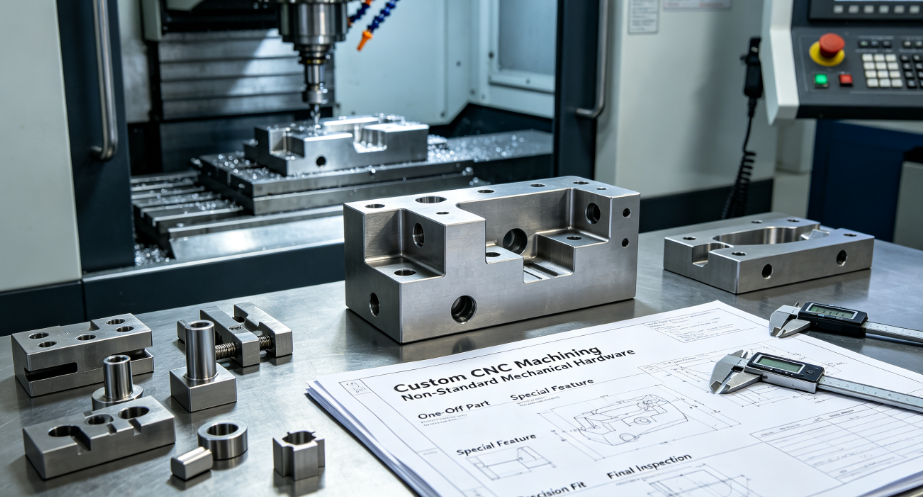
CNC machining is your go-to process for standardized, load-bearing orthopedic hardware that demands ultra-tight repeatable tolerances and mirror-smooth articulating surfaces. Choose CNC if your project hits any of these boxes:
1. Solid monolithic implant designs with critical mating surfaces
Hip femoral heads, knee articulating components, locking bone plates, intramedullary nails rely on perfectly uniform curved contact surfaces. 5-axis CNC machines these complex contoured profiles in a single fixture setup, eliminating alignment drift common with 3-axis multi-clamp workflows. We hold sphericity under 10μm for joint prostheses to meet strict ISO 7206 orthopedic standards.
2. High repeatability for clinical pilot & small production batches
If you need 20–500 identical trauma plates or fixation screws for surgeon trials, CNC delivers identical dimensions and surface finish across every unit. SLM batch-to-batch surface consistency requires extra post-processing, while CNC maintains uniform Ra values without secondary lattice cleanup.
3. Implants requiring mirror electropolished articulating faces
Joint prostheses need ultra-smooth Ra 0.02–0.2μm finishes to cut wear debris inside the patient’s body. CNC-machined titanium takes medical electropolishing evenly, removing micro-scratches that cause friction and long-term implant degradation.
4. Fast iteration for standardized implant prototype validation
If you’re refining a generic bone plate design with simple curved geometry, CNC turns around revised parts in 3 days flat. No heat treatment or powder residue cleanup steps required to hit testing timelines.
Zorapid CNC Orthopedic Exclusive Perks
- Dedicated low-contamination medical machining zones segregated from industrial metal parts
- In-house medical passivation, bead blasting, electropolishing lines
- Full CMM coordinate measuring inspection on every implant with digital dimension reports
- Mutual NDAs for all confidential orthopedic CAD designs
When SLM Selective Laser Melting Is Non-Negotiable For Orthopedic Designs
SLM metal 3D printing solves manufacturing barriers CNC simply cannot overcome — especially for modern personalized orthopedic care. Choose SLM for these clinical-critical use cases:
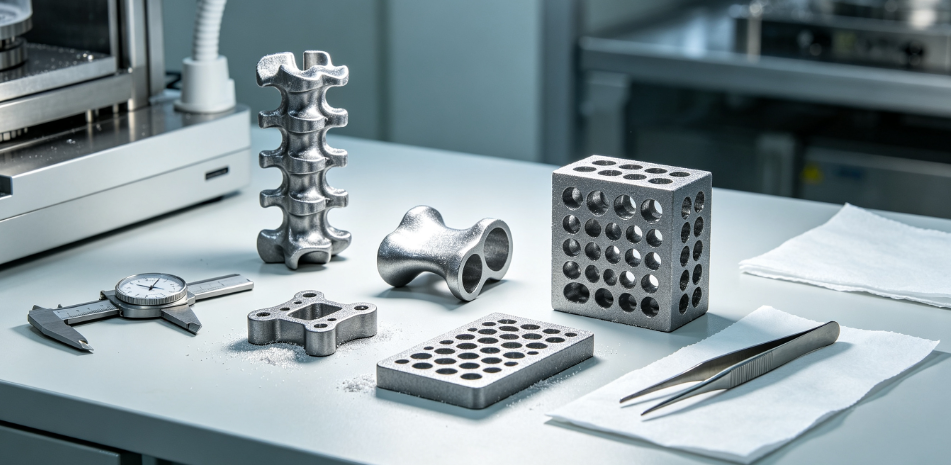
1. Porous trabecular lattice structures for accelerated osseointegration
The biggest limitation of solid CNC titanium implants is poor bone attachment. SLM prints fully interconnected porous networks that mimic natural cancellous bone structure. Bone cells grow deep into implant pores, locking hardware permanently and cutting long-term loosening risk. Spinal interbody cages are the most common SLM orthopedic application for this exact reason.
2. Patient-specific custom reconstructive implants
Tumor resection implants, limb salvage prosthetics, and uniquely contoured cranial plates rely on CT/MRI scan-derived organic geometry full of deep undercuts and asymmetric curves. CNC would require dozens of custom fixtures and multi-day setup; SLM prints the full patient-matched part in one single build cycle with zero design simplification.
3. Lightweight thin-walled implant architectures
SLM generates complex hollow internal support structures that slash implant weight by 30–50% without sacrificing mechanical strength. This drastically reduces stress shielding compared to fully solid CNC titanium blocks, lowering post-op bone resorption risk for long-term implant stability宝鸡市科辉….
4. Hybrid designs: SLM porous core + CNC finished solid outer features
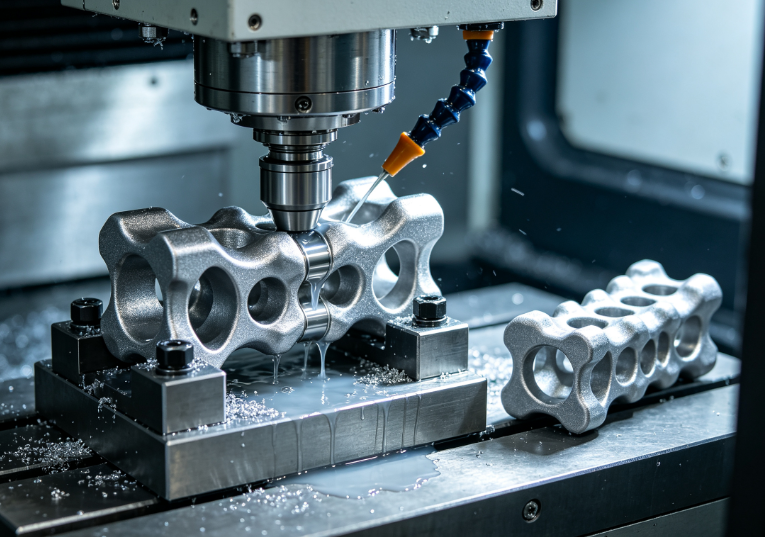
Many OEMs combine both processes: SLM print the porous bone-ingrowth lattice core, then 5-axis CNC machine the outer mounting ridges, threaded holes, and articulating surfaces for precision fit — Zorapid handles this full hybrid workflow in-house without third-party handoffs.
Zorapid SLM Medical Grade Standards
- Argon-sealed low-oxygen SLM build chambers to prevent titanium oxidation
- ASTM F136 Ti-6Al-4V ELI medical powder stock with full batch traceability
- HIP heat treatment post-print to eliminate internal microcracks and boost fatigue life
- Full powder removal & ultrasonic bioburden cleaning to eliminate residual metal particles before finishing
Zorapid’s Dual Capability: In-House Biocompatible CNC + SLM Titanium Workflow
Most medical manufacturers only offer one process, forcing you to split orders across multiple vendors. Our integrated orthopedic titanium pipeline eliminates cross-supplier delays and IP risk:
- Secure CAD/STL file upload via encrypted RFQ portal; sign mutual NDA upfront for all proprietary implant designs
- Medical engineering team completes free DFM review within 24 hours: recommend CNC, SLM, or hybrid manufacturing based on your clinical requirements
- Material confirmation: Ti-6Al-4V ELI Grade 23, custom porosity targets for SLM, surface roughness specs for CNC
- Production stage:
- CNC: 5-axis simultaneous machining in clean segregated medical workcells
- SLM: Laser melting build → HIP heat treatment → full powder removal
- In-house medical finishing line (passivation, electropolish, controlled medical bead blasting)
- Full quality documentation: MTCs, CMM inspection logs, surface roughness test reports, build history records
- Dust-free biocompatible packaging, express air shipping to US/EU medical labs in 4–8 business days
Medical-Grade Surface Finishes For Biocompatibility & Osseointegration
Surface treatment directly impacts clinical success — we handle all regulatory-compliant finishing in-house to avoid cross-contamination risks:
- Medical Electropolishing (Ra 0.02–0.2μm) Mandatory for hip/knee articulating CNC components. Creates mirror-smooth inert surfaces to minimize friction and wear debris inside bodily tissue.
- ASTM A967 Medical Passivation Forms a permanent protective TiO₂ oxide barrier on all titanium parts, preventing corrosion in bodily fluids — required for every permanent orthopedic implant before sterilization.
- Controlled Biocompatible Bead Blasting (Ra 0.6–0.8μm) Applied to bone-contact CNC implant surfaces to boost cell adhesion. For SLM lattices, we fine-tune blast pressure to preserve delicate porous pore geometry.
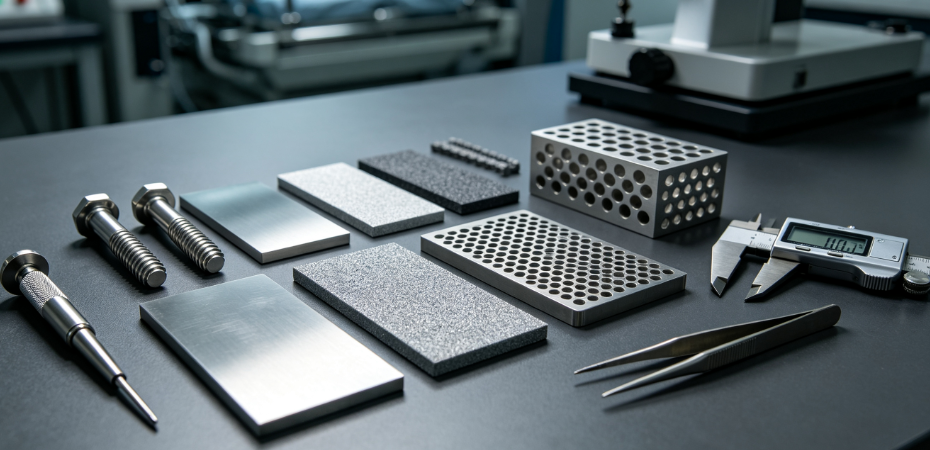
- Vibratory Medical Deburring Removes micro-sharp edges from threaded screw holes and CNC contour edges without scratching critical mating surfaces. No harsh industrial abrasives used.
Full Regulatory Compliance
Orthopedic implant manufacturing lives or dies by audit-ready documentation — Zorapid’s quality system aligns with all global medical device standards:
- ISO 13485:2016 certified medical device quality management system
- Full traceability for every titanium raw material batch, CNC cut log, SLM build file, and finishing process (FDA 21 CFR Part 820 compliant)
- Complete Device History Records (DHR) packaged with every order for 510(k) premarket submissions
- Documentation templates pre-formatted for EU MDR notified body audits
- Bioburden control protocols for low-particulate medical implant production zones
We eliminate the huge administrative headache of chasing incomplete manufacturing records ahead of clinical trials or regulatory inspections.
Real Client Case: Hybrid CNC + SLM Spinal Cage Orthopedic Project
A US orthopedic medical startup partnered with Zorapid to develop a new lumbar fusion cage that blended porous bone-ingrowth lattice and precision solid mounting ridges.
Their original challenge:
Local US manufacturers only offered standalone CNC or SLM services, requiring two separate vendors, duplicated QA testing, and 21-day combined lead times. Initial quotes hit $15,800 for a 15-unit prototype batch.
Our Zorapid hybrid manufacturing solution:
- SLM printed the full porous trabecular cage core with 40% targeted porosity to optimize osseointegration
- Post-SLM HIP heat treatment to eliminate internal print microcracks
- 5-axis CNC machined the outer solid serrated ridges and threaded mounting holes to ±0.002mm tolerance
- Medical bead blasting + passivation for full biocompatibility
- Full CMM dimensional inspection of every contoured and porous feature
Project outcomes:
- Total lead time cut to 7 business days door-to-door Texas delivery
- Total project cost reduced by 61% vs split vendor quotes
- All prototype cages passed in-vitro biocompatibility and mechanical compression testing
- The team locked their final implant geometry 3 weeks ahead of schedule and submitted their FDA 510(k) application on time
In-Stock Biocompatible Titanium Grades We Machine & Print
We only stock implant-certified titanium to meet orthopedic clinical standards, no generic industrial alloys:
- Ti-6Al-4V ELI Grade 23 (ASTM F136) Primary material for all permanent load-bearing implants: spinal cages, femoral stems, trauma plates, joint prosthetics. Low interstitial content delivers superior fatigue resistance and zero cytotoxicity.
- CP Titanium Grade 1 / Grade 2 (Commercially Pure) Soft, ultra-corrosion resistant for thin delicate non-load-bearing implants: small facial trauma fixation plates, minor bone screws, low-stress reconstructive hardware.
- Beta Titanium Alloys (Custom SLM Only) Low elastic modulus formulations to drastically reduce stress shielding for high-load limb salvage implants, available for custom SLM print runs only.
FAQ
Can SLM printed titanium implants meet FDA/MDR biocompatibility requirements?
Absolutely. Ti-6Al-4V ELI SLM parts pass all standard biocompatibility testing when manufactured with medical powder, HIP post-treatment, and full medical finishing. We supply complete audit-ready material and process documentation for regulatory submissions.
Can I combine SLM porous lattice with CNC precision features in one implant?
Yes, this hybrid workflow is one of our most popular orthopedic solutions. We SLM print the porous core, then run secondary 5-axis CNC machining on all solid mating, threaded, and articulating surfaces to lock in micron-level tolerances.
What minimum order do you offer for custom orthopedic titanium implants?
Zero MOQ for both CNC and SLM. We regularly produce single patient-specific SLM implants and one-off CNC prototype bone plates for early-stage medical device R&D teams with no low-volume surcharges.
Do you sign NDAs to protect confidential orthopedic implant designs?
Mandatory mutual NDAs available for every medical client. All implant CAD/STL files are stored on encrypted restricted-access servers, with limited internal team permissions to protect your IP.
Which process delivers tighter dimensional accuracy for orthopedic hardware?
5-axis CNC machining holds consistent ±0.001mm tolerances out of production. Raw SLM parts sit at ±0.02mm; secondary CNC post-finishing tightens SLM critical features down to ±0.002mm for clinical use.
Are SLM porous titanium implants stronger than solid CNC titanium?
Solid CNC titanium has higher raw tensile strength. SLM porous lattices are engineered to match human bone modulus to reduce stress shielding, prioritizing long-term bone integration over maximum raw strength for fusion implants.
Final Thoughts
Modern orthopedic implant design no longer forces an either-or choice between CNC and SLM titanium manufacturing.
- Use 5-axis CNC biocompatible titanium machining for standardized solid implants, ultra-tight tolerances, and smooth articulating joint surfaces.
- Use SLM selective laser melting for patient-matched prosthetics, porous trabecular lattices, and complex undercut geometry impossible to machine conventionally.
- Leverage Zorapid’s dual in-house capabilities for hybrid CNC+SLM implants that combine precision fit and accelerated osseointegration in one part.
Every orthopedic OEM’s biggest risk is mismatching manufacturing process to clinical design goals — wasting budget, delaying regulatory testing, or compromising long-term patient implant performance. Our medical engineering team eliminates that guesswork with free DFM analysis tailored to orthopedic regulatory and clinical requirements.
Get Your Confidential Orthopedic Titanium DFM Review & Quote Today
Upload your STEP/STL implant CAD files to our secure RFQ portal. Zorapid’s dedicated medical orthopedic engineering team will deliver a transparent, no-obligation quote within 24 hours, including clear recommendations for CNC, SLM, or hybrid manufacturing workflows, plus free design feedback to optimize biocompatibility, tolerances, and clinical performance.
Whether you need a single patient-specific SLM implant prototype or mid-volume CNC clinical batches, we deliver fully regulatory-compliant biocompatible titanium orthopedic parts with complete traceability and zero hidden setup fees.