Publisher: Zorapid.Ltd
If you run a turning shop, you’ve definitely seen the same daily bottleneck: operators stuck manually loading raw bar stock every few minutes.
Constant bar swapping eats up cycle time, wastes labor, and limits how many parts your lathe can crank out per shift.
Bar feeder automation solves this pain point completely. At Zorapid, we’ve upgraded dozens of our Swiss turning and CNC lathe cells with auto bar feed systems over the years. The production gains we saw were game-changing.
In this post, we’ll break down exactly how bar feeders lift turning efficiency, share real shop floor data, compare manual vs automated workflows, cover ROI timelines, and walk through which bar feeder fits your production goals.
By the end, you’ll know if adding bar feed automation is the right upgrade for your turning department.
What Is Bar Feeder Automation, And How Does It Work For CNC Turning?
The Basics Of Automatic Bar Feeders
A bar feeder is an auxiliary unit mounted next to your CNC lathe or Swiss turn machine. It holds long metal bar stock, feeds material into the spindle automatically, and replaces short manual loading steps.
Instead of your operator manually cutting, positioning, pushing, and clamping single bars one by one, the machine handles the whole process unattended.
Modern models support round, square, hexagonal bars in steel, aluminum, brass, copper, titanium and specialty alloys—perfect for precision medical, automotive, aerospace small turned parts.
Two common types our workshop uses daily:
- Short bar feeders: Ideal for low-to-medium batch small-diameter parts, compact footprint
- Full-length long bar feeders: For high-volume mass production, supports full 3m raw bars for extended unmanned runs
The Standard Automated Bar Feeding Workflow
- Operators load a full rack of raw bars into the feeder at the start of shift
- The system pushes one bar through the lathe spindle automatically as needed
- CNC finishes one part, cuts off the finished component
- Bar feeder advances fresh stock without human input
- Once a bar runs out, the feeder indexes the next bar into position
- No pause, no manual adjustment, no waiting around for stock reloads
Bar Feeder Automation Vs Manual Bar Loading – Direct Efficiency Comparison
Every turning shop loses thousands of productive hours yearly to manual bar handling. The gap becomes obvious when you lay the two methods side-by-side.
Key Pain Points Of Manual Bar Loading
Running turning cells without auto bar feed creates consistent production drags:
- Operators pause machining every 5–15 minutes to swap short bars
- Spindle sits idle during loading, wasting valuable machine runtime
- Risk of inconsistent bar seating leads to scrap, dimensional errors
- Staff can only monitor one lathe at a time
- No possibility of overnight lights-out production
- Repetitive lifting creates operator fatigue and safety hazards
- Short bar remnants create tons of material waste
How Bar Feeder Automation Eliminates These Bottlenecks
Automatic bar feed systems remove nearly all downtime linked to material handling:
- Minimize spindle idle time Machines keep cutting parts nonstop instead of waiting for bar swaps. Our internal data shows idle machine time drops by 75% or higher after bar feeder installation.
- Free up your operators One technician can easily oversee 3–5 automated turning cells at once, instead of babysitting a single manual lathe. Labor overhead per finished part drops drastically.
- Enable lights-out overnight production Load a full batch of bars before closing time, and the lathe runs unattended through the night. You walk in the next morning to finished machined parts, no extra labor cost.
- Cut scrap rates from human loading error Automated feeding delivers consistent bar alignment every cycle, eliminating dimensional drift caused by misaligned manual stock feeding.
- Reduce leftover bar waste Long bar feeders utilize nearly the full length of raw stock, cutting leftover bar scrap volume by up to 40%.
Hard Production Data Comparison Table
| Production Metric | Manual Bar Loading | Bar Feeder Automation | Improvement Rate |
|---|---|---|---|
| Machine idle time per hour | 12–18 mins | 2–4 mins | -78% idle time |
| Parts output per 8hr shift | 380–550 units | 900–1,400 units | +140% throughput |
| Operator machines managed | 1 lathe per staff | 3–5 lathes per staff | -65% labor per cell |
| Scrap from loading misalignment | 4.2% average | 0.7% average | -83% scrap rate |
| Unmanned running capacity | 0 hours | 8–12 overnight hours | 100% extra night production |
| Bar remnant waste percentage | 11% | 6.5% | -41% material waste |
4 Major Ways Bar Feeder Automation Boosts Overall Turning Efficiency
1. Maximize Spindle Utilization
CNC lathes are expensive capital equipment—you lose money every minute the spindle isn’t cutting metal.
Manual bar loading creates constant short stops that kill utilization. Bar feeders eliminate almost all these unplanned pauses.
For high-volume small turned components (fasteners, pins, shafts, medical micro parts), this throughput jump directly translates to more finished orders shipped every week.
2. Slash Labor Costs Without Sacrificing Output
Labor is usually one of your largest recurring shop expenses.
With automated bar feeding, you don’t need dedicated staff standing by each lathe to reload stock. Your team shifts focus to higher-value work: quality inspection, secondary finishing, setup prep, and machine maintenance.
Many Zorapid clients report cutting labor spending on their turning lines by 30–50% within the first two months after installing bar feeders.
3. Unlock Lights-Out Turning For Overnight & Weekend Runs
This is the biggest long-term efficiency win most shops overlook.
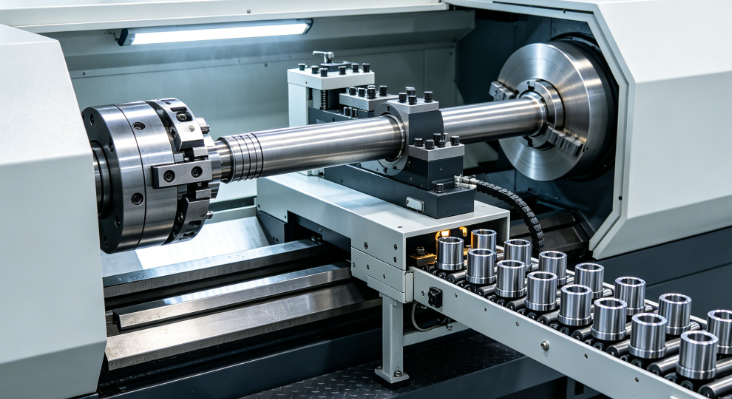
A lathe with a full-length bar feeder loaded with raw stock can run unattended for 10+ hours straight. No overtime pay, no night shift staff required.
[Image 4: Real Zorapid production cell – lights-out turning running overnight with long bar feeder]
We regularly run our Swiss turning cells unmanned after hours for mid and high batch orders. Our production capacity effectively doubles without expanding floor space or hiring extra operators.
4. Stabilize Part Quality & Lower Rework Time
Human error during manual bar loading creates consistent quality headaches: crooked seating, uneven clamping, inconsistent stock protrusion.
Bar feeders feed material with repeatable precision cycle after cycle. Tight tolerances (±0.002mm to ±0.005mm) hold steady across thousands of parts, reducing inspection time and rework for defective units.
What Types Of Turning Operations Benefit Most From Bar Feeder Automation?
Bar feed upgrades deliver the strongest ROI for these common turning jobs:
- High-volume small diameter turned parts (Ø0.8mm – Ø50mm)
- Swiss-type CNC turning for medical implants, aerospace tiny shafts, electronics pins
- Mass production brass, aluminum, steel fasteners and connector components
- Medium batch recurring customer orders with consistent bar stock material
- Shops limited on available skilled operator labor
Bar feeders still add value for low-volume prototype runs, but the clear financial payoff comes with steady, repeat production batches.
Real-World ROI Breakdown For Bar Feeder Automation
Most shop owners worry about upfront equipment cost, but the payback window is surprisingly short for active turning lines.
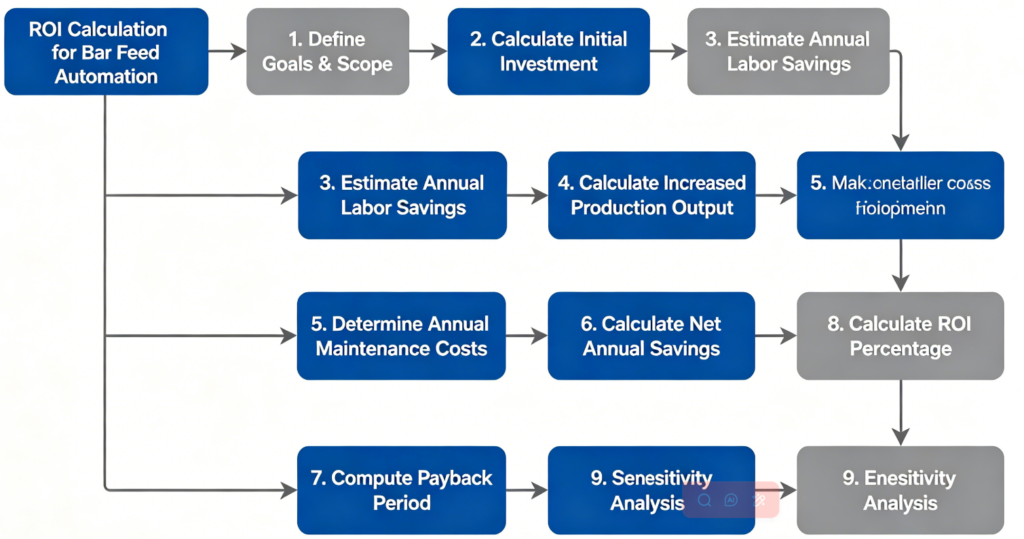
Sample client case from Zorapid’s turning department:
- Original setup: 2 Swiss lathes with fully manual bar loading
- Monthly output: 22,000 finished shaft parts, 2 dedicated operators
- Labor + idle machine loss monthly cost: $7,800
- After installing two long bar feeders: Monthly output jumps to 51,000 parts, single operator covers both cells Monthly combined labor & waste savings: $5,100 Full equipment payback timeline: 7.5 months
Key factors that speed up ROI:
- High daily production volume
- Expensive raw bar materials (titanium, stainless steel, Inconel)
- High local operator hourly labor rates
- Opportunities to run overnight unmanned shifts
Zorapid’s Top Practical Tips To Maximize Bar Feeder Turning Efficiency
- Match feeder bar length to your most common raw stock Standardize on full 3m bars to cut remnant waste and reduce frequent reloading.
- Use proper bar support liners Poor liner fit causes vibration, ruins surface finish and shortens tool life. Swap liners to match your bar diameter every setup.
- Schedule full bar rack loading at shift start Stack all required material at once to extend unattended run time through lunch breaks and end of shift.
- Pair bar feeders with high-pressure coolant & tool monitoring Combine automation with tool breakage detection to fully eliminate overnight supervision needs.
- Train operators on quick feeder changeover Fast material diameter swaps cut downtime between different customer part batches.
Final Wrap-Up
Bar feeder automation isn’t just a fancy add-on for luxury manufacturing shops—it’s a necessary efficiency upgrade for any turning operation chasing higher throughput, lower labor cost, and consistent quality.
Manual bar loading creates avoidable bottlenecks that cap how much your CNC lathes can produce each day. Automatic bar feeders fix that core limitation: higher spindle utilization, fewer staff hours per part, overnight lights-out production, and less scrap from human error.
If your turning cells are stuck with slow manual stock handling and you’re struggling to hit order deadlines, bar feeder automation is one of the fastest ways to expand production without expanding your team or floor space.
If you’d like to see how Zorapid leverages automated bar feed Swiss turning for high-volume precision components, send your part drawing for a free production capacity and lead time assessment.
FAQ
Can bar feeders work with all CNC lathes and Swiss turn machines?
Most modern CNC lathes, sliding head Swiss machines and fixed-head turning centers support aftermarket bar feeder integration. Older legacy lathes may require minor spindle or control upgrades. Our engineering team can assess your existing machine model to confirm compatibility.
How much extra production output can I expect after adding bar feeder automation?
Average throughput jumps 120%–150% for standard turning batches. Lights-out overnight runs add another 8–12 hours of untapped production time on top of regular day shift output.
Do bar feeders eliminate the need for turning operators entirely?
No, but they drastically cut how many staff you need per machine. A single skilled operator can supervise 3 to 5 automated bar feed lathes at once, focusing on setup, quality checks and maintenance instead of repetitive bar loading.
Is bar feeder automation only for high-volume mass production?
It delivers the best ROI for high repeat batches, but even low-to-medium volume shops gain efficiency benefits: less scrap from misloading, shorter cycle interruptions, and the ability to run small batches unattended after hours.
Can bar feeders handle specialty hard metals like titanium, Inconel or stainless steel?
Yes. Heavy-duty long bar feeders support all common turning alloys, including abrasive high-temperature metals. Just match the feeder liner and guide system to your material hardness and bar diameter to avoid vibration.
How long is the typical payback period for a bar feeder system?
For active high-throughput turning cells, full payback usually lands between 6–10 months. Shops with high labor rates or expensive raw materials often see ROI even faster.
Will a bar feeder reduce part quality consistency or surface finish?
The opposite is true. Automated feeding delivers uniform bar positioning every cycle, cutting scrap from misalignment and vibration. Surface roughness and dimensional tolerance stability improve noticeably compared to manual loading.
Can I run bar feeders unattended overnight without staff supervision?
Absolutely, when paired with tool breakage monitoring, coolant level sensors and part offloading systems. At Zorapid, we routinely run our bar feed Swiss cells lights-out through nights and weekends for qualified batch orders.
What’s the main difference between short bar feeders and full-length long bar feeders?
Short bar feeders have a compact footprint for limited floor space and smaller batch runs. Long bar feeders hold full 3m raw stock, minimize bar waste, and support extended unmanned production shifts—ideal for high-volume continuous turning work.
Can Zorapid offer automated bar feeder turning for custom precision turned parts?
Yes. Our full Swiss turning workshop is equipped with modern long bar feeder automation for small to large batch precision components across medical, automotive and aerospace industries. Send your CAD file for a free production efficiency evaluation and formal quote.