Published: Zorapid.Ltd
If you run high-precision CNC jobs, you know the pain all too well.
You lock in your CAM program, set up fixtures, hit cycle start—and end up with chatter ripples, exit burrs, thin-wall warpage, or unexpected tool collision. You waste expensive bar stock, burn through carbide cutters, and push delivery dates back for your aerospace, medical or automotive clients. Trial-and-error physical test cuts eat up hours of machine time, and rework can push your scrap rate above 10% on complex parts.
For decades, machinists only fixed defects after they showed up on the finished workpiece. Today, digital twin simulation flips the whole workflow on its head. We catch every machining flaw long before a single chip hits the shop floor.
At Zorapid, we run full-physics digital twin simulation on every 3-axis and 5-axis CNC project. We don’t just run basic CAM toolpath checks. We build a 1:1 virtual copy of the machine, cutting tool, fixture, raw material and cutting environment. The result? We cut CNC defects by 85%, slash rework, and hold tight micron tolerances consistently for global OEM buyers.
Let’s break down exactly how this technology stops the most common CNC defects cold, with real shop results from our precision manufacturing center.
What Is a CNC Machining Digital Twin
A basic CAM simulation only checks if your tool will crash into the fixture.
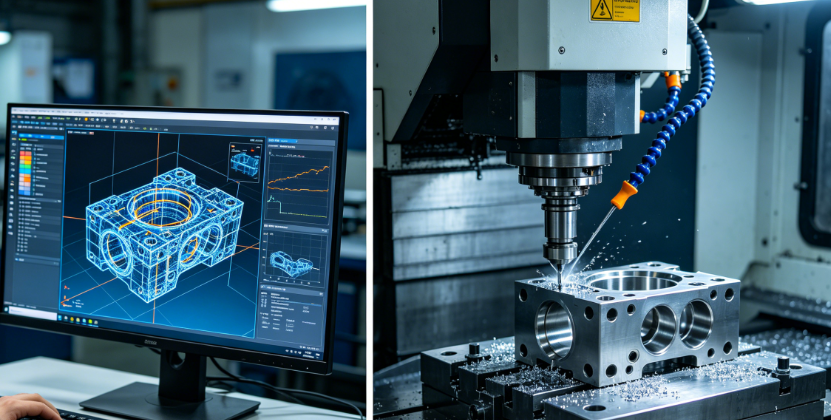
A digital twin is a high-fidelity virtual replica of your full machining system, with live physical behavior built in:
- Exact kinematics of your 5-axis mill (spindle acceleration, axis backlash)
- Material physics: thermal expansion, chip formation, residual stress
- Real-time cutting force, vibration frequency and tool deflection
- Fixture clamping deformation under heavy milling loads
We import your STEP or SolidWorks CAD file, build the virtual machine model, then run the full NC code inside the digital environment. The software predicts every physical reaction during cutting. Every chatter wave, burr formation point, thermal drift or thin-wall bend pops up on screen before you touch metal.
No more guessing feeds and speeds. No more costly test runs. Every defect gets fixed in the virtual world first.
4 Common CNC Defects That Digital Twin Simulation Eliminates
1. Chatter Vibration & Surface Rippling (Biggest 5-Axis Headache)
The problem: Deep cavity milling, long overhang tools, and thin-walled titanium (Ti-6Al-4V) or Inconel 718 parts create unstable vibration. Chatter leaves wavy surface marks, ruins Ra finish, and shortens tool life drastically. Traditional CAM cannot predict vibration frequencies.
How digital twin fixes it:
The simulation runs a stability lobe analysis, mapping high-risk spindle speed zones where chatter will kick in. Our engineers shift RPM and adjust climb milling toolpaths virtually, locking in a stable cutting window.
Zorapid Case:
We machined thin-wall aerospace In718 turbine components with 0.7mm wall thickness. Without simulation, initial test runs created heavy chatter, with surface roughness spiking above Ra 3.2μm. After digital twin vibration modeling, we reworked the toolpath and adjusted cutting parameters. The finished parts hold Ra <0.4μm with zero vibration marks, and tool life jumped by 40%.
2. Exit Burrs & Edge Chipping
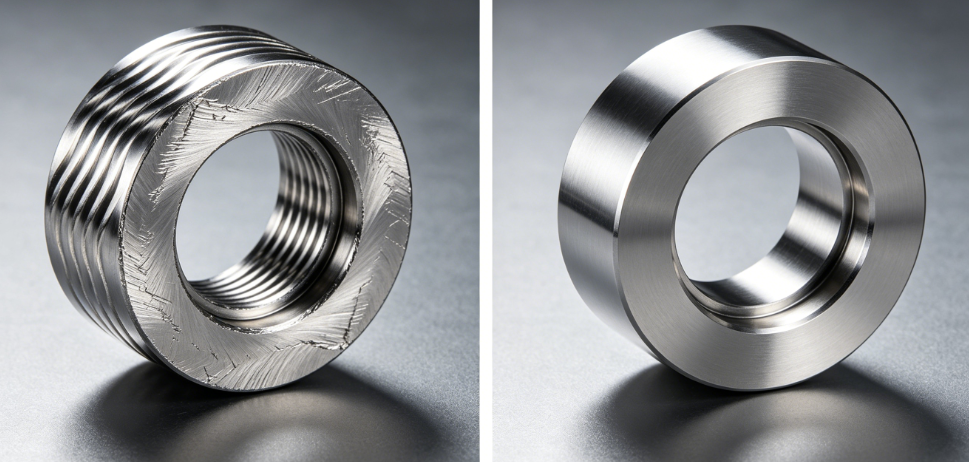
Soft aluminum, copper and PEEK polymer parts always develop sharp exit burrs when the tool breaks through the workpiece edge. Manual deburring adds extra labor, and micro-burrs ruin precision assembly for medical and electronic components.
Digital twin models material flow as the cutter exits the cut. It pinpoints exactly where burrs will form based on tool geometry, feed rate and exit angle. We tweak the finishing toolpath, add lead-out moves, and switch cutting direction in the simulation.
Result on our aluminum medical housing runs:
Exit burrs dropped from 90% occurrence down to zero, and we cut manual deburring labor out entirely.
3. Thin-Wall Warpage & Thermal Distortion
Thin structural brackets and mold inserts bend from two factors: residual cutting stress and spindle heat expansion. Even with tight fixture clamping, dimensional drift can push parts outside ±0.005mm tolerance after cooling.
Our digital twin simulates heat buildup layer by layer, calculating thermal expansion of the workpiece and machine spindle during continuous cutting. We split roughing passes, add cooling pauses, and resequence machining operations to release stress evenly.
One semiconductor thin-wall aluminum tray project previously showed 0.012mm warpage after machining. After virtual thermal simulation, we reorganized the milling order. Post-machining deformation fell below 0.003mm, fully meeting client CMM inspection standards.
4. Tool & Machine Collision Damage
5-axis simultaneous movement creates hidden clash risks between tool holders, rotary tables and fixtures. One crash can crack a spindle or shatter a high-end carbide tool, costing thousands in downtime and replacement parts.
Offline digital twin runs the full G-code line by line with full machine kinematics active. It catches blind-side collisions that standard CAM simulation misses. At Zorapid, we have eliminated all unplanned machine crashes since we rolled out full digital twin pre-simulation on every program.
Our Zorapid End-to-End Digital Twin Workflow
- DFM + Digital Model Setup We receive your CAD files, run DFM checks, then build a matched digital twin of our 5-axis machining center, tool library and fixture setup.
- Full Physics Simulation Run We execute the complete NC program virtually. The system flags chatter zones, burr hotspots, thermal drift, collision risks and thin-wall deflection.
- Virtual Process Optimization Our programmers revise feeds, speeds, toolpaths and cutting sequences directly inside the simulation until zero defects are predicted. No physical test cuts needed.
- One-Click Production The validated, error-free G-code goes straight to the CNC machine. We run lights-out machining with consistent quality from the first piece to the 500th batch.
- Real-Time Closed-Loop Tuning Machine sensor data feeds back into the digital twin mid-production. If spindle temperature shifts slightly, the model auto-adjusts cutting parameters to hold tight tolerances through long production runs.
Hard Numbers: The ROI of Digital Twin Defect Prevention
We tracked production data across 120+ precision CNC jobs over 6 months:
- Scrap & rework rate reduced from 11.2% down to under 1.7%
- Test cut material waste cut by 76% (no more sacrificial blanks for trial runs)
- Unplanned downtime from tool breakage & machine crashes dropped to zero
- Delivery lead times shortened by 22%, since we skip iterative physical testing
- Tolerance consistency improved; 99.4% of parts pass first-article CMM inspection
For aerospace, medical implant and semiconductor CNC parts, first-pass yield makes or breaks your project timeline. Digital twin simulation turns unpredictable trial-and-error machining into fully predictable zero-defect production.
Which Parts Benefit Most From This Simulation?
Digital twin defect control delivers the biggest gains on these high-complexity jobs:
5-axis Inconel & titanium aerospace structural components
Thin-wall medical-grade Ti-6Al-4V implant blanks
Aluminum semiconductor vacuum chambers with micron tolerances
PEEK & engineering plastic precision housings prone to edge burrs
Injection mold cores with deep cavities & long tool overhangs
Low-volume prototype batches where material cost is extremely high
If you keep fighting surface flaws, warpage and inconsistent quality on complex CNC parts, pre-simulation is no longer an upgrade—it’s a production necessity.
Wrap-Up | Partner With Zorapid For Zero-Defect CNC Machining
Troubleshooting defects after machining wastes time, money and tight project deadlines. Digital twin simulation lets us predict, adjust and eliminate every flaw before the first cut.
At Zorapid, our 3000㎡ precision manufacturing center runs digital twin virtual simulation paired with 5-axis CNC and SLM metal 3D hybrid manufacturing. We hold ISO & AS quality certifications, serve OEM clients across North America, Europe and Australia, and guarantee first-pass yield on tight-tolerance precision parts.
Send over your CAD drawing today. We will run a free digital process simulation report, flag potential machining defects upfront, and lock in a stable, error-free production plan.
FAQ
What CNC machining defects can a digital twin simulation eliminate?
Our digital twin catches almost all common flaws ahead of physical cutting. This includes chatter vibration, surface ripples, exit burrs, thin-wall warpage, thermal distortion, tool deflection, edge chipping, and 5-axis machine collisions. We also predict residual stress deformation on titanium, Inconel 718 and high-strength aluminum parts.
Is digital twin simulation the same as regular CAM toolpath verification?
Definitely not. Standard CAM only checks for simple tool crashes. Our high-fidelity digital twin builds a 1:1 virtual copy of the whole system. It calculates spindle vibration, cutting force, heat expansion, fixture deformation and material flow. We predict physical machining results, not just tool movement.
Do I need to send special files to start the digital twin analysis at Zorapid?
Just share your standard CAD files in STEP, IGES or SolidWorks format. We will build the virtual machine model, import your NC code, and run full physics simulation. No extra drawing revisions are required from your side. We deliver a defect risk report free of charge for OEM customers.
Will digital twin simulation add extra lead time to my CNC order?
It shortens lead time instead. Traditional manufacturing requires multiple test cuts and rework. With virtual pre-optimization, we skip sacrificial blanks and trial runs. Most projects see a 20%+ reduction in overall production cycles. Programming happens offline without occupying machine runtime.
Does digital twin work for both prototype small batches and mass CNC production?
Yes. It delivers the highest ROI on low-volume high-cost prototypes made from Ti-6Al-4V, IN718 and PEEK. For mid-batch and mass production, the validated toolpath keeps quality consistent from the first piece to the last batch, raising first-pass inspection yield steadily.
Can digital twin control thin-wall deformation under 0.005 mm tolerance?
We can. The simulation layers thermal buildup and clamping stress, then rearranges milling sequences and roughing passes to release internal stress evenly. In our semiconductor thin-wall projects, we consistently bring warpage down below 0.003 mm to meet strict CMM tolerance requirements.
Will digital twin simulation increase my CNC manufacturing cost?
It drastically lowers total cost. Scrap rate, wasted raw material, broken cutters and rework are cut sharply. On complex aerospace and medical components, customers often save more than 80% on reject losses. The virtual optimization service is included for all Zorapid precision CNC orders.
Can digital twin avoid 5-axis simultaneous motion collisions?
Yes. Standard offline simulation often misses blind-side clashes on rotary tables and tool holders. Our machine kinematics model runs the full G-code line by line. Since we implemented digital twin verification, Zorapid has zero unplanned spindle or fixture crashes on 5-axis jobs.
What materials perform best with digital twin defect prediction?
Hard-to-machine materials gain the biggest benefits: titanium alloy, Inconel 718, stainless steel, medical-grade PEEK, aluminum die-cast blanks and mold steel S136 / NAK80. We accurately forecast burr formation, chatter and heat distortion for all these alloys.
How do I apply for a free digital twin process check from Zorapid?
Simply submit your CAD files and tolerance requirements via our contact page. Our engineering team will finish the virtual defect analysis within 24 working hours and send you a written optimization report with revised toolpath suggestions.