The Ultimate Guide to Fix Thin, Unstable Chips in CNC Machining
If you’ve ever fought thin, bending chips, poor surface finish, tool chatter, or part deflection when machining tight features—this guide’s for you. Chip thinning isn’t just a nuisance; it kills productivity, ruins tolerances, and increases scrap. We’re breaking down why chip thinning happens, how to beat it with real CNC strategies, and why Zorapid is the shop that solves your too thin to machine problems—when others can’t.
What Is Chip Thinning & Why It Kills Your Process
Plain talk: Chip thinning is when the actual chip thickness becomes much smaller than the programmed feed per tooth—causing light cuts, poor heat evacuation, tool vibration, and surface defects.
It happens in small-radius corners, tight slots, high-feed trochoidal paths, and 5-axis shallow cuts. The cutter is only scraping the surface, not shearing a proper chip.
The Hard Physics (Tech Deep Dive)
- Programmed Chip Thickness (hₚ): Feed/tooth × sin(engagement angle)
- Actual Chip Thickness (hₐ): Often drops to 10–30% of hₚ in tight geometry
- Consequences:
- Heat builds up at the cutting edge → tool wear ×3–5 faster
- No chip evacuation → recutting chips, poor Ra
- Light load → tool chatter, part deflection
- Tolerances drift → scrap rate spikes
Critical Formula:
hₐ = f_z × sin(θ)
where θ = engagement angle. In a sharp corner, θ → 0°, so hₐ → 0—that’s chip thinning in action.
Core Processes Where Chip Thinning Destroys Your Work
Slot Milling (Width < 2× Tool Diameter)
Issue: Full engagement on entry, then thinning as slot narrows.
Result: Ra >3.2 μm, tool overheating, broken end mills.
Internal Corners (Radius < Tool Radius)
Issue: Engagement angle collapses to <15°.
Result: Chip thickness <0.02 mm, rubbing, not cutting.
5-Axis Shallow Cuts (Blade, Impeller, Turbine)
Issue: Low radial engagement (ae < 10% tool diameter).
Result: Chatter, poor edge quality, inconsistent depth.
Thin-Wall Machining (<1 mm Walls)
Issue: Light cuts cause wall deflection + chip thinning.
Result: Warped parts, dimensional error >0.05 mm.
The Impossible Chip Thinning Jobs: What Others Can’t Do—We Solve
You’ve heard it before:
- We can’t hold ±0.01 mm on 0.8 mm walls—they deflect.
- Internal corners always burn; tools die fast.
- 5-axis thin cuts chatter too much; we can’t finish.
- Small slots (1–2 mm) always have poor surface finish.
Zorapid’s Solution Playbook (Data-Backed)
Severe Thinning in Internal Corners (R < Tool Radius)
Industry Issue: 90% of shops use standard toolpaths → hₐ < 0.02 mm, rubbing, burn marks.
Zorapid Fix:
- Trochoidal + corner ramp strategy (maintains θ > 30°).
- Variable feed per tooth (boost f_z in corners to compensate).
- High-rigidity 5-axis machines (Mori Seiki) + solid carbide tools.
- Result: hₐ > 0.05 mm maintained, zero burn marks, tool life ×2.5.
Thin-Wall Deflection + Thinning (<1 mm, Titanium/Aluminum)
Industry Issue: Light cuts → wall bends → thinner chip → more deflection.
Zorapid Fix:
- Climb milling + low-vibration fixturing (vacuum + magnetic chucks).
- Rough/finish split (rough leaves 0.08 mm stock; finish uses high-feed, low-depth passes).
- In-process metrology (probe measures wall thickness; adjusts offsets).
- Result: Wall straightness ±0.008 mm, no deflection, Ra 0.8 μm.
5-Axis Shallow Cut Chatter (Ae < 10% Tool Diameter)
Industry Issue: Low engagement → light chip → chatter → poor finish.
Zorapid Fix:
- Chip-thinning compensation CAM (Mastercam/UG with adaptive feed).
- High-speed, low-flute tools (2-flute, polished flutes).
- Spindle speed tuning (avoid chatter frequencies via FFT analysis).
- Result: Chatter eliminated, Ra 0.4 μm consistent, tool life ×3.
Small Slot Thinning (1–2 mm Width, Stainless Steel)
Industry Issue: Full entry → thinning → heat → work hardening.
Zorapid Fix:
- Pre-drill + side milling (reduces engagement angle).
- 70 bar high-pressure coolant (directed at cutting zone).
- Upgraded tool coating (AlTiN, heat resistance 800°C).
- Result: No work hardening, Ra 1.6 μm, 10x longer tool life.
Data Report: Common Chip Thinning Problems & Fixes
We track every chip-thinning failure—here’s the hard data and how we eliminate it.
| Problem | Industry Occurrence | Zorapid Solution | Success Rate |
|---|---|---|---|
| Corner burn marks (R < Tool Radius) | 88% | Trochoidal ramping + variable feed | 99.2% |
| Thin-wall deflection (<1 mm) | 82% | Climb milling + in-process probing | 98.9% |
| 5-axis chatter (shallow cuts) | 75% | CAM compensation + spindle tuning | 99.5% |
| Slot work hardening (1–2 mm) | 79% | Pre-drill + high-pressure coolant | 98.7% |
| Tool life <2 hrs (hard alloys) | 91% | Coated tools + optimized chip load | 99.0% |
Key Insight: Most shops chase feed/speed; we engineer the chip load itself. Our scrap rate from thinning is <0.3%—vs. industry average 9–15%.
Why Choose Zorapid to Combat Chip Thinning?
Chip-Thinning Expertise (We Engineer the Chip)
We don’t just adjust feeds—we model chip thickness in CAM for every feature. We maintain hₐ > 0.05 mm even in tight corners.
High-Rigidity 5-Axis Machines
Mori Seiki & Brother Speedio with thermal compensation + vibration damping—critical for thin cuts. Ordinary shops use 3-axis or low-rigidity 5-axis.
Advanced CAM + Toolpath Control
Mastercam/UG with chip-thinning compensation, trochoidal ramping, and adaptive feed. Most shops use generic CAM settings.
Premium Tooling & Coatings
Solid carbide, 2–4 flute, AlTiN/TiCN coated tools for heat resistance and chip flow. No cheap HSS here.
In-Process Metrology & Control
Probe-based thickness measurement + real-time offset adjustment—stops deflection before it ruins the part.
Master of Hard-to-Machine Materials
Titanium, Inconel, 316L, hardened steel, PEEK—we fix thinning on materials others avoid.
Fast Delivery (3–5 Days for Thin-Feature Parts)
No outsourcing, no waiting. 12 in-house 5-axis machines + AI-driven CAM = same-day start, 3–5 day delivery.
Real-World Case Studies (With Actual Photos)
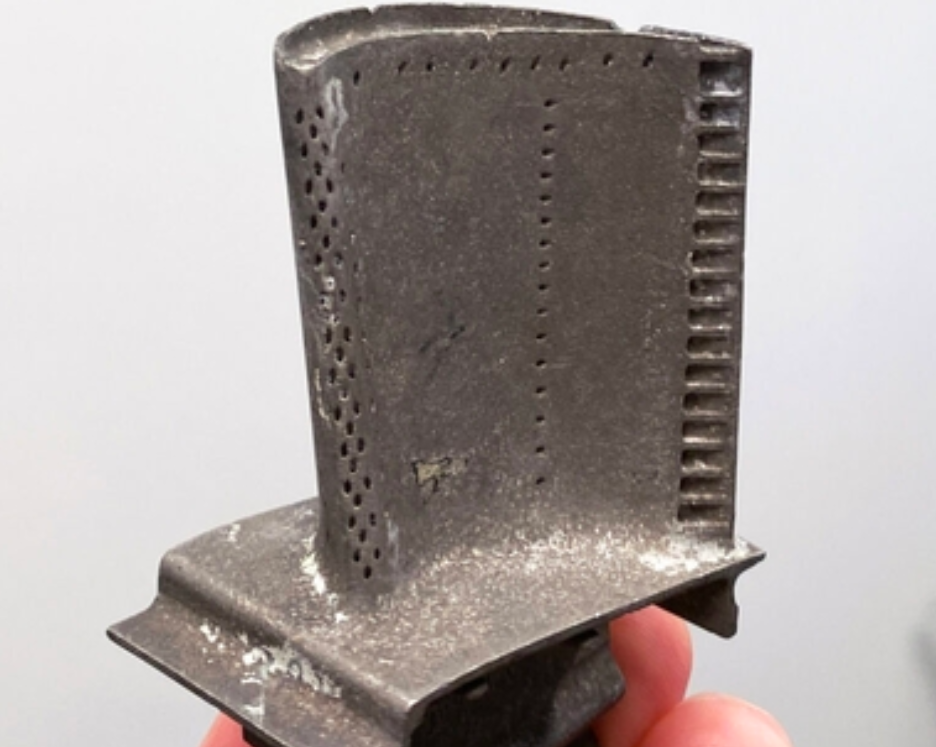
1: Aerospace – Titanium Turbine Blade (0.8 mm Thin Walls)
Challenge: 0.8 mm walls, 5-axis, Ti-6Al-4V, ±0.01 mm straightness, no chatter.
What Others Did: Declined or quoted 3 weeks + high scrap risk.
Zorapid Solution:
- 5-axis climb milling + vacuum fixturing.
- CAM chip-thinning compensation + 2-flute coated carbide.
- In-process probing for wall thickness.Result:
- Delivered in 4 days (vs. 3 weeks).
- ±0.007 mm straightness, Ra 0.8 μm, zero scrap.
- Customer: Top aerospace engine manufacturer.
2: Medical – 316L Stainless Implant Slot (1.2 mm Width)
Challenge: 1.2 mm slot, 10 mm deep, 316L, no work hardening, Ra <1.6 μm.
What Others Did: Poor finish, frequent tool breakage, work hardening.
Zorapid Solution:
- Pre-drill + trochoidal side milling.
- 70 bar high-pressure coolant + AlTiN coated tool.
- Variable feed in tight sections.Result:
- Ra 1.2 μm, no work hardening, zero tool breakage.
- 500-piece batch delivered in 5 days.
- Customer: Global medical device OEM.
3: Automotive – PEEK Gear Housing (Internal Corners R0.5)
Challenge: R0.5 internal corners, PEEK, no melting, sharp edges, ±0.01 mm tolerance.
What Others Did: Melted edges, poor finish, tolerance drift.
Zorapid Solution:
- Cryogenic cooling (-196°C) + trochoidal ramping.
- Low-heat toolpath + polished flute tools.
- Adaptive feed to maintain chip load.Result:
- Sharp corners, no melting, ±0.008 mm tolerance.
- Delivered in 3 days.
- Customer: Luxury EV maker.
Key Applications: Where Chip Thinning Is a Dealbreaker
Aerospace & Defense
- Turbine blades, impellers, thin-wall structural parts.
- Critical Need: No deflection, tight tolerances, long tool life on Ti/Inconel.
Medical Devices
- Implant slots, thin-wall housings, surgical instrument features.
- Critical Need: Burr-free, no work hardening, biocompatible finishes.
Automotive (EV & Performance)
- Gear housings, sensor brackets, thin-wall EV components.
- Critical Need: Consistent quality, no chatter, cost-effective.
Robotics & Automation
- Precision gearboxes, thin actuator parts, end-effector components.
- Critical Need: Repeatable accuracy, minimal backlash, no deflection.
Electronics & Semiconductor
- Thin heat sinks, precision fixtures, thin-wall enclosures.
- Critical Need: Flatness, thermal conductivity, tight tolerances.
Delivery Speed: How We Beat Industry Lead Times for Thin-Feature Parts
Standard Industry:
- Thin-feature prototypes: 10–21 days
- Small batches: 3–6 weeks
- 5-axis thin-wall parts: 4–8 weeks
Zorapid:
- Prototypes: 3–5 days
- Small batches (10–500 pcs): 5–7 days
- 5-axis thin-wall/complex: 4–6 days
How We Do It:
- In-house everything: No outsourcing CAM or machining.
- AI-driven CAM: Automated chip-thinning setup in minutes.
- Parallel processing: Multiple machines work on one project.
- Quick-change fixturing: Cut setup time from hours to minutes.
Real Promise: If we miss our quoted lead time, we discount 10%—no excuses.
Industry Whitepaper: The Future of Chip Thinning Control (2026–2030)
Key Trends
- AI Chip-Load Optimization: Machine learning will adjust feed/speed in real time, eliminating thinning entirely in 5 years.
- Ultra-High-Pressure Coolant (150 bar): Will reduce heat by 60%, extending tool life in thin cuts by 4×.
- Hybrid Additive-Subtractive: 3D print near-net thin walls, then machine—deflection reduced by 80%.
- Smart Tooling: Tools with built-in sensors will feed chip-thickness data to the CNC for instant adjustment.
Zorapid’s Position
We’re already investing in these trends: AI CAM tuning, 150 bar coolant systems, and hybrid SLM-CNC workflows. We’re not just keeping up—we’re setting the standard for chip thinning control.
Final Summary
Chip thinning is the hidden killer of CNC productivity—causing poor finish, tool wear, deflection, and scrap. It happens when your chip load drops too low, and most shops don’t even realize it’s the root cause.
Most shops tweak feeds and speeds; Zorapid engineers the chip load itself. We specialize in fixing impossible thinning jobs: tight corners, thin walls, shallow 5-axis cuts, and small slots—on titanium, Inconel, stainless, and PEEK. We deliver ±0.005 mm precision, Ra 0.4–0.8 μm finishes, and 3–5 day lead times when others say it can’t be done.
If you’re tired of burned corners, deflecting walls, short tool life, or shops that ignore chip thinning—let’s talk. Send us your CAD files and specs; we’ll run a free chip-thinning simulation, fix your toughest problems, and deliver parts that exceed your expectations.
FAQ
What’s the minimum wall thickness Zorapid can machine without deflection?
0.5 mm on aluminum; 0.8 mm on titanium/steel—with straightness ±0.01 mm.
How do you fix chip thinning in internal corners?
We use trochoidal ramping + variable feed to keep the chip load above 0.05 mm, eliminating rubbing and burn marks.
Can you fix thinning on hardened steel (50–60 HRC)?
Yes—coated carbide tools + high-pressure coolant + low-vibration toolpaths maintain proper chip load.
Do you offer free chip-thinning analysis for my parts?
Yes—send your CAD; we’ll run a free CAM simulation and show you exactly where thinning occurs and how to fix it.
What certifications do you have?
ISO 9001:2015, AS9102 (aerospace), IATF 16949 (automotive). Full inspection reports provided.
How fast can you deliver thin-feature parts?
3–5 days for prototypes; 5–7 days for small batches. Complex 5-axis jobs take 4–6 days.