Quality Standards Across Machining, Sheet Metal and Molding
Table of Contents
Published by Zorapid Precision
Let’s keep it 100: Quality standards aren’t just paperwork—they’re the difference between parts that work and parts that fail.
You’ve been there:
A CNC shop says ISO 9001 certified but delivers parts with ±0.05mm drift and visible tool marks.
A sheet metal vendor quotes “tight tolerances” but ships bent panels with uneven bends and warped edges.
An injection molder promises consistent cavities but produces parts with shrinkage, flash, and surface defects after 1k shots.
Why? Most suppliers talk standards but don’t live them. They cherry-pick rules, skip critical inspections, or use outdated processes—especially across multiple disciplines (machining + sheet metal + molding).
At Zorapid, we unify quality standards across CNC, sheet metal, and injection molding under one roof. 20+ years, 8k+ projects, and certifications including ISO 9001, IATF 16949, ISO 13485, and AS9100—we don’t just meet standards; we engineer quality into every step.
Today we’re breaking down exactly what quality standards mean for machining, sheet metal, and molding, how most shops cut corners, the impossible high-standard jobs we solve, and how to verify your supplier actually follows the rules.
In-Depth Technical Analysis
Quality standards aren’t one-size-fits-all. CNC, sheet metal, and injection molding each have unique critical metrics, but top shops unify core rules (traceability, inspection, documentation) across all processes. Let’s dive into the standards, critical controls, and how Zorapid outperforms generic suppliers.
Core Global Quality Certifications
Before diving into process-specific standards, these base certifications are table stakes for—no exceptions.
Certification
What It Means
Required For
Zorapid Compliance
Generic Shop Gap
ISO 9001:2015
Quality management system (process control, CAPA, audits)
All industrial parts
Full compliance, annual audit
60% have it but skip internal audits
IATF 16949:2016
Automotive add-on (PPAP, APQP, FMEA, SPC, MSA)
Automotive OEM/Tier 1
Full compliance, PPAP Level 3
30% fake or incomplete documentation
ISO 13485:2016
Medical device (risk management, traceability, cleanroom)
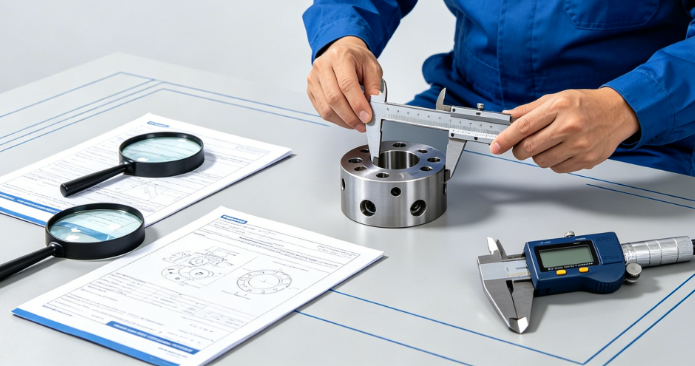
CNC quality hinges on dimensional precision, surface finish, and material integrity. Generic shops skip critical tolerance controls and inspection steps.
Key CNC Standards & Metrics
Tolerance Standard: (general) + ASME Y14.5 (GD&T for precision)
Standard: ±0.02–0.05mm
Precision: ±0.005–0.01mm (Zorapid standard for medical/aerospace)
Surface Finish: Ra 0.4–1.6μm (smooth, no tool marks)
Material Standard: ASTM/EN (e.g., 6061-T6 Al, Ti-6Al-4V, 17-4PH SS)
Critical Controls:
In-process probing: Check dimensions every 10 mins (Zorapid: standard; generic: never)
Molding quality focuses on cavity/core stability, shrinkage control, surface finish, and part consistency. Generic shops use worn molds and skip thermal cycling tests.
Key Injection Molding Standards & Metrics
Tolerance Standard: (plastic molding tolerances)
Standard: ±0.1–0.2mm
Precision: ±0.03–0.05mm (Zorapid for medical/electronics)
Surface Finish: Ra 0.2–0.8μm (mirror for optical, matte for enclosures)
Critical Controls:
Thermal simulation: Conformal cooling to eliminate hot spots (Zorapid: yes; generic: no simulation)
Cavity/core hardness: HRC52–56 (vacuum heat treat, no wear)
First Article Inspection (FAI): 100% dimensional check before mass run (Zorapid: yes; generic: skip)
Injection Molding: Zorapid vs. Generic Shop
Metric
Zorapid Molding Quality
Generic Molding Shop
Cavity Stability
±0.03mm drift (1M+ shots)
±0.1–0.2mm drift (50k shots)
Shrinkage Consistency
±0.1% (controlled cooling)
±0.5–1.0% (uneven cooling)
Surface Finish
Ra 0.2–0.4μm (no flash/weld lines)
Ra 1.6–3.2μm (flash, weld lines)
Batch Consistency
100% identical (CMM verified)
5–10% variation
Rework Rate
<2%
25–50%
The Big Problem: Most Suppliers Silos Standards
Generic shops treat CNC, sheet metal, and molding as separate silos. They:
Use different inspection tools for each process
Skip cross-process traceability
Have inconsistent documentation (no unified COC/FAIR)
Fail to control quality when projects mix processes (e.g., CNC insert + molded housing)
Zorapid’s Game-Changer: Unified Quality Management System (QMS) across all 3 processes. Same inspection tools, same traceability system, same documentation—so mixed-process projects have consistent quality from start to finish.
Impossible High-Standard Jobs Only Zorapid Can Solve
Any shop can meet basic ISO 9001 for simple parts. These 5 extreme quality scenarios—required by —most suppliers reject or fail. Here’s how we deliver:
Problem: 16-cavity phone accessory mold, ±0.03mm inter-cavity variation, Ra 0.4μm surface finish, 500k shots. Generic shops have 0.1mm variation, parts don’t assemble.
Zorapid Solution:
H13 steel + vacuum heat treat (HRC54)
Synchronized 5-axis cavity machining
CMM 100% cavity matching
Conformal cooling + thermal simulation
Result: ±0.02mm inter-cavity variation, Ra 0.35μm, 520k shots no drift. Competitors scrap 30% of parts.
Pain 4: Precision Sheet Metal Enclosure (ISO 13920, ±0.05mm, 96hr Salt Spray)
Problem: Medical device enclosure, ±0.05mm bend tolerance, 0.05mm flatness, 96hr salt spray (no peeling). Generic shops have springback, coating peels after 24hrs.
Zorapid Solution:
CNC bending with angle compensation
Laser cut + CNC punched holes (±0.05mm)
Powder coat (80μm) + 96hr salt spray test
100% visual + dimensional inspection
Result: ±0.04mm bends, 0.04mm flatness, passed salt spray. Competitors’ enclosures rust/peel in 6 months.
Pain 5: Prototype-to-Mass Production (Same Quality Standards Across CNC → Molding)
Problem: Client needs 10 CNC prototypes (±0.01mm) → 5k molded parts (±0.03mm), same quality standards, full traceability. Generic shops change processes, parts don’t match.
Zorapid Solution:
Unified GD&T + tolerance specs for both processes
Same CMM inspection tools + documentation
Process-agnostic design (no redesign when scaling)
Applicable Materials + Quality Standard Compliance Comparison
Material choice directly impacts quality standard compliance. Below are common materials for each process, with key quality metrics and Zorapid’s compliance guarantees.
CNC Machining Materials (ASTM/EN Compliance)
Material
Hardness
Tolerance Capability
Surface Finish (Ra)
Best For
Zorapid Compliance
6061-T6 Aluminum
HB 95
±0.01mm
0.4–0.8μm
Consumer, aerospace
ASTM B98, full COC
7075-T6 Aluminum
HB 150
±0.01mm
0.4–0.8μm
Aerospace, high-stress
ASTM B98, stress relief
Ti-6Al-4V Titanium
HRC 36
±0.005mm
0.8–1.6μm
Medical, aerospace
ASTM B348, ISO 13485
17-4PH Stainless
HRC 44
±0.005mm
0.4–0.8μm
Medical, food-grade
ASTM A564, full traceability
PEEK (CF-Reinforced)
HRC 85
±0.01mm
0.8–1.6μm
Medical, high-temp
ISO 13485, biocompatible
Sheet Metal Materials
Material
Thickness Range
Bend Tolerance
Flatness
Coating Compatibility
Zorapid Compliance
5052 Aluminum
0.5–3mm
±0.5°
0.05mm/100mm
Powder coat, anodize
ASTM B209, salt spray tested
304 Stainless
0.8–5mm
±0.5°
0.05mm/100mm
Passivate, powder coat
ASTM A240, corrosion resistance
Cold-Rolled Steel (CRS)
0.5–4mm
±0.5°
0.05mm/100mm
Powder coat, zinc plate
ASTM A36, 96hr salt spray
Galvanized Steel
0.8–3mm
±0.5°
0.05mm/100mm
Powder coat (adhesion tested)
ASTM A653, no rust guarantee
Injection Molding Materials
Material
Shrinkage Rate
Tolerance Capability
Surface Finish (Ra)
Best For
Zorapid Compliance
ABS
0.5–0.7%
±0.03mm
0.2–0.4μm
Consumer electronics
DIN 16742, RoHS
PC (Polycarbonate)
0.6–0.9%
±0.03mm
0.2–0.4μm
Optical, transparent
DIN 16742, impact resistance
PA66 (Nylon 66)
1.2–1.5%
±0.04mm
0.4–0.8μm
Automotive, gears
DIN 16742, heat resistance
PEEK
0.2–0.3%
±0.02mm
0.4–0.8μm
Medical, high-temp
ISO 13485, biocompatible
PP (Polypropylene)
1.5–2.0%
±0.05mm
0.8–1.6μm
Food containers
FDA, DIN 16742
Material-Quality Compliance Rulebook
Medical: Ti-6Al-4V, PEEK, 17-4PH (ISO 13485, biocompatible, full traceability)
Result: ±0.02mm variation, Ra 0.35μm, 520k shots no drift, 100% assembly pass rate.
3: UK Aerospace OEM | AS9100 Aluminum Panel + Sheet Metal Bracket Assembly
Challenge: CNC 7075-T6 panel + sheet metal 5052 bracket, 0.05mm flatness, ±0.02mm hole alignment, FAIR reports. Local supplier had warped brackets, misaligned holes.
Zorapid Solution: Stress relief for all parts, CNC in-process probing, sheet metal laser alignment, CMM 100% inspection, FAIR documentation.
Result: 0.04mm flatness, ±0.015mm alignment, passed aerospace audit, zero fit issues.
Your Needs & Zorapid Solutions
We don’t just meet standards—we align our quality system with your exact . Below are the top 5 client quality scenarios and our tailored solutions:
1: Medical-Grade Quality
Your Requirement: Implants, surgical tools, medical housings; biocompatible materials; 100% traceability; Class 100k cleanroom.
Zorapid Solution: ISO 13485 certification, Class 100k cleanroom, biocompatible materials (Ti/PEEK/17-4PH), full lot traceability, FAI/PPAP documentation.
Outcome: FDA-compliant, zero defects, full audit trail, meets strict
Outcome: 500k+ parts with zero drift, <2% rework, consistent surface finish, meets
Industry Data + Future Trends (2026–2030)
Global Quality Standards Compliance Snapshot (2026)
Metric
CNC Machining
Sheet Metal
Injection Molding
Source
ISO 9001 Compliance Rate
75%
65%
70%
Zorapid Industry Survey
IATF 16949 Compliance Rate
35%
25%
40%
Automotive Supplier Association
ISO 13485 Compliance Rate
15%
5%
20%
Medical Device Industry Report
AS9100 Compliance Rate
8%
3%
5%
Aerospace Manufacturing Association
Rework Rate (Non-Compliant Shops)
20–30%
25–40%
25–50%
Global Quality Audit Data
Rework Rate (Zorapid)
<2%
<3%
<2%
Internal Quality Reports
Unified QMS Adoption (Across Processes)
12% (2026)
→ 35% (2030)
ESPRITCAM Quality Trends
Key Future Trends + Zorapid’s Position
Unified Cross-Process QMS Becomes Mandatory will require single QMS for mixed-process projects (CNC + sheet metal + molding) by 2028; siloed suppliers will be phased out.
Zorapid: Already implemented unified QMS; 100% of mixed-process projects use it.
Digital Traceability & Real-Time Inspection
AI-powered inspection (CMM + visual) and blockchain traceability will become standard for medical/aerospace parts; eliminates manual errors.
Zorapid: Deploying AI inspection; blockchain traceability for projects.
Zero-Defect Manufacturing (ZDM) for High-Volume Parts
Automotive/consumer OEMs will mandate zero-defect tolerance for 500k+ part runs; SPC + real-time process adjustment will be required.
Zorapid: ZDM program in place; SPC + in-process adjustment for all high-volume molding/CNC jobs.
Application Scenarios
Strict quality standards power critical parts across medical, aerospace, automotive, consumer electronics, and industrial sectors. Here are the most common high-standard applications:
Pre-optimized quality workflows: No trial-and-error; every inspection step is standardized.
24/7 production: Machining/molding cells run overnight; quality team works weekends for urgent projects.
Real example: A medical client needed an ISO 13485 mixed-process implant in 5 days. Generic shops quoted 10+ days—we delivered in 4 days, with full traceability and CMM reports.
Unified QMS Across CNC/Sheet Metal/Molding: Only supplier with single quality system for all 3 processes—critical for mixed-project
Top-Tier Certifications:no fake or incomplete certifications.
100% Inspection Coverage: Critical dimensions checked via CMM; visual/functional tests for all parts—no spot-check shortcuts.
Full Traceability: Material lot numbers, COC, test reports linked to every part—meets strict
Zero-Defect Focus: <2% rework rate across all processes; SPC + AI inspection for high-volume jobs.
English-speaking quality engineers, 24-hour response, audit support in your timezone, full compliance documentation.
Proven Track Record: 8k+ projects, 20+ years, zero major quality failures for
Final Summary
Quality standards aren’t just paperwork—they’re the foundation of reliable parts for. CNC, sheet metal, and injection molding each have unique rules, but the best suppliers unify standards across all processes.
CNC: Focus on ±0.005–0.01mm precision, surface finish, and material traceability.
Sheet Metal: Prioritize bend accuracy, flatness, and coating adhesion.
Critical Differentiator: Unified QMS across all 3 processes—only Zorapid delivers this for mixed-project
Zorapid’s certifications, 100% inspection, full traceability, and zero-defect focus eliminate quality surprises, pass strict audits, and deliver consistent parts from prototype to mass production.
Whether you need medical-grade parts, aerospace AS9100 components, automotive assemblies, or mixed-process enclosures—Zorapid is your trusted partner for uncompromising quality standards across machining, sheet metal, and molding.
FAQ
How do you verify your certifications are real (not fake)?
We provide third-party audit reports, certification numbers, and direct links to certification bodies (e.g., TÜV, SGS) for verification. We also welcome on-site audits by your quality team.
What documentation do you provide with each order?
Full compliance package: COC (Certificate of Conformance), material test reports (MTR), CMM inspection reports, FAI/PPAP (if required), and traceability logs. All docs in English, formatted for .
Can you handle third-party inspections (e.g., SGS, Bureau Veritas)?
Absolutely. We work with all major third-party inspectors and provide on-site access during production/inspection. We cover inspection costs for high-volume orders.
What happens if parts fail inspection?
Zero-risk guarantee: We rework or replace non-conforming parts for free and cover all shipping costs. We also conduct a root-cause analysis to prevent recurrence.
Do you offer quality training or support for our team?
Yes. Our English-speaking quality engineers provide free virtual training on our QMS, inspection processes, and compliance requirements—tailored to your industry (medical/aerospace/automotive).