Published:Zorapid.Ltd
If you manage automotive component programs, you already know this harsh reality:
Selecting the wrong CNC or mold supplier for mass production creates cascading risks. Delayed tool launches, inconsistent dimensional quality, non-conforming batches, failed PPAP submissions, unstable mold cycle times, and line stoppages at your assembly plant.
Automotive manufacturing operates under far stricter rules than general industrial sourcing. Safety-related parts, traceability, IATF 16949, strict statistical process control, and long-term production stability are non-negotiable. Many shops can make prototypes, but very few can sustain consistent quality for multi-year mass production runs of auto CNC components and injection molds.
This guide walks you through a complete, field-proven sourcing workflow for mass-production automotive CNC machining and injection mold suppliers. We share clear audit checklists, critical compliance requirements, common costly pitfalls, and explain how Zorapid delivers stable, audit-ready automotive manufacturing for EV and traditional vehicle programs.
Why Automotive CNC & Mold Sourcing Is Unlike General Manufacturing
Before sending out RFQs, understand the unique pressures every auto supplier must handle:
- Long production lifecycles Automotive programs often run 3–8 years. Suppliers must maintain mold upkeep, spare mold components, repeatable CNC parameters, and archived process records across years.
- Strict automotive quality standards IATF 16949, PFMEA, Control Plans, SPC, MSA, and full Level 3 PPAP are standard gates before mass production release. Generic ISO 9001 is not sufficient.
- Zero-tolerance for batch variation Safety-critical and functional components demand stable Cpk values. Tolerance drift, tool wear management, and in-process inspection must be embedded into daily operations.
- Supply chain resilience requirements Auto OEMs and Tier 1 buyers require contingency plans for machine breakdowns, labor shortages, and material supply disruptions.
- Full material traceability All raw aluminum, steel, engineering plastics, and mold steel must carry mill certificates, batch tracking, and permanent part marking for trace-back.
- IP protection & formal change control Design revisions, mold modifications, and process adjustments require formal customer approval. Unauthorized changes are unacceptable.
Step-by-Step Supplier Screening Workflow for Auto CNC & Molds
Phase 1: Initial Desk Audit (Filter out unqualified candidates early)
Send a standardized pre-qualification questionnaire and request:
- Valid IATF 16949 certificate (verify certification body independently)
- Automotive customer references (Tier 1 / EV OEM projects)
- Machine inventory: 3/5-axis CNC, sinker EDM, wire EDM, mold testing injection presses
- Inspection equipment list: CMM, roughness testers, optical comparators, calibration records
- Past PPAP, PFMEA, Control Plan samples for similar auto components
- Material traceability procedures and NCR / CAPA process records
Phase 2: RFQ Package Alignment
A weak RFQ creates incomparable quotes. Include all these documents:
- 2D drawing with GD&T, special characteristics marked
- 3D STEP model
- Volume forecast (annual quantity, peak demand)
- Required documentation level (PPAP Level 3, material CoC, SPC data)
- Surface specs, plating / anodizing requirements
- Mold specifications: mold steel grade, expected shot lifetime, spare part policy
- Lead time targets for tooling, FAI samples, and mass production deliveries
Phase 3: On-Site or Virtual Factory Audit
Focus your audit on these high-risk areas:
- Separated prototype workshop vs mass production production zones
- Mold maintenance storage area, spare mold component inventory
- In-process inspection stations and SPC data collection
- Calibration schedule for all measurement tools
- Raw material warehouse with batch segregation
- Document control: version management for drawings and process sheets
Phase 4: Sample Validation & First Article Inspection (FAI)
Do not skip formal FAI review. Cross-check:
- Dimensional compliance on critical and special characteristics
- Surface finish, deburring, cosmetic standards
- Material certificate matching actual production stock
- Mold trial reports: cycle time, ejection, warpage, gate balance
Phase 5: PPAP Gate & Mass Production Release
Only authorize mass production after full PPAP package approval. Never rush this stage.
Core Supplier Qualification Criteria
| Evaluation Item | Automotive CNC Mass Production Supplier | Automotive Injection Mold Maker |
|---|---|---|
| Mandatory Quality System | IATF 16949 required | IATF 16949 required |
| Key Deliverables | FAI, CMM inspection reports, SPC data, CoC per batch | Moldflow analysis, mold design drawing, mold trial report, dimensional sample data |
| Critical Equipment Requirement | 5-axis CNC, CMM, tool presetters, automated tool monitoring | CNC milling, sinker & wire EDM, injection test press, polishing workshop |
| Traceability Standard | Full batch traceability from raw stock to finished shipment | Mold steel batch traceability, mold revision history log |
| Document Deliverables | Control Plan, PFMEA, MSA, PPAP Level 3 | Mold PFMEA, mold maintenance plan, spare parts list, change record log |
| Common Automotive Parts | EV housing, sensor brackets, suspension hardware, cooling components | Interior trim, connector housings, battery module enclosures, lighting components |
| Long-Term Support Requirement | Process parameter archiving, rework procedure, material stock strategy | Mold repair, modification service, guaranteed spare mold inserts |
| Main Failure Risk | Tool wear leading to tolerance drift, unstable fixturing | Poor cooling design, insufficient mold steel hardness, premature mold wear |
Risk & Commercial Terms Checklist
| Evaluation Item | Automotive CNC Mass Production Supplier | Automotive Injection Mold Maker |
|---|---|---|
| Lead Time Expectation | 10–25 days for mass batches (depends on complexity) | 6–12 weeks for hardened production mold + first samples |
| Minimum Order Consideration | Flexible, scalable from pilot batches to high volume | High upfront tool investment; volume forecasts impact mold design strategy |
| Change Control Rule | All drawing revisions trigger updated process sheets | Any mold modification requires formal ECN approval and updated trial samples |
| Payment & Tool Ownership | Part pricing only; raw material cost volatility clauses clearly stated | Clarify full mold ownership, mold storage fees, modification cost rate card |
| Contingency Capacity | Secondary machine plan for peak demand or machine downtime | Mold backup strategy, or duplicate cavity plan for high-volume parts |
| Acceptable Scrap Rate | Predefined scrap threshold with escalation process | Mold lifetime guaranteed (minimum shot count specified in contract) |
| Logistics Support | Export packaging to prevent corrosion, complete customs documentation | Secure mold export packaging, load test before shipment |
Critical Red Flags – Walk Away From These Suppliers
Watch for these warning signals during your sourcing process:
- Claims IATF 16949 but cannot provide full PFMEA / Control Plan examples for automotive projects
- Offers drastically low quotes without completing full DFM review of your CAD and drawings
- Refuses to share machine schedules, capacity utilization data, or on-time delivery KPIs
- No dedicated quality team; relies on operators for all inspection
- Cannot archive process records for multi-year production support
- Vague mold ownership terms or hidden storage / modification fees
- Unwilling to conduct formal FAI or submit complete PPAP documentation
- Cannot provide material mill certificates and batch traceability for production runs
- Avoids virtual or on-site factory audits
- Lacks formal NCR and root-cause CAPA process for non-conforming parts
Common Costly Mistakes In Automotive CNC & Mold Sourcing
- Treating prototype suppliers as mass production partners Prototype shops prioritize speed; mass production factories build stable repeatable processes. Mixing these workflows almost always creates quality drift.
- Ignoring DFM before mold steel cutting or CNC process locking Late geometry changes trigger expensive mold rework, long delays, and cost overruns.
- Under-specifying mold lifetime requirements If you need 1,000,000+ shots, low-grade mold steel will wear quickly and cause continuous dimensional variation.
- No formal escalation protocol for production disruptions When machine breakdowns or material shortages happen, unclear communication stops your assembly line.
- Overlooking secondary process control Anodizing, plating, painting, and deburring variation is a top source of automotive component rejection. Verify sub-supplier management systems.
What Makes Zorapid A Reliable Automotive CNC & Mold Mass Production Partner
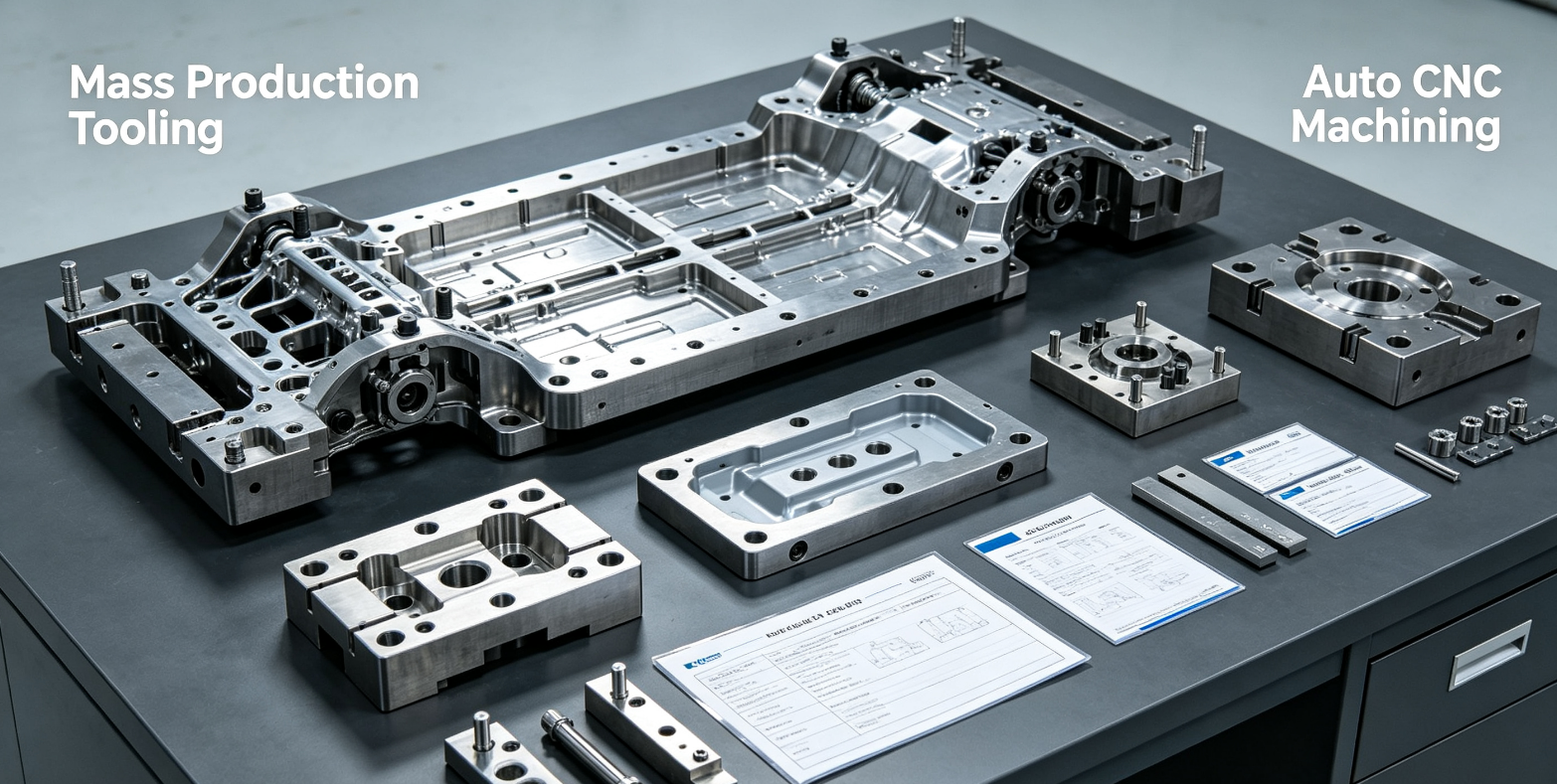
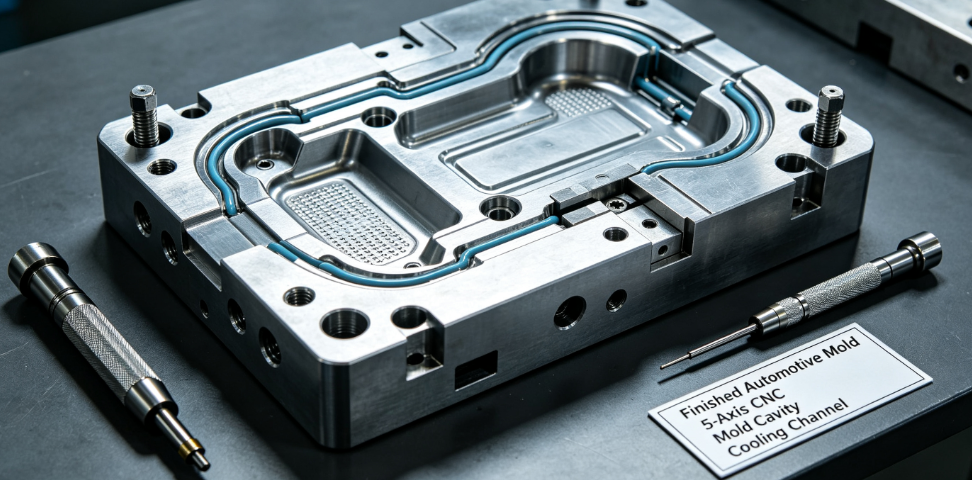
Most manufacturers only focus on either CNC machining or mold building. Zorapid operates both divisions in-house, fully aligned with automotive program requirements for EV and traditional vehicle components.
IATF 16949-aligned manufacturing workflows
Our engineering and quality teams follow automotive standards, ready to build PFMEA, Control Plans, SPC tracking, and complete Level 3 PPAP packages for Tier 1 and EV OEM customers.
Dual capability: Mass production CNC + hardened injection molds
We support programs end-to-end: prototype validation → tool development → pilot runs → sustained mass production. You can consolidate multiple component families under one supplier.
Automotive-focused DFM review for CNC and mold projects
Before steel cutting or CNC process locking, our team identifies risks: thin-wall warpage, insufficient draft angles, cooling deficiencies, fixture deflection, and hard-to-inspect critical features. We propose cost-effective design adjustments to avoid post-launch issues.
Locked, archived production processes for long program lifecycles
All CNC parameters, mold settings, and inspection standards are permanently archived. Even multi-year automotive programs maintain consistent part quality without repeated requalification.
Full traceability & complete documentation packages
We supply material CoC, CMM dimensional reports, surface roughness records, batch inspection logs, and all documentation required for your internal SQE audits and OEM submissions.
Structured mold lifecycle management
We define guaranteed mold shot life, maintain spare inserts, offer controlled mold modification procedures, and provide professional mold storage and maintenance plans.
Contingency production planning
We reserve flexible machine capacity for peak demand and build backup fixturing / process plans to minimize disruption risk for your automotive production line.
Seamless pilot-to-mass-production transition
Process parameters validated during pilot runs are carried directly into mass manufacturing, eliminating costly re-qualification gaps that often occur when switching vendors.
FAQ
Is IATF 16949 mandatory for all automotive component suppliers?
If your parts are supplied to OEMs or Tier 1 customers, IATF 16949 is almost always a formal requirement. Generic ISO 9001 does not cover automotive-specific requirements such as SPC, MSA, layered audits, and PFMEA. Some indirect non-cosmetic auxiliary parts may have exemptions, but always confirm with your SQE team upfront. Zorapid operates processes built around IATF 16949 expectations to simplify your supplier qualification.
What PPAP level do I need to specify for mass production launch?
Most automotive programs require Level 3 PPAP for production release, which includes full dimensional results, material test reports, FMEA, control plan, and sample parts. Level 1 or Level 2 is rarely accepted for mass production critical components. We can pre-build PPAP document templates aligned with your customer-specific requirements (CSRs).
How can I verify if a supplier’s quoted capacity is realistic?
Request 6–12 months of historical on-time delivery KPIs, current machine utilization rates, and production shift schedules. Avoid suppliers running consistently above 90% utilization — they have limited flexibility to absorb urgent orders or disruptions. We openly share capacity planning data for all automotive projects during RFQ review.
What minimum mold steel grade should I specify for automotive mass production molds?
For low-volume pilot molds: P20 or 718H. For sustained mass production over 500,000 shots: S136, STAVAX or pre-hardened high-grade mold steel. Low-cost steel will suffer surface wear, corrosion, and dimensional drift for exterior and cosmetic automotive parts. Our engineers recommend steel grades based on your forecasted shot lifetime and plastic material.
Should I own the injection mold tooling after project completion?
This must be clearly defined in your commercial contract. Many suppliers retain mold ownership unless full tool payment is completed. Confirm mold storage duration, storage fees, modification cost rates, and conditions for mold transfer. Zorapid offers transparent tool ownership terms with clear documentation for all automotive mold programs.
What risks come from sourcing CNC automotive parts without full traceability?
If a field failure occurs, you cannot trace defective batches back to raw material stock or production runs. OEMs regularly issue mandatory recalls due to lack of traceability. We mark every batch with unique lot codes and maintain full raw material certificates linked to each shipment.
Can a supplier with only prototype experience scale directly to automotive mass production?
Rarely. Prototype workflows prioritize speed and one-off parts; mass production requires standardized in-process checks, SPC monitoring, tool wear management, and shift-to-shift consistency. We separate prototype and mass-production manufacturing zones to prevent cross-contamination of process standards.
How long should I plan for mold development and first samples?
Standard hardened automotive production molds: 6–12 weeks from drawing lock to first T1 trial samples. Complex multi-cavity molds or parts with tight cosmetic requirements require longer schedules. We provide a detailed milestone timeline with weekly progress updates for all tooling projects.
What is the difference between PFMEA and Control Plan, and why do auto buyers require both?
PFMEA identifies potential process failure modes and risks. The Control Plan defines active inspection and reaction plans to catch those failures during production. The two documents must be fully linked. Our quality team ensures every special characteristic identified in PFMEA is covered within the control plan.
How do I manage engineering changes after mass production starts?
Enforce a formal ECN (Engineering Change Notice) process. No supplier should implement geometry, material, or process changes without written customer approval. Zorapid maintains a formal change log for all CNC programs and mold modifications for audit purposes.
What surface finish standards are typical for automotive CNC components?
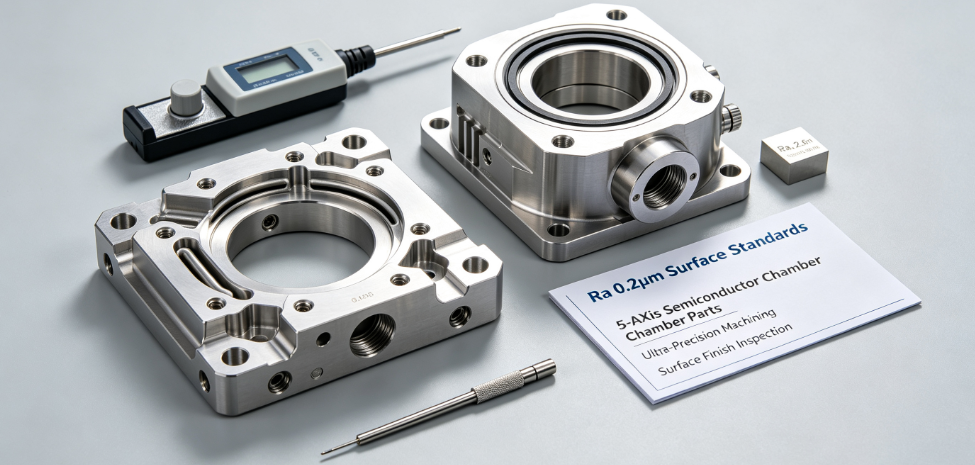
Functional mating surfaces commonly require Ra ≤0.8 μm; non-critical structural surfaces Ra ≤3.2 μm. Sealing and fluid contact surfaces require strict burr-free specifications. We define deburring and finishing standards in the control plan to avoid cosmetic or assembly issues.
How to handle secondary operations (anodizing, plating, coating) in supplier evaluation?
Ask the supplier to provide audit records of their subcontract surface treatment vendors. Poor plating adhesion, uneven anodizing thickness, and hydrogen embrittlement are frequent automotive field issues. Zorapid manages qualified, audited secondary process partners under our internal quality system.
What lead time buffer should I build into automotive mass production orders?
Add 10–15% contingency to quoted lead times to account for material delays, quality hold inspections, or logistics disruptions. For EV component programs with tight launch windows, we offer expedited production slots with pre-agreed capacity reservations.
Can Zorapid support both low-volume pilot batches and high-volume sustained mass production?
Yes. Many automotive programs start with small pilot runs for validation before scaling to full volume. We lock identical manufacturing parameters from pilot to mass production, eliminating requalification risks that occur when switching between different suppliers.
How do you control dimensional drift on long-running CNC mass production orders?
We implement scheduled tool change intervals, regular CMM sampling, and continuous SPC monitoring. If trends show approaching tolerance limits, our quality team triggers corrective action before out-of-spec parts are manufactured. All trend data is available for customer review on request.
Final Thoughts
Automotive mass production sourcing is not just about finding the lowest quote. Sustainable partnerships rely on verified quality systems, stable processes, complete documentation, and long-term program support.
Choosing a supplier that lacks automotive experience will create costly delays, failed PPAP submissions, and production line disruptions down the road. Whether you need precision CNC machined EV components or hardened production injection molds, evaluate candidates against consistent, automotive-specific audit criteria.
Zorapid combines in-house mass-production CNC and mold manufacturing, built around automotive quality standards, supporting your program from prototype validation all the way through multi-year serial production.
Send your CAD and specifications today for a DFM review and formal quotation.