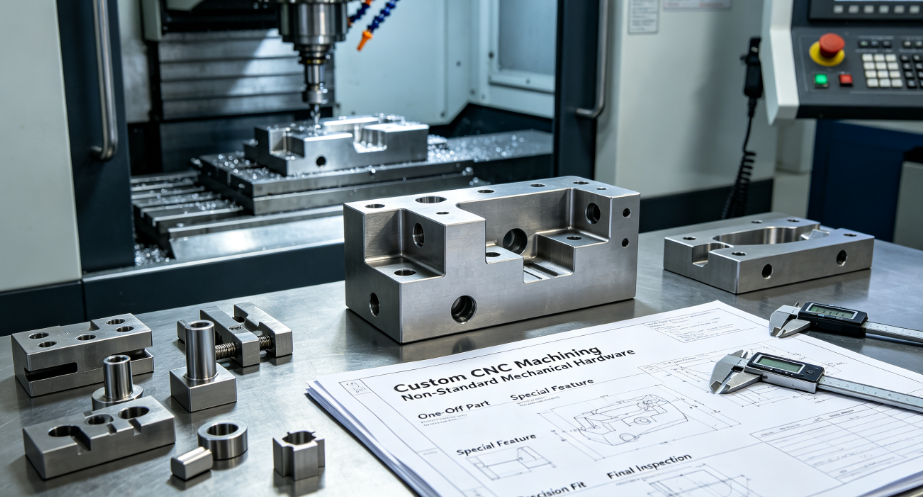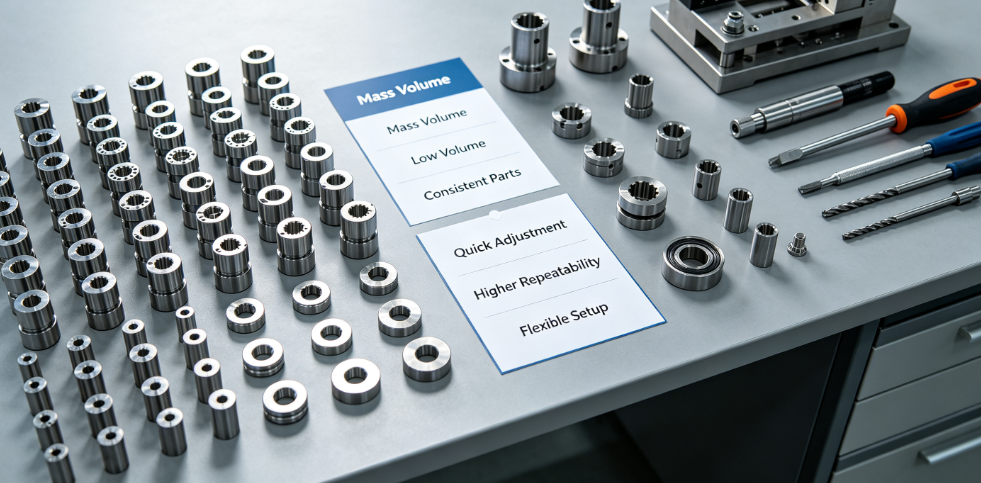
Zorapid Exclusive Tech Blog
Written in casual US/EU industrial engineer conversational tone | Target: Medical OEM R&D, Procurement, Design Engineers
tart with engineer pain point hook
If you’re a medical device design or procurement engineer, you’ve definitely pulled your hair out over tiny precision medical shafts: you lock ±0.005mm drawing tolerance, send prints out for quotes, and get back tapered, out-of-spec parts with burrs, delayed prototypes and sky-high minimum order limits. Tiny medical shafts (Ø0.4~8mm, L/D up to 40:1) are the hidden core of minimally invasive surgery robots, endoscopes, insulin pumps and implant devices, and holding consistent ±0.005mm diameter/runout tolerance is one of modern precision manufacturing’s toughest benchmarks.
Today’s complete guide from Zorapid breaks down every machining secret, core manufacturing pain points, our proprietary Swiss CNC turning solutions, industry growth stats, material specs, real customer case data, application mapping, lead time advantages, closing summary & full FAQ—all built from our 20+ years medical micro-turning workshop experience, ISO13485 & AS9102 certified production floor.
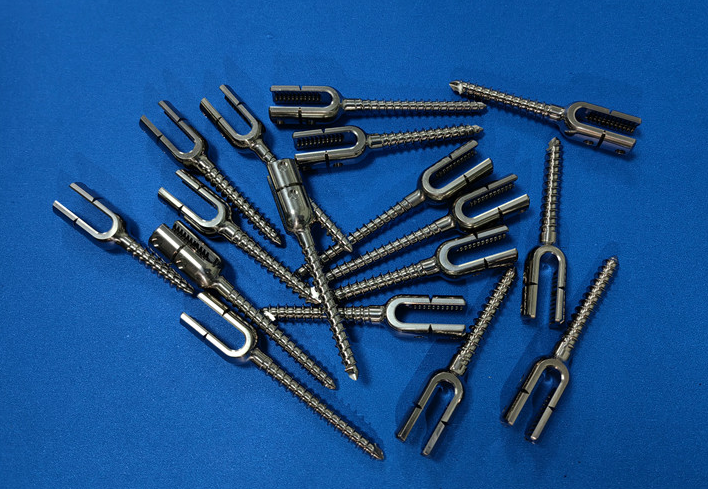
In-Depth Professional Swiss CNC Turning Tech Analysis
Core Swiss-Type Lathe Working Principle vs Standard Conventional Turning
Standard CNC lathes fix workpiece at chuck end only; slender micro shafts bend under cutting force, creating taper & dimensional drift, impossible to hit stable ±0.005mm for high L/D ratio parts over 3:1.
Swiss CNC’s defining design: bar stock feeds through precision adjustable guide bushing, cutting happens within ≤1mm of bushing support point, workpiece slides axially while spindle rotates, nearly eliminates workpiece flex during entire turning cycle—the only mechanical setup physically capable of locking ±0.005mm consistent tolerance on miniature slender medical shafts.
Full Step-by-Step Production Process for ±0.005mm Micro Medical Shaft
- Raw Bar Pre-treatment: Medical-grade bar straightening, surface flaw inspection, stress relief annealing (critical for 316LVM, Ti-6Al-4V to avoid post-machining thermal deformation); raw stock tolerance pre-controlled to ±0.01mm before feeding.
- Machine Preheating & Thermal Stabilization: All Zorapid Swiss CNC (Citizen/Brother Speedio series) warm up 90+ mins before production, constant ambient temp control 22±1°C inside processing workshop—thermal expansion is top hidden reason for micron tolerance out of spec.
- Custom Guide Bushing Matching: Material-specific split guide bushing: clearance set 2~5μm per raw material, stainless steel vs titanium vs PEEK all use independent custom bushing, zero generic standard bushing for medical micro shafts.
- Multi-Axis Live Tooling Integrated Machining: Single setup complete OD turning, ID bore, cross-drilling, thread tapping, flat milling, deburring; eliminate secondary clamping error which kills ±0.005mm precision from repeated re-fixturing.
- Optimized Cutting Parameter Calibration (Zorapid proprietary data):
- 316LVM Stainless: Spindle 8500~12000 RPM, feed rate 0.02~0.04mm/rev, coated carbide micro inserts + MQL minimal quantity cryogenic cooling to suppress built-up edge
- Ti-6Al-4V ELI: Spindle 4200~6500 RPM, ceramic tipped tools, low depth of cut per pass to stop work hardening deformation
- Medical PEEK: Low RPM 1200~2800 RPM, polished sharp PCD tooling to prevent polymer melting & surface blister
- In-process real-time dimensional inspection: In-line micrometer probing every 5pcs during run, auto offset tool wear compensation to maintain continuous ±0.005mm batch consistency.
- Post-process precision cleaning & medical passivation: Ultrasonic micro-deburr + ASTM F86 standard passivation for metal shafts; full ISO10993 biocompatibility pre-test before delivery.
Precision Standard Definition: What Exactly Is ±0.005mm Tolerance for Medical Shaft?
Covers outer diameter tolerance, concentricity ≤0.003mm, runout ≤0.004mm, critical step dimensional variation all capped within 5μm total deviation; for implant-grade shafts, local critical control zones tighten down to ±0.0025mm per FDA medical component specification.
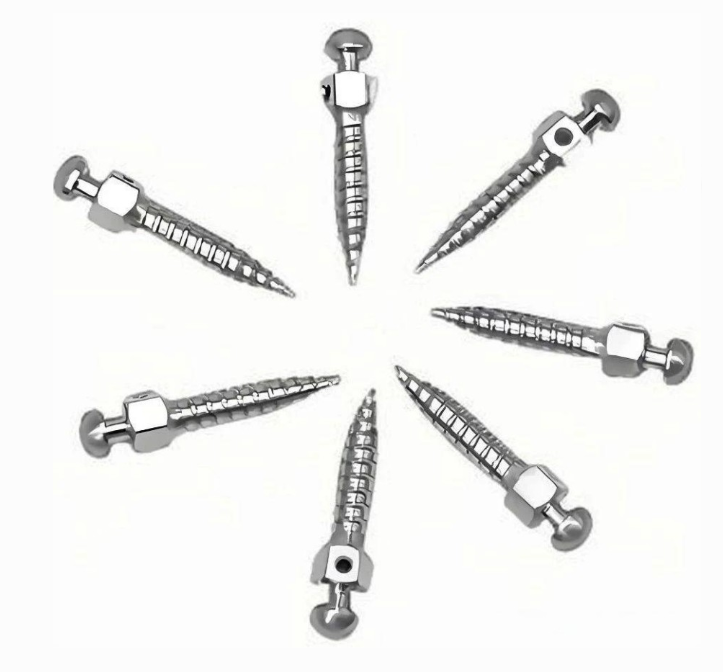
Core Manufacturing Difficulties + Zorapid Targeted Solutions
Top 6 Industry-Wide Pain Points When Machining ±0.005mm Tiny Medical Shafts
- High L/D Slender Deflection: Ø1.5mm ×50mm shaft (L/D≈33:1) easily flexes under cutting load → dimension drift out of ±0.005mm, taper defect top failure reason
- Medical Alloy Material Drawbacks: 316LVM sticky chip, Ti alloy severe work hardening, PEEK thermal softening during cutting → tool wear spikes, inconsistent sizing mid-batch
- Thermal Expansion Drift: Workshop temperature fluctuation >2°C triggers micron-level part expansion/shrinkage, batch tolerance scatter over long production runs
- Micro-Burr Generation: Tiny shaft edge burr ≥0.01mm invalidates medical assembly, manual deburr damages precision OD dimension accidentally
- Prototype MOQ Barrier: Most factories demand minimum 50~500pcs order; medical R&D only needs 1~10 trial samples, impossible for early-stage verification
- Traceability & Regulatory Compliance Gap: FDA/ISO13485 requires full production parameter traceability from raw bar to finished piece, most small workshops lack digital record system
Zorapid Custom-Built Solutions to Eliminate Every Pain Point
| Difficulty | Zorapid Exclusive Solution | Real Tolerance Improvement Result |
|---|---|---|
| Slender Shaft Deflection | Grade-matched precision split guide bushing + back-spindle tailstock synchronous support | Concentricity locked ≤0.003mm, 100% avoid taper |
| Tough Medical Alloy Machining | Material-specific coated/PCD/CBN custom tool library + proprietary MQL cryogenic cooling program | Tool life +65%, dimension drift from tool wear <2μm |
| Thermal Fluctuation Error | Constant-temp 22°C sealed precision production zone + machine real-time thermal compensation programming | Ambient temp swing ±3°C no tolerance out-of-spec |
| Micro Burr Issue | In-cycle in-machine orbital micro-deburr inside Swiss lathe, no secondary manual handling | Zero residual burr, surface Ra ≤0.02μm |
| High MOQ Restriction | 1pc sample starting order, flexible small-batch Swiss unmanned lights-out production | R&D prototype available without bulk purchase |
| Medical Regulatory Traceability | Full digital lot tracking: raw batch→cut param→inspection report laser part ID, FDA audit-ready document | 100% full-process traceability per ISO13485 |
Future 2026–2030 Industry Data Report & Market Trend Analysis
Global Miniature Medical Shaft Market Core Statistics (CAGR & Demand Forecast, MedTech official research data)
- Overall Market Growth: Global micro medical precision shaft market maintains 14.3% annual CAGR from 2026 to 2030, driven by minimally invasive surgery (MIS), surgical robotic, wearable insulin delivery & in-body implant equipment booming demand; global annual total demand will hit 960 million pieces by 2030.
- Regional Split: North America occupies 45% global consumption (US top medical OEM cluster); EU 29% share; APAC fastest-growing 15.2% YoY growth (aging population in Japan/Germany boosts orthopedic implant component orders).
- Tolerance Standard Upgrade Trend: 68% of new medical device R&D projects launched after 2025 specify ≤±0.005mm critical shaft tolerance; before 2022 only ~32% of projects required this tight precision, industry tightening precision specs year by year.
- Small-Batch Demand Shift: Traditional mass production (10k+ pcs) ratio drops year-on-year; R&D prototype & low-volume customized order (1~500pcs) rises from 22% (2024) to projected 39% by 2030, matching Zorapid’s core 1pc-start business positioning.
- Material Trend Data: Ti-6Al-4V ELI & 316LVM grow fastest (+16.1% CAGR); medical-grade PEEK polymer shaft demand surges 19.7% annually as disposable catheter parts expand market share.
Procurement Trend Insight for OEM Engineers
More US/EU medical brands shift sourcing from domestic high-cost factories to qualified Asia precision manufacturers with ISO13485, AS9102 certification; Zorapid’s dual-certified production becomes preferred low-cost, fast-lead supplier for mid-size & startup MedTech OEMs.
Core Benefits When You Select Zorapid as Your ±0.005mm Medical Shaft Supplier
1. Unmatched Precision Stability (Core Advantage)
All Swiss CNC fleet calibrated monthly by third-party metrology lab; mass production batch dimension pass rate ≥99.7%, consistently hold ±0.005mm OD tolerance on all micro medical shafts, scrap rate down to ≤0.4% vs industry average 8~15% scrap for tight-tolerance micro turning.
2. Ultra-Flexible Order Rules: 1 Piece Start Prototype
No minimum order quantity; from lab prototype 1~5pcs to medium batch 10k+ mass production fully supported, perfectly fit MedTech iterative design upgrade cycles without overstock waste.
3. Full Medical Standard Certification Package
ISO9001, ISO13485 medical quality, AS9102 aerospace precision, full material certification (3.1/3.2 test report), passivation & biocompatibility auxiliary documentation ready for FDA/CE audit directly, save your third-party certification cost & time.
4. In-House Full Chain Service
From DFM design review → raw material sourcing → Swiss turning → surface passivation → CMM full dimensional inspection → sterile packaging all in-house; no outsourced third-party sub-contracting which introduces precision inconsistency risk.
5. Cost Optimization Advantage
Automated bar-fed Swiss lights-out production cuts labor & cycle cost ~32% vs US/EU local machining pricing, same ±0.005mm precision at 40~55% lower unit cost for your medical component sourcing.
6. Free Pre-Production DFM Design Consult
Our medical precision engineering team reviews your drawing free of charge, optimize shaft geometry to lower machining difficulty & production cost while fully keeping your required ±0.005mm tolerance specification.
5. Ultimate Complete Machining Guide + Stepwise Troubleshooting Solutions
Ultimate 5-Stage Full Process Guide to Hit Stable ±0.005mm Shaft Tolerance
1: Pre-Order DFM Design Optimization (Before Production Starts)
- Avoid overlong unsupported shaft design; add tiny locating step/guide groove for Swiss bushing support if L/D>25:1
- Specify proper raw material grade (316LVM not regular 316 for implant use) to cut hidden deformation risk
- Mark critical ±0.005mm control zones clearly on 2D drawing for targeted in-process inspection
2: Pre-Production Machine Setup Checklist
- Warm machine ≥90min, lock ambient temp 22±1°C
- Custom-fit guide bushing clearance per raw material grade
- Trial run 3 sample pieces, CMM full inspection then fine-tune tool offset before formal batch run
3: In-Production Running Parameter Control (Zorapid Standard Spec)
- Max single pass cutting depth ≤0.08mm for slender micro shaft
- Continuous MQL cooling full cutting cycle to lock workpiece temp stable
- Auto probe check every 5pcs for real-time tool wear compensation
4: Post-Machining Inspection Standard
All critical ±0.005mm dimension tested via high-precision optical micrometer + CMM; concentricity/runout checked separately; non-conforming parts fully isolated, zero mixing into qualified shipment
5: Common Defect Quick-Fix Troubleshooting Cheat Sheet
| Defect Symptom | Root Cause | Fast Fix Solution |
|---|---|---|
| OD out +0.006~+0.01mm gradually | Tool flank wear | Auto tool offset + replace worn coated insert |
| Taper along shaft length | Guide bushing clearance oversized | Swap tighter custom split bushing |
| Random dimension scatter | Workshop temp swing | Shift production into constant-temp sealed cell |
| Surface micro nick & burr | Exit cutting parameter too aggressive | Reduce feed rate + activate in-cycle deburr |
Full Applicable Medical Grade Materials + Material Performance Breakdown
All below materials fully supported on Zorapid Swiss CNC for ±0.005mm tiny medical shaft manufacturing, all meet ISO10993 biocompatibility standard for human-contact medical devices:
- 316LVM Vacuum Melt Stainless Steel
- Advantage: Superior corrosion resistance, non-magnetic option for MRI compatible devices, high fatigue strength for implant & surgical drive shafts; standard for endoscope core shafts, insulin pump actuator pins
- Machining note: Sticky chip → coated carbide inserts + MQL cooling required to hit Ra≤0.02μm finish & ±0.005mm tolerance
- Ti-6Al-4V ELI Medical Grade Titanium Alloy
- Advantage: Ultra-lightweight, excellent human tissue biocompatibility, low elastic modulus matching human bone; orthopedic bone screw core shafts, minimally invasive surgical robot drive spindles
- Machining note: Severe work hardening → low cutting speed + ceramic tooling
- CoCrMo Cobalt Chrome Alloy
- Advantage: Extreme wear & corrosion resistance, long-term in-body service; heart valve micro drive shafts, orthopedic joint fine transmission shafts
- Medical Grade PEEK 450G High-Performance Polymer
- Advantage: Biocompatible, radiolucent, lightweight, no metal MRI interference; disposable micro-catheter inner drive shafts, ophthalmic device micro spindles
- Machining note: Low spindle RPM + polished PCD tool to avoid thermal melting deformation
- Nitinol Shape Memory Alloy
- Advantage: Superelastic shape recovery; steerable endoscope tip control micro shafts, vascular intervention device core components
Real-World Customer Case Analysis
1: US Minimally Invasive Endoscope Startup (Ø1.2mm ×42mm 316LVM Drive Shaft, ±0.005mm OD Tolerance)
- Client Pain: Previous supplier failed 3 consecutive batches, dimensional taper 0.012~0.02mm out of spec, R&D prototype delayed 6 weeks
- Zorapid Solution: Custom split guide bushing + back spindle synchronous support, optimized 9800RPM Swiss turning parameters, in-cycle integrated deburr
- Final Result: First sample batch 10pcs 100% pass CMM inspection, batch scrap 0%, client launched endoscope prototype on schedule; later formal mass order 12k pcs/quarter recurring
2: EU Orthopedic Implant Brand Ti-6Al-4V ELI Micro Screw Core Shaft Ø1.8mm, ±0.004~±0.005mm Critical Tolerance
- Original Issue: Domestic EU factory minimum MOQ 2000pcs, client only needed 80 trial prototypes for animal testing
- Zorapid Service: 80pcs small batch 5-day turnaround, full 3.2 material cert + passivation report + ISO10993 test data attached
- Outcome: Pass lab biocompatibility test; client shifted all low-volume prototype & pilot batch orders to Zorapid long-term
3: Canada Insulin Pump OEM PEEK Micro Lead Screw Shaft Ø2.1mm ±0.005mm Pitch & OD Tolerance
- Core Trouble: PEEK thermal deformation during turning made pitch dimension drift over 0.01mm
- Zorapid Fix: Low-RPM specialized PCD tooling + low-temperature MQL air cooling, constant-temp production cell
- Result: Stable full-batch tolerance control, unit cost cut 38% vs Canada local machining pricing
Global Application Scenarios of ±0.005mm Tiny Medical Shaft
① Minimally Invasive Surgical Robotics (Top High-Precision Application)
Surgical manipulator tiny drive shafts inside laparoscopic/orthopedic robotic arms; ±0.005mm precision directly decides surgical positioning accuracy during minimally invasive operations, core for da Vinci-type auxiliary surgical equipment inner transmission components.
② Endoscope & Minimally Invasive Diagnostic Devices
Steerable endoscope inner pull-rod & lens positioning micro shafts (Ø0.5~3mm); precision runout ≤0.004mm ensures smooth tip bending control for stomach/ear/nose minimally invasive diagnosis devices.
③ Implantable Medical Devices (Cardiac & Orthopedic Field)
Pacemaker internal micro transmission shafts, spinal implant adjustment fine spindle, bone fixation screw core shafts; strict biocompatibility + micron tolerance dual requirement to meet long-term in-body safety standards.
④ Drug Delivery & Insulin Infusion Pumps
Precision metering lead screw shafts inside portable insulin pumps & wearable micro drug delivery devices; ±0.005mm dimension guarantees accurate micro-drug dosage control, avoid over/under dosage risk for diabetic patients.
⑤ Ophthalmic & Dental Precision Equipment
Dental handpiece inner high-speed rotor shafts, eye surgical instrument micro control spindles; high rotational stability from tight tolerance reduces operation vibration during clinical treatment.
⑥ Wearable Medical Monitoring Hardware
Mini BLDC motor drive shafts inside wearable blood glucose, heart rate monitoring devices; low runout precision extends motor service life & improves detection data stability.
Zorapid Unbeatable Delivery Speed Advantage + Production Scheduling Data
Standard Lead Time Breakdown (Industry Benchmark Comparison)
- R&D Urgent Prototype (1~20pcs): 3~5 working days turnaround after DFM confirmation & PO lock; industry average prototype lead 12~25 business days
- Small Pilot Batch (21~500pcs): 7~10 working days; competitors usually need 20~35 days
- Medium Mass Batch (500~15,000pcs): 12~18 working days via unmanned lights-out Swiss CNC 24h continuous production
Core Reasons for Fast Delivery
- 3,000㎡ dedicated medical precision workshop with full 22+ sets Citizen/Brother Swiss CNC lathes in constant standby
- In-house raw medical alloy stock inventory (316LVM, Ti-6Al-4V, PEEK bulk bar pre-stored), eliminate raw material procurement waiting cycle
- Independent in-house CMM/optical inspection lab, no third-party outsourced testing delay
Global Shipping Support
DDP door-to-door US/EU shipping coordination; air express for urgent samples 3~5 days to North America/EU doorstep, sea freight bulk batch cost-saving option available.
Full Article Summary Wrap-Up
±0.005mm tolerance tiny medical Swiss turned shafts are irreplaceable core hardware for next-gen global MedTech miniaturization trend, yet consistent precision production stays extremely challenging due to slender deflection, tricky medical alloy properties & strict medical regulatory rules.
Zorapid’s 20+ years Swiss CNC micro-turning experience, certified constant-temp production facility, material-specific proprietary machining parameters, flexible 1pc-start order policy, fast lead time & full ISO/medical certification documents perfectly resolve all OEM sourcing pain points across prototype development to formal mass production phase.
From DFM free design review, raw material selection, precision Swiss turning, post-treatment to full metrology inspection & global delivery, we deliver one-stop qualified ±0.005mm medical micro shaft manufacturing for US/EU medical OEMs. If you have new medical shaft drawings needing quotation or prototype trial, send your CAD/2D files to our engineering team anytime for free DFM analysis & formal quote.
FAQ
Can Zorapid hold stable ±0.005mm tolerance for ultra-slender L/D>35:1 micro medical shafts?
Yes, our custom split guide bushing + back spindle tailstock synchronous Swiss setup reliably control OD within ±0.005mm for L/D up to 42:1; we have multiple verified customer cases for Ø1.2×50mm long slender endoscope shafts.
Do you provide full material certification & FDA-compliant process documents for medical-grade parts?
100% support; 3.1/3.2 raw material test cert, passivation report, full production traceability log, ISO10993 auxiliary documentation all attached with shipment, ready for your FDA/CE audit submission.
What’s your minimum order quantity for prototype testing?
1 piece MOQ allowed, no hidden minimum purchase fee; perfect fit early-stage MedTech R&D iterative design verification.
Can you machine Nitinol & PEEK polymer medical shafts with same ±0.005mm tight tolerance?
Fully capable; independent dedicated PCD tooling & low-temp machining program for polymers/nitinol, proven stable micron tolerance on all mainstream medical biocompatible materials.
What’s your typical surface finish Ra value for finished medical shafts?
Standard Ra≤0.02μm after optimized Swiss turning + medical passivation; mirror finish Ra≤0.008μm available upon special implant-grade drawing requirement.
How do you control thermal expansion error to guarantee ±0.005mm across different seasons?
All precision medical shaft production runs inside sealed constant-temperature 22±1°C workshop, eliminate seasonal ambient temperature fluctuation impact on dimensional precision.