Whether you are a seasoned professional in the manufacturing industry or a mechanical designer seeking detailed insights, this will provide valuable, practical, and accurate advice on CNC punching. We will dive into its wide-ranging applications across various industries, the role of CNC punching operators, the differences between stamping and punching, and the critical role of CNC in the defense sector.
In addition, click here to learn about CNC machining parts manufacturers at https://zorapid.com. Let’s explore the complexities of CNC punching and see how this technology is revolutionizing modern manufacturing.
What are the applications of CNC punching?
CNC punching is a key process in modern manufacturing, capable of creating precise holes and shapes in sheet metal. Thanks to its versatility and accuracy, it is widely used across numerous industries.
Let’s look at some key sectors where CNC punching is extensively applied. https://zorapid.com/cnc-machining
Automotive
CNC punching fabricates automotive brackets, panels and assemblies, delivering the high precision and durability these parts demand.
Aerospace
The aerospace industry greatly benefits from CNC punching. It enables the production of lightweight and durable components. The precision offered by CNC punching is critical for manufacturing parts that meet stringent aerospace industry standards.
Construction
CNC punching is widely used in construction for structural parts and decorative panels. Its ability to punch complex shapes and patterns makes it perfect for architectural and structural applications.
Electronics
In the electronics industry, CNC punching is adopted to manufacture enclosures, mounting plates, and heat sinks. The precision and repeatability of CNC punching ensure a perfect fit for electronic components, enhancing overall performance and reliability.
HVAC
CNC punching is used to produce ventilation grilles and duct components. The efficiency and accuracy of CNC punching support the fabrication of parts that optimize airflow and system performance.
Household & Industrial Appliances
For household and industrial appliances, CNC punching can manufacture a wide range of components that are integral to the function and design of the equipment. The excellent repeatability of CNC punching ensures consistent quality in high-volume production.
What Is a CNC Punch Press Operator?
A CNC punch press operator is a skilled technician responsible for managing the entire CNC punching process. Professional expertise ensures punching operations are carried out with high precision and efficiency. Below are the core responsibilities of a CNC punch press operator:
Machine Setup
The operator is in charge of installing and calibrating required tools and dies. Proper setup is critical to ensure the machine runs smoothly and produces parts that meet required specifications.
Code Programming
The CNC punch press operator inputs design specifications into the machine’s computer. This programming step converts design blueprints into executable instructions for the CNC punch press.
Operation
During production, the operator oversees the punching process, ensuring stable machine operation and that stamped parts comply with quality standards.
Maintenance
Routine inspection and equipment maintenance are part of the operator’s daily duties. Regular maintenance keeps the machine operating efficiently and reduces the risk of breakdowns.
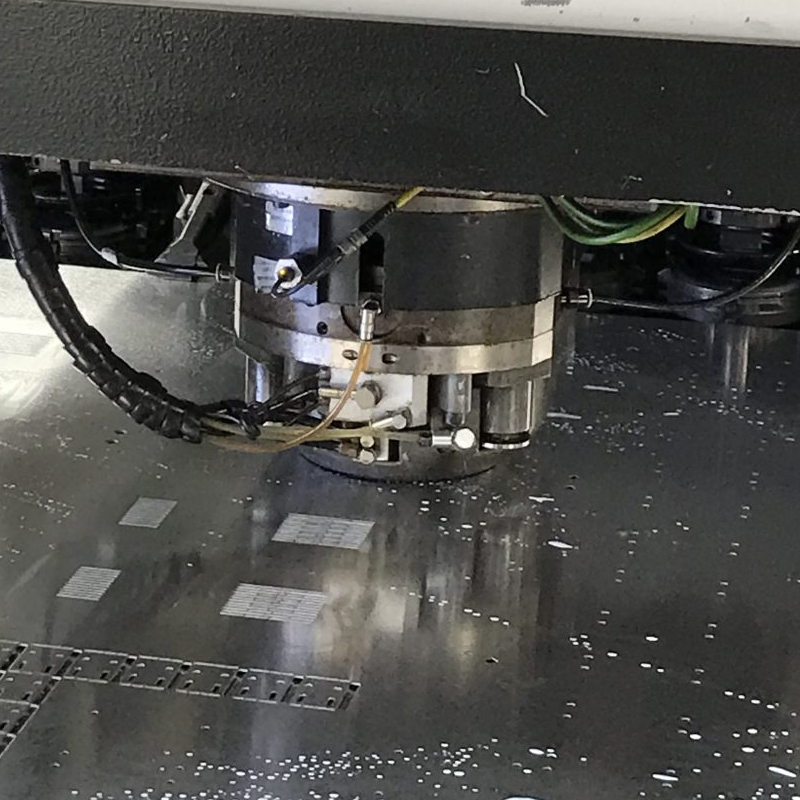
What Is the Difference Between CNC Punching and Stamping?
Both punching and stamping belong to metal forming processes, yet they differ greatly in technology and application.
Punching
Punching uses a punch press to create holes or cutouts by shearing metal. The process is suitable for simple shapes and repetitive tasks, and highly efficient for mass production of identical parts.
Stamping
Stamping involves more complex operations, using dies to perform bending, embossing and imprinting. It can form intricate shapes in one or multiple stages and is ideal for sophisticated parts. Stamping is commonly used for components that require multiple forming processes.
What Is CNC in the Defense Industry?
CNC machining, including CNC punching, plays a vital role in the defense industry. It is essential for manufacturing precision components. The defense sector demands extremely high accuracy and reliability, which CNC technology can consistently deliver.
Weapon Systems
CNC punching is used to manufacture parts for firearms, artillery, and missiles. The precision required for these components is critical, and CNC punching delivers the necessary dimensional accuracy.
Military Vehicles
For military vehicles, CNC punching produces structural and functional components. These parts must be robust, durable, and able to withstand harsh operating conditions. CNC punching ensures all these stringent requirements are met.
Aerospace
In military aerospace applications, CNC punching fabricates components for military aircraft and drones. Lightweight yet durable parts made by CNC punching are indispensable for achieving optimal operational performance.
Supporting Equipment
CNC punching also makes military operational tools and equipment, delivering versatile auxiliary support devices of all kinds.
How Does a CNC Punching Machine Work?
CNC punch machines move sheet metal along X and Y axes under the punch. The whole process is computer-programmed for precise positioning. Here’s how it works.
Precision Movement System
The machine’s computer program controls the movement of the sheet metal, positioning the material accurately beneath the punching punch. Such precise motion is essential for producing accurate shapes and holes.
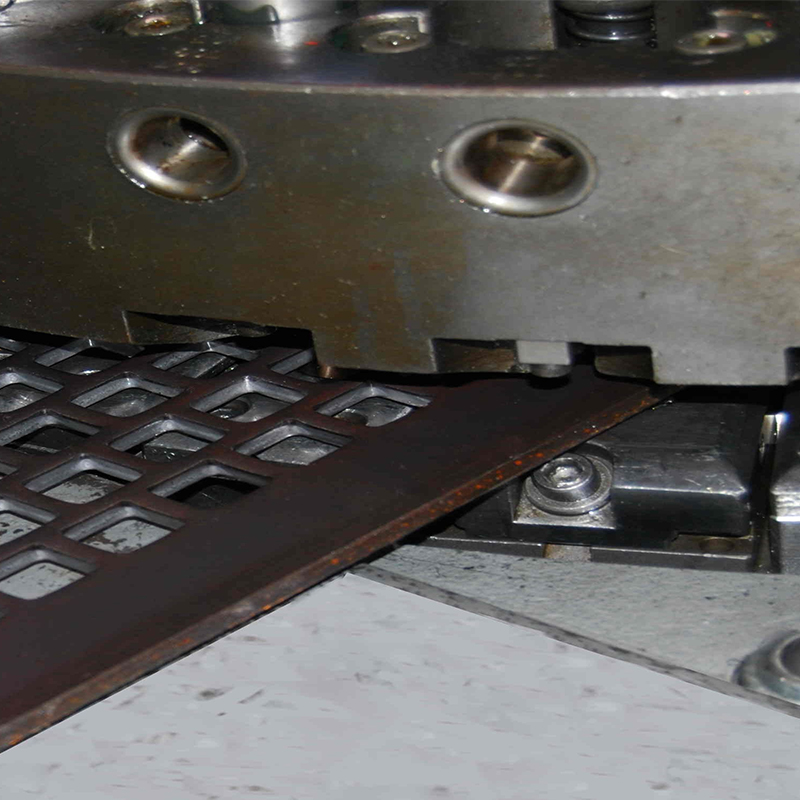
Punch Hammer
The punch of the punching machine moves up and down to create holes or cutouts on the sheet metal. The movement of the punch synchronizes with the positioning of the sheet metal to ensure precise punching.
Tooling
CNC punch machines come with assorted tools and dies. Quick tool changes adapt to various shapes and sizes, boosting overall versatility.
Efficiency and Cost-effectiveness
CNC punching machines are designed for high repeatability and minimal material waste. Such efficiency is critical for mass production where consistent quality and cost performance are essential.
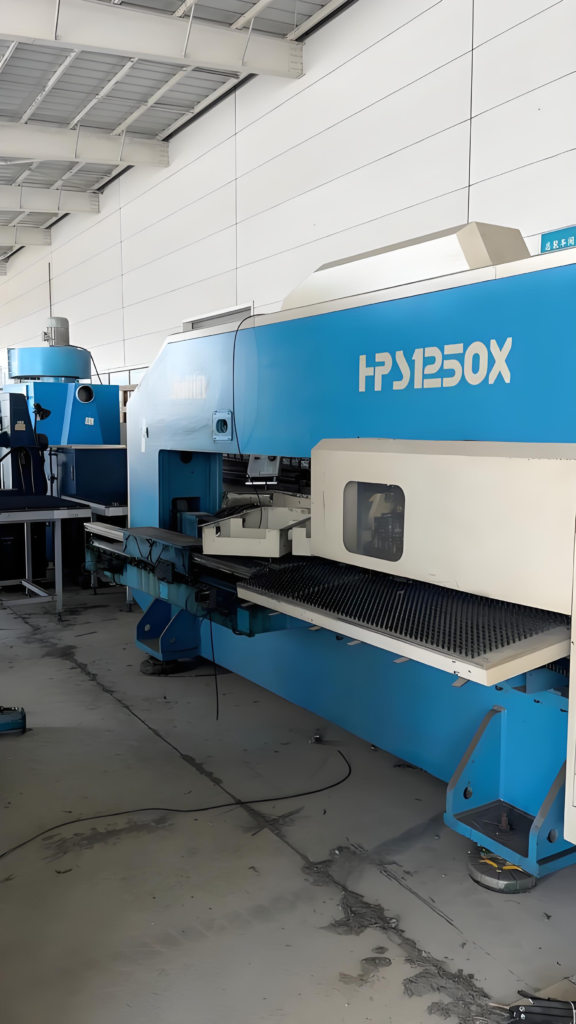
What Is a CNC Punch Press?
CNC punch presses automate punching via CNC control, fitted with assorted tools and dies to punch holes, cut openings and form custom sheet metal shapes. Here are its core functions:
Versatility
CNC punch presses can handle materials of different types and thicknesses, suiting a wide range of manufacturing requirements. The ability to switch tools quickly allows for diverse punching operations.
Time Saving and High Efficiency
Automation enabled by CNC technology reduces the need for manual intervention. This automation boosts efficiency and ensures consistent quality throughout the entire production process.
Platform Precision
CNC punch presses deliver high machining accuracy. Such precision is critical for manufacturing parts that meet exact specifications, especially for industries like aerospace and defense where precision is paramount.
What Is a CNC Turret Punch Press?
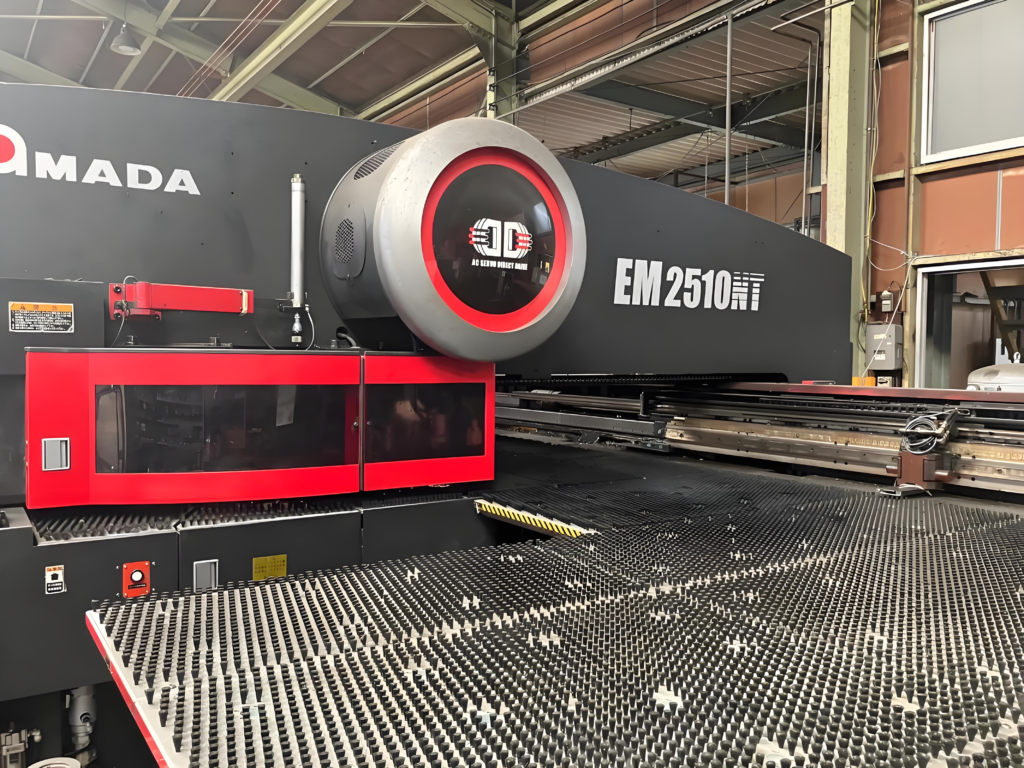
A CNC turret punch press features a rotating turret that holds multiple tools. This design enables rapid tool changes and allows multiple punching operations without manual intervention. The advantages of using a CNC turret punch press are as follows:
Efficiency and Convenience
The rotating turret supports fast tool changing, which reduces setup time and improves production efficiency. This feature is especially beneficial for mass production.
Versatility
Equipped with a variety of tools, the CNC turret punch press can perform a wide range of punching operations. It can complete multiple tasks with a single setup, enhancing versatility and efficiency. This flexibility greatly simplifies the manufacturing process.
Reduced Downtime
The ability to switch tools quickly minimizes machine downtime, ensures smooth production flow, and further boosts overall efficiency. Less downtime translates to higher productivity.
Conclusion
Understanding CNC punching and its applications provides valuable insights into modern manufacturing processes. https://zorapid.com delivers precise and efficient solutions for industries ranging from automotive to electronics. By leveraging the capabilities of CNC punching, manufacturers at Zorapid can achieve high precision and benefit from repeatability and cost-effectiveness in production. Get a quote for custom CNC parts today.
FAQ
What is the difference between CNC punching and CNC milling?
CNC punching is sheet metal stamping with fast die cutting at low cost. CNC milling uses layer-by-layer tool cutting for complex 3D shapes. Punching is ideal for flat sheets with mass holes and regular outlines.
What materials are suitable for CNC punching?
Cold-rolled steel, galvanized steel, aluminum, stainless steel and copper sheets, ideal for thin and medium-hard metal plates.
What are the core technologies of CNC punching?
Automatic nesting layout, multi-station die switching, step punching, micro-joint tab retention, one-pass forming, automatic positioning and error compensation technology.
What are the advantages of CNC punching?
Fast processing speed, low mass production cost, high hole accuracy, high material utilization, one-pass punching and forming, perfect for high-volume standard sheet metal production.
What are the limitations of CNC punching?
It is only suitable for thin sheets and limited for thick or ultra-hard materials. Complex curved and irregular 3D shapes cannot be processed, requiring laser cutting or CNC milling as a complement.